
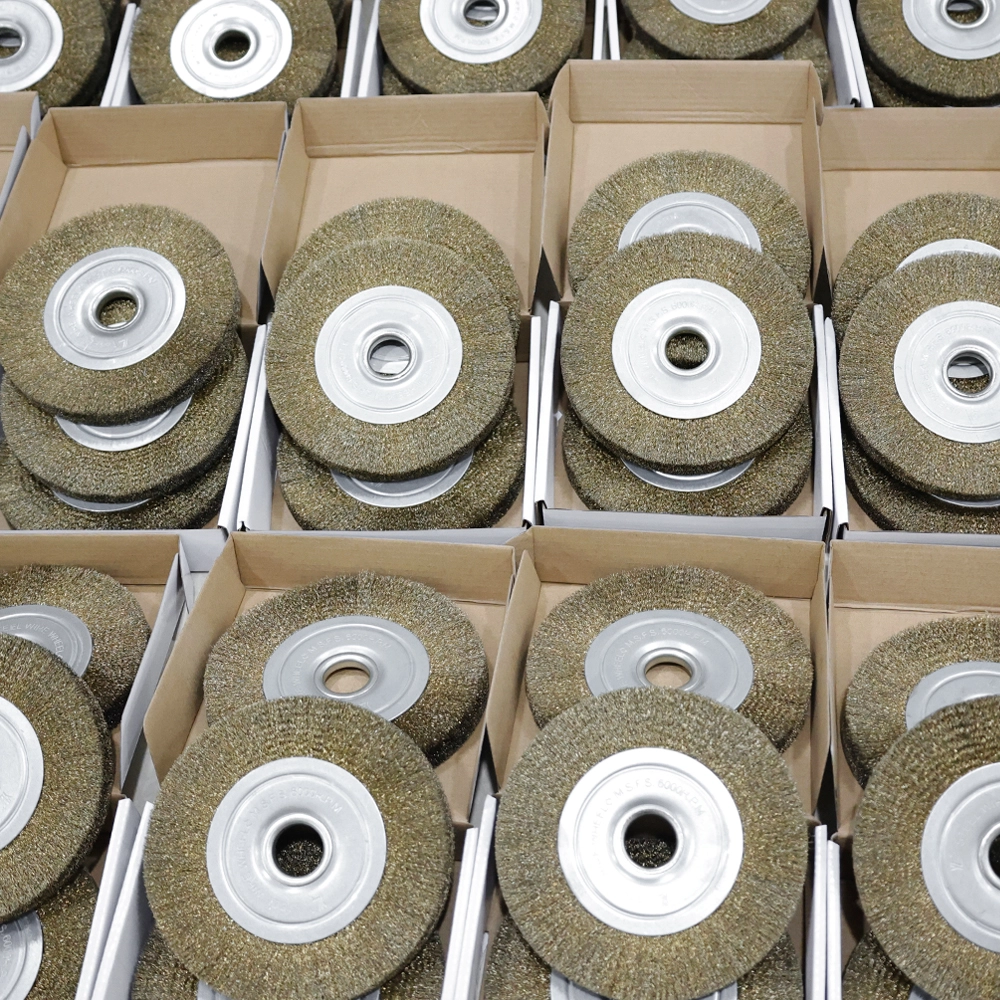
Polishing consumables rarely show up in a single batch, but they quietly set the cost per part and the surface consistency of the whole month. Managing them is a numbers job, not a shopping job.
This management guide covers cost-per-part calculation for wheels, belts and compound, inventory rules, and the consumption log that turns consumables into a controllable line item.


Common Mistakes and How to Avoid Them
The pitfalls that show up most often in real projects, with the cause and the practical fix.
| Mistake | Why It Happens | Practical Fix |
|---|---|---|
| 1. Consumables bought on price only | Short life raises cost | Track cost per part, not unit price |
| 2. No consumption log | Cost invisible until month end | Weigh and log per shift |
| 3. Stockout of compound | Line stops, rush buys | Set 2-week stock floor |
| 4. Wheel life not measured | Early discard or overuse | Log hours per wheel type |
| 5. Belt changes on feel | Quality varies by operator | Change on logged hours |
| 6. Same budget for all stations | Misallocates spend | Budget by operation consumption |
| 7. Waste not measured | Compound dust and scrap | Monitor usage per 1000 parts |
| 8. No supplier comparison | Price drift unnoticed | Quarterly cost review |
Best Practices That Hold Up in Production
The operating disciplines that separate a reliable line from a reactive one.
- Calculate cost per part by operation
- Log wheel, belt and compound use per shift
- Set stock floors and reorder points
- Review supplier prices quarterly
- Budget consumables by station consumption
Implementation Roadmap
A practical sequence that can be adapted to your own project.
Process Flowchart
Consumable control flow
A step-by-step sequence with notes and cautions so every shift follows the same order.
- Cost per part = consumable spend / parts produced.
- Belt life in hours beats operator feel.
- Cheap consumables can cost more per part.
- Compound dust is both cost and a health issue.
Working Data & Formula Notes
Cost per part data
Simple tracking units for polishing consumables.
| Component / Parameter | Working Value / Role | What Changes Mean (annotation) |
|---|---|---|
| Wheel cost/part | Wheel price / parts per life | Compare wheels by life, not price |
| Belt cost/part | Belt price / parts per life | Log hours to set the change point |
| Compound cost/part | kg used x price / parts | Weigh per shift for truth |
| Stock floor | 2 weeks of consumption | Prevents stockout and rush buys |
Reference Data
Specifications and references cited in this guide. Confirm final parameters with your line supplier.
Consumable log example
| Item | Unit | Change point | Tracked by |
| Contact wheel | Hours | Per wheel type | Shift log |
| Belt | Hours | Per station | Shift log |
| Compound | kg | Per shift | Scale |
| Dress stick | pcs | Per week | Inventory count |
Implementation Cases
Case 1 - cheap belts that doubled cost per part
Situation. A plant switched to a lower-priced belt and saved 15% on unit price, but belt life fell by half and re-polish work appeared.
Approach. A cost-per-part log was introduced; the higher-priced belt showed a 30% lower cost per part over a month of data.
Outcome. The plant switched back on data, not price, and re-polish work disappeared.
Case 2 - stockout that forced an overnight rush buy
Situation. Compound ran out mid-month; an urgent order arrived at 60% above the normal price and the line still lost a shift.
Approach. A 2-week stock floor and reorder point were set from consumption data, with a weekly inventory count.
Outcome. No further stockouts; consumable spend became predictable and rush-buy premiums ended.
Frequently Asked Questions
How do I calculate cost per part?
Divide consumable spend for an operation by the parts produced in the same period.
Why not buy on unit price?
Life and performance change the real cost; a cheap belt that lasts half as long costs more per part.
What units should I track?
Hours for wheels and belts, kilograms for compound, pieces for dress sticks.
How do I set a stock floor?
Two weeks of average consumption, with a reorder point above the lead time.
Who logs the data?
Shift operators with a simple card; the supervisor validates the scale and counts weekly.
Why weigh compound?
Feel-based use is invisible; weighing per shift turns it into a number you can manage.
How often review suppliers?
Quarterly, comparing cost per part rather than unit price.
What about compound dust?
It is a cost and a health risk; extraction and dust recovery also cut consumption.
Can this work in a small shop?
Yes - a paper log on one wall is enough to start controlling the biggest consumable lines.
What Would You Like to Solve?
Send us your consumable prices, life data and monthly parts output. We can build the cost-per-part sheet and the stock rules for your polishing department.
Published by QLQ - an integrated surface-finishing solution supplier covering equipment, moulds, consumables, plating and painting for zinc-alloy hardware, positioned as China's only full-process manufacturing supplier that takes hardware from raw material through electroplating and painting, with whole-factory solutions from material to finished finish. Values cited are project references; confirm with your line supplier before specification.