
Professional Zinc Alloy Surface Finishing Solutions
Nickel/Tin Plating
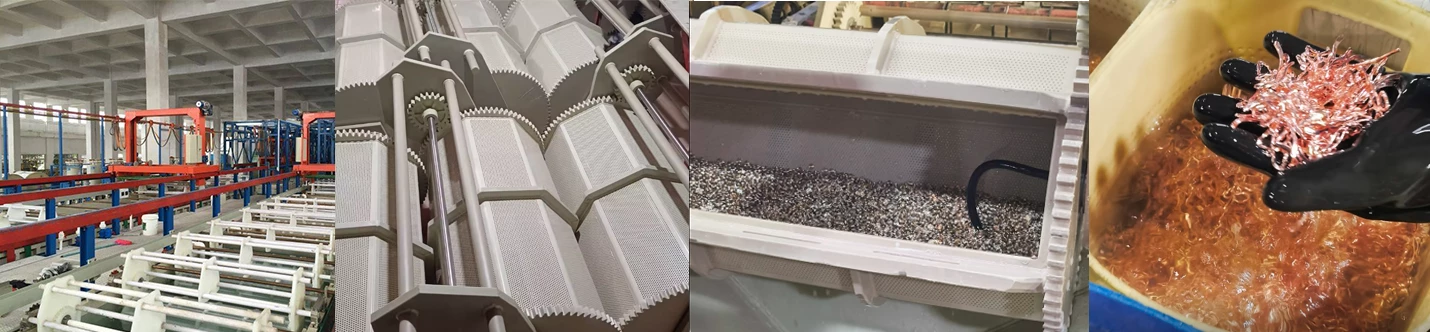
Barrel Nickel & Tin Plating — Bright, Matte, Pearl & Solderable Finishes
Nickel (bright pH 4.2-4.6, 50-55 °C, matte, pearl) and tin (solderable, electronics) plating for small parts in barrel. Pinhole prevention with wetting agents.
Why Barrel Nickel & Tin
Nickel provides hardness, brightness and corrosion resistance. Tin provides solderability for electronic components. Both are barrel-processed daily for small hardware.
Barrel vs Rack — Nickel/Tin Comparison
Key parameter differences between barrel and rack for nickel and tin plating
| Parameter | Barrel Plating | Rack Plating |
|---|---|---|
| Bright Ni current density | 0.5-2 A/dm² | 2-6 A/dm² |
| Nickel pH | 4.2-4.6 | 4.0-4.8 |
| Temperature | 50-55 °C | 50-65 °C |
| Barrel rotation (Ni) | 8-12 rpm | N/A |
| Tin current density | 0.5-1.5 A/dm² | 1-3 A/dm² |
| Cost per part (Ni) | Lower (mass batch) | Higher (individual) |
| Wetting agent need | Higher (rotation aerates) | Standard |
| Pinhole sensitivity | Higher (part-contact shadows) | Lower (fully exposed) |
▼
Barrel Nickel & Tin — Process Steps
Five finishes from a single barrel line: bright, matte, pearl, tin, and Ni-Sn alloy
1Bright Nickel Plating
Workhorse finish for most hardware. Sulfamate or Watts-type bath. Barrel rotation vs. rack: lower current density (0.5-2 A/dm²) to compensate for barrel masking.
Key Parameters
pH: 4.2-4.6
Temperature: 50-55 °C
NiSO₄·6H₂O: 240-300 g/L
NiCl₂·6H₂O: 45-60 g/L
H₃BO₃: 30-40 g/L
Current density: 0.5-2 A/dm²
Before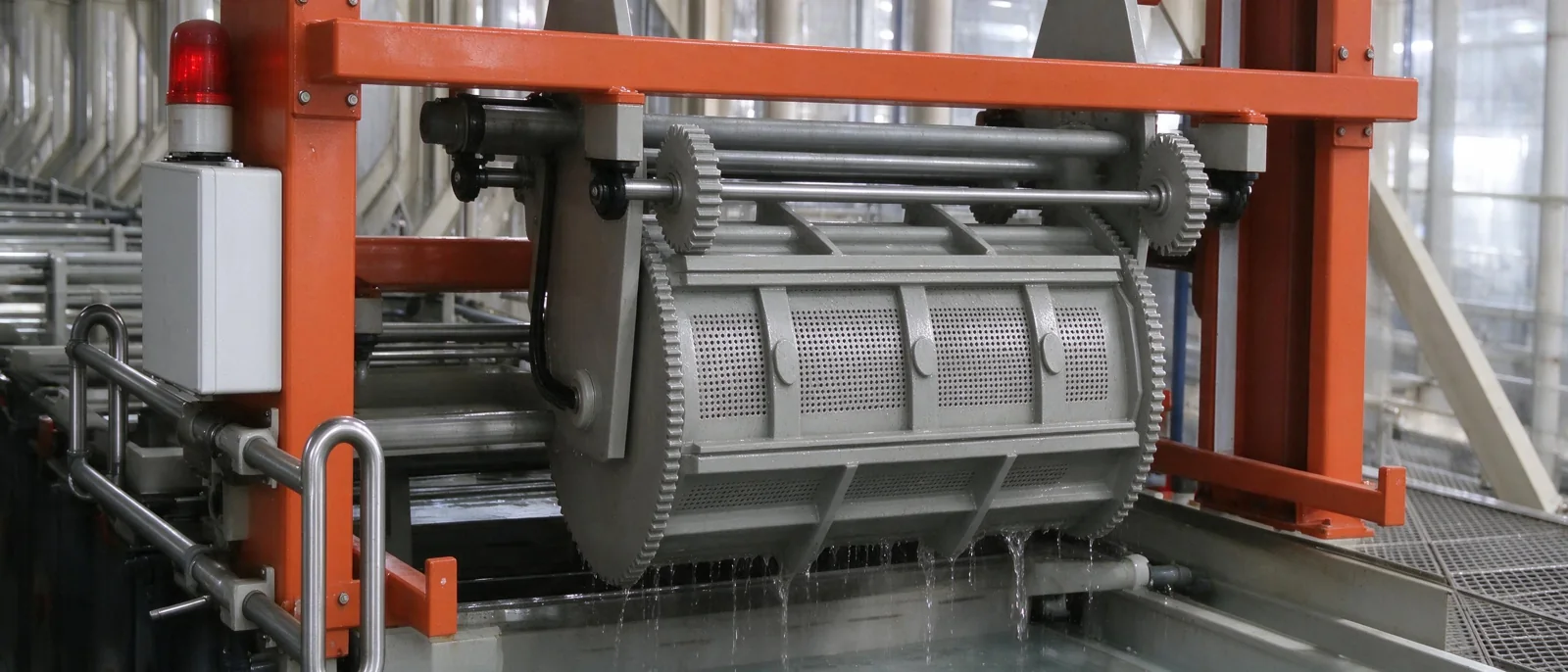 Conceptual illustration based on reference photographs; not test evidence.
Conceptual illustration based on reference photographs; not test evidence.After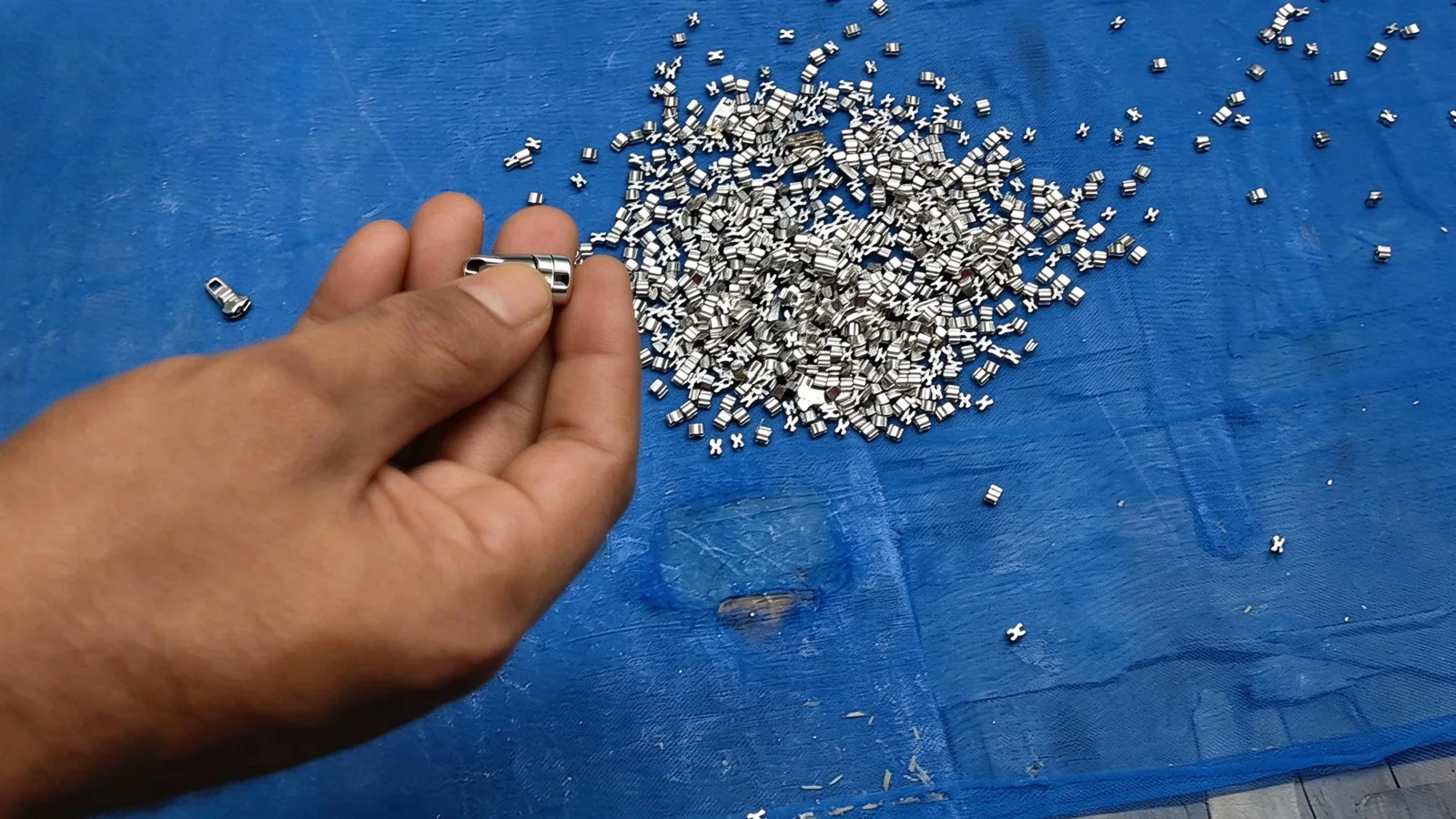 Conceptual illustration based on reference photographs; not test evidence.
Conceptual illustration based on reference photographs; not test evidence.2Matte & Pearl Nickel
Matte nickel uses no brightener — just a pure nickel deposit with matte finish. Pearl nickel adds micro-matting agents for a soft satin sheen. Barrel lines achieve this consistently.
Key Parameters
Matte Ni: No brightener, same basic bath
Pearl Ni additive: 0.5-2 mL/L matting agent
Pearl effect: Micro-dispersed inert particles
3Tin Plating (Barrel)
Tin for solderability on electronic components and food-contact parts. Acid tin (methane sulfonate) or alkaline stannate. Barrel rotation prevents 'tin whisker' contact damage.
Key Parameters
Tin (acid): Sn²⁺ 20-40 g/L, MSA 100-200 g/L
Tin (alkaline): Sn⁴⁺ 20-40 g/L, KOH 10-20 g/L
Current density: 0.5-1.5 A/dm²
Barrel rotation: 6-10 rpm
4Nickel-Tin Alloy (Gun Color Base)
Ni-Sn alloy (60:40 or 50:50) forms the base for gun metal color. Barrel-compatible with tight parameter control.
Key Parameters
Ni:Sn ratio: 60:40 to 50:50
Current density: 0.5-1.5 A/dm²
pH: 4.5-5.0
Temperature: 45-55 °C
5Pinhole / Pit Prevention
Barrel plating is prone to pinholes because parts contact each other and trap gas bubbles. Wetting agent + barrel reciprocation + filtration are the three defenses.
Key Parameters
Wetting agent: 1-3 mL/L (anti-pit)
Barrel reciprocation: 20-50 mm stroke
Filtration: Continuous 5-10 μm
Air agitation: Gentle (avoid over-oxidation)
6Rinse & Protection
Nickel rinse — anti-tarnish dip (0.5-1% Cr³⁺ or organic) for bright nickel. Tin rinse — DI water only (chromates interfere with solderability).
Key Parameters
Ni anti-tarnish: 0.5-1% Cr³⁺ or organic
Tin protection: DI rinse only
Drying temp: < 80 °C
▼
Nickel & Tin Application Guide
Choose the right finish and process for your part
| Finish | Appearance | Hardness (HV) | Thickness (μm) | Best For | Barrel-Friendly? |
|---|---|---|---|---|---|
| Bright Nickel | Silver mirror | 350-500 | 5-15 | General hardware, sliders | ★★★ |
| Matte Nickel | Satin matte | 300-450 | 5-15 | Minimalist designs, tools | ★★★★ |
| Pearl Nickel | Silk sheen | 300-400 | 5-10 | Luxury bags, handbags | ★★★ |
| Tin (Acid) | Bright white | 10-20 | 3-10 | Electronics, PCB contacts | ★★★★ |
| Tin (Alkaline) | Matte white | 10-20 | 3-10 | Food contact, cookware | ★★★★ |
| Ni-Sn (Gun base) | Grey-black | 500-600 | 3-8 | Gun color precursor | ★★★★ |
📌 Nickel & Tin Cheat Sheet
Ni pH4.2-4.6
Ni temperature50-55 °C
Barrel Ni current density0.5-2 A/dm²
Tin current density0.5-1.5 A/dm²
Barrel rotation (Ni)8-12 rpm
Wetting agent1-3 mL/L
Ni thickness typical5-15 μm
Barrel vs rack Ni current0.5-2 vs 2-6 A/dm²
⚠ Pinholes in barrel nickel — the hidden defectPinholes are the #1 hidden defect in barrel nickel. Gas bubbles get trapped between contacting parts in the rotating barrel. The fix: (1) increase wetting agent to 2-3 mL/L, (2) add barrel reciprocation (vertical 'bobbing' motion during rotation), (3) filter continuously at 5 μm. Pinholes that look acceptable in the bath may corrode through within weeks in service — especially in humid environments.
FAQ
Can bright nickel and matte nickel run in the same barrel?
Not simultaneously — brightener contamination ruins the matte finish. Run matte nickel in a dedicated bath or schedule bright nickel first, then a full carbon treatment before matte runs.
What causes 'burning' in barrel nickel?
Same as acid copper — too much current for the barrel geometry. Nickel is less tolerant than copper. Keep barrel Ni current density at 0.5-2 A/dm². Above 2.5 A/dm² in barrel, expect burning at barrel door edges.
Tin plating for electronics — matte vs bright?
Matte tin is preferred for electronics: bright tin additives can co-deposit organics that degrade solderability over time. Matte tin has superior shelf life for solderability. Always specify matte tin for connectors and terminals.
How do I test nickel adhesion on barrel parts?
Simple bend test: bend 10 parts per batch 90° and inspect for peeling. Cross-cut (ISO 2409) for flat surfaces. In barrel lines, adhesion issues trace back 90% of the time to insufficient activation before nickel — never to the nickel bath itself.
What is the right barrel rotation speed for nickel?
8-12 rpm for most barrel sizes. Too slow (<6 rpm): parts at the bottom get thick Ni while top parts barely plate. Too fast (>15 rpm): excessive foaming of wetting agent and mechanical damage to parts.
Get a Free Quote Today
Send us your samples or drawings — our engineers reply within 24 hours with pricing and technical advice.
Contact Us