
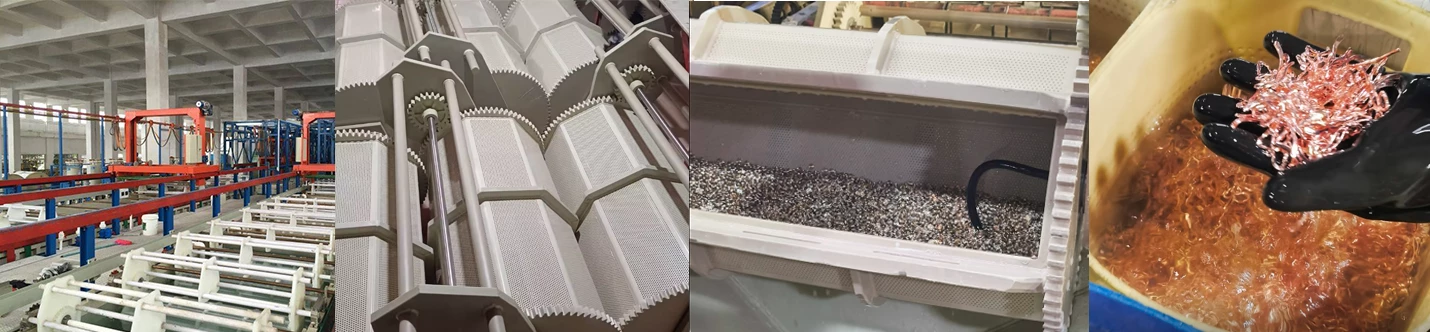
Professional Zinc Alloy Surface Finishing Solutions
Alkaline Copper
Barrel Alkaline Copper Strike — Adhesion Base for Zinc Alloy
Alkaline copper strike for mass-plated small parts. Essential base layer that bonds the plating system to zinc alloy. Cyanide or cyanide-free, pH 9-11, 40-55 °C, 0.5-1.5 A/dm².
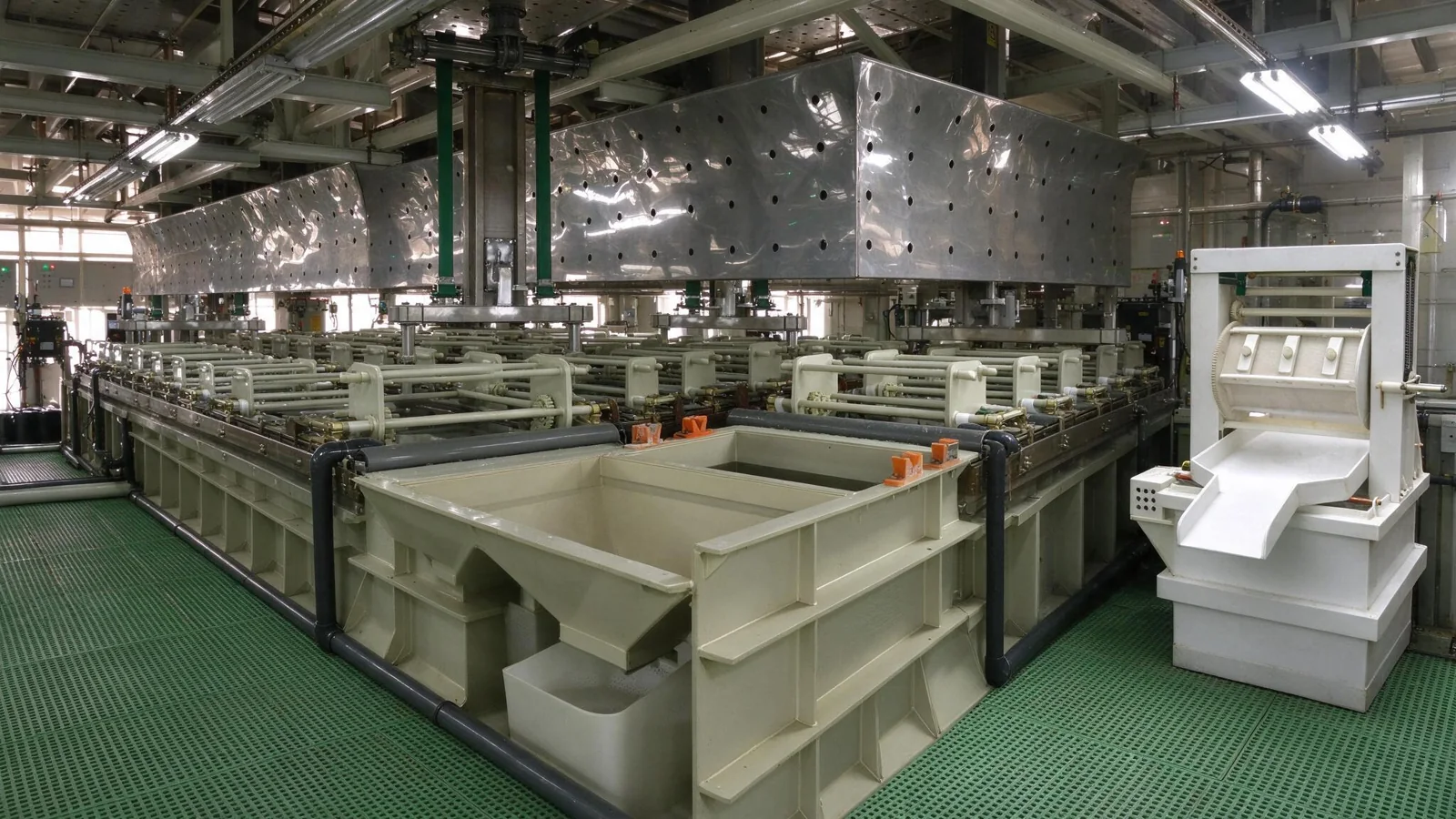 Conceptual illustration based on reference photographs; not test evidence.
Why Barrel Alkaline Copper Strike
The critical first plating layer that makes every subsequent coat stick — every roll-processed small part needs it
Barrel vs Rack — Alkaline Copper Strike
How barrel strike parameters differ from rack for this critical base layer
| Parameter | Barrel Plating | Rack Plating |
|---|---|---|
| Current density | 0.5-1.5 A/dm² | 1.5-3 A/dm² |
| Voltage | 6-12 V | 3-6 V |
| Barrel rotation | 6-12 rpm | N/A |
| Plating time | 10-30 min | 5-15 min |
| Thickness per batch | 3-8 μm | 5-12 μm |
| Throwing power | Good (barrel rotates parts) | Excellent (direct current distribution) |
| Cost efficiency | Higher (mass processing) | Lower (per-part handling) |
▼
Alkaline Copper Strike — Process Steps
The foundation layer that must be right before any further plating
1Solution Make-up & Control
Cyanide-based or cyanide-free alkaline copper bath. Free cyanide controls anode dissolution and prevents precipitation. Maintain pH and temperature precisely.
Key Parameters
pH range: 9-11
Temperature: 40-55 °C
Cu metal: 20-30 g/L
Free CN⁻ (cyanide bath): 10-20 g/L
Free KOH (CN-free): 15-25 g/L
2Barrel Loading & Immersion
Load pretreated parts into the plating barrel. The barrel rotates at 6-12 rpm inside the copper bath, ensuring all surfaces contact fresh solution.
Key Parameters
Barrel rotation: 6-12 rpm
Current density: 0.5-1.5 A/dm²
Part load: 50-70% barrel volume
Anode type: Copper (rolled or OFHC)
Before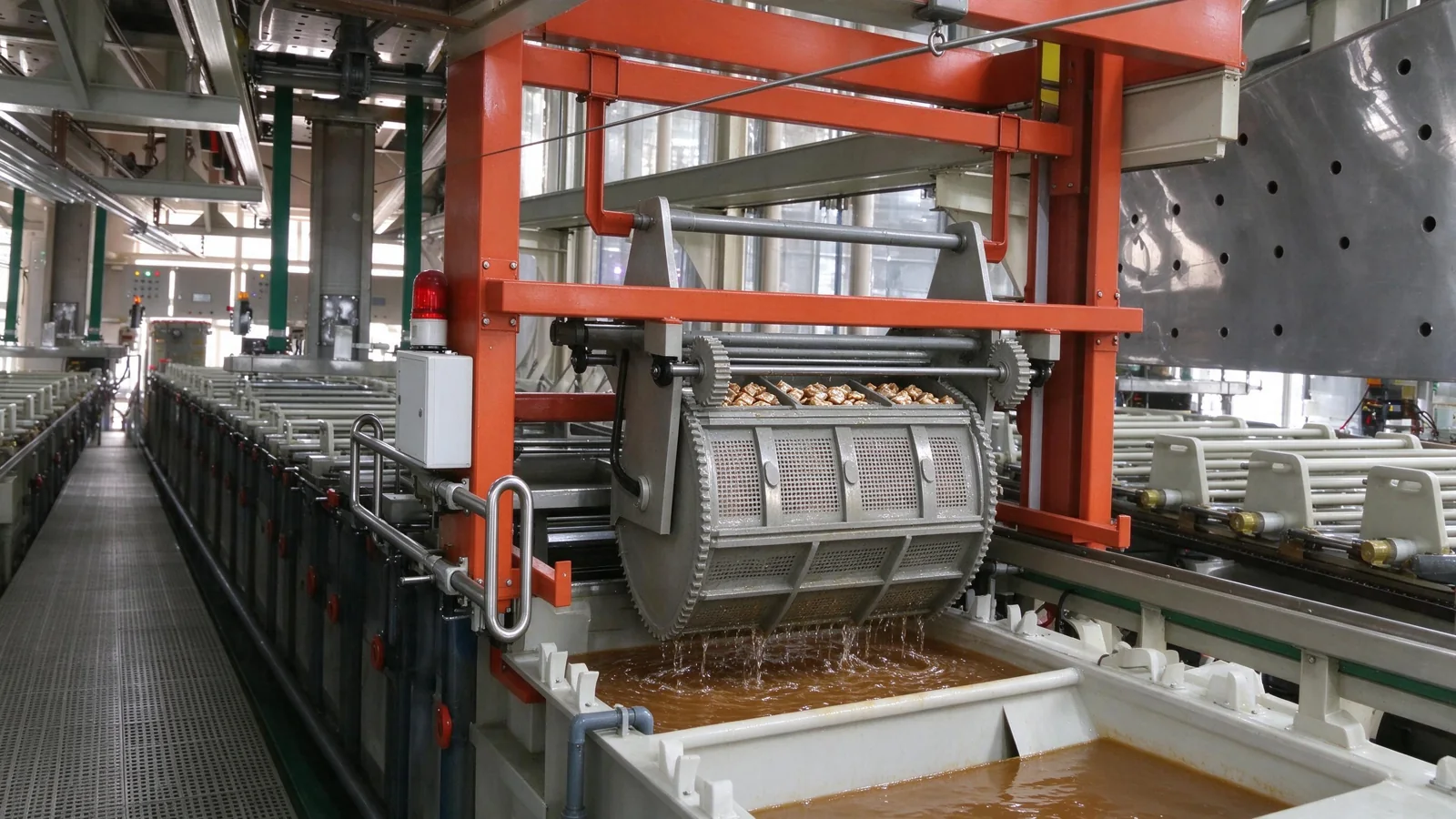 Conceptual illustration based on reference photographs; not test evidence.
Conceptual illustration based on reference photographs; not test evidence.3Strike Plating
Apply current — start with a high-current 'strike' for 30-60 seconds to cover rapidly, then reduce to normal density. Barrel rotation ensures uniform distribution.
Key Parameters
Initial strike: 1.5 A/dm² for 30-60 s
Normal current: 0.5-1.0 A/dm²
Time: 10-30 min
Target thickness: 3-8 μm
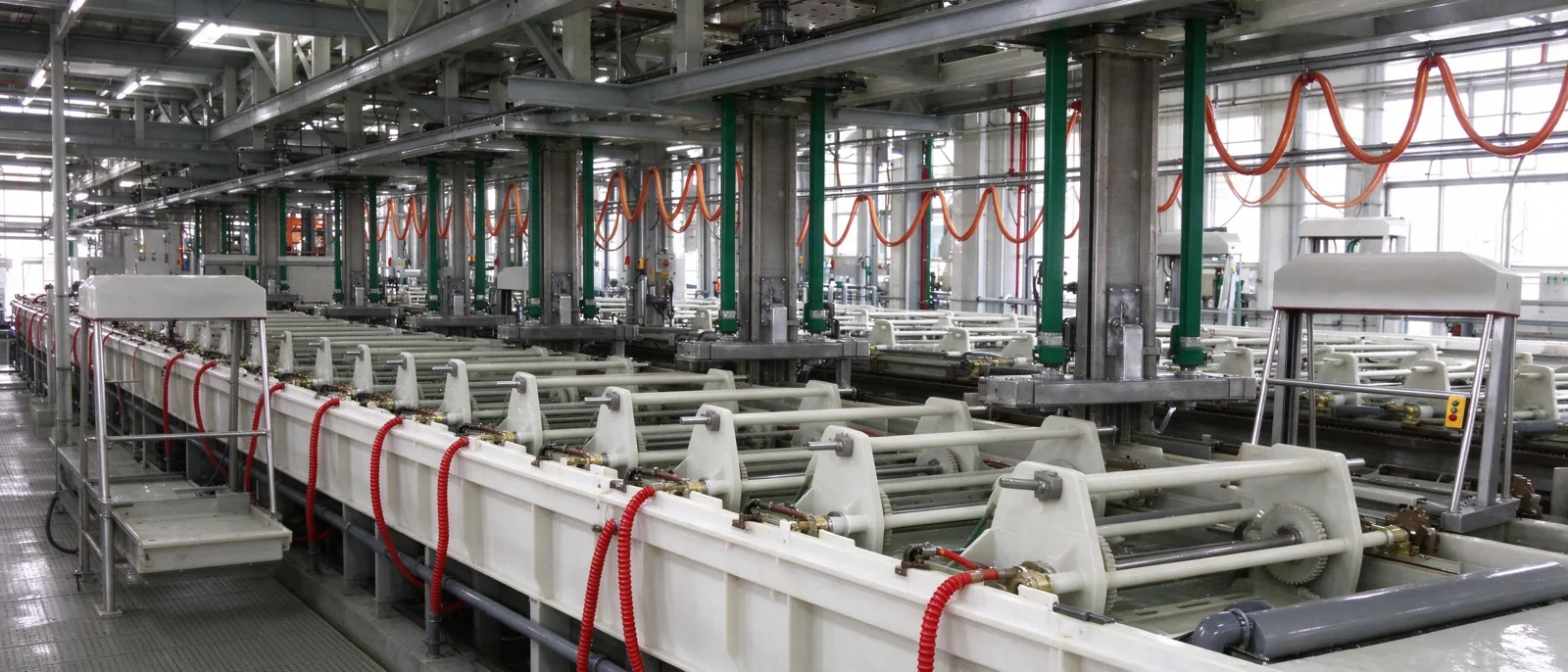 Conceptual illustration based on reference photographs; not test evidence.
4Drag-out Recovery
Rinse the barrel over a drag-out recovery tank to capture copper-rich solution. This reduces chemical cost and environmental load.
Key Parameters
Recovery method: Drag-out tank + spray rinse
Recovery rate: 70-85% of dragged solution
5Rinse & Transfer to Next Bath
Multi-stage rinse before acid copper. Only when barrel is fully rinsed does it move to the next bath — carry-over of alkaline solution into acid copper would cause bath contamination.
Key Parameters
Rinse stages: 2-3 counter-current
Water quality: < 30 μS/cm
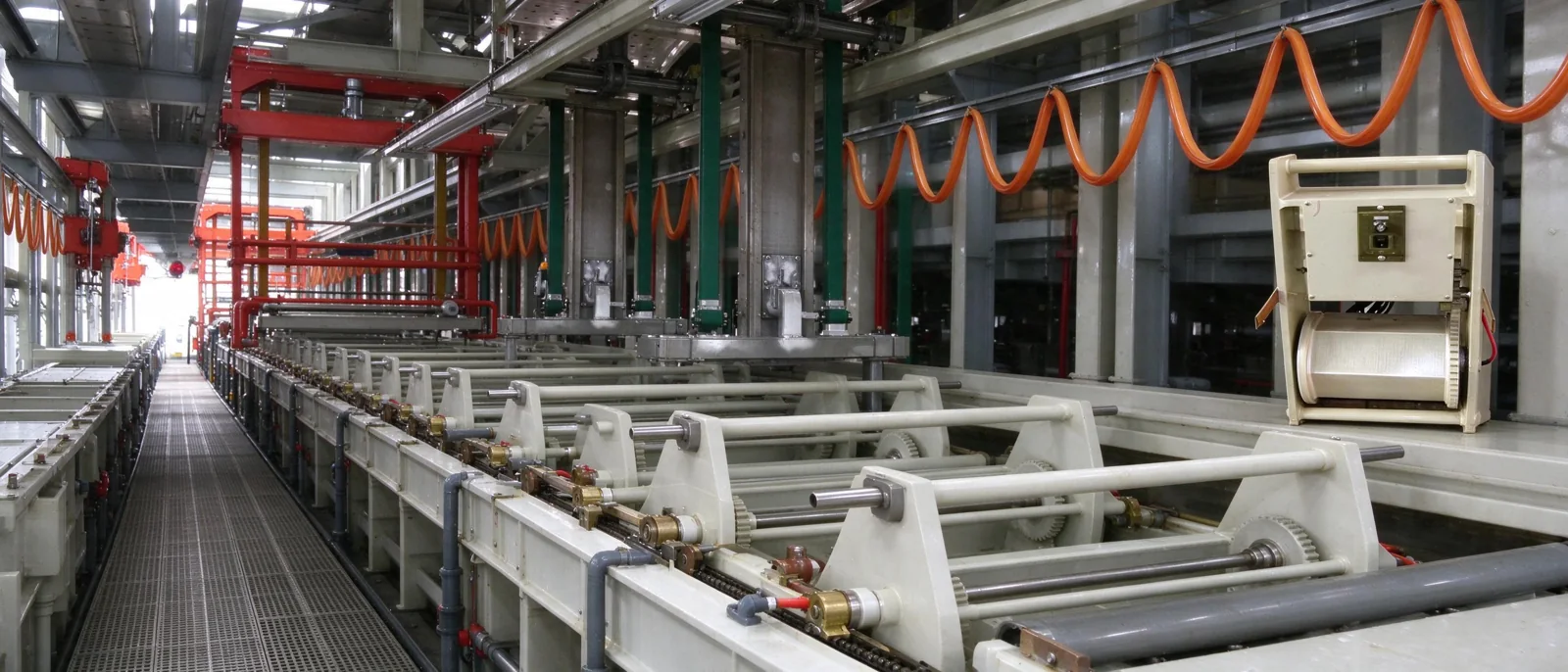 Conceptual illustration based on reference photographs; not test evidence.
▼
Copper Bath Comparison: Cyanide vs Cyanide-Free
Choose based on environmental compliance and substrate type
| Parameter | Cyanide Alkaline Cu | Cyanide-Free Alkaline Cu |
|---|---|---|
| Complexing agent | NaCN / KCN | Pyrophosphate / HEDP |
| Current density range | 0.5-1.5 A/dm² | 0.3-1.0 A/dm² |
| Throwing power | Excellent | Good |
| Zinc alloy compatibility | Excellent | Good (needs pre-strike) |
| Toxicity | High (requires treatment) | Low |
| Waste treatment cost | Higher (cyanide destruction) | Lower |
| Compliance | Requires special permits | REACH / RoHS ready |
| Operating cost | Lower chemical cost | Higher chemical cost |
📌 Alkaline Copper Strike Cheat Sheet
pH range9-11
Temperature40-55 °C
Barrel current density0.5-1.5 A/dm²
Rack current density1.5-3 A/dm²
Barrel rotation6-12 rpm
Strike time10-30 min
Target thickness3-8 μm
Free CN⁻10-20 g/L
💡 Why barrel current density is lower than rackIn barrel plating, the rotating barrel creates intermittent contact between parts and the cathode. Effective current density on individual parts is lower than rack where each part is directly wired. Barrel current density is calculated as total current ÷ total part surface area — the real per-part density during rotation may spike briefly when parts contact, but the average stays 0.5-1.5 A/dm².
FAQ
Why is alkaline copper strike mandatory for zinc alloy?
Zinc alloy — especially Zamak 3 and 5 — is chemically active in acidic solutions. If you plate acid copper directly on zinc, the acid attacks the zinc surface, and metallic zinc displaces copper ions forming a loose, non-adherent 'cement' layer. Alkaline copper strike (pH 9-11) is benign to zinc and builds a proper diffusion bond.
Cyanide vs cyanide-free for barrel lines?
Cyanide baths have superior throwing power for complex-shaped parts in barrels and are more forgiving of current distribution variations. But cyanide-free (pyrophosphate/HEDP) is REACH-compliant and eliminates cyanide waste treatment. For EU-bound products, we recommend cyanide-free with a pre-strike step.
What happens if barrel rotation stops during plating?
Parts at the bottom of the barrel burn (high current density), parts at the top get no plate. The barrel must rotate continuously during plating. Most automatic lines have rotation-fault alarms.
Typical thickness for barrel alkaline copper?
3-8 μm per batch. Thicker requires longer time, but barrel efficiency drops after 30 minutes as copper ions get depleted inside the barrel. For >10 μm, consider two shorter cycles.
Can I plate alkaline copper on steel in barrel?
Yes — but steel needs a different pre-treatment (cathodic electro-clean + acid etch). On steel, alkaline copper serves as an anti-carburizing mask layer, not just adhesion base.
Get a Free Quote Today
Send us your samples or drawings — our engineers reply within 24 hours with pricing and technical advice.
Contact Us