

Professional Zinc Alloy Surface Finishing Solutions
Barrel plating process
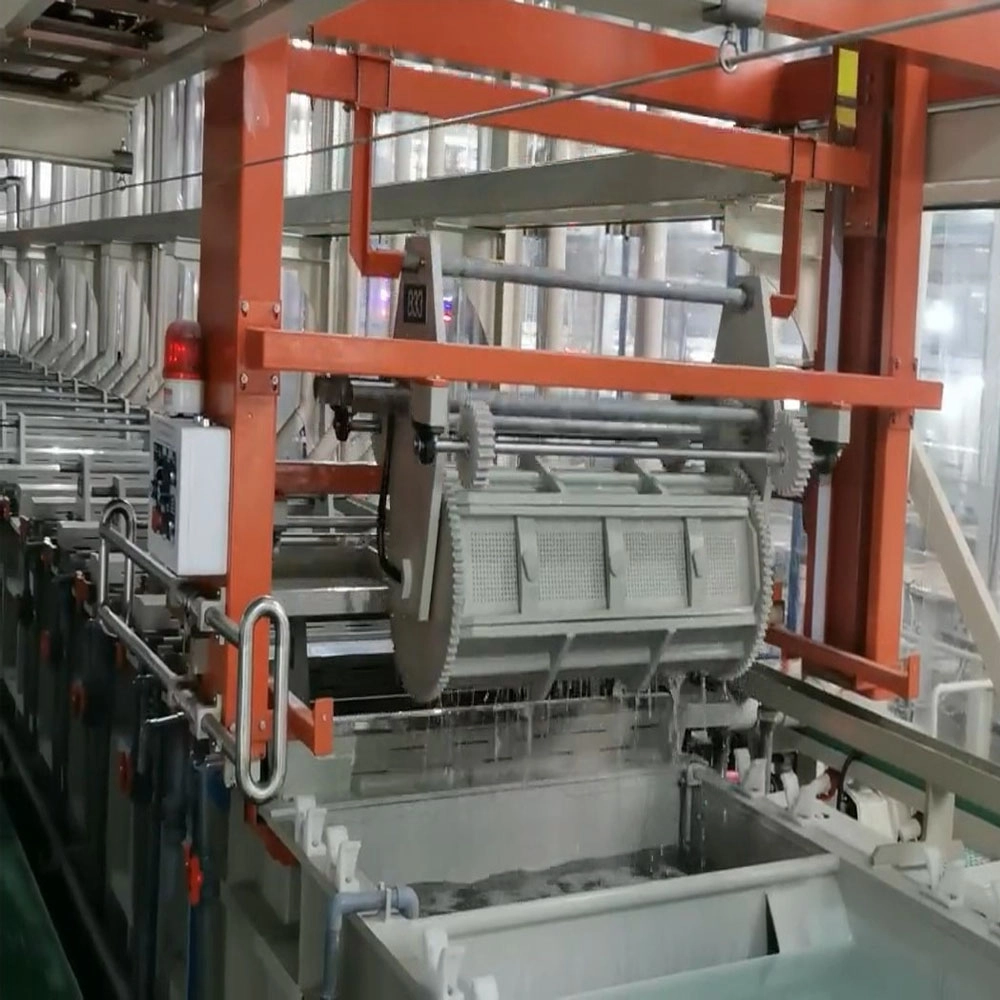
Barrel plating process
Generate QR code
-
Shipping & lead time: contact us for a quote. Packing and delivery terms depend on the product and destination.
Product description
Shipping & Return
A complete barrel plating line in nine steps — from pre-treatment through copper, nickel, gunmetal, chrome and gold to the final sealing and inspection stage. Use it as a reference when you plan the tank sequence, the barrel loading and the quality gates for zinc-alloy and iron hardware such as zipper sliders, dog hooks and bag fittings.
Step 1 — Pre-treatment (polishing, degreasing, acid pickling, activation, barrel change)
Pre-plating preparation. It secures coating adhesion, levelling and cleanliness, and it is the core precondition for plating quality.
Core process
- Loading → load the parts into the polishing / burnishing barrel (no conductivity)
- Polishing / burnishing: deburring, edge rounding, levelling
- Screen the parts and clear the media → transfer to the transfer crate
- Chemical degreasing → electrolytic degreasing (removes wax and oil)
- Acid pickling to remove rust → multi-stage rinsing
- Activation → deionised water rinse (final rinse before plating)
- [Key switch-over] load the work into the plating barrel (with conductive core)
Tanks and equipment
Polishing / burnishing barrel, transfer crate, degreasing tank, pickling tank, activation tank, DI water rinse tank, plating barrel
Key quality control points
- No polishing wax, no oil, no oxide scale left on the parts
- Rinsing is thorough, no drag-in contamination between tanks
- Correct barrel load, good conductivity
Typical parts
Every small part that needs barrel plating: zipper sliders, dog hooks, screws, snap clips, decorative hardware
Step 2 — Alkali copper strike
A strike layer with excellent coverage that improves the bond between the substrate and the deposits that follow.
Core process
- Plating barrel into the alkali copper tank
- Energise and deposit the alkali copper strike
- Recovery rinse → transfer in DI water
Tanks and equipment
Alkali copper plating tank, plating barrel, rectifier and busbar system, circulation filtration
Key quality control points
- Even thickness, no missed areas, no burning
- Current, pH and temperature held stable
Typical parts
Strike layer for iron and zinc-alloy hardware
Step 3 — Acid copper
Bright acid copper plating. It fills fine lines and improves surface brightness and levelling.
Core process
- Plating barrel into the acid copper tank
- Control current, temperature and barrel rotation speed
- Multi-stage rinsing to prevent drag-out
Tanks and equipment
Bright acid copper tank, plating barrel, temperature control system
Key quality control points
- Mirror-like finish, no pitting, no pin-holes
- Good levelling, fine scratches covered
Typical parts
High-end visible parts: zipper sliders, bag hardware buckles, decorative hardware
Step 4 — Nickel / tin deposit
Nickel: corrosion protection, wear resistance and barrier layer. Tin: solderable, soft protection, anti-tarnish.
Core process
- Plating barrel into the nickel tank (bright nickel or satin nickel) or the tin tank
- Control time and current to reach the required thickness
- Rinse before the next process step
Tanks and equipment
Nickel / tin plating tank, plating barrel, filter
Key quality control points
- Thickness on specification, corrosion resistant, no blistering
- Even colour, no darkening and no cloudiness
Typical parts
Hardware fasteners, small electronic parts, parts that must resist wear or corrosion
Step 5 — Gunmetal plating
Decorative alloy deposit (nickel-cobalt system) in gun-black / matte grey - the mainstream colour family for high-end bag hardware.
Core process
- Plating barrel into the gunmetal tank
- Electro-colour the parts and keep the shade even
- Rinse and anti-tarnish treatment
Tanks and equipment
Gunmetal plating tank, plating barrel, temperature control equipment
Key quality control points
- Consistent shade, no yellowing, no cloudiness
- Good adhesion, no colour loss
Typical parts
Zipper sliders, dog hooks, high-end apparel hardware
Step 6 — Chrome plating
Decorative top chrome: high brightness, high hardness, wear resistant, fingerprint resistant and strongly corrosion resistant.
Core process
- Plating barrel into the decorative chrome tank
- Short energising time for a thin chrome deposit
- Fast take-out and thorough rinsing
Tanks and equipment
Decorative chrome tank, plating barrel, ventilation system
Key quality control points
- Even brightness, no chrome peeling, no crazing
- No exposed base metal, no haze
Typical parts
Exposed bright decorative parts and high-end hardware buckles
Step 7 — Gold plating
High-end decoration plus electrical contact function: anti-tarnish, corrosion resistant, premium colour.
Core process
- Plating barrel into the gold plating tank
- Control time for flash gold or heavy gold as required
- DI water rinse and anti-oxidation treatment
Tanks and equipment
Gold plating tank, plating barrel, DI water system
Key quality control points
- True colour, even thickness, no exposed base metal
- Anti-tarnish, no darkening
Typical parts
High-end jewellery, precision electronics, premium hardware
Step 8 — Other plating colours (custom colour families)
Customised appearance for customers, with a wide choice of colour families.
Colour families / process
- Pearl nickel, pearl-tone finishes and the matte series
- Antique bronze, red copper and antique finishes
- Two-tone plating and electrocoat colouring
- Process tailored to the customer colour card
Tanks and equipment
Dedicated tank for the colour family, plating barrel
Key quality control points
- Colour match, batch-to-batch stability, full traceability
Typical parts
Branded custom hardware and differentiated appearance parts
Step 9 — Post-treatment
Protection, stabilisation, drying and inspection after plating, so the finished part is corrosion resistant, presentable and to specification.
Core process
- Multi-stage DI water rinsing (prevents residue, whitening and white rust)
- Passivation / sealing (improves corrosion resistance, protects colour, prevents tarnishing)
- Hot-air drying (dewatering to prevent rust)
- Unload the parts from the plating barrel
- Full inspection: appearance, thickness, salt spray, adhesion
Tanks and equipment
Rinse tanks, sealing tank, drying oven, plating barrel, inspection bench
Key quality control points
- Completely dry, no water marks, no white rust
- Even sealing, salt-spray result on specification
- Consistent appearance, no rejects
Typical parts
Final treatment for every barrel-plated part
Shipping cost is based on weight. Just add products to your cart and use the Shipping Calculator to see the shipping price.We want you to be 100% satisfied with your purchase. Items can be returned or exchanged within 30 days of delivery.
Specifying Barrel plating process for your line
Four details decide whether this machine fits your line. Send them and we reply with a working proposal instead of a price list.
- Part and process: what you plate or paint, material, typical size.
- Output: parts per hour, shifts per day.
- Spec: coating thickness, colour standard, acceptance tests.
- Site: floor space, power supply, water and wastewater limits.
| What you send | What you get back |
|---|---|
| Part drawing or sample | Compatibility check and recommended settings |
| Output target per shift | Capacity, tank or rack count, manpower |
| Finish spec with tolerance | Control points and acceptance tests |
| Site conditions (power, water, space) | Layout proposal and utility requirements |
Buying questions we answer most
Can this machine be built for our voltage and local parts?
Yes. Voltage, plug type, rectifier rating, tank dimensions and rack design are built to order. Send the site conditions with the enquiry.
What installation support is included?
Layout drawing before shipment, remote commissioning support, and on-site installation on request. Operator training is part of the standard scope.
What are the spare parts and wear items?
Pumps, filter elements, contacts, seals and drive belts. A recommended first-year spare kit is quoted with the machine so production does not stop for a consumable.
What is the lead time and shipping method?
Typically 25-45 days after deposit for standard equipment, longer for custom lines. Sea freight in export packing; wooden case dimensions and weight are provided before booking.
Can we see it running before buying?
Yes. Factory video walk-through or an on-site visit, and if you send sample parts we run them on a comparable line and return them with a process report.
Put Barrel plating process into a process
- Process overview - how each stage connects
- Plating workshop - rack and barrel line layout
- Painting workshop - spray, cure and colour control
- Product overview - what else the line needs