Wax remove after polishing
This is the "Polishing Wax Removal (Dewaxing) Operations Manual".
The Challenge: Polishing wax is a mixture of Grease (Stearic Acid/Paraffin) and Abrasive Powder (Aluminum Oxide). During high-speed buffing, the heat melts this mixture, baking it into the deep corners of logos and screw holes.
The Risk: If you plate over wax, the plating will blister or leave white "unplated" dots.
Here is the comparison and the Master’s Standard for the Ultrasonic Dewaxing Line using the [QLQ System].
🧼 Wax Removal Masterplan: TCE vs. Ultrasonic
Part I: The "Old School" Method: TCE Vapor Degreasing
You mentioned you have a fully automatic TCE Machine. Here is the brief summary.
Equipment: Tri-chloro-ethylene (TCE) Vapor Degreaser.
The Process:
Boiling Sump: Liquid TCE boils at 87°C.
Vapor Zone: A cloud of heavy solvent vapor fills the tank.
Condensation: Cold parts enter the vapor. Vapor condenses on the metal, dissolving the wax grease instantly. The dirty liquid drips off.
Spray/Dip: High-pressure spray removes the abrasive powder.
✅ Pros: Extremely fast (2 mins), Parts come out dry, dissolve heavy grease easily.
❌ Cons:
Health Hazard: TCE is carcinogenic (Cancer risk).
Environmental: Highly regulated/banned in many regions.
Cost: Solvent is expensive and evaporates.
Defect: It removes the grease well, but sometimes leaves the dry abrasive powder stuck in the hole.
Part II: The "Modern" Standard: Ultrasonic Dewaxing (QLQ System)
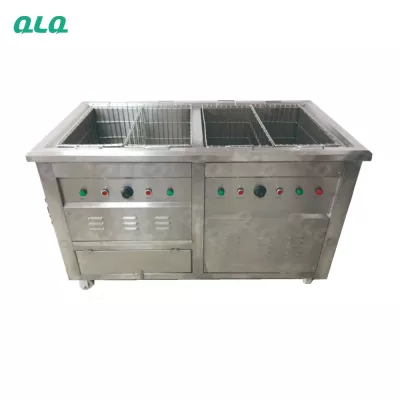
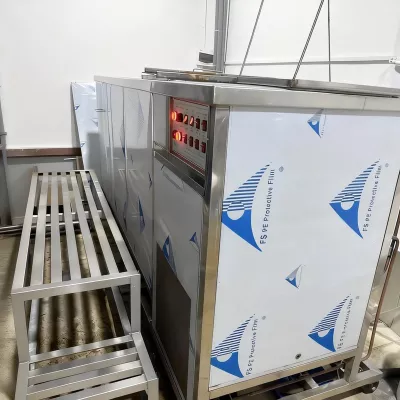
This is the preferred method for Zinc/Brass Rack Plating. It is water-based, safer, and effectively removes solid particles.
Goal: 100% Removal of "Rock Hard" impacted wax from logos.
Mechanism: Saponification (Chemical turns grease to soap) + Cavitation (Sound waves blast dirt off).
1. Tank & Equipment Configuration
| Parameter | Specification | The Master's Standard |
| Tank Material | SUS 304/316 | Double-walled with Insulation (Save energy). |
| Transducers | Bottom + Side | Side-Mount is Critical. Bottom-only gets blocked by the rack. |
| Frequency | 28kHz vs 40kHz | 28 kHz (Stronger power for heavy wax). |
| Power Density | Watts/Liter | > 15 Watts/Liter (High Power). |
| Heating | Capacity | Must heat to 80°C in < 45 mins. |
| Oil Skimmer | Mandatory | Overflow Weir. Wax floats. You must skim it off continuously. |
2. The Chemical Recipe (QLQ System)
Standard Make-up for 1,000 Liters.
| Chemical | Concentration | Function |
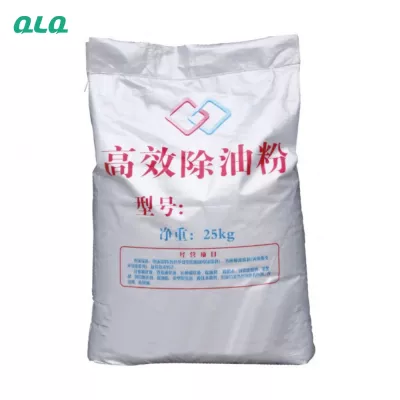
| [QLQ] Wax Remover Powder | 50 – 80 g/L | Alkaline Builder. Saponifies the fatty acids in the wax. |
| [QLQ] Penetrant Additive | 5 – 10 ml/L | Surfactant. Lowers surface tension to let water enter tiny holes. |
| [QLQ] Emulsifier | 3 – 5 ml/L | Keeps the removed oil suspended in water (prevents re-deposition). |
3. Operating Parameters (The Cockpit)
Temperature: 70°C – 80°C.
Why? Most polishing waxes melt at 60°C. You must be above the melting point. Cold ultrasonic does nothing to wax.
Time: 5 – 10 Minutes.
Filtration: Continuous Cycle.
Rack Movement: Vertical Agitation (Up/Down).
Why? Helps dislodge trapped air bubbles from blind holes so the solution can enter.
Part III: The Process Workflow (SOP)
Step 1: Pre-Soak (The Softener)
Action: Dip racks in a hot (80°C) static tank with [QLQ] Wax Remover for 5 minutes.
Goal: Soften the "burned" wax. No ultrasonic needed here. Saves the main tank from getting too dirty.
Step 2: Main Ultrasonic Clean (The Blaster)
Action: Submerge in the Ultrasonic Tank.
Rule: Do not overload the rack.
Physics: Sound waves travel in straight lines. If part A hides part B, part B will not get cleaned (Shadowing effect).
Spacing: Leave 1-2 cm between parts.
Step 3: Hot Rinse (The Emulsion Keeper)
Action: Rinse in 60°C Hot Water.
Critical: NEVER go from Hot Ultrasonic $\rightarrow$ Cold Rinse directly.
Why? Thermal Shock. The melted wax remaining on the surface will instantly freeze and harden again in cold water. You must rinse it away while it is hot and liquid.
Step 4: Electrolytic Degreasing (The Final Polish)
Action: Anodic/Cathodic Cleaning (as per Plating Manual).
Goal: Remove the thin molecular film left by the ultrasonic soap.
Part IV: Master's Troubleshooting & Tricks
| Defect | Visual Symptom | Root Cause | The Master's Fix |
| White Residue | White dots inside logo letters. | Wax Packing. Polisher used too much pressure. | 1. Increase Ultrasonic Power (28kHz). 2. Add [QLQ] Penetrant. 3. Manual Spray Wand before racking. |
| Oil Film | Water breaks on the surface. | Saturated Solution. | The chemical is "full" of oil. Dump part of the bath or Skim the surface better. |
| Dark/Etched Zinc | Surface looks dull/grey. | 1. pH too High. 2. Time too Long. | 1. Lower concentration. 2. Reduce time to 3 mins. Zinc dissolves in strong alkali. |
| Re-Deposition | Parts have "scum" line on them. | Dirty Surface. | You are lifting the clean rack through a layer of floating oil. Turn on the Overflow Pump before lifting. |
Part V: Maintenance Checklist
Daily:
Skim the Surface: Before production starts, skim off the solid wax "cake" floating on top.
Check Temperature: Ensure it is > 70°C.
Weekly:
Dump and Refill: Wax removal tanks get dirty fast. Do not save money here. A dirty cleaning tank contaminates the entire plating line.
Clean Transducers: Sludge settles on the bottom. If the bottom is covered in mud, the sound waves cannot escape. Clean the tank floor.
🌟 Featured Album: The "Sonic Boom" Series
Description for the Blog/Guide Album:
🔊 The "Sonic Boom" Album: Mastering Ultrasonic Wax Removal
Polishing wax is the #1 enemy of adhesion. If you can't get it out of the logo, you can't plate the product. This album compares the Old School TCE method with the Modern Ultrasonic technique.
What you will master:
🌡️ The 70°C Rule: Why running your ultrasonic tank at 50°C is a waste of electricity, and the science of "Melting Point" cleaning.
📡 Frequency Tuning: When to use 28kHz (Brute Force) for heavy belt buckles vs. 40kHz (Gentle Touch) for delicate jewelry.
🚿 The "Hot Rinse" Secret: The most common mistake in the industry: Shocking hot parts in cold water. Learn why a Hot Rinse saves your batch.
🧴 Chemistry Class: Understanding Saponification—how to turn the grease on your zipper pull into soap that washes itself away.