
Rack Maintenance
This is the "Plating Rack Maintenance & Stripping Operations Manual".
The "Invisible Thief": A dirty rack is the #1 cause of lost profits.
Electricity Thief: The "trees" (buildup) on the hooks steal up to 30% of your rectifier current.
Contamination: The buildup traps chemicals (Cyanide, Acid) and carries them into the next tank, killing your bath balance.
Poor Contact: Dirty hooks cause "arcing" (sparking) and burning, leading to rejected parts.
You mentioned you are currently using Concentrated Hydrochloric Acid (HCl). While common because it is cheap, it is dangerous to the rack life if not controlled.
Here is the Master’s Standard for managing this process safely and effectively.
🔧 Plating Rack Maintenance & Stripping Manual
Target: Stainless Steel or Copper Tipped Racks (Coated in Plastisol).
Goal: Clean metallic contact, Intact insulation, Zero Cross-Contamination.
Current Method: Immersion Stripping (Concentrated HCl).
Part I: The Stripping Line Setup (The "Acid Room")
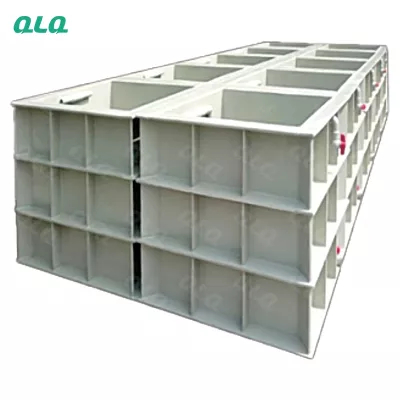
HCl fumes are highly corrosive. This area must be isolated from the main plating line.
Tank Material: PP (Polypropylene) or PVC. (Stainless steel tanks will dissolve).
Ventilation: Lateral Exhaust (Lip Extraction) is mandatory.
Risk: HCl fumes rust every piece of steel in the factory (cranes, roof beams) within months.
Location: Ideally outdoors or in a sealed "Acid Room" with a Scrubber tower.
Part II: The Chemical Formula (HCl Method)
Using pure HCl is slow for Copper/Nickel. We accelerate it or manage the time carefully.
| Component | Concentration | Function |
| Hydrochloric Acid (HCl) | 30% - 37% (Industrial) | Dissolves Zinc instantly. Loosens Nickel/Copper. |
| [QLQ] Inhibitor | 1 – 3 ml/L | CRITICAL. Protects the steel rack tip from being eaten by the acid. |
| Water | 0% | Use undiluted for maximum speed. |
The Chemistry Reality:
Zinc Die-cast residue: Dissolves instantly in HCl.
Copper/Nickel Buildup: HCl does not dissolve Copper/Nickel fast. It mostly attacks the bond between the buildup and the hook, allowing you to hammer it off.
Warning: HCl aggressively attacks Stainless Steel (304/316) rack tips. If you soak too long, the tips become thin and brittle.
Part III: The Operations Workflow (SOP)
Step 1: Inspection & Sorting
Frequency: Inspect every time the rack completes a cycle.
Criteria:
Light Build-up: reuse.
Heavy Build-up (> 1mm): Send to stripping.
Damaged Coating: If the green PVC coating is sliced/cracked, set aside for repair. Acid will enter the crack and eat the copper core.
Step 2: The Acid Soak (Stripping)
Action: Submerge the tips only (or the whole rack if needed) into the HCl Tank.
Time:
Zinc Residue: 1 – 3 Minutes.
Copper/Nickel (Loosening): 10 – 30 Minutes.
Monitoring: Watch for bubbles.
Violet Reaction: Zinc dissolving.
Green Reaction: Copper/Nickel dissolving.
Step 3: The Rinse (The "Stop" Button)
Action: Remove rack and rinse immediately in a Counter-Flow Rinse.
Neutralization: Dip in Sodium Carbonate (Soda Ash) solution (30 g/L) for 1 minute.
Why? This neutralizes the acid trapped in the crevices. If you skip this, the rack will "sweat" acid later and ruin your plating bath.
Step 4: Mechanical Removal (The "Knock")
For thick Copper/Nickel trees, the acid only loosens the grip.
Action: Use a Rubber Mallet (Hammer). Gently tap the tips. The heavy plating crust should crack and fall off like a shell.
Warning: Do not use a metal hammer. You will bend the contact tips.
Step 5: Tip Polishing (Contact Renewal)
After stripping, the stainless steel tip is often dark/passive.
Action: Quickly sand the contact point with 400 Grit Sandpaper or a Scotch-Brite pad.
Goal: Shiny metal for good electrical conductivity.
Part IV: Rack Repair (Insulation Maintenance)
A clean hook is useless if the rack coating is broken.
The "Green Paint" Fix:
If the PVC coating has a cut or pinhole:
Dry the rack completely.
Apply [QLQ] Rack Stop-Off Lacquer (Air Dry) or Plastisol Patch.
Allow to cure 24 hours.
Why it matters:
If solution enters the rack, it corrodes the Copper Spine.
Result: The rack breaks in half while carrying a heavy load of zipper pulls.
Part V: Safety Precautions (HCl Hazard)
⚠️ DANGER:
Fumes: Concentrated HCl releases white acidic fumes.
Rule: Operators must wear Gas Masks (Acid Cartridge) and Faceshields.
Exothermic Reaction:
If you strip a lot of Zinc at once, the tank will boil and spit acid.
Action: Strip small batches.
The "Chlorine Gas" Trap:
NEVER add Nitric Acid or Oxidizers (Peroxide) to the HCl tank.
Result: This creates Aqua Regia and Chlorine Gas. It will dissolve your racks and choke the operator.
Part VI: Master’s Experience & Recommendations
1. The "Nitric" Upgrade (Better for SS Tips)
While you use HCl now, the Professional Standard for Stainless Steel tips is 50% Nitric Acid.
Why? Nitric Acid dissolves Copper and Nickel fast but does not attack Stainless Steel.
Benefit: Your racks last 5 years instead of 1 year.
Cost: Nitric is more expensive than HCl, but you save on buying new racks.
2. The Electrolytic Strip (The Best Method)
Instead of chemical soaking, use electricity.
Setup: A tank with [QLQ] Electrolytic Stripper Salt (Alkaline).
Action: Connect Rack to Anode (+).
Result: The buildup dissolves off in 5 minutes. No acid fumes. No damage to the rack coating.
3. The "Cost of Buildup" Data
Scenario: A rack has 1kg of copper buildup on the hooks.
Calculation: That 1kg of copper absorbed Electricity + Brightener + Copper Anodes.
Loss: You paid to plate the rack, not the zipper pull.
Rule: Stripping racks weekly saves 15% on your electricity bill.
🌟 Featured Album: The "Rack Resurrection" Series
Description for the Blog/Guide Album:
🔧 The "Rack Resurrection" Album: Extending the Life of Your Tooling
Your racks are the "hands" that hold your money. If they are dirty, broken, or corroded, your production stops. This album teaches you how to maintain them like a pro.
What you will master:
🧪 The HCl vs. Nitric Debate: Why your Stainless Steel hooks are snapping off, and why switching to Nitric Acid might save your tooling budget.
🔨 The "Tap Test": How to use a rubber mallet to check if the insulation coating has debonded (which hides dangerous trapped chemicals).
🎨 Patching 101: A video guide on how to repair cuts in the green PVC coating using [QLQ Stop-Off] so they don't peel further.
⚡ The "Arcing" Killer: How to sand your contact tips correctly to prevent that black "spark mark" that ruins good zipper pulls.
Sort
- Recommended
- Newest