
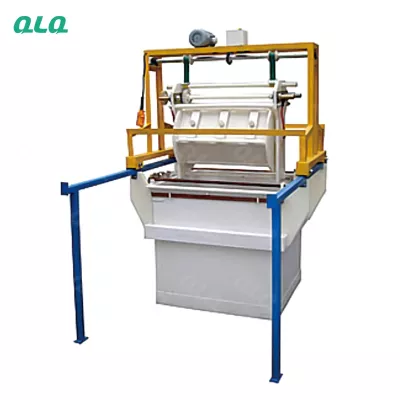
Nickel free plating in barrel
This is the "Barrel White Bronze (Copper-Tin-Zinc) Operations Manual".
In the industry, this finish is often called "White Copper-Tin" (白铜锡) or "Nickel-Free White".
The Mission: To look exactly like Bright Nickel/Chrome but contain Zero Nickel. This is mandatory for baby clothes, underwear, and high-end brands selling to Europe (Oeko-Tex Standard 100).
The Challenge: You are trying to plate three different metals (Copper, Tin, Zinc) at the same time in specific percentages (usually 55% Cu, 30% Sn, 15% Zn). If the temperature changes by 2°C, the color changes from "White" to "Yellow."
Here is the Master’s Standard for running this highly technical tank using the [QLQ System].
⚪ Barrel White Bronze Plating Manual (The Nickel-Free Standard)
Target: Zinc Alloy Zipper Pulls, Buttons (Baby/High-End).
Goal: Bright Silver-White Color (Like Chrome), 100% Nickel-Free.
Chemical Type: Cyanide-Stannate Alkaline Bath (Tri-Metal Alloy).
Part I: Tank Make-up Formula (The Recipe)
Because controlling 3 metals is difficult, we recommend using [QLQ] Pre-mixed Salts. However, here is the raw chemical basis for the Master.
Standard Make-up for 1,000 Liters (1 Ton):
| Chemical Component | Concentration | Amount (kg/1000L) | Function |
| Copper Cyanide (CuCN) | 10 – 15 g/L | 12 kg | The red component (Ductility). |
| Sodium Stannate (Na₂SnO₃) | 40 – 50 g/L | 45 kg | The white component (Brightness/Hardness). |
| Zinc Cyanide (Zn(CN)₂) | 1 – 2 g/L | 1.5 kg | The blueish-white component (Color tone). |
| Sodium Cyanide (NaCN) | 40 – 50 g/L | 45 kg | Dissolves Copper & Zinc. |
| Sodium Hydroxide (NaOH) | 10 – 15 g/L | 12 kg | Dissolves Tin (Essential for conductivity). |
| [QLQ] WB Make-up Agent | 20 – 30 ml/L | 25 Liters | Complexing agent to stabilize the alloy. |
| [QLQ] WB Brightener | 2 – 5 ml/L | 3 Liters | Provides the mirror shine. |
Target Alloy Ratio on Part: Cu 55% / Sn 30% / Zn 15%.
Color Logic:
Copper: Makes it Yellow/Pink.
Tin: Makes it Grey/White.
Zinc: Makes it Blue/Bright.
Part II: Operating Parameters (The Cockpit)
This tank is 10x more sensitive than standard Copper.
| Parameter | Range | The Master's Target |
| Temperature | 55°C – 65°C | 60°C ± 1°C (Use precise thermostat). |
| pH Value | > 13.0 | High Alkalinity is required for Tin. |
| Voltage | 4 V – 8 V | Lower than Copper. Too high = Burnt/Grey. |
| Current Density | 0.2 – 0.5 A/dm² | Low Current. (Slow plating). |
| Barrel Rotation | 6 – 8 RPM | Standard. |
| Plating Time | 30 – 45 mins | Target 3–5 microns. |
| Anodes | Inert | Carbon Graphite or Stainless Steel (316L). |
Part III: Operational Key Points (The "Secret Sauce")
1. The Anode Strategy (Inert System)
The Problem: You cannot use Alloy Anodes (Copper-Tin chunks) in a barrel tank because they dissolve unevenly. Copper dissolves fast, Tin dissolves slow. The bath goes out of balance instantly.
The Master's Rule: Use Inert Anodes (Graphite/SS).
Replenishment: You must add metal salts manually or via auto-dosing.
Daily: Add [QLQ] White Bronze Replenisher Syrup based on Ampere-Hours.
2. Temperature is Color
Scenario: The color is perfect at 60°C.
Drop to 55°C: Efficiency of Tin drops. Plating turns Yellow (High Copper).
Rise to 65°C: Efficiency of Tin rises. Plating turns Grey/White (High Tin).
Action: Your heater must have a circulation pump to ensure the whole tank is exactly the same temp.
3. Free Cyanide & Free Hydroxide Balance
Free NaCN: Controls the Copper.
Low CN: Roughness, Yellow color.
High CN: Blistering, Low efficiency.
Free NaOH: Controls the Tin.
Low OH: Tin precipitates as sludge (Stannous), causing dark rough plating.
High OH: Tin efficiency drops, color turns Yellow.
Part IV: Tank & Solution Maintenance Schedule
Daily Routine:
Color Pass (The "White Paper" Test):
Plate a sample barrel. Place the zipper pull on a sheet of bright white paper.
Comparison: It should look like Stainless Steel. If it looks like "Champagne" (Yellowish), add Sodium Stannate or [QLQ] Zinc Booster.
Add Brightener:
White Bronze brighteners break down fast at 60°C. Add small amounts every 2 hours.
Weekly Routine:
Titration (The Full Panel):
You must measure: Copper Metal, Tin Metal, Zinc Metal, Free Cyanide, Free Hydroxide, and Sodium Carbonate.
Note: This requires a competent Lab Technician. You cannot guess.
Oxidize the Tin (Stannite Removal):
Bivalent Tin ($Sn^{2+}$) is bad (causes darkness). We want Tetravalent Tin ($Sn^{4+}$).
Action: Add a small amount of Hydrogen Peroxide (H₂O₂) diluted in water if the solution turns dark/brown. This restores the clear straw color.
Monthly Routine:
Carbonate Freezing:
Like Cyanide Copper, this bath generates Carbonates. If Na₂CO₃ > 60 g/L, efficiency dies. Freeze it out.
Part V: Master’s Troubleshooting (Real Experience)
| Defect | Visual Symptom | Likely Cause | The Master's Fix |
| Yellow / Red Cast | Plating looks like pale gold. | 1. Temp too Low. 2. Low Tin/Zinc. 3. High Current. | 1. Check Heater (60°C). 2. Add Sodium Stannate. 3. Lower Voltage. |
| Grey / Dull | Plating looks like lead. | 1. Temp too High. 2. Low Copper. 3. Metallic Impurities (Lead). | 1. Cool down. 2. Add Copper Cyanide. 3. Add [QLQ] Purifier. |
| Roughness | Sandpaper feel. | 1. Stannite ($Sn^{2+}$) formation. 2. Low Free NaOH. | 1. Add Hydrogen Peroxide (carefully). 2. Add NaOH. |
| Cloudy / Haze | Not mirror bright. | 1. Low Brightener. 2. Organic Contamination. | 1. Add Brightener. 2. Carbon Treatment. |
| Blistering | Peeling off. | 1. Lead Impurity in Zinc base. 2. Poor Copper Strike. | 1. Dummy plate (low current). 2. Check Cyanide Copper tank. |
Part VI: Efficiency & Cost Control
1. The Cost of "White"
Reality: White Bronze chemistry is 3x more expensive than Nickel chemistry.
Master's Tip: Do not use White Bronze to build "thickness."
Wrong: 10 mins Cyanide Cu $\rightarrow$ 40 mins White Bronze. (Expensive).
Right: 30 mins Cyanide Cu $\rightarrow$ 15 mins Acid Cu (Leveling) $\rightarrow$ 5-10 mins White Bronze (Top coat only).
Note: Since White Bronze is the top layer, it determines the color and allergy safety. The layers underneath don't matter for allergies as long as they are sealed.
2. Drag-out Recovery
Value: The solution contains Copper, Tin, and Cyanide. It is expensive and toxic.
Action: Use a "Dead Tank" (Drag-out) immediately after plating. Use this liquid to top up the evaporation in the main tank.
🌟 Featured Album: The "Hypoallergenic Shield" Series
Description for the Blog/Guide Album:
🛡️ The "Hypoallergenic Shield" Album: Mastering Nickel-Free White Bronze
Exporting to Europe? If your zipper contains Nickel, it will be rejected at the border. White Bronze is the only solution, but it is the hardest tank to control. This album simplifies the "Tri-Metal" chaos.
What you will master:
🎨 The Color Triangle: A visual chart showing how Temp, Copper, and Tin affect the color. Learn to diagnose "Yellow" vs "Grey" instantly.
📉 The "Flash" Strategy: How to save 50% on chemical costs by using Acid Copper for leveling and using White Bronze only as a cosmetic "Flash" coating.
🧪 The Stannate Secret: Why your bath turns dark brown (Stannous Tin) and how to fix it with a capful of Peroxide.
🌡️ Thermostat Discipline: Why a $500 Precision Heater saves you $5,000 in rejected "Yellow" batches.
�� Pass the Oeko-Tex Test every time. Master White Bronze with this Guide!
Sort
- Recommended
- Newest