
Industrial gold plating
This is the "Zinc Alloy & Steel Real Gold Rack Plating Manual".
The Challenge: You are dealing with two completely different animals.
Zinc Alloy: Highly reactive, dissolves in acid, needs gentle handling.
Stainless Steel / Iron: Passive surface, needs aggressive activation (Strong Acid).
The Common Goal: Both require a perfect "Barrier Layer" before Gold. If you plate Gold directly onto Zinc or Steel, it will either peel immediately or disappear (diffuse) into the base metal within weeks.
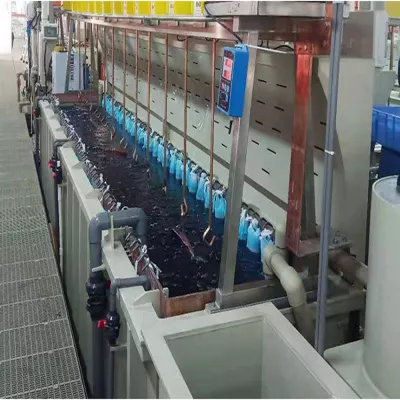
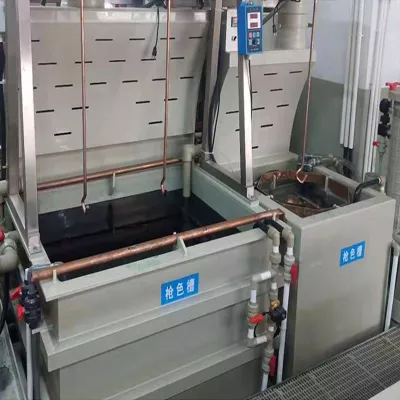
Here is the Master’s Standard for running a dual-substrate Gold Line using the [QLQ System].
👑 Real Gold Rack Plating Manual (Zinc & Steel Substrates)
Target: High-End Belt Buckles (Zinc), Bag Chains (Steel), Luxury Hardware.
Goal: 24K/18K Color, 48H Salt Spray, Class 0 Adhesion.
System: Acid Hard Gold (Cobalt Alloyed).
Part I: The "Layering Strategy" (The Architecture)
You cannot treat Zinc and Steel the same way. The foundation determines the adhesion.
Path A: Zinc Alloy (The "Gentle" Path)
Seal: Cyanide Copper (Thick > 8µm). Mandatory.
Level: Acid Copper (Bright leveling).
Barrier: Bright Nickel or White Bronze.
Finish: Real Gold.
Path B: Steel / Stainless Steel (The "Aggressive" Path)
Activate: Wood’s Nickel Strike (Strong Acid). Mandatory.
Level: Acid Copper (Optional) or Semi-Bright Nickel.
Barrier: Bright Nickel.
Finish: Real Gold.
Part II: The Critical "Strike" Tanks (The Adhesion Makers)
If Gold peels, it is 99% because of these tanks.
1. For Zinc: Cyanide Copper Strike
Purpose: To coat the active zinc so it doesn't dissolve in the acid tanks later.
Master's Rule: "Live Entry" (Hot Entry).
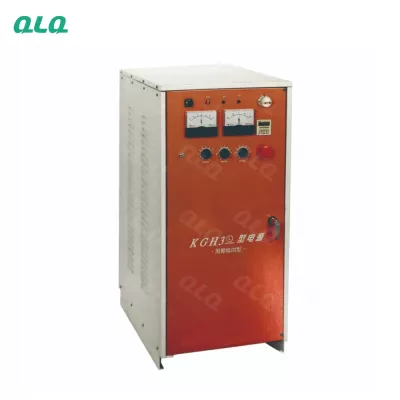
The Rectifier must be ON (3V) before the rack enters the liquid.
Thickness: Must be > 5 microns. If you see "White/Grey" spots after Acid Copper, your Cyanide Copper was too thin.
2. For Steel: Wood’s Nickel Strike (The "Super Glue")
Purpose: Stainless Steel has a passive oxide film. Normal plating won't stick. Wood's Nickel uses high acid to eat the oxide and deposit nickel simultaneously.
Formula:
Nickel Chloride: 240 g/L.
Hydrochloric Acid (HCl): 100 – 120 ml/L. (Very Strong Acid).
Process:
Time: 2 – 3 minutes.
Current: High (3 – 5 A/dm²).
Appearance: Matte, thin grey nickel layer.
Part III: The Gold Tank Formulation (Acid Hard Gold)
This formula works for BOTH Zinc (sealed) and Steel (activated).
Standard Make-up for 100 Liters:
| Chemical Component | Concentration | Function |
| Potassium Gold Cyanide (PGC) | 4 – 6 g/L (as Metal) | The Gold Source (68.3% Au). |
| Citrate/Phosphate Buffer | 80 – 100 g/L | Maintains Acid pH (4.0 - 4.5). |
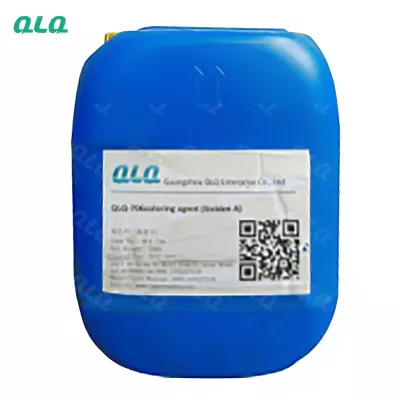
| [QLQ] Cobalt Brightener | 50 – 80 ppm | Hardener (140 HV) & Whitener (18K/24K). |
| [QLQ] Nickel Brightener | 50 – 80 ppm | Alternative Hardener (Paler Gold). |
| Conductive Salts | 50 g/L | Efficiency. |
Cost: A 4g/L bath = $300 USD per Liter roughly. Treat this liquid like liquid cash.
Part IV: Operating Parameters (The Cockpit)
| Parameter | Range | The Master's Target |
| Temperature | 35°C – 45°C | 40°C. (Stable color). |
| pH Value | 4.0 – 4.5 | 4.2. (Check daily). |
| Voltage | 2 V – 4 V | Low Voltage. Prevent burning. |
| Anodes | Platinized Titanium | Mesh type. Never use Stainless Steel (dissolves). |
| Agitation | Solution Flow | Filter Pump or Magnetic Stirrer. No Air. |
| Time | 20s – 3 mins | Depends on thickness (Flash vs. Micron). |
Part V: Operations Workflow (SOP)
Step 1: Pre-Treatment (Separate Lines)
Zinc Rack: Hot Soak $\rightarrow$ Ultrasonic $\rightarrow$ Cathodic Clean $\rightarrow$ Acid Salt Activate.
Steel Rack: Hot Soak $\rightarrow$ Anodic Clean $\rightarrow$ 50% HCl Dip $\rightarrow$ Wood's Nickel.
Step 2: Intermediate Plating (The Barrier)
Plate Bright Nickel or White Bronze (Nickel-Free).
Activation: Just before Gold plating, the Nickel surface must be activated.
Dip: 10% Sulfuric Acid (clean water).
Rinse: DI Water (Conductivity < 5 µS).
Why? If Nickel is passive (oxidized), the Gold will look "Cloudy" or peel.
Step 3: Gold Plating
Dip rack in Gold Bath.
Timer: Automatic.
Rectifier: Ramp up (Soft Start) to prevent burning tips.
Step 4: Recovery Rinsing (Save Money)
Drag-out 1 (Static): Gold concentration ~20% of main tank. Use to top up main tank.
Drag-out 2 (Static): Gold concentration ~2%. Send to Resin Recovery.
Hot Pure Water Rinse: Fast drying.
Part VI: Master’s Troubleshooting (Substrate Specific)
| Defect | Visual Appearance | Substrate | Root Cause & Master's Fix |
| Blistering | Bubbles forming. | Zinc | Failed Cyanide Copper. The acid copper attacked the zinc through pinholes in the barrier. Increase Cyanide Cu time. |
| Peeling | Sheet peeling. | Steel | Passive Surface. Wood's Nickel failed or HCl dip was too weak. Reactivate steel. |
| Red Spots | Tiny red rust dots. | Steel | Pinholes. The Nickel barrier is too thin. Steel is rusting under the gold. Plate Nickel > 10 mins. |
| Dark / Brown | Muddy Gold color. | Both | 1. Contamination. (Copper/Zinc dragged into Gold). 2. Temp too High (>50°C). |
| Cloudy | Haze under the gold. | Both | Passive Nickel. The rinse water before gold was dirty or the transfer time was too long. |
Part VII: Efficiency & Cost Control
1. The "Diffusion" Threat
Physics: Gold atoms love to mix with Copper atoms. If you plate Gold directly on Copper, the Gold will "disappear" (diffuse) into the Copper in 3 months, leaving a red stain.
The Fix: You MUST use a Nickel or White Bronze barrier.
Thickness: Barrier must be > 3 microns to stop diffusion.
2. Thickness Calibration (XRF)
Scenario: You quote 0.1 micron. You plate 0.15 micron.
Loss: You lose 50% profit.
Action: Use an X-Ray Fluorescence (XRF) machine daily to check the "Deposit Rate" (Microns per Minute). As the gold concentration drops, the rate slows down. You must adjust the timer.
3. Rack Maintenance
Gold Theft: If your rack tips have heavy nickel buildup, the Gold will plate onto the rack, not the buckle.
Action: Strip racks frequently (Nitric Acid). Mask the racks well with [QLQ] Green Plastisol.
🌟 Featured Album: The "Iron & Zinc" Gold Series
Description for the Blog/Guide Album:
👑 The "Iron & Zinc" Album: Real Gold Plating on Difficult Metals
Plating Gold on Copper is easy. Plating Gold on porous Zinc or hard Stainless Steel is an art. This album covers the specific "Barrier Strategies" needed for success.
What you will master:
⚓ Wood's Nickel: The recipe for the high-acid strike bath that acts as the "Super Glue" for Stainless Steel accessories.
⚡ Live Entry SOP: Why entering the Cyanide Copper tank "Hot" (with voltage on) is the only way to stop Zinc Alloy from blistering.
🛑 The Diffusion Block: Why Gold disappears into Copper over time, and exactly how many microns of White Bronze you need to stop it.
💰 The "Drag-Out" Bank: How to design a 3-stage rinse system that recovers $2,000 of gold per month from your wash water.
Sort
- Recommended
- Newest