
Electrophoresis
This is the "Rack Electrophoretic Lacquer (E-Coat) Operations Manual".
The Definition: E-Coat (Cataphoretic Lacquer) is the "Ferrari" of lacquering. It uses electricity to deposit a uniform polymer film onto the metal, covering every corner and screw hole evenly.
The Mission: To produce a finish that feels like ceramic, resists 48 hours of salt spray, and has Zero Drip Marks.
Here is the Master’s Standard for running a High-End Rack E-Coat line using the [QLQ System].
⚡ Rack Electrophoretic Lacquer (E-Coat) Manual
Target: Luxury Buckles, Bag Locks, Zipper Pulls.
Goal: Uniform Thickness (10-15 microns), High Hardness (4H), Crystal Clear or Deep Black.
Type: Cathodic Acrylic/Polyurethane E-Coat.
Part I: Tank Make-up Formula (The Chemistry)
E-Coat is not a simple mix. It is a Colloidal Suspension. You generally buy a "Concentrate" and dilute it with DI Water.
Standard Make-up for 1,000 Liters (1 Ton):
| Component | Amount | Function |
| DI Water (Conductivity < 5µS) | 600 – 700 Liters | The Carrier. Must be ultra-pure. |
| [QLQ] Clear Resin (Binder) | 300 – 400 kg | The main plastic film former. |
| [QLQ] Color Paste (Pigment) | 10 – 50 kg | Optional. For Black/Gold/Gunmetal E-Coat. |
| Solvent (High/Low Boiling) | 20 – 30 Liters | Controls film smoothness ("Flow"). |
| Acid Catalyst (Acetic/Lactic) | As needed | Controls pH and stability. |
Key Metrics (The "Blood Test"):
Solid Content: 10% – 15%. (Too low = Thin/Pitting; Too high = Orange Peel).
Conductivity: 600 – 1000 µS/cm.
MEQ (Acid Value): 30 – 40.
Part II: Operating Parameters (The Cockpit)
Unlike plating, E-Coat is self-limiting (insulating). Once coated, it stops conducting.
| Parameter | Range | The Master's Target |
| Temperature | 26°C – 32°C | 29°C ± 1°C. (Strict Control required). |
| pH Value | 5.5 – 6.5 | 6.0. (Acidic). |
| Voltage | 20 V – 100 V | Soft Start Ramp. (See Part III). |
| Time | 30 – 60 Seconds | 45 Seconds. |
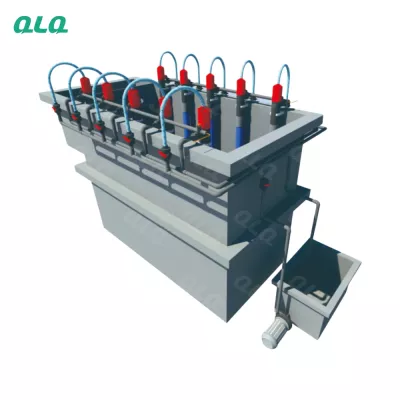
| Anode System | SS 316 Plates | Must use Anolyte Cells (Membrane Boxes). |
| Circulation | High Flow | 4-6 Turnovers/Hour. (Prevents settling). |
Part III: The Process Workflow (SOP)
Step 1: Pre-Treatment (The Clean Base)
Parts must be Plated $\rightarrow$ Rinsed $\rightarrow$ Passivated (Chrome-Free) $\rightarrow$ Pure DI Rinse.
Critical: Conductivity of the final rinse water falling into the E-Coat tank must be < 20 µS. If dirty water enters, the E-Coat bath dies.
Step 2: E-Coating (The "Soft Start" Ramp)
The Error: Turning on 60V instantly.
The Result: Hydrogen gas bursts out of the part, causing Pinholes.
The Master's Ramp:
0 - 10 Sec: 0V $\rightarrow$ 30V.
10 - 40 Sec: Hold at 40V - 60V (Build thickness).
40 - 45 Sec: Drop to 0V.
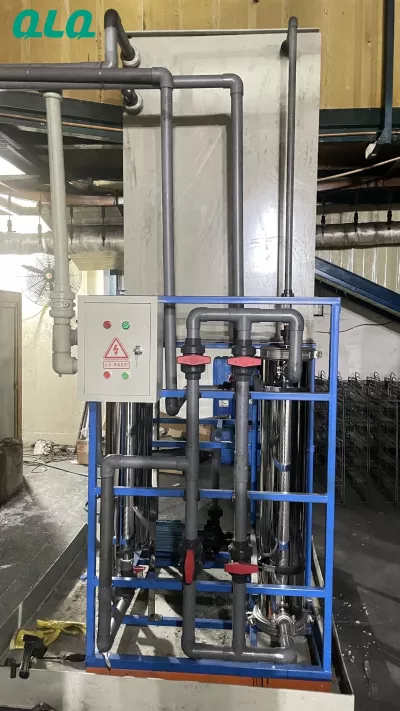
Step 3: Ultra-Filtration (UF) Rinsing (The Recycle Loop)
You cannot rinse E-Coat with water immediately. You must use UF Permeate (The clear liquid extracted from the paint).
UF Rinse 1: Washes off excess paint. Flows back to Main Tank. (Saves 95% of paint).
UF Rinse 2: Final clean.
Pure DI Rinse: Final spray to remove any sticky residue.
Step 4: Dehydration (Air Knife)
Action: High-pressure clean air blows off water droplets.
Goal: Prevent "Water Spots" during baking.
Step 5: Curing (The Oven)
Pre-Heat (Flash-off): 10 mins @ 80°C. (Solvents evaporate).
Full Cure: 30 mins @ 160°C (Clear) or 140°C (Low Temp).
Note: If the temp is too low, the film will be soft (Fail Acetone Rub Test).
Part IV: Operational Key Points (The "Secret Sauce")
1. The Anolyte Balance (The Kidney)
The Problem: As you coat parts, the bath generates excess Acid. If pH drops too low (< 5.0), the resin dissolves and the film becomes rough.
The Fix: Anolyte Cells. These are membrane boxes around the Anodes.
Maintenance: You must flush the Anolyte system daily and verify the conductivity of the anolyte fluid. This "kidney" removes the bad acid.
2. Racking Angle (The "Tear Drop")
The Issue: E-Coat is liquid. Gravity pulls it down. It forms a fat drop at the bottom of the buckle.
The Fix: Rack parts at a tilted angle (Diamond shape) so the liquid drains to a sharp point, not a flat edge.
Electrostatic Detearing: Some high-end lines use a high-voltage grid after the tank to "shake off" the drop.
3. Solvent Balance (Orange Peel)
The Physics: The solvent helps the plastic particles "melt" and flow together in the oven.
Low Solvent: Rough, sand-like finish.
High Solvent: Orange peel, sagging.
Action: Add [QLQ] Leveling Solvent based on Refractometer readings (Brix).
Part V: Master’s Troubleshooting (Real Experience)
| Defect | Visual Appearance | Root Cause | The Master's Fix |
| Pinholes / Craters | Tiny holes in the coating. | 1. Voltage too high (Gas burst). 2. Silicon Contamination. 3. pH too low. | 1. Use Soft Start Ramp. 2. Add [QLQ] Anti-Crater Additive. 3. Check Anolyte system. |
| Orange Peel | Wavy texture. | 1. Solid Content too High. 2. Voltage too high. 3. Drying too fast. | 1. Add DI Water. 2. Lower Voltage. 3. Add High-Boiling Solvent. |
| Water Spots | White rings after baking. | Dirty Final Rinse. | Check DI Water (< 5 µS). Blow dry effectively. |
| Yellowing | Clear coat looks gold/brown. | 1. Oven Temp too High. 2. Over-curing. | Calibrate Oven. Keep < 165°C. |
| Poor Adhesion | Peels off like skin. | Passivation Failure. | The underlying plating was passive. Reactivate before E-Coat. |
| Roughness | Sandpaper feel. | Bath Instability. | pH is too low or dirt in tank. Filter with 10-micron bag. |
Part VI: Efficiency & Cost Control
1. The UF Recycling Savings
Without UF: You drag out 30% of your expensive paint into the waste water.
With UF: You recover 98% of the paint.
Rule: The UF membrane is expensive. Never let it dry out. Clean it weekly to prevent clogging.
2. Energy Management
E-Coat ovens run at 160°C.
Tip: Ensure the oven is Fully Loaded. A half-empty oven doubles the cost per piece.
3. "Matte" vs "Gloss"
Inventory: Do not try to convert a Gloss Tank to Matte by adding powder. It ruins the tank.
Strategy: Have two small tanks (1 Gloss, 1 Matte) on a sliding rail, rather than one giant tank.
🌟 Featured Album: The "Liquid Ceramic" Series
Description for the Blog/Guide Album:
⚡ The "Liquid Ceramic" Album: Mastering E-Coat (Electrophoresis)
E-Coat is the standard for "Apple-Quality" finishing. It is harder than lacquer, thinner than powder, and smoother than spray. But it requires a disciplined laboratory mindset.
What you will master:
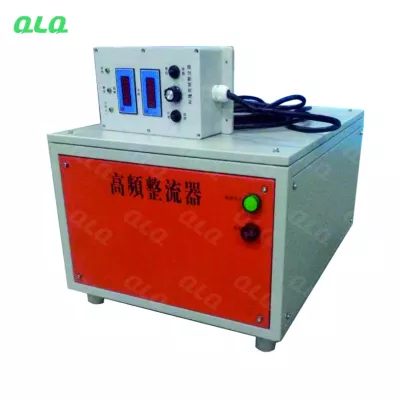
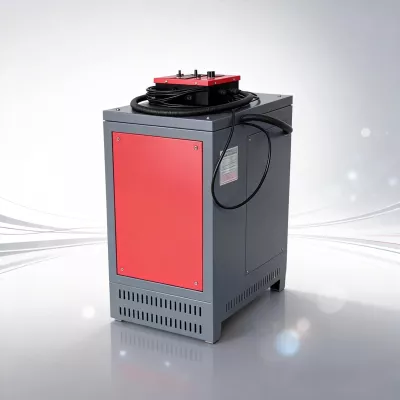
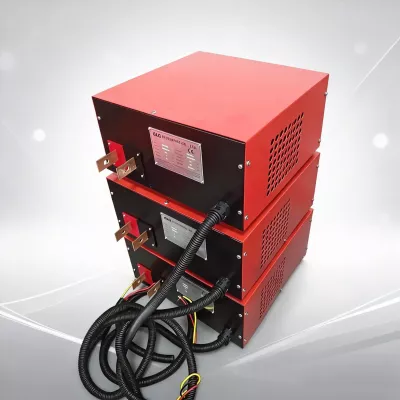
🎹 The "Soft Start" Curve: A programming guide for your Rectifier to eliminate Hydrogen Pinholes by slowly ramping the voltage.
🧬 The Anolyte Kidney: Understanding why your pH keeps dropping and how to flush your Anode Cells to keep the bath healthy.
💧 The UF Loop: How the Ultra-Filtration system saves you $50,000 a year in paint costs, and how to clean the membranes without destroying them.
🔥 The "Yellowing" Limit: A temperature chart showing exactly when Clear E-Coat starts to burn, ensuring your Silver finishes stay White.
Sort
- Recommended
- Newest