
Alkaline copper plating in Barrel
This is the "Cyanide Copper Strike (Barrel) Operations Manual".
For Zinc Alloy die-castings, the Cyanide Copper Strike is the single most important tank in the entire line.
The Mission: To create the initial bond. If this layer fails, the Nickel and Gold on top will peel off, no matter how good they are.
The Challenge: Zinc dissolves in acid. Cyanide is the only chemistry that can plate copper onto zinc without destroying the base metal.
Here is the Master’s Standard for running this critical tank using the [QLQ System].
⚡ Cyanide Copper Strike Manual (Barrel Plating)
Target: Zinc Alloy Zipper Pulls, Buckles, Buttons.
Goal: 100% Adhesion (Pass Bend Test), Semi-Bright Pinkish-Red Color.
Chemical Type: Rochelle Salt Cyanide Copper (High Efficiency).
Part I: Tank Make-up Formula (The Recipe)
Standard Make-up for 1,000 Liters (1 Ton).
| Chemical Component | Concentration (g/L) | Amount (kg/1000L) | Function |
| Copper Cyanide (CuCN) | 40 – 50 g/L | 45 kg | Provides Metal Ions. |
| Sodium Cyanide (NaCN) | 55 – 65 g/L | 60 kg | Dissolves Copper, Complexing Agent. |
| Sodium Hydroxide (NaOH) | 10 – 15 g/L | 12 kg | Conductive salt, Increases pH. |
| Rochelle Salt | 40 – 60 g/L | 50 kg | Anode corrosion aid, Grain Refiner. |
| [QLQ] Copper Wetting Agent | 1 – 2 ml/L | 1.5 Liters | Reduces surface tension (Anti-Pitting). |
| [QLQ] Carbonate Remover | As Needed | -- | To precipitate carbonates (Maintenance). |
Critical Calculation (Free Cyanide):
You generally need ~15 g/L of Free Cyanide.
Formula:
Free NaCN = Total NaCN - (CuCN × 1.1)
Part II: Operating Parameters (The Cockpit)
| Parameter | Range | The Master's Target |
| Temperature | 50°C – 60°C | 55°C (Too cold = Blistering; Too hot = Carbonates). |
| pH Value | 12.0 – 13.0 | > 12.5 (Must be high to protect steel tanks/baskets). |
| Voltage | 6 V – 12 V | Start High (10V), then drop to 6-8V. |
| Current Density | 0.5 – 1.5 A/dm² | Depends on Barrel Load. |
| Plating Time | 20 – 40 mins | 30 Minutes (Must achieve >5 microns). |
| Filtration | Continuous | 2 Turnovers/Hour (Carbon core). |
| Baumé (Density) | 15 – 20 °Bé | Keep consistent. |
Part III: Operational Key Points (The Rules of War)
1. The "Live Entry" Rule (带电入槽) —— Non-Negotiable
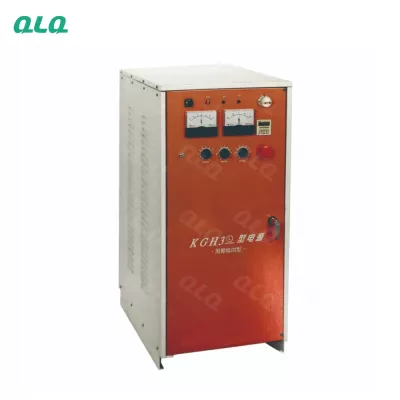
The Action: The barrel MUST be rotating and the Rectifier MUST be ON (Preset to 6V) before the barrel touches the solution.
The Physics: Zinc is more active than Copper. If it enters "dead" (no electricity), Copper will chemically deposit onto the Zinc loosely (Immersion Copper).
The Result: The plating will look fine, but will peel off like tape during the QC Bend Test.
2. The "Soft Start" Ramp
Minute 0-2 (Strike): High Voltage (10-12V).
Why? To blast a layer of copper onto the zinc instantly to seal it.
Minute 2-30 (Plate): Lower Voltage (6-8V).
Why? To build thickness without burning the edges of the barrel holes.
3. Anode Maintenance
Material: OFHC Copper Balls (Oxygen-Free) in Steel Baskets.
Color Check:
Bright Pink: Active (Good).
Black/Dark: Polarized (Bad). Check Free Cyanide (Too low) or Hydroxide (Too low).
Blue Sludge: Anodes dissolving too fast. Free Cyanide is too high.
Part IV: Tank & Solution Maintenance Schedule
Daily Routine:
Titration Analysis: Analyze Free Cyanide and Copper Metal.
Adjustment: Add Sodium Cyanide first (safety), then Copper Cyanide if needed.
Temperature Check: Ensure heaters are working. 55°C is critical.
Filter Check: Ensure the pump is running. Cyanide copper generates sludge; if you don't filter, the parts become rough.
Weekly Routine:
Carbon Treatment: Add powdered Carbon or change Carbon Filter Cores.
Why? Organic impurities (oil from pre-treatment) cause "Haze" or "Blistering."
Rochelle Salt Top-up: Add 10% of the initial make-up amount. This chemical breaks down over time but keeps the grain fine.
Quarterly Routine:
Carbonate Removal (The "Freezing" Method):
Cyanide decomposes into Sodium Carbonate (Na₂CO₃) over time.
Symptom: Efficiency drops, plating gets rough, voltage must be cranked up.
Action: In winter (or using a chiller), cool the tank to < 5°C. The Carbonates will crystallize (freeze) at the bottom. Shovel them out.
Part V: Master’s Troubleshooting (Real Experience)
| Defect | Visual Symptom | Likely Cause | The Master's Fix |
| Blistering | Bubbles appear after baking. | 1. Low Free Cyanide. 2. Temp too low (<50°C). 3. Poor Pre-treatment. | 1. Titrate & Add NaCN. 2. Check Heaters. 3. Check Acid Dip (is it dirty?). |
| Roughness | Sandpaper feel on the surface. | 1. High Carbonates. 2. Anode Sludge. 3. Torn Anode Bags. | 1. Freeze out carbonates. 2. Clean Anode Baskets. 3. Increase Filtration. |
| Dark / Dull | Plating is not the correct salmon-pink color. | Metallic Impurities (Zinc/Lead dissolved in bath). | Add [QLQ] Zinc Purifier (Sulfide based) to precipitate the zinc contaminant. |
| Burnt Edges | Dark/Rough plating near the barrel holes. | 1. Current too high. 2. Low Metal Content. | 1. Lower Voltage. 2. Add Copper Cyanide. |
| Passive Anodes | Anodes turn black and won't conduct current. | Low Rochelle Salt or Low Free Cyanide. | Add Rochelle Salt (10 g/L) and NaCN. |
Part VI: Safety Precautions (Life or Death)
Acid Separation:
NEVER bring Acid (Sulfuric/Hydrochloric) near the Cyanide tank.
Reaction: Acid + Cyanide = HCN Gas (Hydrogen Cyanide). This kills in seconds.
The "Antidote" Kit:
Every Cyanide line must have an Amyl Nitrite / Sodium Thiosulfate kit accessible.
Waste Water:
Cyanide rinse water must be piped separately to the CN-Breaking Station (using Bleach/Hypochlorite at pH 11).
🌟 Featured Album: The "Cyanide Code" Series
Description for the Blog/Guide Album:
☠️ The "Cyanide Code" Album: Running the Most Dangerous (and Essential) Tank
For Zinc Alloy, there is no substitute for Cyanide Copper. It is the "Anchor" that holds everything together. This album teaches you how to tame the beast safely and efficiently.
What you will master:
⚡ The "Live Entry" SOP: A step-by-step video showing exactly how to engage the rectifier before the barrel hits the water to prevent 99% of blistering issues.
❄️ The Carbonate Freeze: How to remove the #1 killer of plating efficiency (Sodium Carbonate) by chilling your tank, saving you from dumping expensive chemistry.
⚖️ The "Free Cyanide" Ratio: A simple calculator to balance your NaCN and CuCN. Why "Too Much" is just as bad as "Too Little."
🧼 The Zinc Purifier: How to use [QLQ Purifiers] to clean out dissolved zinc from the solution, keeping your copper layer bright and ductile.
👉 Respect the Chemistry. Master the Adhesion. Download the Cyanide Code now!
Sort
- Recommended
- Newest