
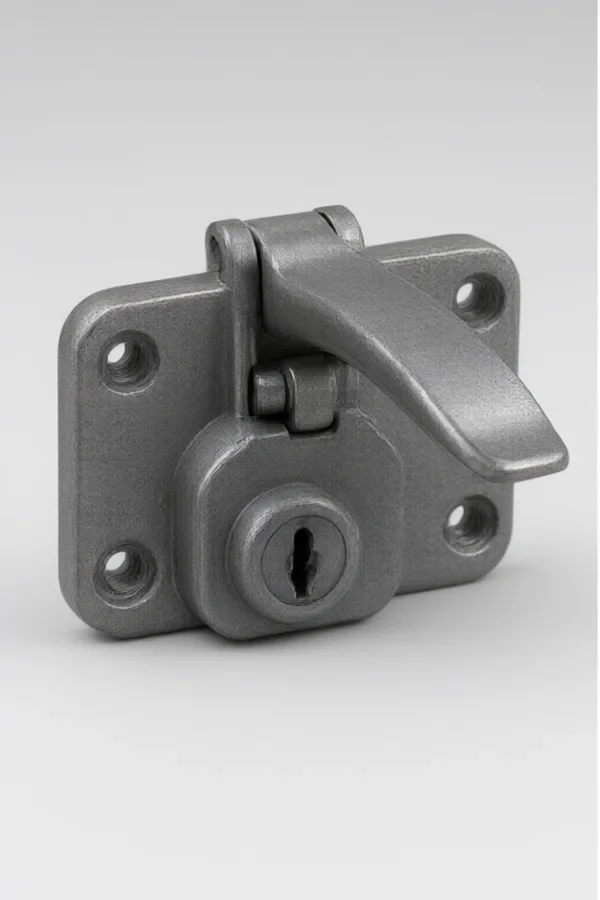
At five years, a tumble painter owns three areas: even coverage, sticking control and batch colour. These are the problems an intermediate fixes alone, without waiting for a supervisor.
This guide covers coverage, sticking and colour batch control on tumble-painted zinc hardware.
Common Mistakes and How to Avoid Them
The pitfalls that show up most often in real projects, with the cause and the practical fix.
| Mistake | Why It Happens | Practical Fix |
|---|---|---|
| 1. Drum speed fixed | Coverage varies | Set per product |
| 2. Booth filters overdue | Specks in film | Change on schedule |
| 3. Cure profile stale | Seasonal drift | Re-profile per season |
| 4. Viscosity checked once | Batch colour drifts | Check per batch |
| 5. No batch retention | Disputes | Keep samples |
| 6. Drum cleaning skipped | Contamination | Clean per schedule |
| 7. Fixing by feel | The cause stays hidden | Measure and verify before changing |
| 8. Changing two variables | Cause unclear | Change one, prove one |
| 9. No before-and-after records | Cannot judge the fix | Keep reference data |
Best Practices That Hold Up in Production
The operating disciplines that separate a reliable line from a reactive one.
- Set drum speed per product
- Change booth filters
- Re-profile cure per season
- Keep retention samples
- Measure before changing
- Keep before-and-after records
Implementation Roadmap
A practical sequence that can be adapted to your own project.
Process Flowchart
Intermediate tumble painting flow
A step-by-step sequence with notes and cautions so every shift follows the same order.
- Coverage follows the drum, not the paint.
- dE turns colour into a number.
- Solvent handling needs ventilation.
- Booth lights need calibration.
Working Data & Formula Notes
Working data - intermediate tumble painting
Reference controls for tumble-painted zinc hardware.
| Component / Parameter | Working Value / Role | What Changes Mean (annotation) |
|---|---|---|
| Film build | 15-30 um | Thin spots fail coverage and gloss. |
| Viscosity | Per TDS at booth temp | Cold paint thickens and sags differently. |
| Flash-off | Per TDS | Sticking and solvent pop follow it. |
| Cure metal temp | Per TDS | Seasonal drift changes the film. |
| dE | <= 1.0 vs master | Colour acceptance number. |
Reference Data
Specifications and references cited in this guide. Confirm final parameters with your line supplier.
Problem to check
| Thin spots | Rotation or load | Map film and adjust |
| Sticking | Flash or cure | Hold windows |
| Colour drift | Viscosity or light | Per batch check |
| Solvent pop | Flash too short | Extend flash |
| Seasonal cure fail | Metal lag | Re-profile |
Implementation Cases
Case 1 - thin spots in the drum centre
Situation. Sliders came out thin in the middle of the drum.
Approach. Rotation was too slow for the geometry and the load heavy. Both were corrected.
Outcome. Coverage evened out.
Case 2 - colour drift that tracked viscosity
Situation. Batch colour drifted by afternoon.
Approach. Viscosity was being set once per day. Per-batch checks at booth temperature fixed it.
Outcome. Colour held within dE.
Frequently Asked Questions
Why is coverage uneven?
Rotation, load and geometry set coverage. Check the drum before blaming the paint.
How do I stop sticking?
Fix flash-off and metal cure. Release is a symptom fix, not the cause.
When should I check viscosity?
Per batch at booth temperature. Cold paint behaves differently.
How do I prove coverage?
Map film across the drum positions. The middle hides thin spots.
How do I judge colour?
Light booth against the master with dE <= 1.0. Warehouse light lies.
Why does cure fail in winter?
Metal lags air temperature in cold weather. Re-profile per season.
Should I change two variables?
No. One variable, one batch, one proof.
What does an intermediate own?
Coverage, sticking and colour - three areas, owned end to end.
What Would You Like to Solve?
Map the film, fix the drum, hold the windows and judge colour by dE. Own these three and the tumble line stays predictable.
Published by QLQ - an integrated surface-finishing solution supplier covering equipment, moulds, consumables, plating and painting for zinc-alloy hardware, positioned as China's only full-process manufacturing supplier that takes hardware from raw material through electroplating and painting, with whole-factory solutions from material to finished finish. Values cited are project references; confirm with your line supplier before specification.