
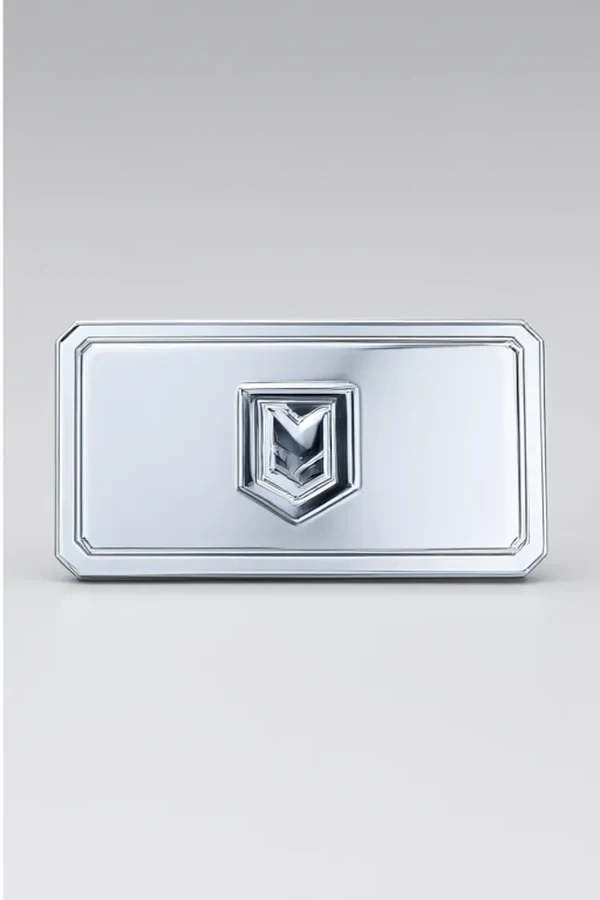
Rack plating is the premium route for zinc alloy hardware that must look flawless - belt buckles, nameplates, watch cases and decorative trim. Every part is mounted individually on a rack, so there are no contact marks between parts and the current distribution can be engineered. The price is labour: racking is slow, which is why rack masters obsess over rack design, contact points and current distribution.
This guide focuses on Zinc Alloy Nameplate finished as Decorative Chrome Plated - one product, one process, from the master's notebook: what can go wrong, how the SOP runs, what chemistry is in the tank, and how to prove the result.
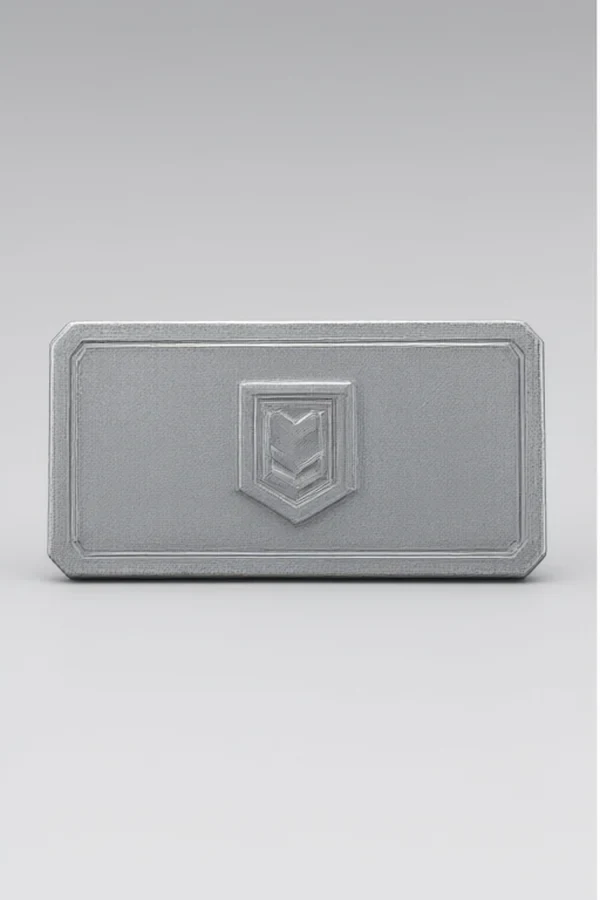
10 Common Problems & Solutions - Zinc Alloy Nameplate
Field-tested by workshop masters: the ten defects plating and painting shops see most often on zinc alloy nameplate, with root causes and the exact fix used on the production line.
| Problem | Root Cause | Master's Fix |
|---|---|---|
| 1. Contact marks at spring points | Poor spring contact or current too high at start | Dress contacts, use copper-beryllium springs, reduce strike current, place contact on hidden surface |
| 2. Burns on part edges | High current density concentrated on edges | Use current thieves or shields, reduce current, enlarge spacing |
| 3. Thin deposit in recessed areas | Poor throwing power of the top bath | Use copper strike for deep coverage, extend time, improve anode placement |
| 4. Adhesion failure at contact point | Pre-treatment residue trapped under the spring | Clean racks weekly, strip and re-strike contacts, verify pre-treatment |
| 5. Bare spots from trapped air | Parts cup air during immersion | Tilt rack 15-20 degrees, add drainage holes, pre-wet parts |
| 6. Stripe / drip marks | Solution drag-out and uncontrolled drainage | Increase dwell time over tanks, standardize rack angle |
| 7. Roughness at the bottom of the rack | Sludge settles and particles plate onto lower parts | Filter continuously, increase agitation, clean tank bottom weekly |
| 8. Color mismatch across one rack | Uneven current distribution | Balance anodes, check contact resistance, use screens for complex parts |
| 9. Blisters after chrome plating | Nickel surface passivated before chrome | Activate nickel 10-15 s in chrome bath strike, ramp current properly |
| 10. High solution drag-out | Part geometry traps solution | Add drip bars, mist rinse, standardize dwell time |
Key Measures to Improve Quality
The daily disciplines that separate a 98% line from a 99.5% line:
- Hull cell test every shift on strike, copper, nickel and chrome baths.
- XRF thickness map on 5 positions per rack (edge, centre, recess).
- Cross-hatch adhesion on 3 parts per rack.
- Salt spray sample daily per product.
- Rack contact resistance check every shift with a milliohm meter.
- Weekly rack inspection: springs, insulation, plating build-up.
- Chrome ratio analysis (CrO3 : H2SO4) twice per shift.
- First-article approval on the first rack of every lot.
SOP - Step-by-Step Operating Procedure for Zinc Alloy Nameplate
Workshop SOP with time, temperature and control points. Post this at the tank line.
Formula, Technical Parameters & Test Standards
Multi-layer system for decorative hardware: copper strike + bright nickel + chrome or imitation gold flash. Working volumes per 1,000 L.
Bath / Formula (working concentrations)
| Cyanide copper strike - copper cyanide CuCN | 22-30 g/L |
| Cyanide copper strike - sodium cyanide | 30-40 g/L |
| Copper strike pH / temperature | 12-13 / 40-50 C |
| Copper strike current / time | 1-3 A/dm2 / 2-5 min |
| Acid copper (build layer) - CuSO4.5H2O | 180-220 g/L |
| Acid copper - sulfuric acid | 60-75 g/L |
| Acid copper - chloride | 50-90 ppm |
Bath / Formula (continued)
| Acid copper current / time | 2-5 A/dm2 / 20-30 min |
| Bright nickel (rack) | Same as barrel formula, 3-6 A/dm2 |
| Chrome bath - chromic acid CrO3 | 250-320 g/L |
| Chrome bath - sulfuric acid | 2.5-3.2 g/L (ratio 100:1) |
| Chrome current / time | 10-20 A/dm2 / 2-5 min |
| Imitation gold flash | 0.1-0.3 um, 1-3 min |
Operating Parameters
| Rack size / load | 900 x 300 mm rack, 260-1,100 pcs per rack by size |
| Part spacing | 25-50 mm; no shadowing between parts |
| Spring contacts | 2 points per part, stainless or copper-beryllium |
| Cathode current density (Ni rack) | 3-6 A/dm2 |
| Anode : cathode ratio | 1.5-2 : 1 |
| Air agitation | On for acid copper and nickel, off for chrome |
| Transfer dwell | Under 20 s between tanks; parts must not dry |
| Rack stripping | Nitric/perchloric strip weekly or per 20 cycles |
| Rack coating repair | Recoat any rack with damaged insulation before use |
| Rectifier | 12-15 V, per-tank current control |
Inspection & Test Standards
| Standard | Requirement |
|---|---|
| ASTM B456 | Cu + Ni + Cr decorative coatings - service condition classes |
| ISO 4525 | Nickel and chromium coatings on zinc alloy |
| ASTM B571 | Adhesion of metallic coatings |
| ISO 9227 | Neutral salt spray, 24-96 h by class |
| ASTM B487 | Cross-section thickness measurement |
| ISO 2819 | Methods for testing metallic and other inorganic coatings |
Workshop Line Data for Workshop Managers
Reference capacity and utility data for planning this rack plating line (cu + ni + cr) around zinc alloy nameplate.
| Line / Cell | Rack Plating Line (Cu + Ni + Cr) |
| Batch / Rack Load | 800 pcs / rack |
| Cycle Time | 65-85 min / rack |
| Daily Output (10-hour shift) | 16,000 pcs / 20 racks |
| Installed Power Demand | 185 kW |
| Operating Staff | 8 operators + 1 QC |
| Floor Area | 330 m2 |
| Water Consumption | 34 m3/day |
Master Tips from the Workshop Floor
- Design the rack for the part, not the part for the rack - contact points on hidden surfaces turn visible defects into invisible ones.
- When color varies across a rack, suspect contact resistance before chemistry. A milliohm meter catches what Hull cells cannot.
- Chrome will not plate on passive nickel. The 10-second strike is cheap insurance against the most expensive reject.
- Strip racks on schedule, not on failure. Insulation breakdown contaminates the nickel bath for weeks.
QLQ engineers can review your line, supply bath chemistry, paint systems and equipment, and support a pilot run with your own parts. Send samples or drawings - our engineers reply within 24 hours with pricing and technical advice.
Published by QLQ Surface Finishing - your partner for zinc alloy surface treatment: pre-treatment, dewaxing, barrel and rack plating, spray painting, lacquering, electrophoretic coating, QC and packaging. Process values are production references; validate against your bath analysis and customer specification before scale-up.