
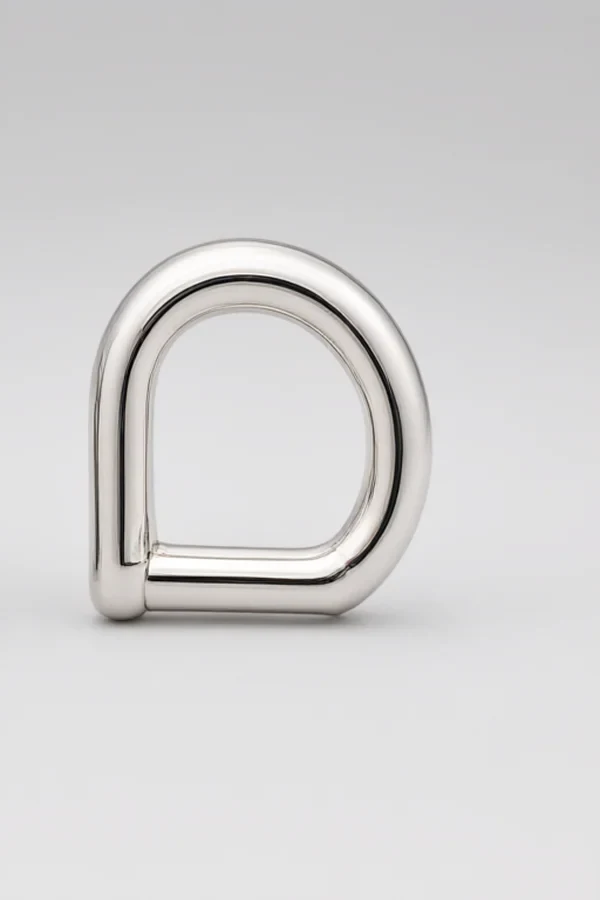
Pre-treatment decides whether the final plating or painting survives. A perfect plating bath cannot save a badly prepared surface: oil, oxide, hard-water film and embedded abrasive all sit invisibly between the substrate and the first deposit. For zinc alloy hardware the pre-treatment sequence is a balance - strong enough to make the surface chemically active, but controlled enough that the zinc itself is never etched.
This guide focuses on Zinc Alloy D-Ring finished as Bright Nickel Plated - one product, one process, from the master's notebook: what can go wrong, how the SOP runs, what chemistry is in the tank, and how to prove the result.
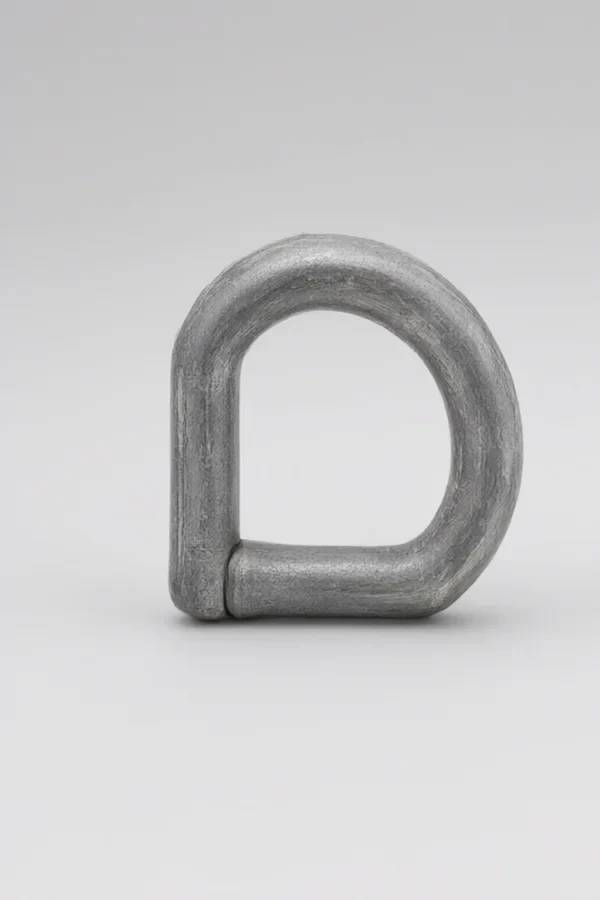
10 Common Problems & Solutions - Zinc Alloy D-Ring
Field-tested by workshop masters: the ten defects plating and painting shops see most often on zinc alloy d-ring, with root causes and the exact fix used on the production line.
| Problem | Root Cause | Master's Fix |
|---|---|---|
| 1. Water-break failure after cleaner | Oil loading too high or cleaner temperature low | Increase temperature to 65-70 C, extend time 2 min, replenish cleaner by titration |
| 2. Spotty etch or rough surface | Acid activation too strong or too long | Reduce acid to 5-8%, cut time to 20-40 s, add inhibitor, check acid concentration |
| 3. Poor adhesion of first deposit | Incomplete activation or surface re-oxidized before plating | Shorten transfer time, keep parts wet, re-activate 15-20 s if delay |
| 4. White haze on zinc surface | Cleaner pH above 10.5 or temperature too high | Correct pH to 9.0-10.5, reduce temperature, verify silicate inhibitor |
| 5. Hydrogen blistering on rack line | Cathodic electroclean too long | Reduce electroclean to 1-2 min, use periodic reverse current |
| 6. Contamination carry-over between stations | Insufficient rinsing or slow cascade flow | Add counterflow rinse, raise flow to 3-5 turnovers/h, verify drain time |
| 7. Chalky hard-water film | TDS too high in rinse or cleaner | Switch final rinse to DI below 10 uS/cm, add chelant to cleaner |
| 8. Non-uniform activation in blind holes | Air pockets block solution contact | Tilt rack, add air agitation, pre-wet parts 1 min before acid |
| 9. Grey etched grain boundaries | Chloride contamination or over-long acid time | Replace acid, control time 20-40 s, check water purity |
| 10. High drag-out losses | Poor drainage geometry | Increase rack angle, add drip zone, extend dwell 20-30 s |
Key Measures to Improve Quality
The daily disciplines that separate a 98% line from a 99.5% line:
- Titrate every cleaner every 4 hours and the acid activator every shift.
- Run a water-break test on 5 parts from every rack or barrel.
- Plate one adhesion coupon per shift and cross-hatch test it.
- Monitor final rinse conductivity daily; keep below 10 uS/cm.
- Log dwell and drag-out time on every shift card.
- First-article approval after every bath make-up.
- Keep a transfer-time timer at the exit station.under 30 s wet-to-wet
- Monthly internal audit of the pre-treatment line against ASTM B322.
SOP - Step-by-Step Operating Procedure for Zinc Alloy D-Ring
Workshop SOP with time, temperature and control points. Post this at the tank line.
Formula, Technical Parameters & Test Standards
Typical pre-treatment chemistry for zinc alloy hardware (working volumes per 1,000 L station).
Bath / Formula (working concentrations)
| Alkaline soak cleaner | 40-60 g/L, 60-70 C, 3-5 min, pH 9.0-10.5 |
| Ultrasonic electrocleaner (cathodic) | 50-70 g/L, 50-60 C, 1-3 min, 2-4 A/dm2, pH 9.0-10.5 |
| Acid activation - sulfuric acid | 5-10% v/v + inhibitor, room temperature, 20-60 s |
| Acid activation - hydrochloric acid (alternative) | 5-8% v/v + inhibitor, room temperature, 20-45 s |
Bath / Formula (continued)
| Desmut solution (for oxide film) | 3-8% acid + 1-2 g/L wetting agent, 15-30 s |
| Aluminum parts (if in mixed line) | 5% nitric acid + 2% ammonium bifluoride, 15-30 s |
| Final rinse quality | DI water below 10 uS/cm |
| Surface pH after rinse | 6.5-8.0 |
Operating Parameters
| Rack line station time | 60-90 s per station, 6-8 stations |
| Barrel line stage time | 3-5 min per stage at 4-6 rpm rotation |
| Water-break requirement | Continuous film for 30 s on every part |
| Rack angle for drainage | 15-20 degrees, no solution pooling |
| Dwell / drip time | 20-30 s over drag-out recovery tank |
| Rinse cascade flow | 3-5 turnovers per hour |
| Cleaner temperature | 60-70 C, +/-3 C control |
| Activation control | 20-60 s; over-activation etches grain boundaries |
| Transfer time to plating | Under 30 s, parts must stay wet |
| Analytical control | Cleaner titrated every 4 h; acid checked every shift |
Inspection & Test Standards
| Standard | Requirement |
|---|---|
| ASTM B322 | Standard practice for cleaning metals prior to electroplating |
| ISO 4520 | Preparation and chromate treatment of electroplated zinc |
| Water-break test | Continuous film for 30 s |
| ASTM B571 | Adhesion of metallic coatings - bend and thermal-shock methods |
| ISO 9227 | Neutral salt spray for downstream coating acceptance |
| Drag-out target | Below 5% of bath volume per rack/barrel |
Workshop Line Data for Workshop Managers
Reference capacity and utility data for planning this 6-station pre-treatment line around zinc alloy d-ring.
| Line / Cell | 6-Station Pre-treatment Line |
| Batch / Rack Load | Rack 600 pcs / 900x300 mm rack |
| Cycle Time | 9-12 min / rack |
| Daily Output (10-hour shift) | 7,000 pcs / 8 racks |
| Installed Power Demand | 62 kW |
| Operating Staff | 4 operators + 1 QC |
| Floor Area | 110 m2 |
| Water Consumption | 12 m3/day |
Master Tips from the Workshop Floor
- The plating line starts at the pre-treatment exit - if the part dries before it reaches the tank, activation is lost.
- Measure drag-out by weighing a rack before and after drip; every litre saved is chemistry, water and effluent cost saved.
- A dull zinc surface after activation means the acid is too weak; a grey frosted one means it is too strong. Read the surface, not the clock.
- Keep one dedicated rinse cascade for the acid station - acid drag-in is the fastest way to poison an alkaline cleaner.
QLQ engineers can review your line, supply bath chemistry, paint systems and equipment, and support a pilot run with your own parts. Send samples or drawings - our engineers reply within 24 hours with pricing and technical advice.
Published by QLQ Surface Finishing - your partner for zinc alloy surface treatment: pre-treatment, dewaxing, barrel and rack plating, spray painting, lacquering, electrophoretic coating, QC and packaging. Process values are production references; validate against your bath analysis and customer specification before scale-up.