
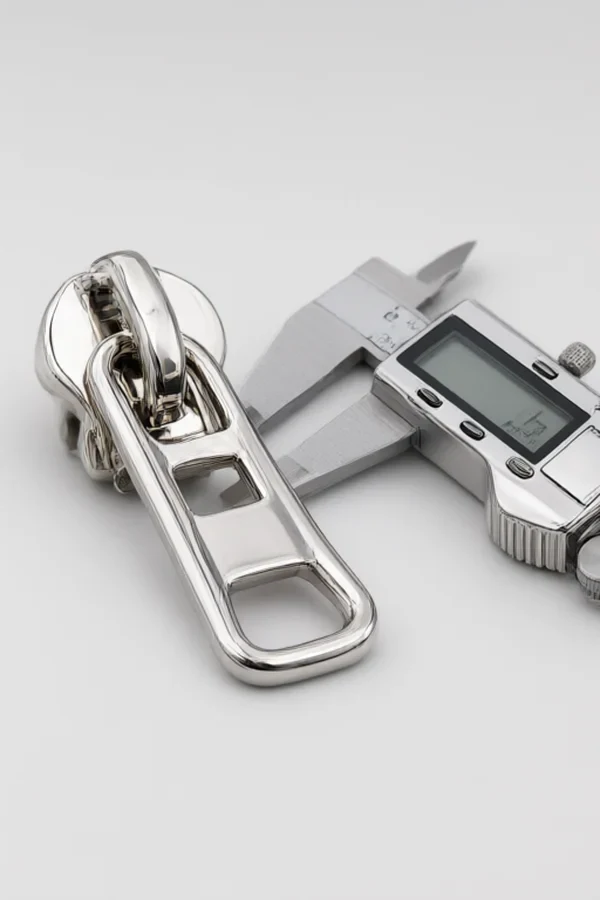
A failure is a question, not a verdict. The senior quality engineer sections the part, reads the evidence and builds a chain from symptom to root cause before changing anything.
This senior guide covers failure analysis: sectioning, root cause and the evidence chain.
Common Mistakes and How to Avoid Them
The pitfalls that show up most often in real projects, with the cause and the practical fix.
| Mistake | Why It Happens | Practical Fix |
|---|---|---|
| 1. Verdict before evidence | Wrong cause | Section first |
| 2. One theory only | Cause missed | Test alternatives |
| 3. No photos | Evidence lost | Document every step |
| 4. Root cause guessed | Fix fails | Prove the cause |
| 5. Multiple changes | Unprovable | One variable |
| 6. Sample destroyed | No re-check | Keep duplicates |
| 7. Report delayed | Fault repeats | Write at the time |
| 8. Customer context ignored | Wrong environment | Check the service |
Best Practices That Hold Up in Production
The operating disciplines that separate a reliable line from a reactive one.
- Section before assigning a cause
- Document evidence at every step
- Prove one root cause
- Change one variable in the trial
- Write the FA report at the time
Implementation Roadmap
A practical sequence that can be adapted to your own project.
Process Flowchart
Failure analysis flow
A step-by-step sequence with notes and cautions so every shift follows the same order.
- The section is the failure witness.
- The report is the evidence chain.
- Keep duplicate samples for re-checks.
- Never change two variables to prove a cause.
Working Data & Formula Notes
FA data
Reference values for failure analysis.
| Component / Parameter | Working Value / Role | What Changes Mean (annotation) |
|---|---|---|
| Section | Reveal interface | First evidence step |
| Measure | Film and dimensions | Numbers beat opinions |
| Prove | One cause | Trial validates |
| Report | At the time | Evidence chain |
Reference Data
Specifications and references cited in this guide. Confirm final parameters with your line supplier.
Evidence checklist
| Item | Purpose | When |
| Photos | Record the failure | Before sectioning |
| Sections | Reveal interface | Controlled |
| Measurements | Compare to spec | At each step |
| Duplicates | Re-check | Kept aside |
Implementation Cases
Case 1 - a blister that was traced to the pre-clean
Situation. Blistering failures were blamed on the plating bath; a section showed contamination under the deposit.
Approach. The section revealed the interface, the pre-clean gate was checked, and a trial proved the cause.
Outcome. The real cause was fixed; the section became the first step of every FA.
Case 2 - a report that stopped a repeat
Situation. A field failure repeated because the first report was never written and the cause was forgotten.
Approach. FA reports were written at the time with photos and proof.
Outcome. The repeat was caught in a month; the report standard ended the forgetting.
Frequently Asked Questions
Why section first?
The section shows which interface failed; verdicts before evidence mislead.
Why document photos?
Photos are the evidence that survives the analysis.
Why prove one cause?
A proven cause fixes; a guessed cause fails.
Why keep duplicates?
Re-checks need samples; a destroyed sample ends the analysis.
Why one variable?
Paired changes make the proof impossible.
Why write at the time?
Delayed reports lose detail and let faults repeat.
What about service context?
The failure environment is evidence too; check it.
What is in the FA report?
Photos, sections, measurements, the proven cause and the fix.
Who owns the report?
Quality engineering, with the line feeding evidence.
What Would You Like to Solve?
Send us the failure photos, service history and any section data. We can help run the evidence chain and build the FA report for your line.
Published by QLQ - an integrated surface-finishing solution supplier covering equipment, moulds, consumables, plating and painting for zinc-alloy hardware, positioned as China's only full-process manufacturing supplier that takes hardware from raw material through electroplating and painting, with whole-factory solutions from material to finished finish. Values cited are project references; confirm with your line supplier before specification.