
Automation in surface finishing is usually justified with one word: labour. But the real economics come from yield, consistency and capacity per square metre. A machine that replaces two operators but adds rework is not automation - it is a more expensive way to make the same defects.
This guide gives factory owners and investors a simple financial model for automation decisions on polishing, plating and painting lines, with realistic inputs and the cost lines most people forget.
Common Mistakes and How to Avoid Them
The pitfalls that show up most often in real projects, with the cause and the practical fix.
| Mistake | Why It Happens | Practical Fix |
|---|---|---|
| 1. Modelling labour savings only | Understates the real gain (yield + consistency) | Model yield, rework and capacity per m2 as well |
| 2. Ignoring energy cost | Ovens and rectifiers dominate utility bills | Use installed kW and load factor, not nameplate |
| 3. Buying oversized machines | Capacity you pay for but never use | Size to product mix and shift plan |
| 4. Forgetting training cost | Automation needs a different skill set | Budget operator and maintenance training |
| 5. No spares strategy | One breakdown erases the payback month | Stock critical spares; check supplier response |
| 6. Automating a bad process | You get faster defects | Stabilise chemistry and pre-treatment first |
| 7. Ignoring downtime | Unplanned stops kill throughput | Track OEE before and after |
| 8. One-variable payback claims | Suppliers quote labour only | Run your own model with your data |
| 9. Over-automating small batches | Set-up time eats the savings | Automate stable, high-volume routes first |
| 10. No measurement baseline | Cannot prove the result | Record yield, labour and OEE for 30 days before the change |
Best Practices That Hold Up in Production
The operating disciplines that separate a reliable line from a reactive one.
- Measure a 30-day baseline: yield, labour hours, rework, downtime
- Model three scenarios: labour only, yield+labour, full OEE
- Size machines to the product mix, not the brochure
- Include spares, training and energy in the payback
- Automate stable high-volume routes before complex ones
- Track OEE monthly after installation
- Audit the process before automation, not after
- Plan consumables: polishing wheels, media, chemistry
Implementation Roadmap
A practical sequence that can be adapted to your own project.
Working Data & Formula Notes
Working model - automation payback with the numbers that matter
Replace the placeholders with your own baseline; the annotations show where models mislead.
| Component / Parameter | Working Value / Role | What Changes Mean (annotation) |
|---|---|---|
| Labour saving = hours saved x rate x shifts x days | Core saving | Use loaded labour cost (wages + benefits + supervision), not base wage. |
| Yield saving = reject% drop x volume x unit cost | Often the bigger number | Measure reject rate before the project; a 5-point yield gain usually beats the labour saving. |
| Energy = kW x load factor x hours x tariff | Operating cost | Nameplate kW overstates; load factor 0.4-0.7 is typical for finishing equipment. |
| Consumables = wheels/media/chemistry per 1,000 pcs | Running cost | Automation can raise or lower consumables - model both directions. |
| Maintenance = 2-5% of capex per year | Lifecycle cost | Cheap machines with no spares network are the expensive ones. |
| Payback = capex / annual net saving | Decision metric | Use annual net saving after energy, consumables and maintenance. |
Reference Data
Specifications and references cited in this guide. Confirm final parameters with your line supplier.
Automation reference set for finishing
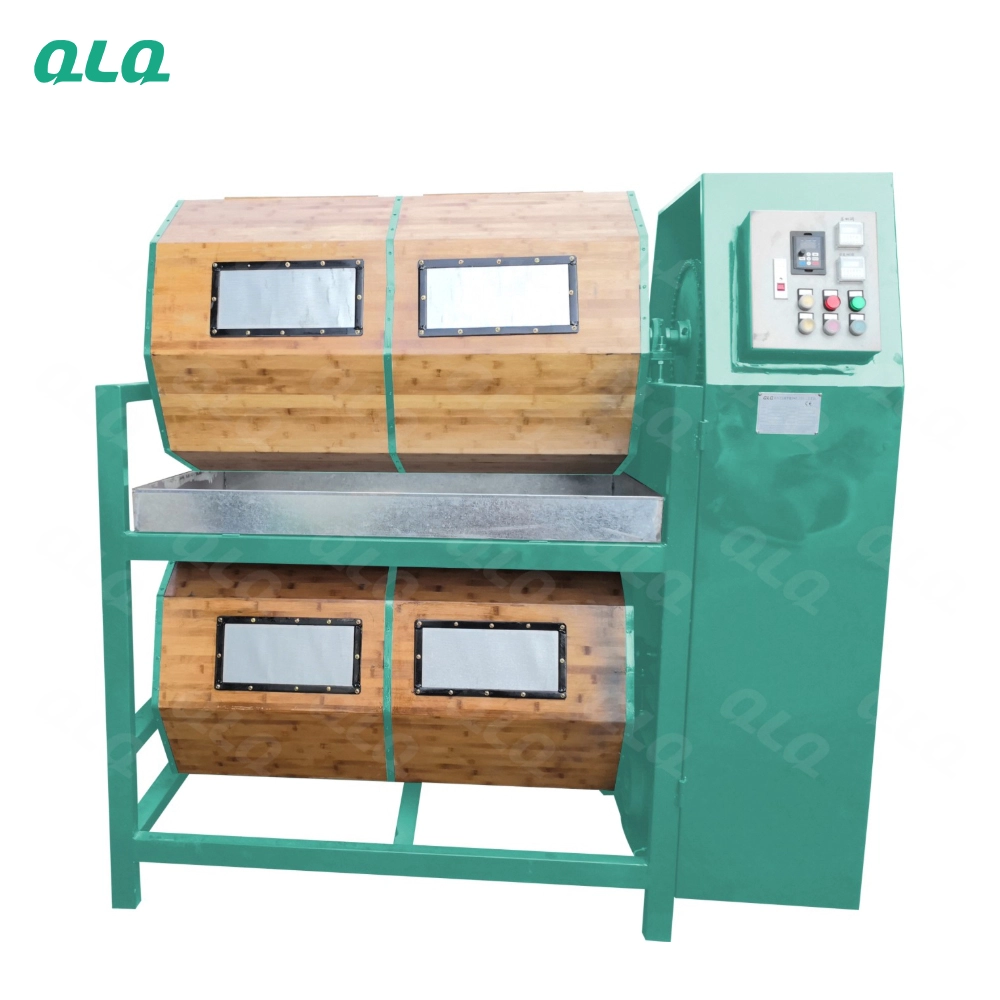
| Dry polishing | Automatic dry-type polishing machine | Bulk surface prep |
| Open polishing | Open polishing machine | Flexible polishing |
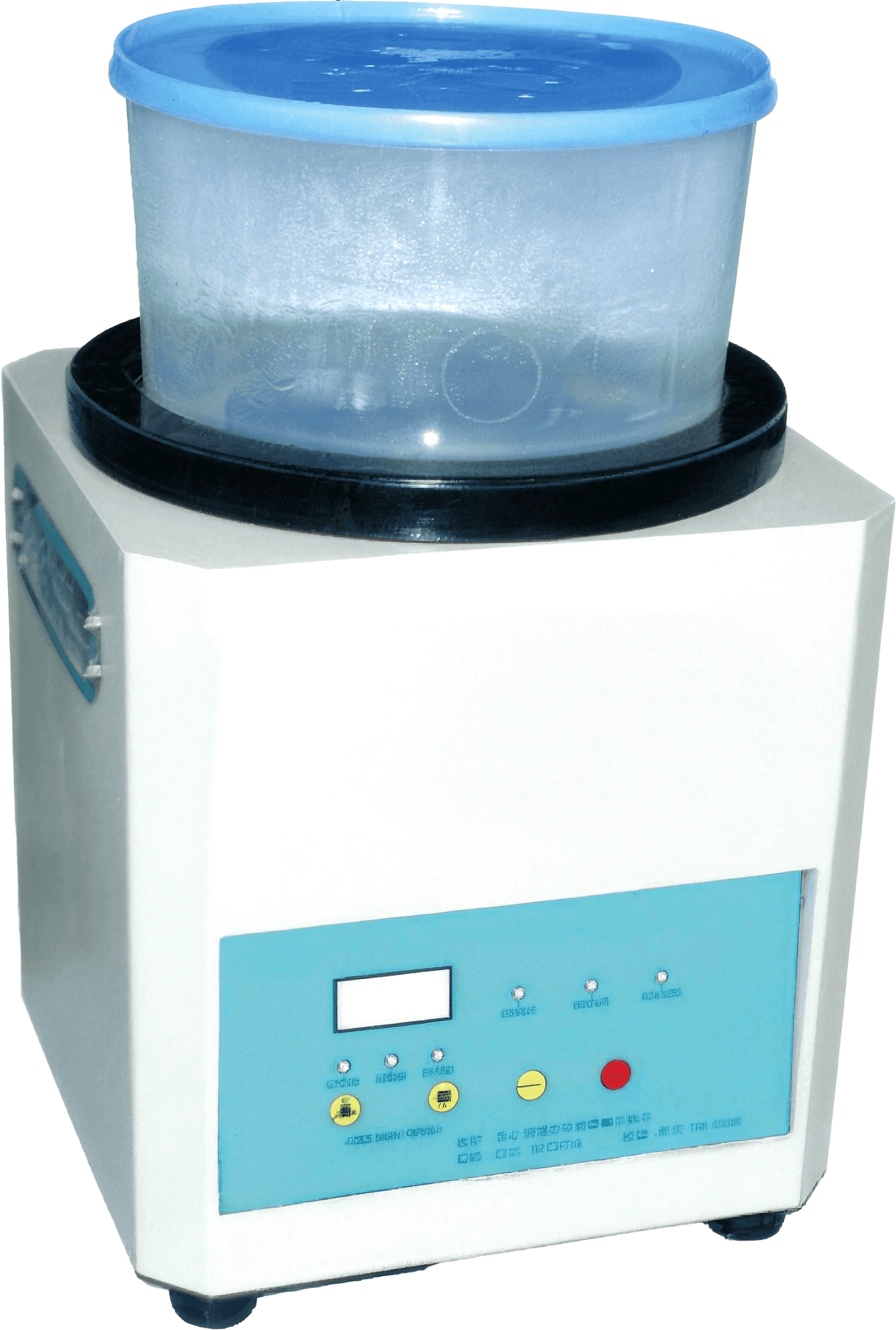
| Magnetic polishing | Magnetic-type polishing machine | Small parts, no media damage |
| Centrifugal polishing | Centrifugal-type polishing machine | Fast finishing |
| Barrel plating | Barrel plating machine series | Bulk plating |
| Painting | Rack and cold painting machines | Colour and topcoats |
Model inputs to collect before automation
| First-pass yield | Current and target |
| Labour cost | USD per hour incl. overhead |
| Rework rate | % of output returning to line |
| OEE / downtime | Availability, performance, quality |
| Energy | Installed kW and load factor |
| Consumables | Wheels, media, chemistry per 1,000 pcs |
Implementation Cases
Case 1 - polishing automation with a yield story
Situation. A shop quoting "labour savings only" for a polishing machine understated the gain, because rejects from inconsistent hand polishing were never counted.
Approach. The owner recorded 30 days of baseline: 9% rework on polished hardware. After installing an automatic dry-type polishing machine and stabilising media, rework fell to 3%.
Outcome. Payback, including yield improvement, was reached about 40% faster than the labour-only model predicted.
Case 2 - a plating line where automation followed chemistry
Situation. A shop bought a loading robot first and saw no gain, because the bath still drifted and rejects continued.
Approach. The owner stepped back, stabilised the bath with ampere-hour dosing and Hull cell control, then automated loading and drying.
Outcome. With the process stable, automation produced a measurable throughput gain; the first attempt had only automated the defect rate.
Frequently Asked Questions
What is the fastest payback automation in finishing?
Usually polishing and drying, because they are labour-heavy and yield-sensitive; barrel plating automation follows where volumes are stable.
How do I prove the ROI after installation?
Compare a 30-day baseline (yield, labour, rework, OEE) with a 90-day post-installation measurement on the same products.
Should I automate before fixing chemistry?
No. Automating an unstable process produces defects faster. Stabilise chemistry and pre-treatment first.
What costs do people forget in automation models?
Energy, spares, training, maintenance, consumables and set-up time on small batches.
Why did my automation project not pay back?
Usually because the baseline was wrong, the process was unstable, or the machine was oversized for the actual product mix. Measure first, automate second.
How do I size an automated line?
From the product mix and shift plan: load per barrel or rack, surface area, and target output. Oversized capacity is the most common mistake.
Is automation worth it for small batches?
Only for stable, high-volume routes. Small-batch automation loses its savings in set-up time.
What is OEE and why does it matter?
Overall equipment effectiveness = availability x performance x quality. It shows where throughput really goes and proves the automation result.
How much maintenance should I plan?
Budget roughly 2-5% of capex per year for maintenance and keep critical spares in stock; one breakdown can erase a payback month.
Who can help model an automation project?
Process engineers with finishing line experience can review your baseline data and help scope automated routes - bring your yield, labour and energy numbers.
What Would You Like to Solve?
Automation decisions should be built on baseline data, not brochure claims. If you can share your current yield, labour hours, rework and energy costs, we can help you model the scenarios and identify which route - polishing, plating, painting or drying - pays back first in your plant.
Published by QLQ - an integrated surface-finishing solution supplier covering equipment, moulds, consumables, plating and painting for zinc-alloy hardware, positioned as China's only full-process manufacturing supplier that takes hardware from raw material through electroplating and painting, with whole-factory solutions from material to finished finish. Values cited are project references; confirm with your line supplier before specification.