

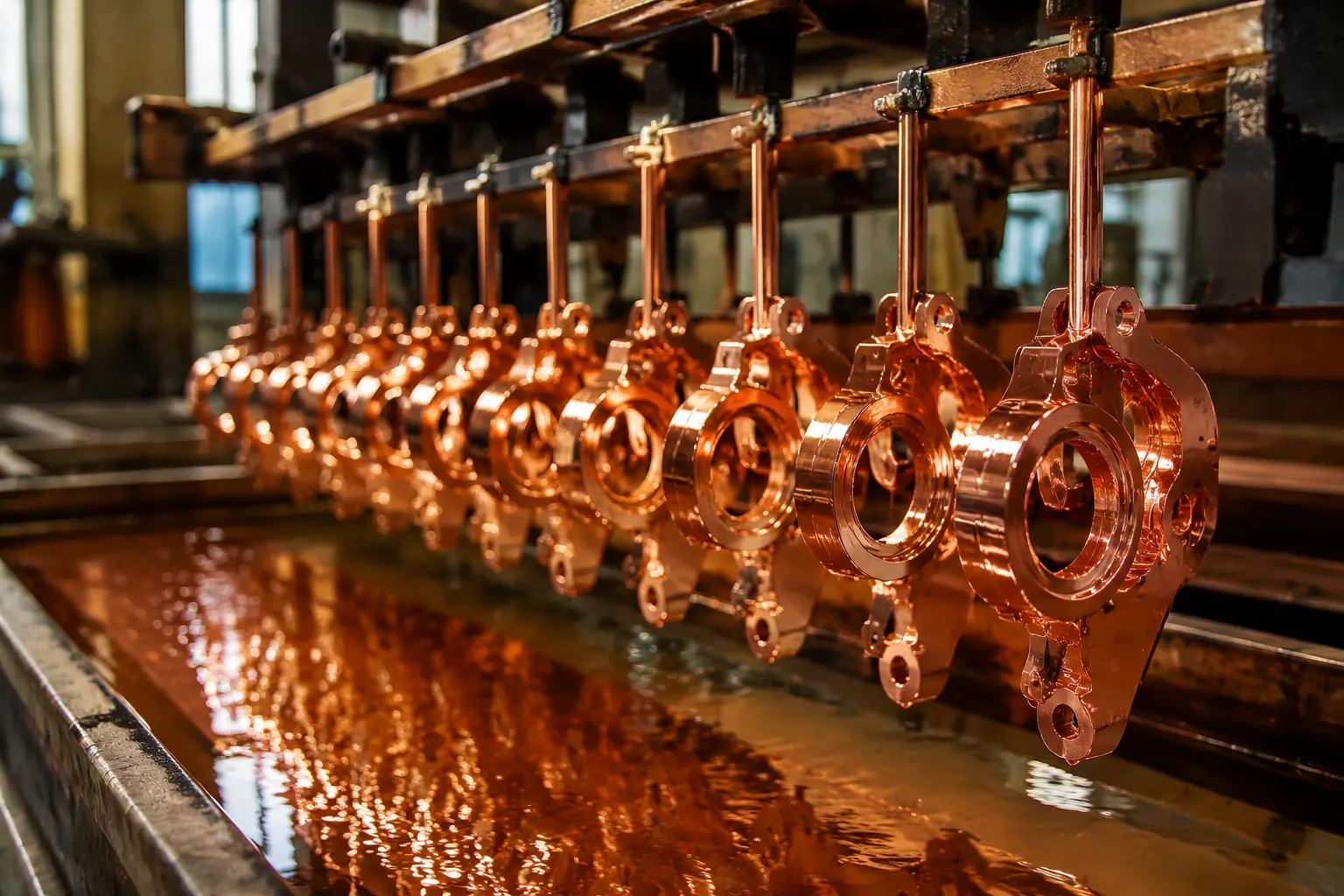
At eight years, rack plating problems cross the chain: a defect that follows the rack, a fault from casting, a drift from the bath. Seniors diagnose the whole rack line.
This guide covers senior rack plating diagnosis.
Common Mistakes and How to Avoid Them
The pitfalls that show up most often in real projects, with the cause and the practical fix.
| Mistake | Why It Happens | Practical Fix |
|---|---|---|
| 1. Rack tips worn | Burns and thin spots | Dress tips |
| 2. Anode distance uneven | Current varies | Balance spacing |
| 3. Rack not matched | Coverage suffers | Match geometry |
| 4. Unload marks | Scratches | Careful handling |
| 5. No rack card | Setups drift | Card per type |
| 6. Bath load wrong | Density drifts | Check per load |
| 7. Treating symptoms | The chain carries the fault | Trace to the root cause |
| 8. No trend data | Drift invisible | Trend the key rack plating metrics |
| 9. Fixes without proof | Faults return | Controlled batch verification |
Best Practices That Hold Up in Production
The operating disciplines that separate a reliable line from a reactive one.
- Dress rack tips
- Balance anode distance
- Keep rack cards
- Handle parts carefully
- Trace the root cause
- Prove fixes with data
Implementation Roadmap
A practical sequence that can be adapted to your own project.
Process Flowchart
Senior rack diagnosis flow
A step-by-step sequence with notes and cautions so every shift follows the same order.
- Rack cards make setups repeatable.
- Bake tests separate casting from plating.
- Sections need lab tools.
- Rack handling needs care.
Working Data & Formula Notes
Working data - senior rack checks
Reference checks for cross-process rack faults.
| Component / Parameter | Working Value / Role | What Changes Mean (annotation) |
|---|---|---|
| Rack card | Per type | Setup history. |
| Bake test | 120 C, 1 h | Porosity evidence. |
| Section | On suspicion | Thickness truth. |
| Thickness trend | Per batch | Drift direction. |
| Controlled batch | Per fix | Proof. |
Reference Data
Specifications and references cited in this guide. Confirm final parameters with your line supplier.
Signature to source
| Blister | Porosity or prep | Bake and section |
| Thin drift | Bath or rack | Trend and card |
| Rack-position fault | Rack geometry | Card and balance |
| Pitting | Fines or bath | Magnification |
| Seasonal drift | Environment | Trend |
Implementation Cases
Case 1 - blisters traced to casting
Situation. One family blistered after nickel.
Approach. The bake test proved porosity.
Outcome. Casting was fixed.
Case 2 - a rack card that found the drift
Situation. Thickness drifted by shift.
Approach. Rack cards showed setup drift at hand-over.
Outcome. Setups were gated.
Frequently Asked Questions
How do I trace a rack defect?
Follow the chain: casting, rack, bath.
Why bake test?
It exposes porosity before finishing.
Why rack cards?
They make setups repeatable.
Why trend thickness?
Drift shows before rejects.
What is a controlled batch?
One change, one batch, linked data.
Should I change several variables?
No.
Why sections?
They prove the thickness truth.
How do I prevent recurrence?
Cards, gates and trends.
What Would You Like to Solve?
Trace the chain, prove with tests and gate the setups. The senior level turns rack rejects into process data.
Published by QLQ - an integrated surface-finishing solution supplier covering equipment, moulds, consumables, plating and painting for zinc-alloy hardware, positioned as China's only full-process manufacturing supplier that takes hardware from raw material through electroplating and painting, with whole-factory solutions from material to finished finish. Values cited are project references; confirm with your line supplier before specification.