
Scope of this guide
This intermediate guide goes into diagnosis: reading symptoms, isolating the variable that changed, and fixing it with data you can collect on the line.
Process: Barrel Plating. Figures in this guide are industry-standard starting ranges; confirm against your supplier TDS before locking settings.
Working ranges and control points
The table below is the daily reference for a plating barrel. Set by the card, verify by the control point column.
| Parameter | Typical range | Control point | Watch out |
|---|---|---|---|
| Loading ratio | 15–30% of barrel volume | Parts tumble freely | Overload gives flat spots |
| Barrel speed | 4–8 rpm | Full tumble visible | Too fast burns parts at door |
| Current per load | 2–6 A/dm² equivalent | Amp-min per kg logged | High current burns outer parts |
| Contact danglers | 2 per barrel, clean tips | Contact resistance < 0.1 Ω | Worn danglers give no-plate zones |
| Cycle time | 20–45 min by thickness | Thickness spot-check per run | Long cycles wear media |
Diagnose It Fast: the intermediate view
Beyond the basic card, this is the layer that matters at your level:
| Symptom | Likely variable | Confirm by | First fix |
|---|---|---|---|
| Dull or hazy finish | Bath chemistry drift | Hull cell panel | Rebalance per test |
| Defects cluster on one rack position | Contact or current map | Position thickness map | Repair contact / re-map amps |
| Good-bad-good pattern | Loading or cycle drift | Time-stamped samples | Standardise load weight |
| Defect appears after maintenance | Work just done | Revert one change | Restore and re-verify |
Standard routine
- Weigh the load and set amp-min target
- Check dangler tips for clean metal contact
- Set barrel speed by part size and weight
- Sample thickness at cycle end, one part per 10 kg
- Rinse in-barrel before unload to protect colour
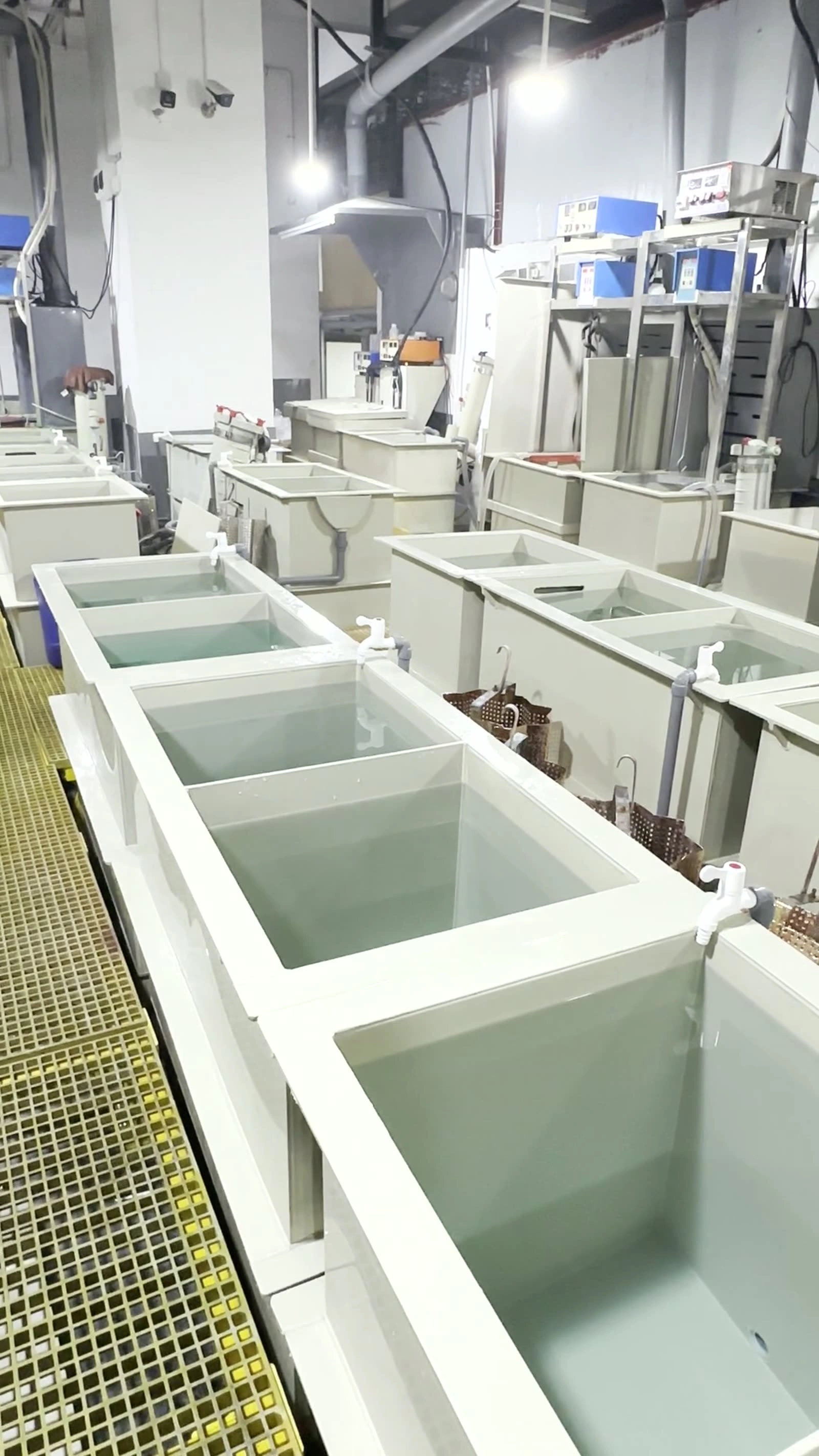
Engineer notes
- Mixed sizes plate unevenly — split loads by part family
- Amp-min per kg, not amp-min per barrel, is the real dose
- Burn marks collect on parts resting at the barrel door
- Add media balls for flat parts to prevent sticking
- Log every load; trend dose vs thickness weekly
Safety: Barrels are heavy and hot after plating. Use hoists and heat gloves; never lift a barrel by its door.
FAQ
Why do some parts in one load come out thin?
They sat against the door or centre of the mass. Check dangler contact and reduce load size.
What loading ratio should I start with?
15–30% of barrel volume so parts tumble freely; flat parts need less.
How often should dangler tips be cleaned?
Daily, and replaced weekly in high-current work.