
Scope of this guide
This management guide translates the process into cost, risk and throughput: what to measure, what to audit and where the money leaks.
Process: Bath Control. Figures in this guide are industry-standard starting ranges; confirm against your supplier TDS before locking settings.
Working ranges and control points
The table below is the daily reference for a plating bath. Set by the card, verify by the control point column.
| Test | Frequency | Target | Watch out |
|---|---|---|---|
| Hull cell | Every new make-up and weekly | Bright band mid panel | Only-end panels read wrong |
| Titration, main metal | Daily | Per supplier TDS | Reagent expiry skews results |
| pH (acid baths) | 2× per shift | ±0.2 of set point | Drift means drag-in or decomposed brightener |
| Contaminants (Hull cell + lab scan) | Weekly | Below supplier limits | Metallics dull deposits first |
| Temperature log | Continuous | ±1 °C of set point | Night setback changes deposit |
Run It As A Business: the management view
Beyond the basic card, this is the layer that matters at your level:
| Cost line | What drives it | Metric to track | Typical lever |
|---|---|---|---|
| Chemicals | Drag-out and bath dumps | Cost per 1000 parts | Rinse counter-flow, drip bars |
| Rework | First-pass yield losses | FPY by defect family | Fix top family first |
| Energy | Heated tanks and idle time | kWh per 1000 parts | Covers, night setback |
| Claims | Escape rate | PPM by customer | Ship gate on FPY |
Standard routine
- Sample from a moving zone, not the still corner
- Run Hull cell before any addition
- Add brightener by Amp-hours, never by feel
- Log every addition with time and operator
- Re-test 30 min after each correction
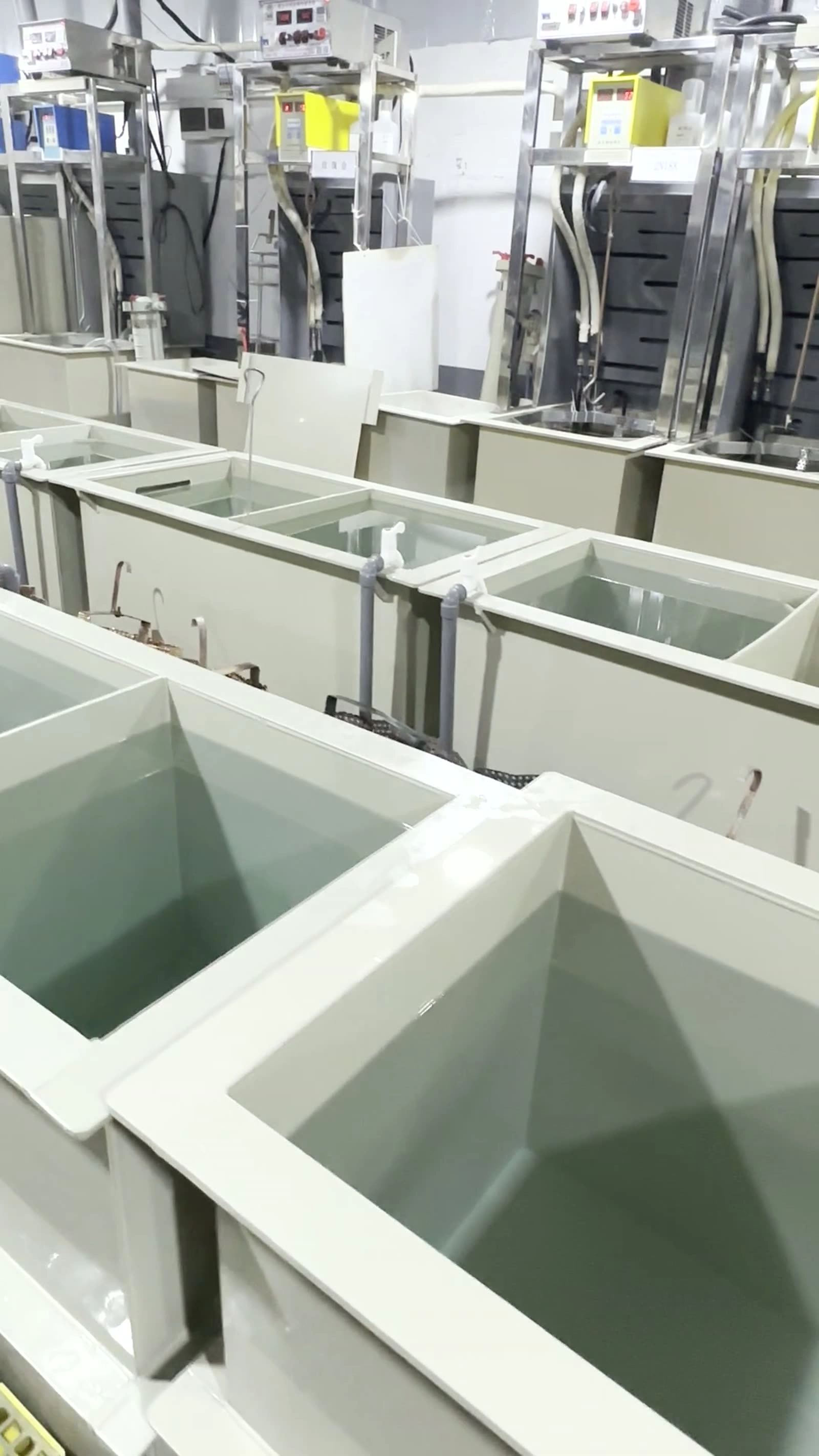
Engineer notes
- One variable per correction; two changes hide the cause
- Organic contamination shows as hazy bands in the Hull cell
- Keep a reference photo set of known-good Hull cells
- Trace conductivity and temperature trends, not single points
- Quarantine any addition without a log entry
Safety: Sampling hot, acid baths needs face shield and gloves. Cool and vent the sample before titration.
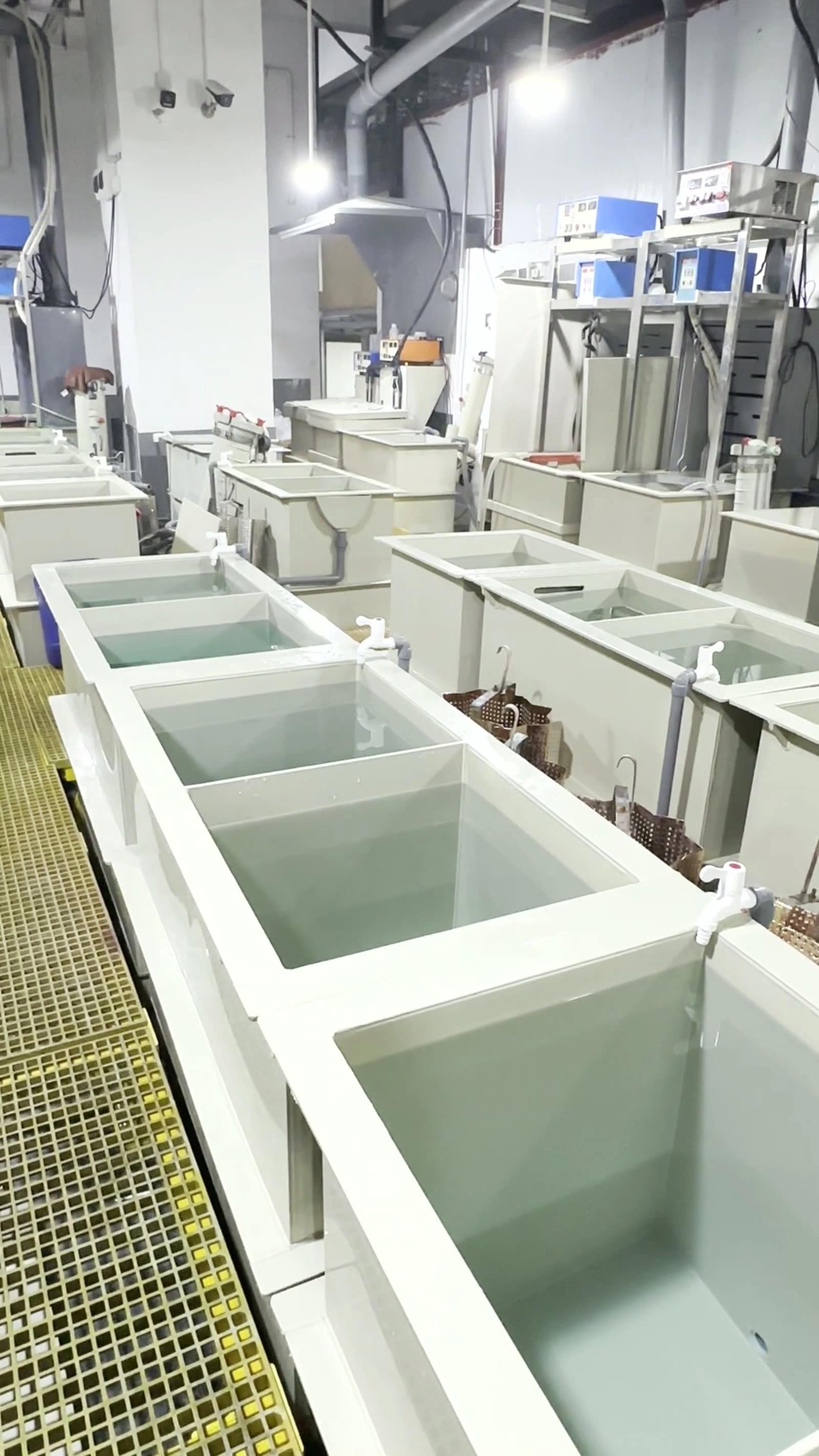
FAQ
How much brightener should I add per shift?
By Amp-hour consumed, per supplier dose curve — not on a fixed schedule.
The deposit is dull all over. Where do I start?
Hull cell first: it separates brightener, metallic and organic causes in one panel.
Why test at the same time each day?
Baths drift with production load; same-time sampling makes trends comparable.
Which single metric should I start reporting weekly?
First-pass yield by defect family; it exposes rework cost and points at the largest lever.