
Why this keeps coming up
Alkaline Zinc Adhesion Failure is one of the recurring questions on finishing forums — and answers online usually jump to a single fix. There isn't one: the symptom has several causes, each confirmed differently, each fixed differently. This is the diagnostic sequence our lines run.
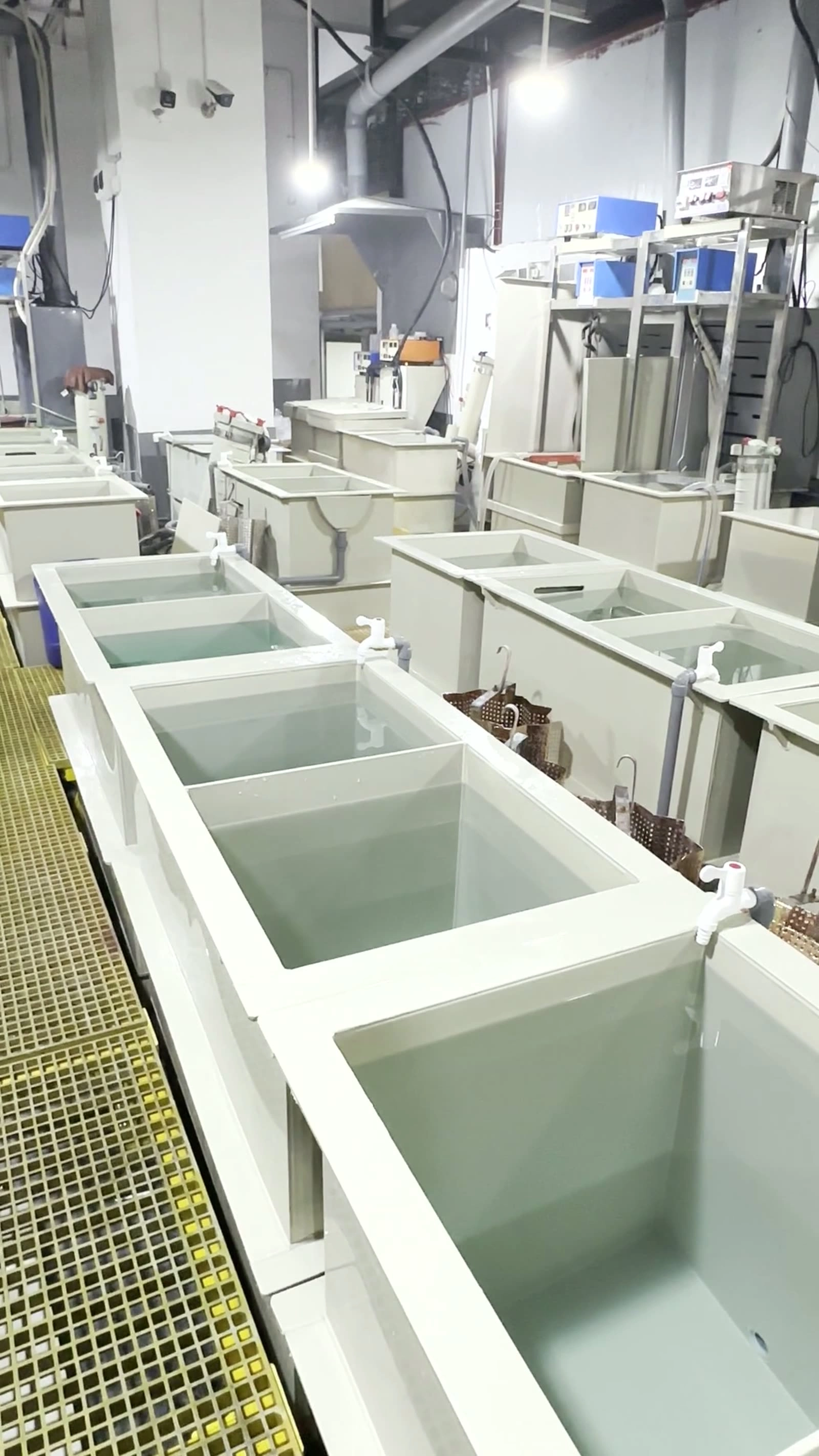
Triage: symptom → confirm → first move
| Symptom | Likely root | Confirm by | First move |
|---|---|---|---|
| Peels in sheets, bare steel shows | Surface contamination pre-plate | Water-break + peel map | Pre-clean audit before dosing |
| Blisters after bake | Hydrogen entry + baking missed | Bake log vs spec | Enforce bake window per spec |
| Adhesion fails on high carbon steel | Substrate-specific prep needed | By-alloy pattern | Stronger activate for that alloy |
| Peel at edges after storage | Post-dip/rinse contamination | Storage test samples | Rinse quality check |
| Random scattered failures | Cleaner bath exhausted | Cleaner titration log | Rebalance or dump per trend |
The fix set with windows
- Fix 1 — clean gate — Water-break-free before any acid; cleaner titrated 2× per shift, dumped on trend not on smell
- Fix 2 — activate fresh — Weak acid activate minutes before zinc; stale activate = peel seeds
- Fix 3 — bake window — Hydrogen embrittlement bake per spec (e.g. 190–210 °C by class) within hours of plating
- Fix 4 — alloy split — High-carbon and case-hardened steels get their own prep card
- Fix 5 — bend/peel gate — Sample bend or tape test per load; adhesion stops at the tank, not at the customer
Case method
A fastener line's peeling claims stopped after two changes: cleaner titration 2× per shift (dump on trend) and a mandatory bake log check before parts leave. Both are paperwork — neither is chemistry. (Method illustration: track your own claim dates vs log compliance.)
On the floor: recognise, record, escalate
| You see | You do | You never do |
|---|---|---|
| Zinc peels in sheets | Keep sample, tag load, call senior | Re-plate over the peel |
| Blisters after bake | Check bake log was actually run | Skip bake to save time |
| Water beads on parts | Flag cleaner tank for titration | Send beading parts to zinc anyway |
| Any adhesion doubt | Tank card entry with load id | Ship and hope |
Engineer notes
- One variable per corrective action; verify with the confirm-by column.
- Records beat memory: log every trial on the tank card.
- Two failed actions in a row is a senior call — escalate with your log.
Safety: Safety: alkaline zinc baths are caustic and hydrogen from pickled steel can ignite. Caustic-rated PPE, no flames near freshly pickled loads, eyewash at the line.
FAQ
Why does zinc peel in sheets?
It never bonded: contamination under the deposit. The peel map points to the stage — cleaner, activate or rinse.
Water-break test — where exactly?
After the last cleaner stage, before acid: beads mean oil remains; sheeting means clean.
Bake window — how tight?
Per spec class, within hours of plating; late bakes let hydrogen damage set in.
Which KPI predicts peel claims?
Cleaner titration compliance and bake log completeness; both drift before claims arrive.