
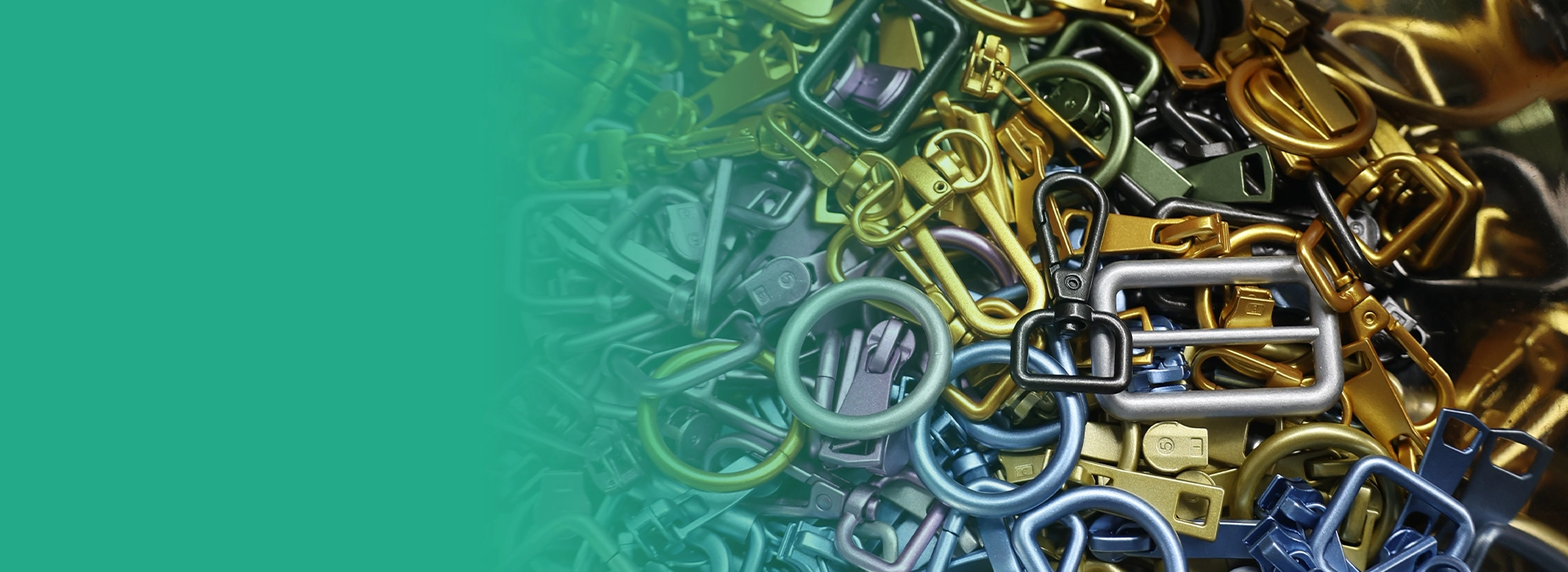
Professional Zinc Alloy Surface Finishing Solutions
Sodium Hydroxide
Sodium Hydroxide
Générer un code QR
-
Estimated Delivery:Oct 02 - Oct 06
-
Free Shipping & Returns: On all orders over $75
Product description
Shipping & Return
Product Overview
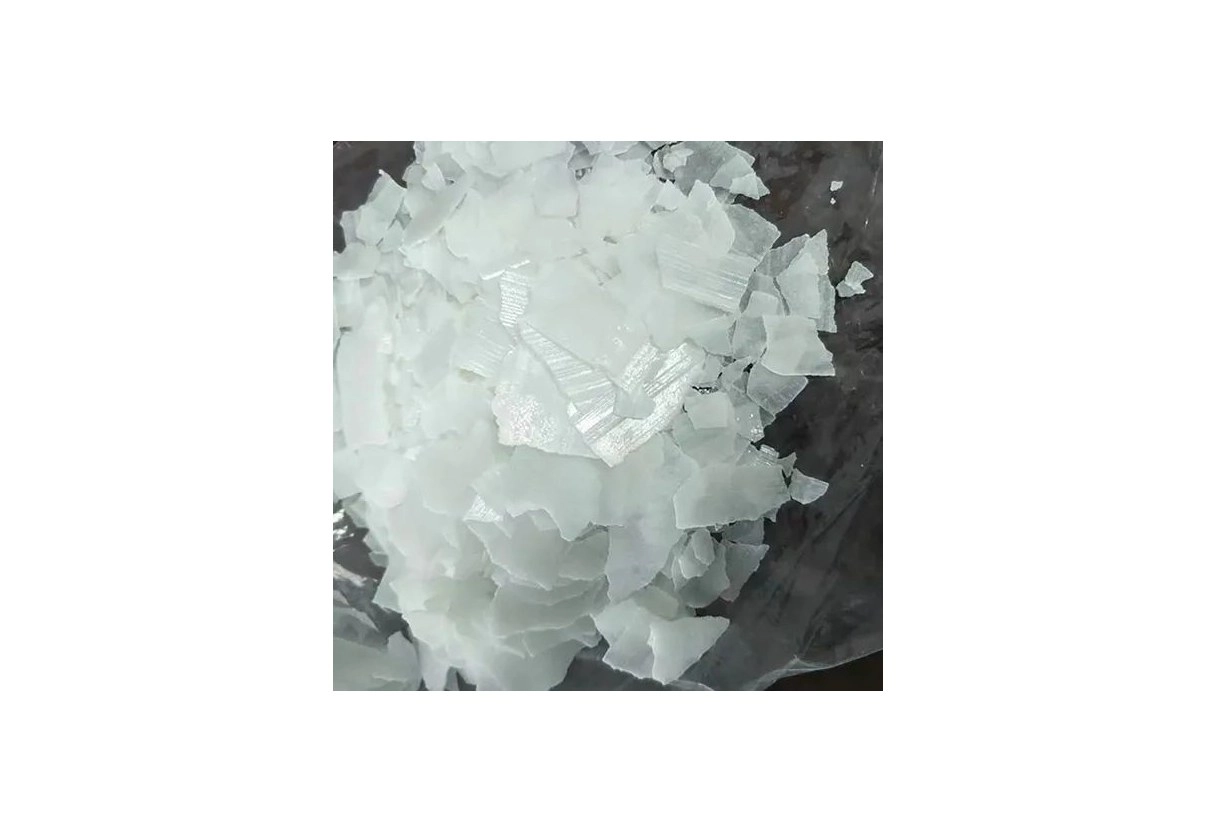
Sodium Hydroxide (NaOH) - caustic soda - is the strongest everyday alkali in the finishing shop and the electrolyte backbone of alkaline zincate zinc plating. As white flakes or pearls it dissolves with strong heat release into the 100-140 g/L caustic solutions that hold zincate zinc in solution, and at lower levels it is the working alkali of soak cleaners, electrocleaners and aluminum etching tanks. In QLQ's finishing plants caustic soda runs the alkaline zinc lines on steel hardware, builds the cleaner stages ahead of the nickel-chrome decoration lines, and neutralizes the acid waste streams. Two commercial forms dominate: flake ≥ 99% and pearl; for plating the relevant impurities are iron, chloride and carbonate, because iron films and stains work while chloride and carbonate drift into the process tanks that follow. Grades sold for soap or oil refining are not held to metal limits that matter to a plating line. Caustic is the chemical that demands the most respect in the store - concentrated solutions are among the most corrosive materials routinely handled, and every handling step in this article assumes full PPE.
Product Identity (Encyclopaedia Card)
| Property | Value |
|---|---|
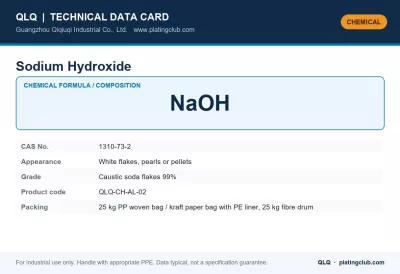
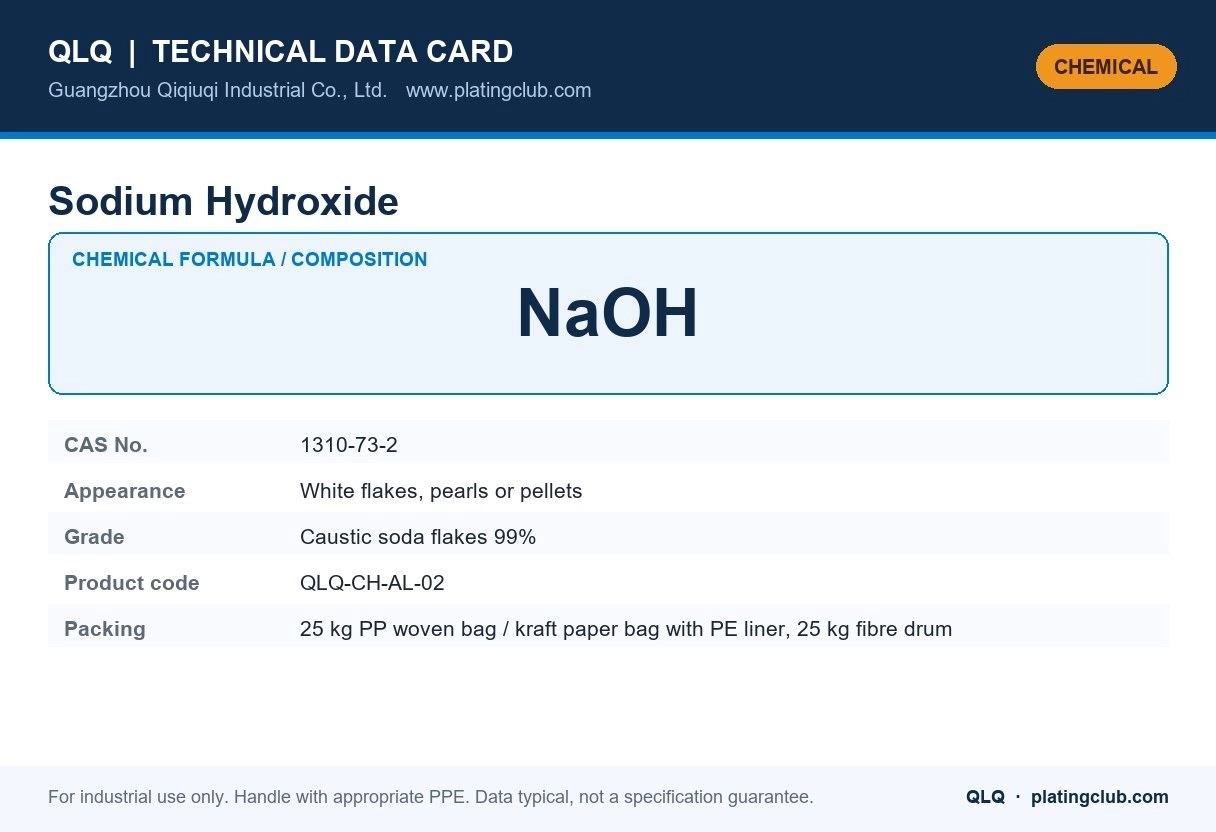
| Chemical name | Sodium Hydroxide |
| Chemical formula | NaOH |
| CAS number | 1310-73-2 |
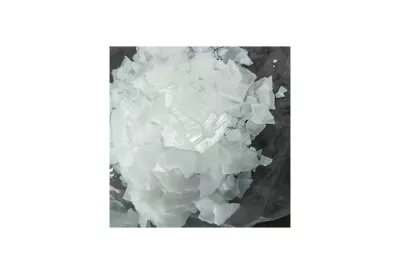
| Appearance | White flakes, pearls or pellets |
| Grade / type | Caustic soda flakes 99% |
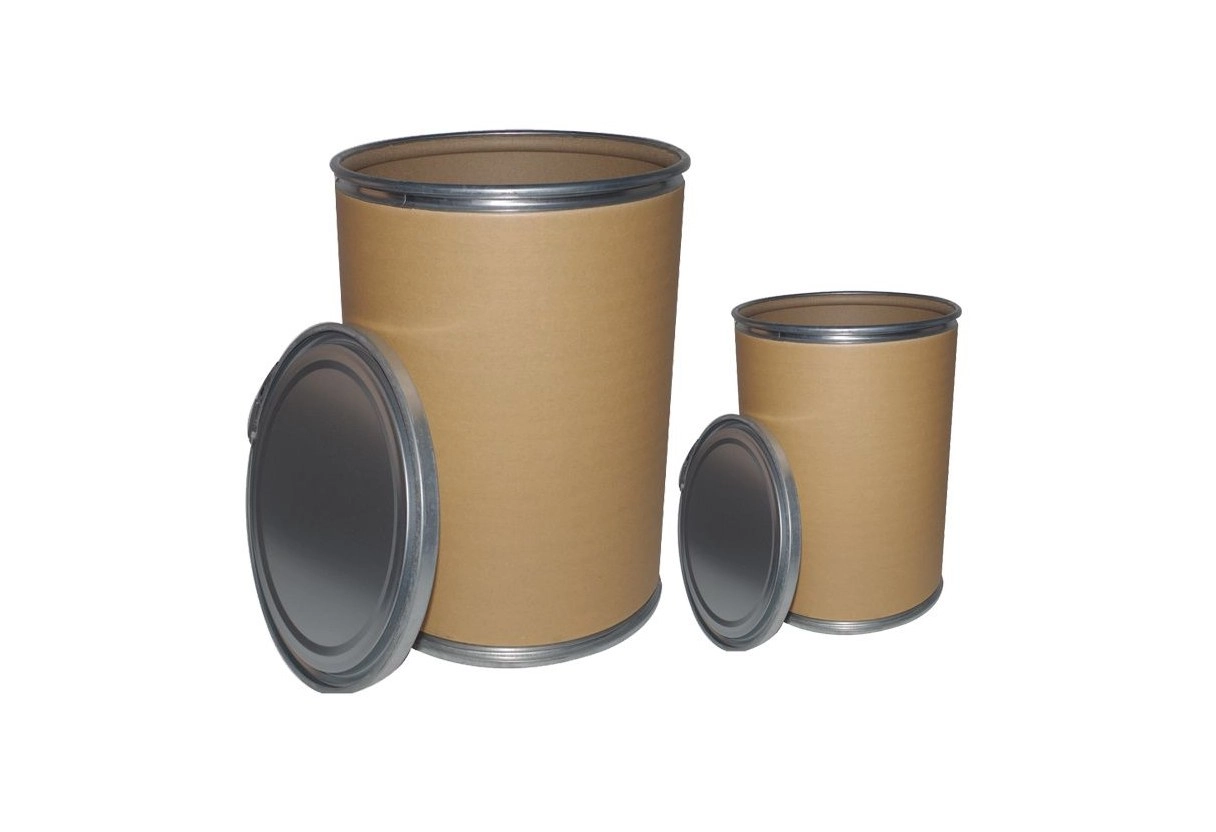
| Standard packing | 25 kg PP woven bag or kraft paper bag with PE inner liner; 25 kg fibre drum |
What it is and what it does. Sodium hydroxide (caustic soda) is the principal alkaline of soak cleaners, electro-cleaners, zincate baths and the alkaline tin and zinc plating systems.
- Supplied as flakes or pearls, typically 99%; strongly hygroscopic, and it absorbs carbon dioxide from the air, so bags must be resealed.
- In the electro-cleaner it provides the saponification that turns oily soil into a rinseable soap.
- Dissolving it in water is strongly exothermic - a 50% solution can boil.
Typical Use in a Plating / Finishing Line
| Item | Typical guidance |
|---|---|
| Soak cleaner | 20-50 g/L at 60-80 C |
| Electro-cleaner | 10-30 g/L with the appropriate electrode polarity |
| Zincate bath | 100-140 g/L |
| Analysis | Titration with standard acid; carbonate by a second titration |
Safety, Handling & Storage
| Item | Requirement |
|---|---|
| Hazard classification | Corrosive (GHS05) — causes severe skin burns and eye damage |
| Personal protective equipment | Face shield + goggles, alkali-resistant gloves, rubber apron; avoid dust generation |
| Spill / first aid | Sweep or vacuum dry powder; dilute and neutralise liquid spills with dilute acid, then collect |
| Storage | Dry sealed store, off the floor, away from acids, aluminium, zinc and organic materials; keep bags closed to avoid caking and carbonation |
| Transport | Classified and packed according to IATA/IMDG for the hazard class; UN number and packing group stated on the shipping documents |
Quality Documents Shipped With Every Batch
| Document | Comment |
|---|---|
| COA (certificate of analysis) | Provided with the shipment; batch traceable to the production date |
| MSDS (safety data sheet) | Provided with the shipment; batch traceable to the production date |
| Packing list | Provided with the shipment; batch traceable to the production date |
| Commercial invoice | Provided with the shipment; batch traceable to the production date |
| Certificate of origin on request | Provided with the shipment; batch traceable to the production date |
Buyer Questions We Answer Every Week
| Question | Answer |
|---|---|
| How do I avoid caking in the bag? | Reseal the inner liner immediately after use and keep the pallet in a dry store. |
| Why does the cleaner carbonate? | It absorbs carbon dioxide from the air; carbonate is controlled by dumping part of the bath on a schedule. |
| Item | Typical Value |
|---|---|
| Chemical formula | NaOH (sodium hydroxide) |
| NaOH content | ≥ 99% (flake / pearl) |
| Appearance | White flakes or pearls, free-flowing, hygroscopic |
| Sodium carbonate (Na2CO3) | ≤ 0.5% (lower is better for process work) |
| Chloride (NaCl) | ≤ 0.05% |
| Iron (Fe) | ≤ 0.002% |
| Standard packing | 25KG woven bag with PE inner liner (flake) |
How It Works in Each Station of the Line
Caustic does four jobs. In alkaline zincate plating it is not an accessory but the solvent system itself: 100-140 g/L NaOH dissolves zinc oxide into sodium zincate and carries the current, and the Zn-to-NaOH ratio is the master control of the bath - too little caustic and zinc precipitates, too much and efficiency collapses. In cleaning, 25-60 g/L caustic saponifies oils and lifts soils at 60-90°C, usually buffered with carbonate and silicate. In electrocleaning it carries the current that scrubs the part surface with gas evolution. And in aluminum preparation, hot caustic is the etchant that strips old oxide and gives the matte etch some anodizers and adhesive-bonding lines need. At the effluent station it is the primary neutralizer of acid waste - dosed with care, because overshooting into strong alkali redissolves the metal hydroxide sludge the plant just settled.
| Station | Typical NaOH level | Working note |
|---|---|---|
| Alkaline zincate zinc bath | 100-140 g/L | With ZnO make-up for 6-12 g/L Zn; 18-35°C |
| Alkaline soak cleaner | 25-60 g/L | 60-90°C, with carbonate/silicate builders |
| Electrocleaner | 30-70 g/L | 60-80°C, reverse current 2-5 A/dm² |
| Aluminum etch / deoxidize pre-step | 40-80 g/L | 45-60°C, seconds to minutes for etch depth |
| Acid waste neutralization | Per acid titration | Neutralize to pH 6.5-9 with mixing and pH control |
How to Check Quality Before Loading a Batch
| Check | Method | Pass Criteria |
|---|---|---|
| Appearance | Visual | White flakes/pearls; no yellow, grey or pink tint (iron, organics) |
| Assay | Acid-base titration against standard HCl | ≥ 99.0% NaOH |
| Carbonate | Precipitation/titration difference method or COA | Na2CO3 ≤ 0.5%; high carbonate clouds zincate baths |
| Chloride & iron | COA figures, spot-check | NaCl ≤ 0.05%, Fe ≤ 0.002% |
| Make-up test | Dissolve required amount in DI water at 30°C | Clear solution; no white sediment or floating scum |
How QLQ controls it: caustic deliveries are quarantined until COA assay and impurity figures match the specification, and each lot's make-up is confirmed in a small dissolution test before it is used on the production lines. Lot numbers follow the chemical into the zinc and cleaner make-up sheets, so a cloudy bath or a stained barrel can be traced to the exact delivery.
Common Problems & Fixes (Workshop Table)
| Problem | Root cause | Fix |
|---|---|---|
| Zincate bath cloudy with white precipitate | Caustic below the holding level, or bath cold | Titrate NaOH and Zn; warm to 25-30°C; restore caustic before adding zinc |
| Low cathode efficiency, thin zinc | Caustic too high relative to zinc (ratio out of window) | Raise zinc with oxide; reduce NaOH only if analysis confirms excess |
| Parts not clean after the soak stage | Caustic depleted by drag-out and CO2 absorption | Titrate; rebuild to working level; check temperature and cleaner load |
| Aluminum etch uneven or too fast | Caustic too hot or too strong; bath loaded with dissolved aluminum | Control temperature 45-60°C; titrate; bleed and rebuild as aluminate builds |
| White crust on tank walls and heaters | Carbonate scaling from air absorption and hard water | Acid-flush scale with inhibited acid; cover tanks; use softened water |
Handling & Safety for the Plating Line
- Corrosivity: caustic burns are deep and slow to appear. Wear face shield or goggles, rubber or PVC gloves with rolled cuffs, rubber apron and boots whenever handling flake, solution or wet work.
- Dissolving: always add caustic slowly to water with stirring - never water to caustic. The heat of solution can boil water instantly and spatter concentrated caustic.
- Eye protection is mandatory: a single droplet in the eye is sight-threatening. Eyewash stations must be adjacent to every caustic make-up and dosing point, tested weekly.
- Storage: caustic is hygroscopic and absorbs CO2, forming carbonate and caking. Keep bags sealed on dry pallets and use oldest stock first.
- First aid: eye contact - flush with water for at least 15 minutes and go to hospital; skin - remove contaminated clothing, brush off dry flakes, flush copiously, then seek medical advice for anything beyond a trivial spot.
- Spills: contain and dilute with large volumes of water, or neutralize small spills with dilute acid after sweeping; never use hot water on a caustic spill (it accelerates the burn and the reaction).
What It Does on Iron, Zinc Alloy, Copper and Stainless Steel Parts
| Substrate | Role of caustic-based stages on this substrate | Recommended practice |
|---|---|---|
| Iron / steel small hardware | Alkaline zinc plating protects steel sacrificially; caustic cleaners prepare it | Clean, rinse, acid activate, zincate plate, passivate; keep NaOH at spec |
| Zinc alloy (sliders, buckles) | Caustic cleaners attack zinc alloys if too strong or too long | Use buffered mild alkali or short, cool caustic dips; rinse fast |
| Copper / brass | Alkaline cleaning and zincate work must be brief - caustic tarnishes copper | Clean cool and short; never leave copper parts in hot strong caustic |
| Stainless steel | Resists caustic well; used for electrocleaning before nickel/chrome systems | Caustic electroclean is safe on stainless; rinse then acid activate |
FAQ
| Question | Answer |
|---|---|
| Can I substitute caustic soda for soda ash in cleaners? | Only partially - caustic is stronger but unbuffered. Production cleaners usually need both: caustic for bite, carbonate for buffering and controlled rinsability. |
| Why does my zincate bath need caustic at 100+ g/L? | That concentration keeps zincate zinc soluble and gives the bath its conductivity and throwing power. Below about 75 g/L zinc precipitates and efficiency collapses. |
| How is caustic analyzed in a zincate bath? | By titration against standard acid after complexing the zinc with cyanide or by the carbonate-difference method; most shops titrate NaOH and zinc weekly. |
| What is the Zn-to-NaOH ratio and why does it matter? | It is zinc metal divided by caustic, typically about 0.07-0.10. Outside that window deposits dull, burn or lose efficiency - check it whenever appearance changes. |
| Does QLQ supply high-purity caustic soda with support? | Yes. QLQ supplies caustic flakes with COA covering assay, carbonate, chloride and iron, plus engineers who help with zincate control and cleaning chemistry. |
Alkaline zinc bath cloudy or cleaning stages weak? QLQ supplies high-purity caustic soda with COA and engineers who help customers in 10+ countries run zincate and cleaning lines safely. Contact us with your bath analysis.
Shipping cost is based on weight. Just add products to your cart and use the Shipping Calculator to see the shipping price.We want you to be 100% satisfied with your purchase. Items can be returned or exchanged within 30 days of delivery.