
Scope of this guide
This junior-level guide sticks to the basics you must run without help: safe settings, daily checks and the pass criteria you can verify yourself.
Process: Gold & Precious Plating. Figures in this guide are industry-standard starting ranges; confirm against your supplier TDS before locking settings.
Working ranges and control points
The table below is the daily reference for a gold bath. Set by the card, verify by the control point column.
| Parameter | Typical range | Control point | Watch out |
|---|---|---|---|
| Bath temperature | 55–65 °C (hard gold) | Thermostat 2× per shift | Cold bath dulls colour |
| Current density | 0.5–1.5 A/dm² | Coulomb counter per rack | High CD gives brittle deposit |
| Gold content | 6–10 g/L as metal | Spectro weekly | Low metal raises resistance |
| Thickness spec | 0.1–0.5 µm decorative; 0.8–1.5 µm wear | XRF per batch | Thin flash wears through |
| Contamination limit | Ni < 20 mg/L, Cu < 10 mg/L | Hull cell check | Drag-in darkens colour |
Standard routine
- Pre-plate nickel barrier before gold on zinc alloys
- Rinse thoroughly — soaps poison gold baths
- Weigh racks before and after to estimate deposit
- XRF-check three points per batch
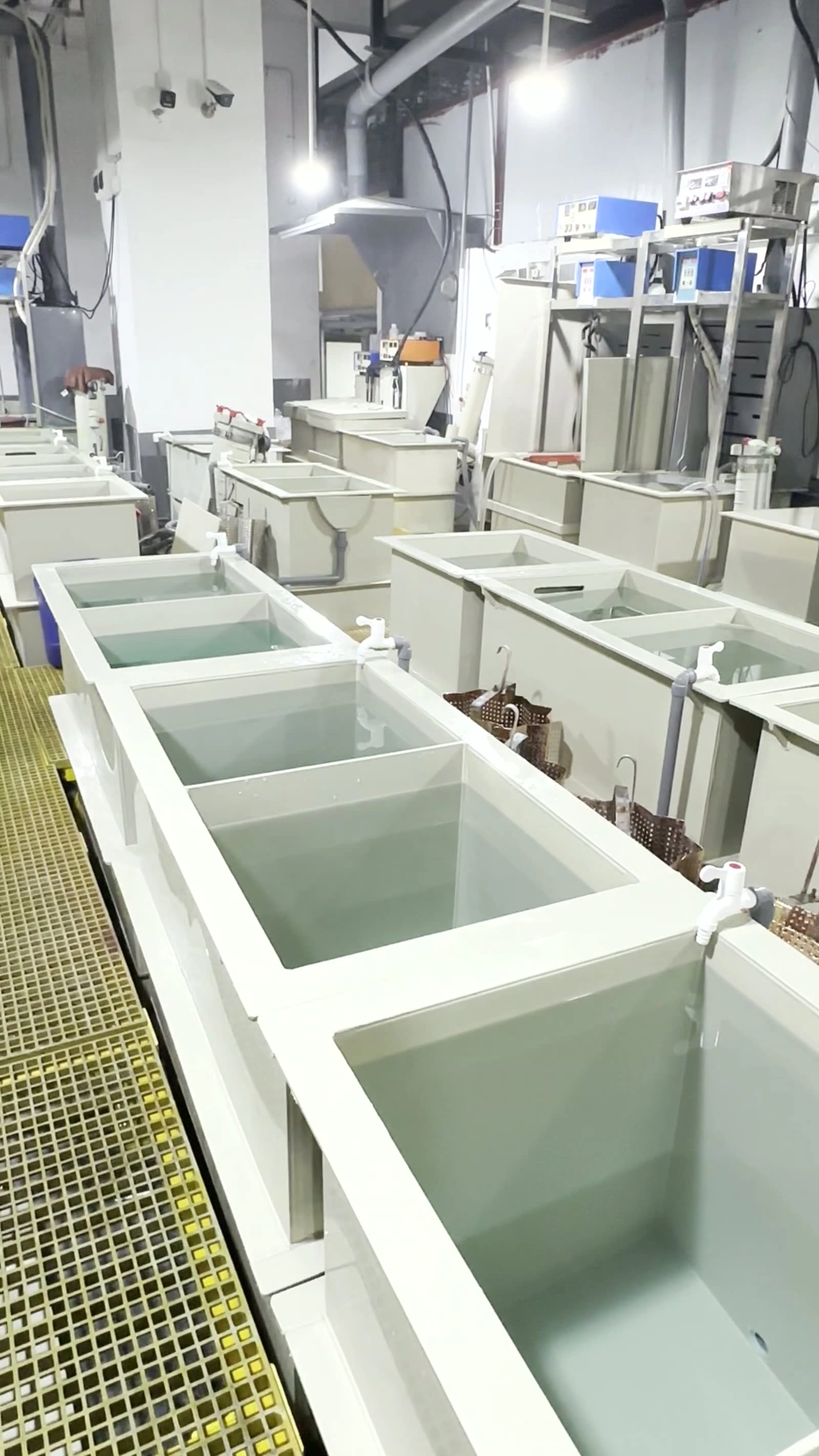
- Return gold-bearing rinse to recovery column
Engineer notes
- Colour drift is usually contamination or low metal, not temperature alone
- Coulomb counting beats time-based dosing for thickness control
- Hard gold for sliding contacts; pure gold for solderability
- Keep a dedicated rinse after nickel to protect the gold bath
- Audit gold salt inventory monthly — losses show up in rinse recovery
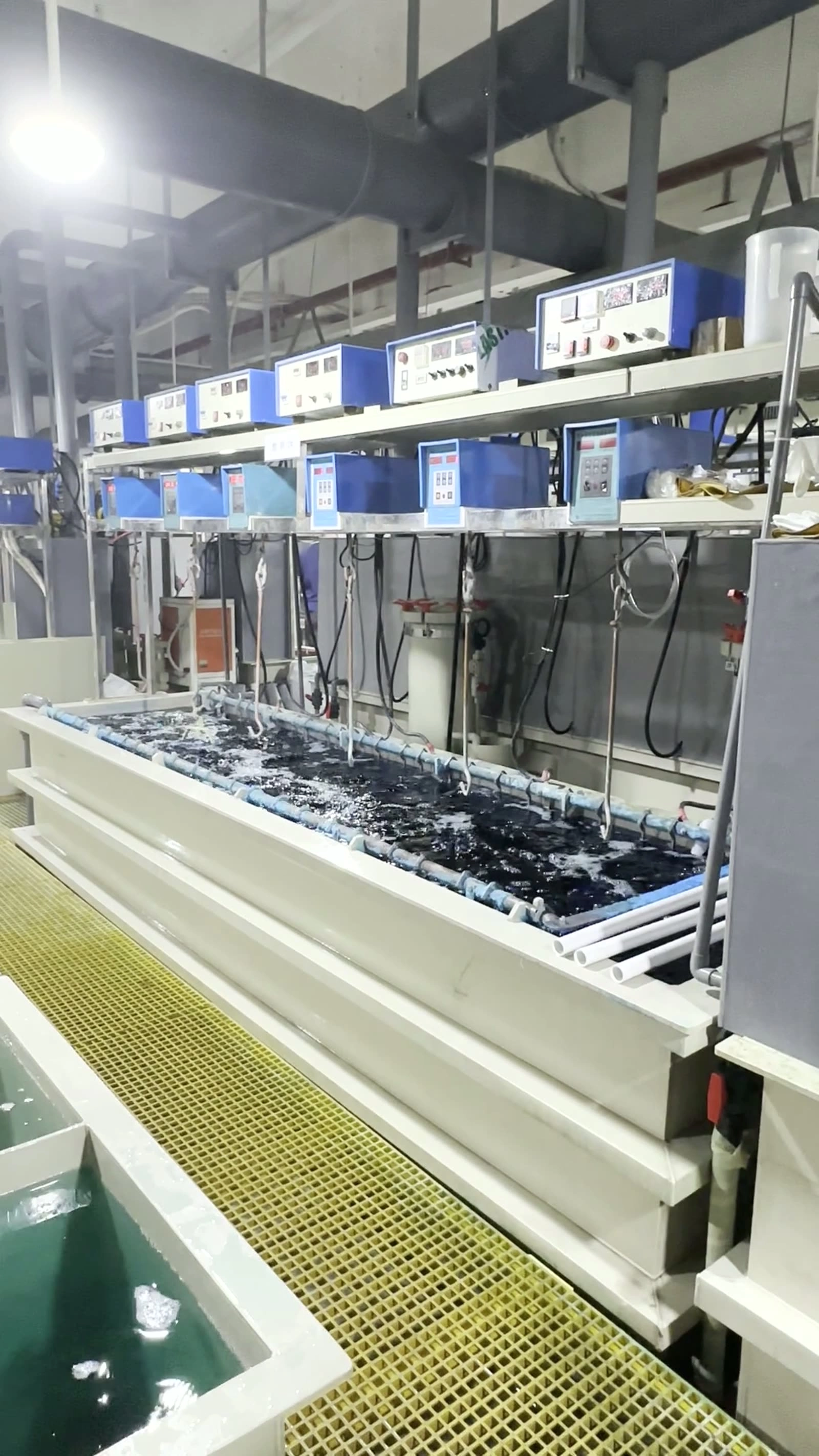
Safety: Gold baths contain cyanide complexes. Never mix with acid, keep pH above 8.5, and follow cyanide antidote procedures posted at the tank.
FAQ
Why is my gold pink instead of yellow?
Copper or nickel contamination from drag-in. Run a Hull cell and check purifier capacity.
What thickness do zipper sliders need?
0.2–0.3 µm over a nickel barrier for decorative wear; more for sliding surfaces.
Can I gold-plate directly on zinc diecast?
No — strike copper, then nickel barrier, then gold; otherwise zinc diffuses and tarnishes.