
Barrel Plating — Antique Copper, Antique Silver, Black Patina & Custom Colors
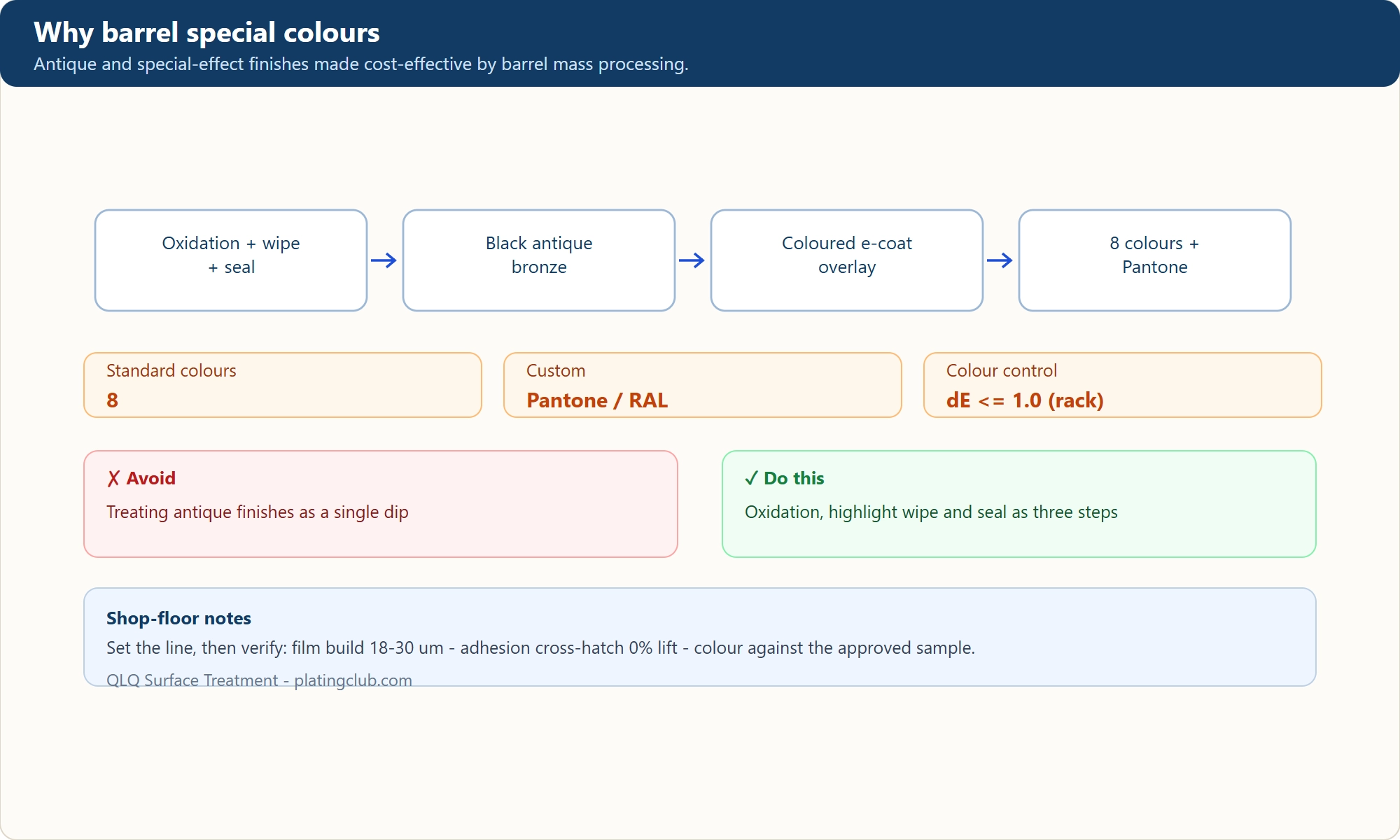
Special-effect finishes for barrel: antique bronze, antique silver, black patina, colored e-coat overlay. 8 special colors + Pantone custom. ΔE ≤ 1.0 control.
Why Barrel Special Colors
Antique and special-effect finishes create distinctive vintage, modern and custom looks — made cost-effective through barrel mass processing
Antique Finishes
Oxidation + wipe + seal process
Black Antique Bronze
Deep aged look, vintage style
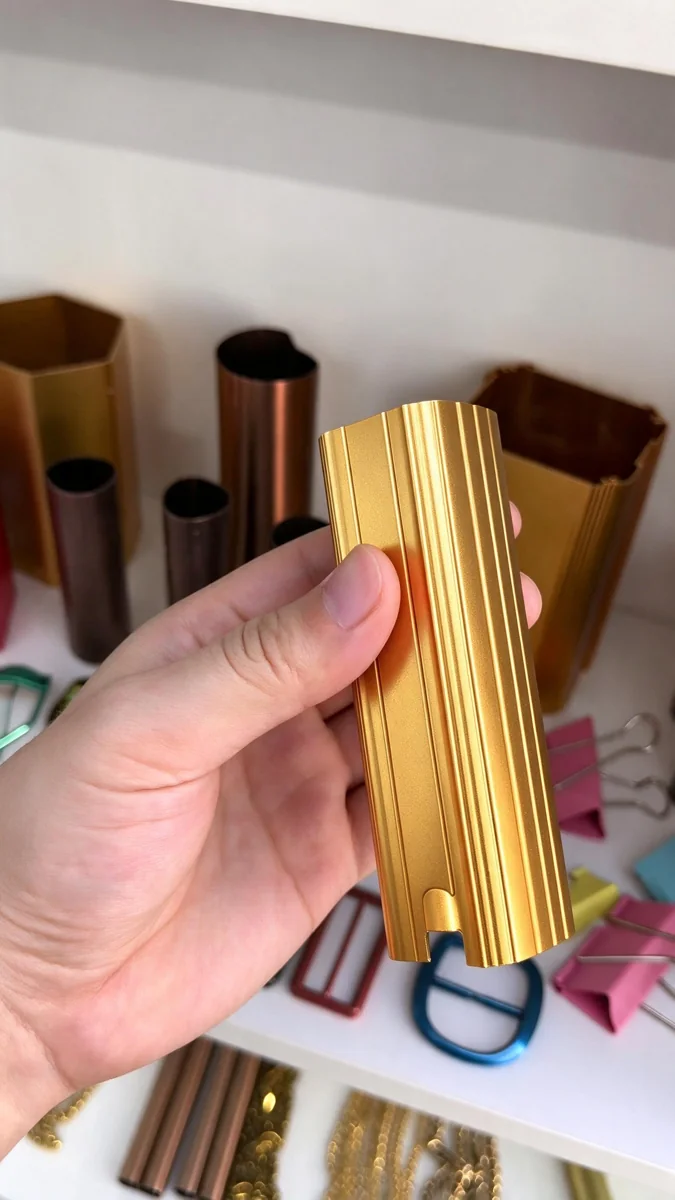
Colored E-Coat
Clear color overlay on plated base
8 Colors + Pantone
8 standard + custom ΔE ≤ 1.0
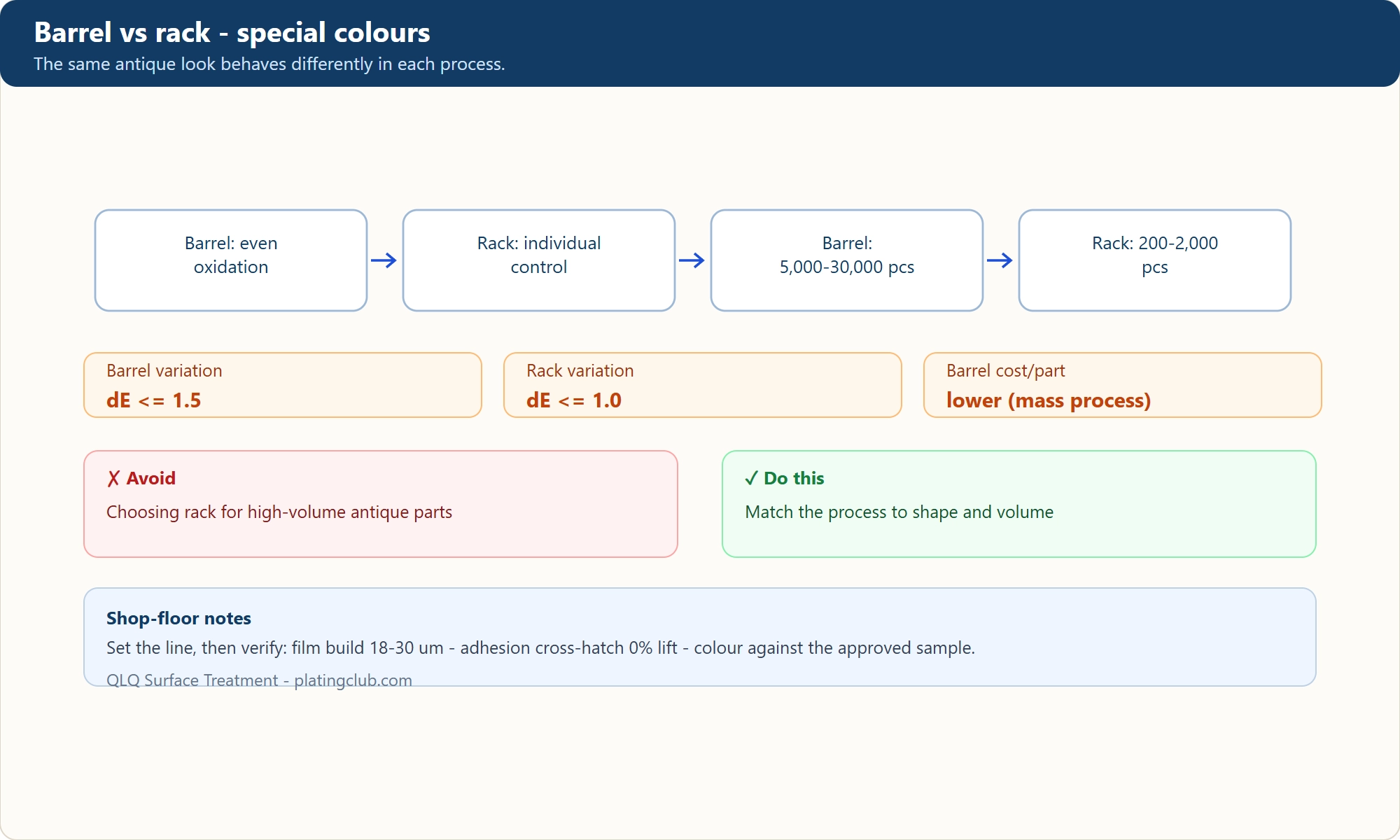
Barrel vs Rack — Special Colors Comparison
How special-effect finishes differ between barrel and rack processes
| Factor | Barrel Plating | Rack Plating |
|---|---|---|
| Antique finish consistency | Good — barrel tumbling gives uniform oxidation | Excellent — individual control |
| E-coat color overlay | Good for simple shapes | Excellent for complex shapes |
| Part-to-part variation | Slightly higher (ΔE ≤ 1.5) | Lower (ΔE ≤ 1.0) |
| Throughput | 5,000-30,000 pcs/batch | 200-2,000 pcs/batch |
| Cost per special-color part | Lower (mass antique processing) | Higher (individual handling) |
| Color depth/patina control | Barrel rotation time controls patina | Manual application controls patina |
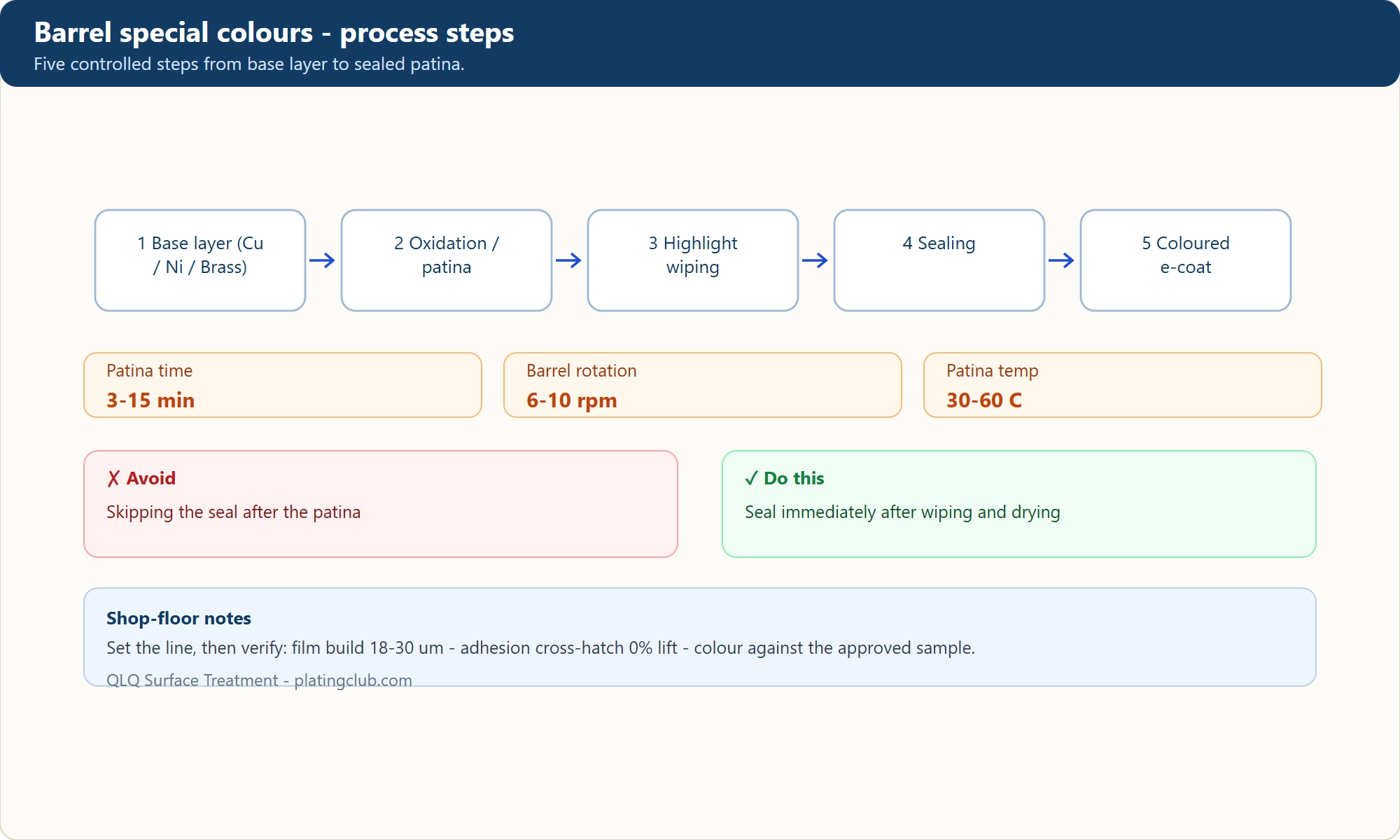
Barrel Special Colors — Process Steps
8 standard finishes plus Pantone custom colors — each with controlled oxidation and sealing
1Base Layer (Cu, Ni or Brass)
Most antique finishes start with a copper, nickel or brass base layer. The base metal determines the final antique color tone.
2Oxidation / Patina Formation
Controlled oxidation with chemical patina solutions. Parts tumble in barrel with patina solution for 3-15 minutes. Barrel rotation ensures uniform oxidation.
3Highlight Wiping (Barrel-Specific)
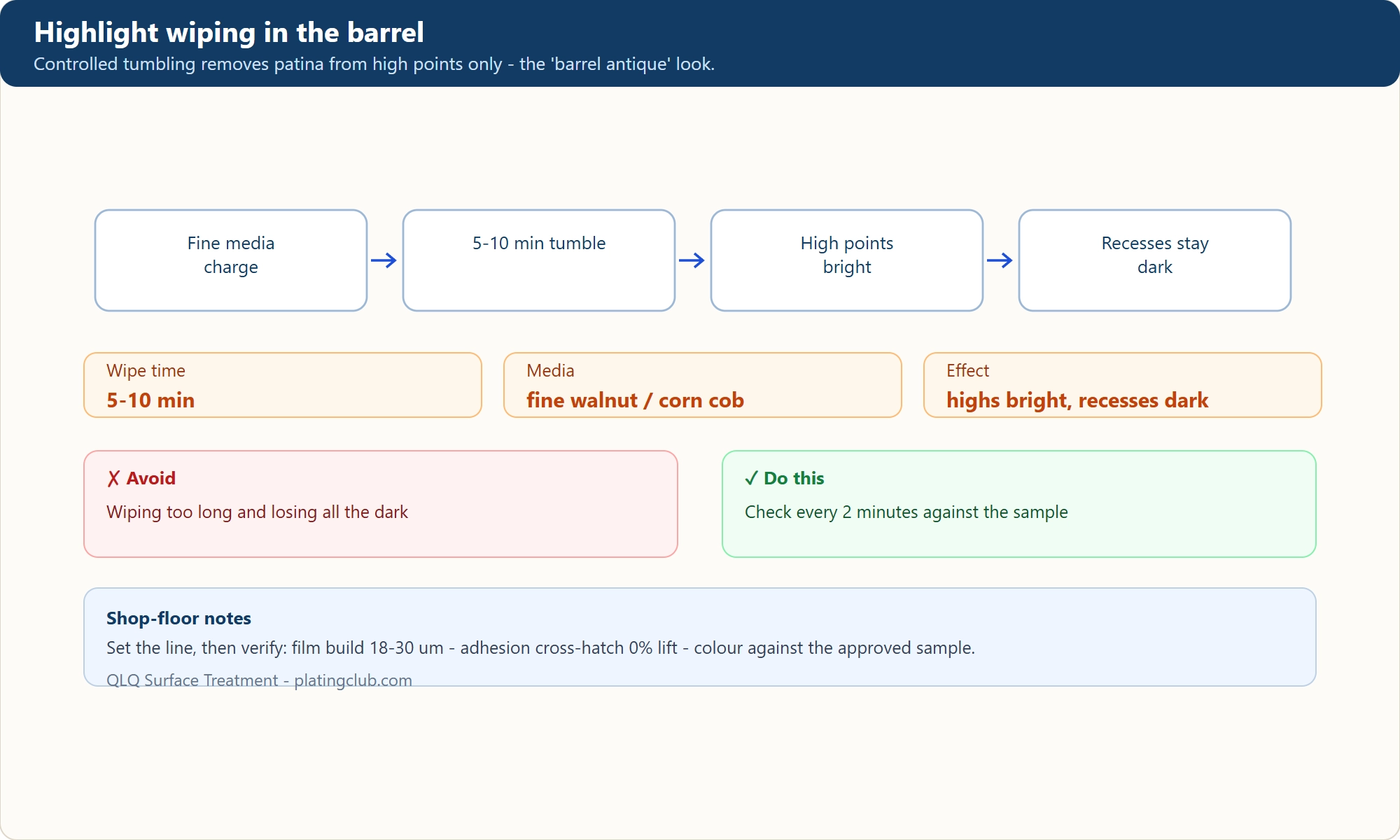
In barrel, highlights are created by controlled tumbling with abrasive media — removes patina from raised surfaces, leaving depressions dark. This is the 'barrel antique' effect.
4Sealing & Protection
Antique finishes are fragile without sealant. Water-clear lacquer or e-coat protects the patina from abrasion and color change from handling oils.
5Colored E-Coat Overlay
For custom colors: plate a neutral base, then apply colored e-coat (RAL, Pantone or custom). The e-coat provides uniform color and high durability.
6Color QC & Tolerance
Spectrophotometer check against master swatch. Antique finishes have inherent variation — we control it by limiting batch size and using calibrated patina solution.
Available Special Colors
8 standard antique and custom colors we run in barrel
| Color Name | Base Metal | Patina System | Finish | Best Use |
|---|---|---|---|---|
| Antique Copper | Copper | Sulfide oxidation | Warm aged copper | Furniture hardware, retro designs |
| Antique Silver | Nickel | Sulfide + fine wipe | Aged silver look | Costume jewelry, decorative trim |
| Antique Bronze | Cu-Sn (bronze) | Permanganate patina | Deep brown-bronze | Door handles, vintage hardware |
| Black Antique Copper | Copper | Heavy sulfide + deep patina | Black-brown aged copper | Tactical, industrial design |
| Aged Brass | Brass or Cu + Ni | Sulfide + selective wipe | Worn brass effect | Furniture, lighting fixtures |
| Pewter | Ni-Sn alloy | Matte finish + fine oxide | Soft grey pewter | Modern minimalist hardware |
| Oil-Rubbed Bronze | Cu + dark oxide | Oil-based patina + seal | Dark, rubbed bronze | Premium door hardware |
| Oxidized Silver | Silver + sulfide | Controlled tarnish | Toned silver | Jewelry, vintage accessories |
📌 Special Colors Cheat Sheet
FAQ
Can I get a consistent antique finish in barrel?
How long does the antique patina last?
What's the MOQ for custom Pantone e-coat colors?
Can you match a physical sample (not Pantone)?
Do colored e-coat overlays change the base metal feel?
Get a Free Quote Today
Send us your samples or drawings — our engineers reply within 24 hours with pricing and technical advice.
Contact Us