

Post-Treatment: Passivation, E-Coating & Sealing
Plating gives the look — post-treatment decides how long it keeps it. The 6-step finishing system that takes salt spray from 24 h to 200+ h.
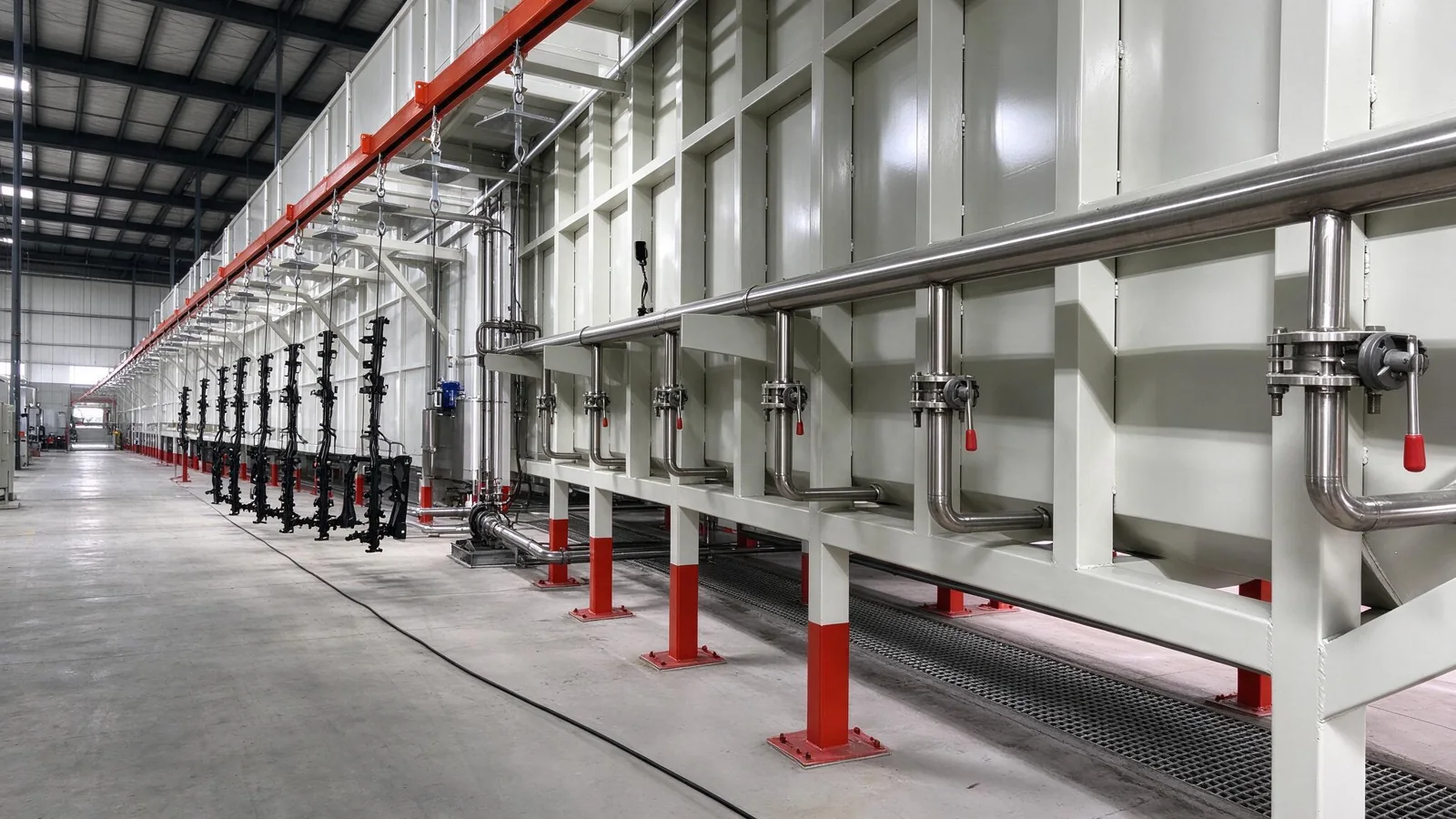
The 6-Step Post-Treatment Line
Every step after the plating bath, before the box
1DI Water Final Rinse
Deionized water removes residual salts that cause spotting and under-film corrosion. Tap water at this stage = future rust stains.
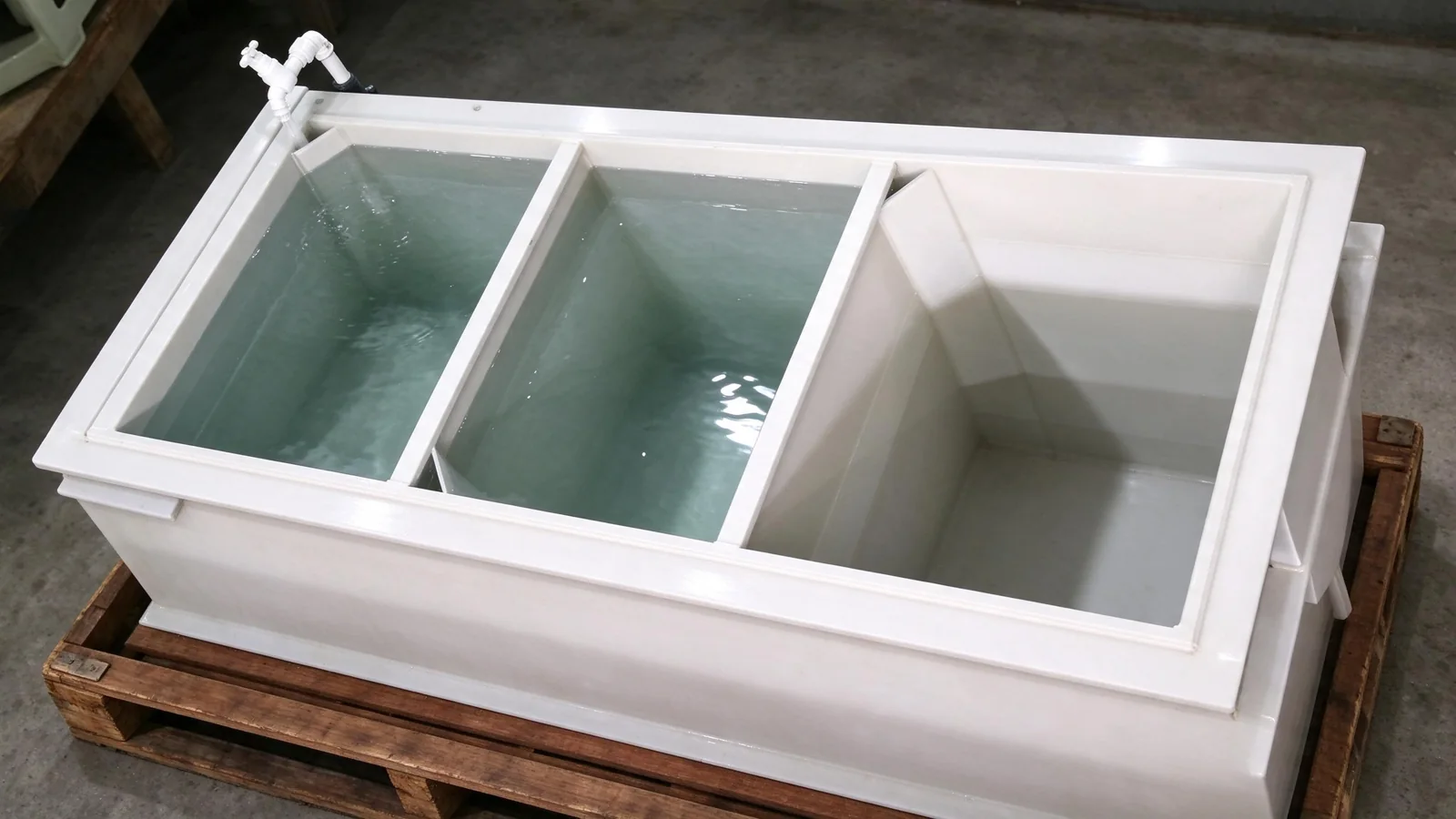
2Passivation / Sealing
Conversion coating that blocks corrosion initiation. Chromate for maximum protection, trivalent or organic for REACH compliance.
3E-Coating (Electrophoretic)
Charged paint particles wrap every edge and recess. Clear, black or custom colors.
4Controlled Drying
Forced-air drying below the water-spot threshold. Humidity-controlled tunnel, not open-air racks.
5Final QC
D65 visual check, XRF thickness audit, cross-cut adhesion, and salt-spray coupon from every batch.
6Anti-Tarnish Packaging
VCI bags or anti-tarnish tissue + desiccant. Correct packaging doubles shelf life before your customer even opens the box.
Protection Levels Compared
Hours of salt spray per treatment stack
| Treatment Stack | Salt Spray | Look | Cost | Use Case |
|---|---|---|---|---|
| As-plated (bare) | 24–48 h | As-plated | — | Indoor, short shelf life |
| Chromate passivation | 48–96 h | Slight iridescence | Low | General hardware |
| Trivalent / organic sealer | 48–72 h | Clear, unchanged | Medium | EU / REACH orders |
| Clear e-coat | 96–200+ h | Glossy clear | High | Premium & outdoor |
| Color e-coat | 96–200+ h | Opaque color | High | Fashion statements |
| Lacquer on antique | 48–120 h | Satin, freezes patina | Medium | Antique finishes |
| Powder coating | 200–500+ h | Thick opaque | Very high | Industrial / marine |
📌 Post-Treatment Cheat Sheet
FAQ
Best stack for outdoor products?
Does passivation change the color?
How long does e-coat last?
Custom e-coat colors?
Get a Free Quote Today
Send us your samples or drawings — our engineers reply within 24 hours with pricing and technical advice.
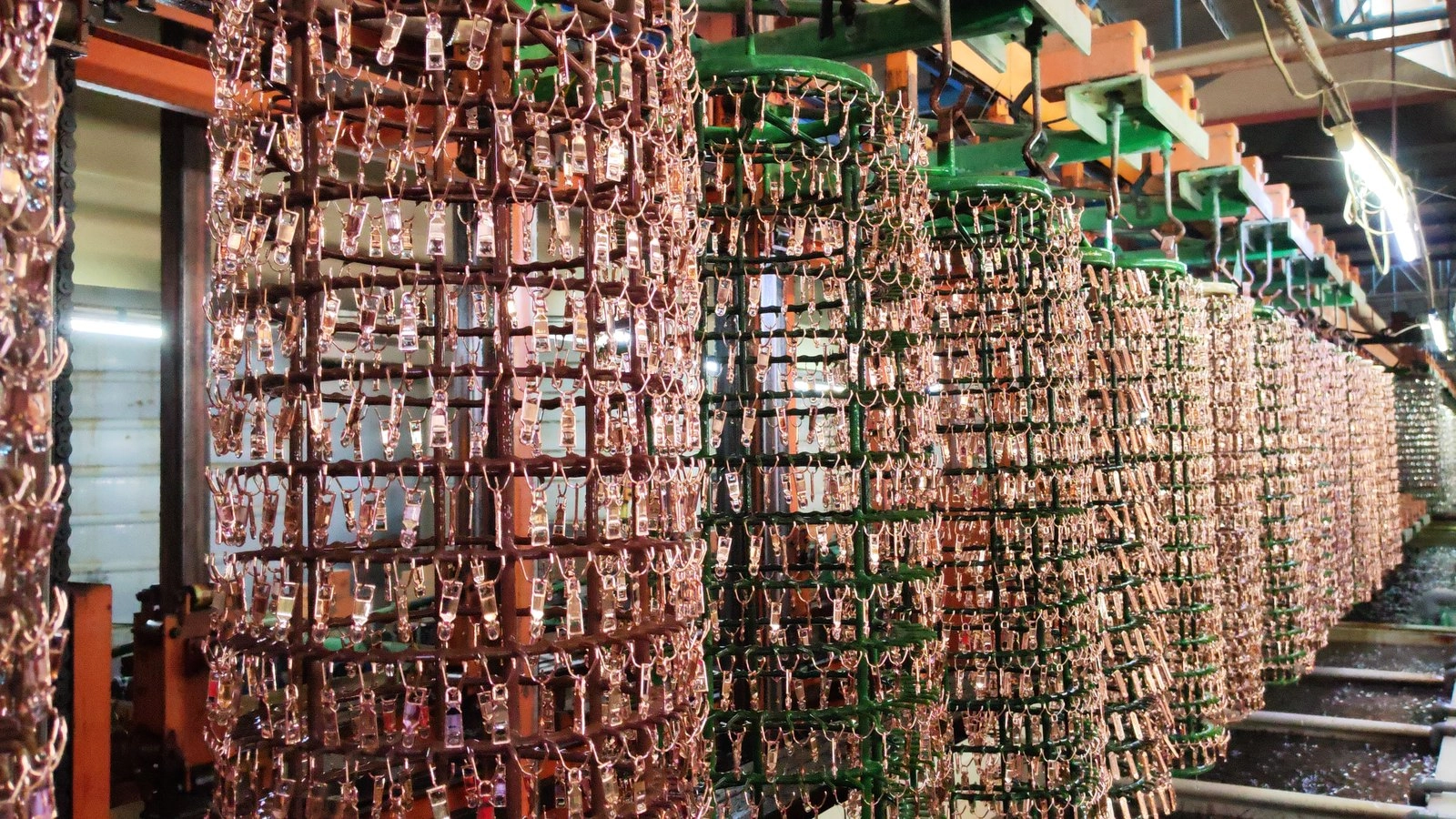
Post-treatment stages on a rack line
| Stage | Purpose | Typical condition | Skip it and you get |
|---|---|---|---|
| Drag-out rinse | Recover chemistry, protect the next bath | 5-15 s drip, then rinse | Contamination and chemical loss |
| Passivation | Slow white corrosion on zinc and brass | Per TDS, 20-60 s | White spots in storage |
| Sealing | Fill porosity, improve corrosion | Dip or spray, dry after | Blistering in humid shipping |
| Drying | Remove water before packing | 60-80 C air, or centrifuge for small parts | Water marks, rust in transit |
| Final inspection | Catch the batch before the customer does | D65 light, approved chip | Rework after shipping |
Passivation and sealing are cheap compared with a returned container.
Storage and packing
- Pack only after parts reach room temperature
- Use desiccant for sea freight; humidity in a container is the real enemy
- Keep parts in bags, not loose in cartons where they rub
FAQ
How long does passivation protection last?
Depends on the film and storage. For sea freight, combine passivation with sealed packing and desiccant.
Do we need sealing on decorative gold?
Usually a thin clear seal for handling and fingerprint resistance; verify it does not shift the colour chip.