

Professional Zinc Alloy Surface Finishing Solutions
Mercaptobenzimidazole
Mercaptobenzimidazole
Generar código QR
-
Estimated Delivery:Oct 02 - Oct 06
-
Free Shipping & Returns: On all orders over $75
Product description
Shipping & Return
Product Overview
2-Mercaptobenzimidazole (MBI, C7H6N2S) is a sulfur-containing heterocyclic compound sold to plating shops as a high-performance anti-tarnish agent for copper, brass and silver, and to additive makers as a raw material for copper brightener and leveler systems. Its chemistry is close to benzotriazole (BTA) - both form a protective molecular film on copper - but the mercapto (-SH) group gives MBI a stronger, more heat-resistant bond to the metal surface, which is why it is preferred where parts see elevated temperature, humid export packing or aggressive handling after plating. On the plating line MBI appears in three roles: an anti-tarnish dip after copper plating and before nickel (protecting copper that must wait in racks or barrels), a post-plate protection stage for finished copper or silver tones, and a functional component blended into proprietary acid copper additives. Market grades differ mainly in assay and heavy-metal content; technical grade is a light gray to off-white powder at ≥ 98% assay. Because MBI is nearly insoluble in plain water, working solutions are made from its sodium salt - a fact that causes most field failures.
Product Identity (Encyclopaedia Card)
| Property | Value |
|---|---|
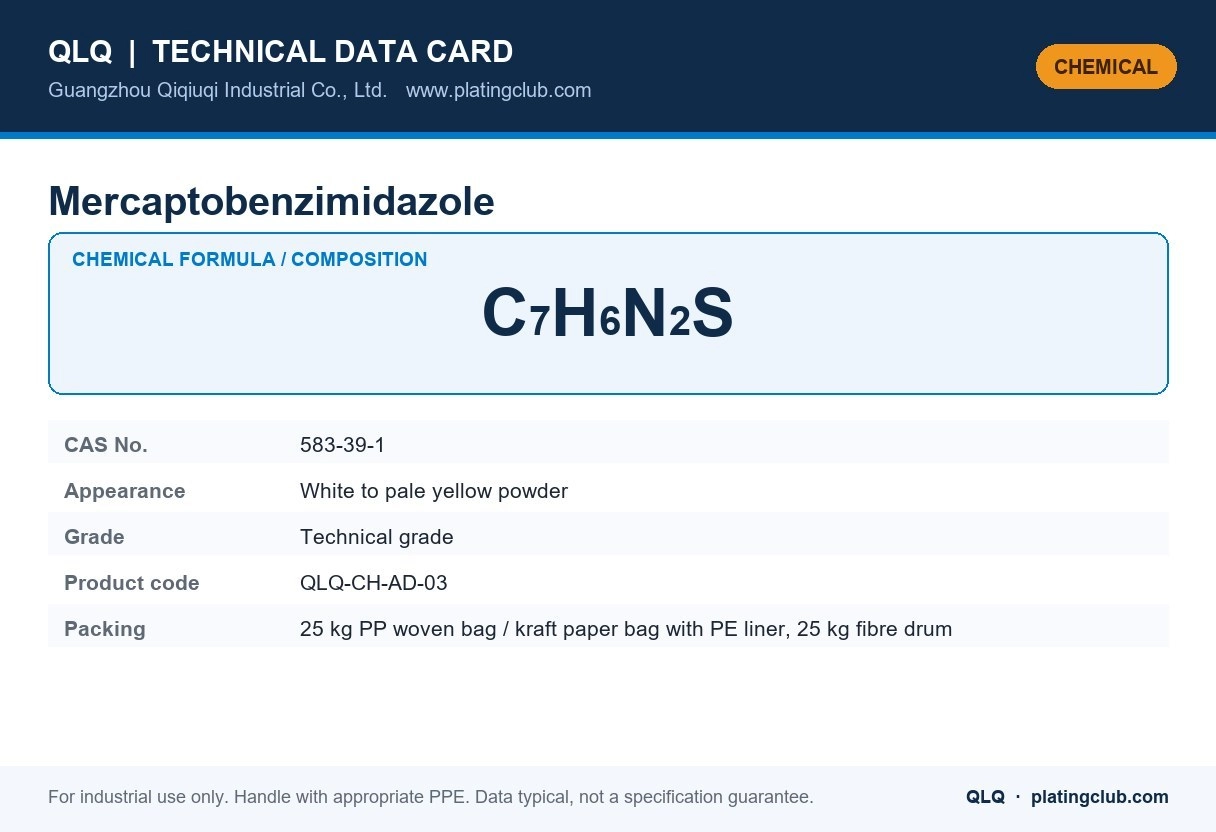
| Chemical name | Mercaptobenzimidazole |
| Chemical formula | C7H6N2S |
| CAS number | 583-39-1 |
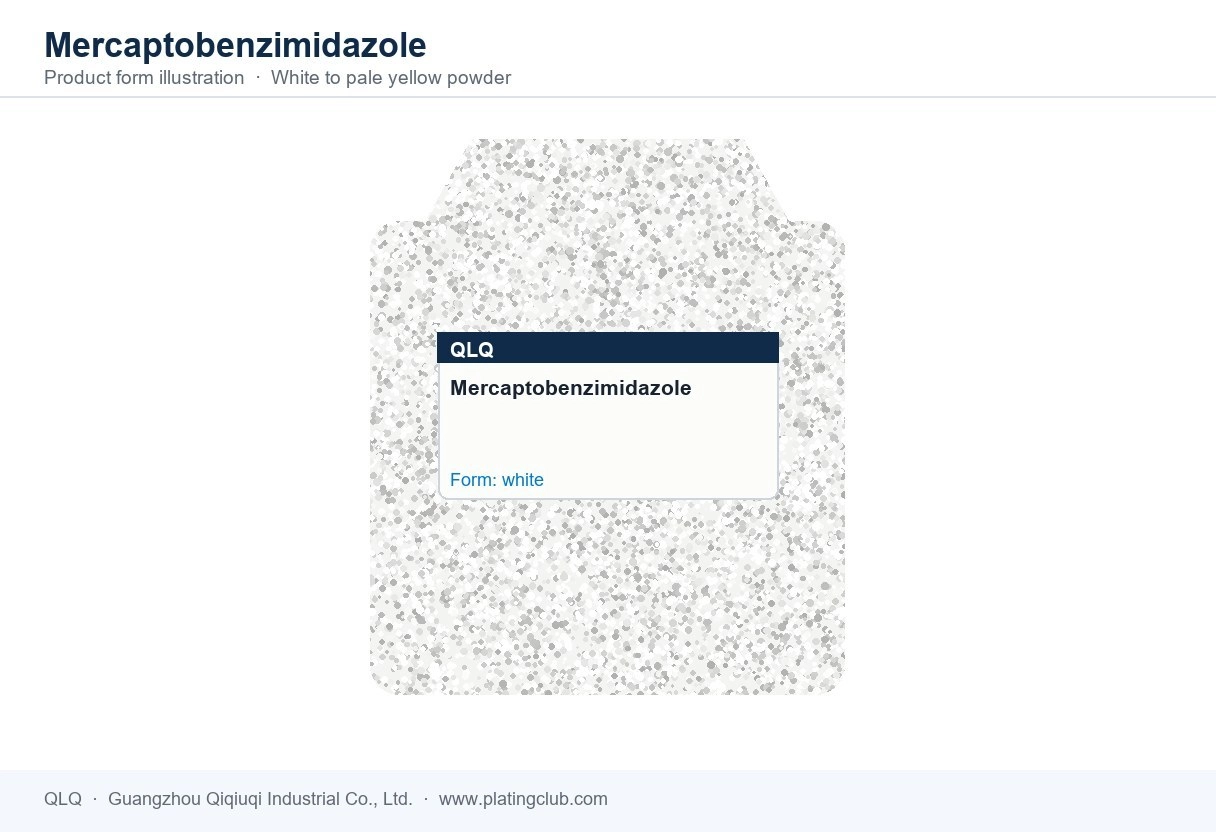
| Appearance | White to pale yellow powder |
| Grade / type | Technical grade |
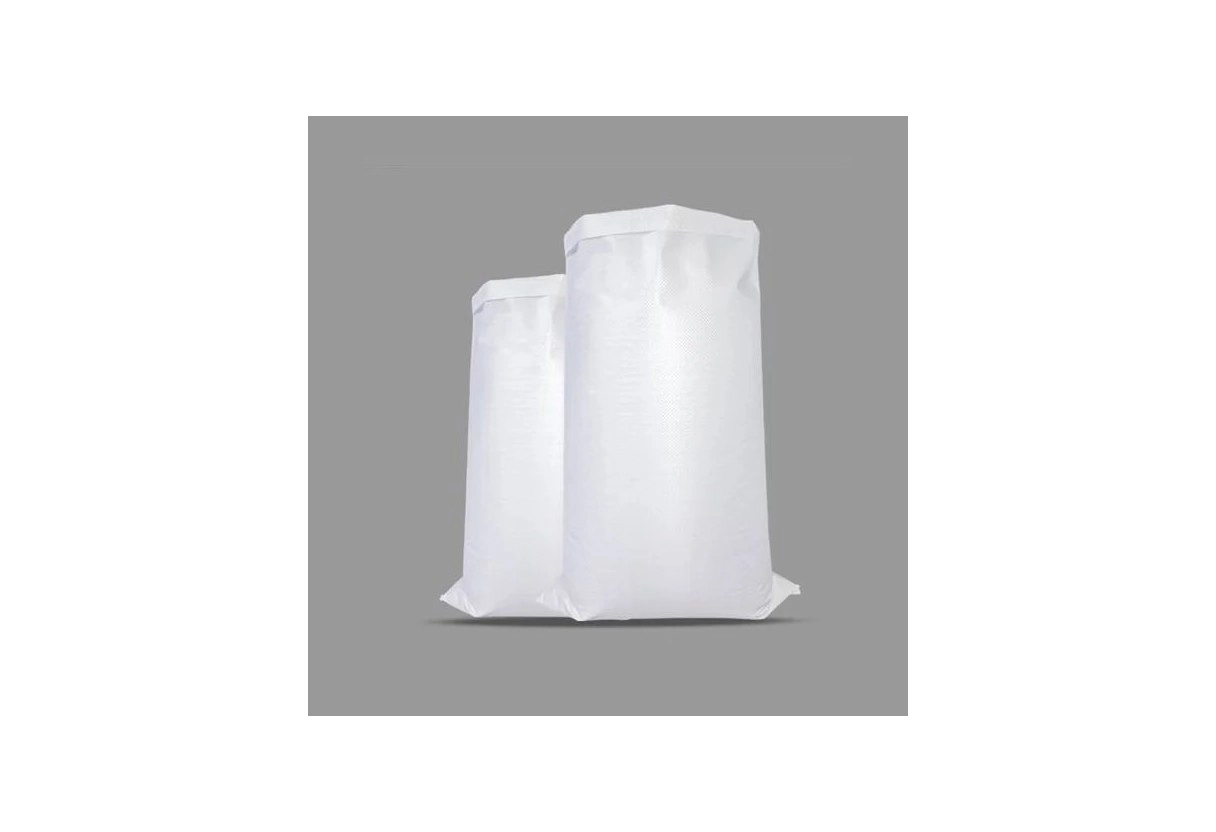
| Standard packing | 25 kg PP woven bag or kraft paper bag with PE inner liner; 25 kg fibre drum |
What it is and what it does. Mercaptobenzimidazole (MBI) is a grain-refining and brightening additive for acid copper and for nickel baths, and it is also a corrosion inhibitor for copper surfaces.
- White to pale yellow powder, added at very low concentration because it is a powerful grain refiner.
- A sulphur-bearing heterocycle that adsorbs on the copper surface and refines the deposit structure.
- Often used together with gelatin or a modern brightener system in barrel bronze and brass baths.
Typical Use in a Plating / Finishing Line
| Item | Typical guidance |
|---|---|
| Acid copper brightening | 1-20 mg/L; make up a dilute stock solution first |
| Corrosion inhibition | A few mg/L for copper surfaces in aqueous systems |
| Note | Very easy to overdose - always dose from a dilute solution |
Safety, Handling & Storage
| Item | Requirement |
|---|---|
| Hazard classification | Not classified as dangerous for transport in most cases; observe good industrial hygiene and dust control |
| Personal protective equipment | Dust mask, goggles and gloves for powder handling; general ventilation |
| Spill / first aid | Sweep up dry; material is a nuisance dust — avoid breathing the dust |
| Storage | Cool, dry, sealed store; keep bags closed, off the floor and away from moisture |
| Transport | Classified and packed according to IATA/IMDG for the hazard class; UN number and packing group stated on the shipping documents |
Quality Documents Shipped With Every Batch
| Document | Comment |
|---|---|
| COA (certificate of analysis) | Provided with the shipment; batch traceable to the production date |
| MSDS (safety data sheet) | Provided with the shipment; batch traceable to the production date |
| Packing list | Provided with the shipment; batch traceable to the production date |
| Commercial invoice | Provided with the shipment; batch traceable to the production date |
| Certificate of origin on request | Provided with the shipment; batch traceable to the production date |
Buyer Questions We Answer Every Week
| Question | Answer |
|---|---|
| Why did the deposit go dull after adding MBI? | It is almost certainly overdosed; dilute the bath or treat with activated carbon and re-balance. |
| Is it soluble in water? | Only slightly; dissolve it in a small amount of dilute alkali or in the recommended carrier solvent first. |
| Item | Typical Value |
|---|---|
| Chemical identity | 2-Mercaptobenzimidazole, C7H6N2S |
| Appearance | White to light gray crystalline powder |
| Assay | ≥ 98% (technical grade) |
| Melting point | ≥ 300°C (decomposes) |
| Solubility | Insoluble in cold water; soluble in alkali (NaOH) and ethanol |
| Heavy metals | ≤ 10 ppm |
| Loss on drying | ≤ 0.5% |
| Standard packing | 25KG/DRUM, PE-lined |
How It Works: MBI Film on Copper and Silver
MBI molecules chemisorb onto copper, brass and silver surfaces and polymerize into a transparent, nanometer-thin barrier film that blocks oxygen, water vapor and sulfides from reaching the metal. The protective film is anchored through the sulfur atom, which makes it notably more stable at elevated temperature than benzotriazole's film - MBI protection is routinely relied on for parts that will be hot-lacquered, vulcanized nearby or shipped through tropical climates. Two practical consequences follow:
| Application | Working range | Notes |
|---|---|---|
| Anti-tarnish dip (copper/brass, before storage or nickel) | 0.5-2 g/L, 60-80°C, 30-120 s | Make from sodium-salt stock; keep pH > 10 in the stock, working bath pH 8-10 |
| Post-plate protection before lacquer | 0.5-1 g/L, 50-70°C, 30-60 s | Improves salt-spray and humidity life under lacquer |
| Silver anti-tarnish (racked silver tones) | 0.2-1 g/L with BTA, 40-60°C | Blend 1:1-1:3 with BTA; verify by sulfur-vapor test |
| Copper brightener / leveler raw material | formulated by blender | Sold in milligram-per-liter ranges inside proprietary additive packages |
The sulfur-vapor or hydrogen-sulfide test (30 min over dilute ammonium sulfide) is the standard workshop check: a protected panel must show no brown or black film, while an unprotected panel discolors in minutes.
How to Make the Working Stock (Common Failure Point)
| Step | Operation | Detail |
|---|---|---|
| 1. Prepare alkali stock | Dissolve NaOH in warm DI water | 50 g NaOH per liter |
| 2. Dissolve MBI | Add 50-100 g MBI per liter slowly with stirring | Heat to 60-70°C; solution turns clear amber |
| 3. Dilute to use | Dose stock into the dip tank | Target 0.5-2 g/L active; pH 8-10 working |
| 4. Maintain | Top up by titration or time-to-tarnish test | Drag-out is the main loss; filter solids periodically |
If MBI powder is thrown directly into a neutral or acidic dip it floats, lumps and never builds the protective film - the single most common reason a shop reports "MBI does not work".
Quality Checks Before Use
| Check | Method | Pass |
|---|---|---|
| Appearance | Visual vs retained sample | Uniform light gray-white; no brown tint (oxidation) or lumps |
| Assay | COA (HPLC or titration) | ≥ 98% |
| Alkali solubility | 2 g in 20 ml 10% NaOH, warm | Clear amber solution, no residue |
| Protection test | Copper panel dipped, then H2S vapor 30 min | No darkening vs untreated control |
| Heavy metals | COA review | ≤ 10 ppm (protects downstream baths) |
How QLQ controls it: every MBI lot is verified for assay, alkali solubility and real H2S-vapor protection on copper panels against a retained reference before release. The batch number is traceable so a tarnish claim can be checked against the exact lot used - and because QLQ also formulates anti-tarnish blends, the technical team can reproduce a customer's working dip conditions in its own lab.
Common Problems & Fixes (Workshop Table)
| Problem | Root cause | Fix |
|---|---|---|
| No protection - parts tarnish anyway | MBI never dissolved (dumped in neutral water) | Remake from NaOH stock; confirm clear amber working bath |
| Yellow-white haze on parts after dip | Bath too concentrated or film not rinsed warm | Cut to 0.5-1 g/L; rinse at 40-60°C, not cold |
| Protection fades after hot lacquer cure | Lacquer cure above film stability, or MBI dose too low | Raise to 1-2 g/L; check cure schedule; consider post-cure dip |
| Silver tone turns yellowish | MBI-heavy blend or high bath temperature | Shift blend toward BTA; run below 60°C |
| Copper plating bath misbehaves after rework dips | MBI dragged into plating tank (film is a strong leveler poison) | Add a rinse + acid desmut between protection and plating; carbon treat tank |
Handling & Safety
- Health: avoid inhaling powder; wear a dust mask, gloves and goggles when weighing. Wash hands after handling.
- Alkali burns: the NaOH stock is strongly alkaline - wear full protection when making it and add powder slowly to avoid splashing.
- Do not acidify the stock: acidifying an MBI/NaOH solution precipitates the free compound and releases its characteristic mercaptan odor; keep stock containers sealed.
- Storage: sealed drums, cool and dry, away from oxidizers. MBI powder is stable for 24 months sealed; partly used drums must be resealed against humidity.
- Waste: spent dips carry chelated copper - route to metal recovery; do not discharge to drain. MBI is not readily biodegradable in strong concentration.
What It Does on Iron, Zinc Alloy, Copper and Stainless Steel Parts
| Substrate | Role / behavior of MBI | Practice note |
|---|---|---|
| Copper / brass parts | Direct protection - the classic use; prevents brown tarnish between process steps and in humid storage | Use as inter-process dip after copper plating when nickel must wait |
| Zinc alloy (sliders, buckles) | Protects the copper underlayer of Cu-Ni-Cr stacks from edge tarnish before nickel and chrome | Short dip (30-60 s); ensure full rinse so MBI never reaches the nickel tank |
| Iron / steel hardware | Protects copper-plated steel from humidity staining before lacquer or shipment | Combine with BTA for low-temperature jobs; seal under lacquer for export |
| Stainless steel | Not needed on bare stainless; useful only where a copper flash has been applied for adhesion or color | Skip the dip on bare stainless - no film forms, no benefit |
FAQ
| Question | Answer |
|---|---|
| MBI or benzotriazole - which should I buy? | Both. BTA is the economical general-purpose copper anti-tarnish agent; MBI gives a stronger, more heat-resistant film and also serves silver. Many lines run a BTA bath with an MBI boost stage for critical export parts. |
| Why does MBI not dissolve in my dip tank? | Because it is nearly insoluble in plain water. Pre-dissolve as the sodium salt in warm NaOH solution, then dilute - a clear amber working bath is the sign it actually dissolved. |
| Will the MBI film hurt the next plating step? | Yes, if dragged in - the film is a strong organic that will dull acid copper or nickel. Always rinse (and acid desmut) between protection and re-plating. |
| Can QLQ supply MBI as a ready anti-tarnish blend? | Yes - technical MBI powder, BTA, and matched anti-tarnish concentrates are all available, with written dip recipes for copper, brass and silver lines. |
Copper parts tarnishing in storage or transit? QLQ engineering runs H2S-vapor testing and helps customers in 10+ countries choose between BTA, MBI and lacquer routes. Contact us with your failure photos.
Shipping cost is based on weight. Just add products to your cart and use the Shipping Calculator to see the shipping price.We want you to be 100% satisfied with your purchase. Items can be returned or exchanged within 30 days of delivery.