

Professional Zinc Alloy Surface Finishing Solutions
Benzotriazole
Benzotriazole
Generera QR-kod
-
Estimated Delivery:Oct 02 - Oct 06
-
Free Shipping & Returns: On all orders over $75
Product description
Shipping & Return
Product Overview
1,2,3-Benzotriazole (BTA, C6H5N3) is the plating industry's standard anti-tarnish and corrosion-inhibition agent for copper and its alloys. A single BTA molecule is small enough to pack tightly on a copper surface, where it forms a transparent, self-repairing film only a few nanometers thick that stops oxygen, humidity and sulfur gases from reaching the metal. In a hardware plating line BTA earns its place in three everyday situations: protecting freshly copper-plated work that must wait before nickel (overnight racks, weekend barrels), stopping tarnish on brass and copper-tone finishes during storage and export packing, and acting as a functional component inside proprietary copper brighteners and process coolants. Market grades: technical BTA at ≥ 99% assay is the plating norm; cheaper grades carry higher sodium sulfate and organics that leave films or foam. BTA is directly water-soluble in warm water (about 2% at 25°C), which makes it far easier to handle than the alkali-soluble sulfur azoles.
Product Identity (Encyclopaedia Card)
| Property | Value |
|---|---|
| Chemical name | Benzotriazole |
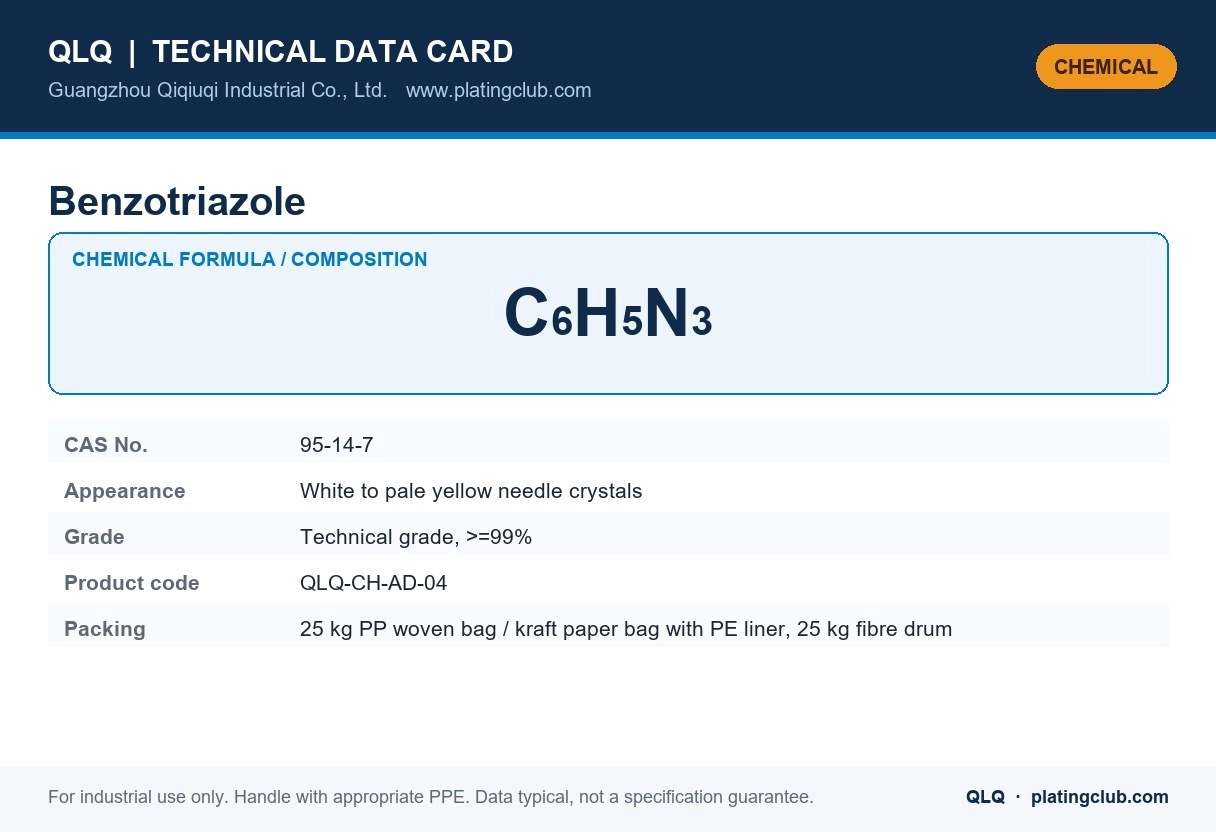
| Chemical formula | C6H5N3 |
| CAS number | 95-14-7 |
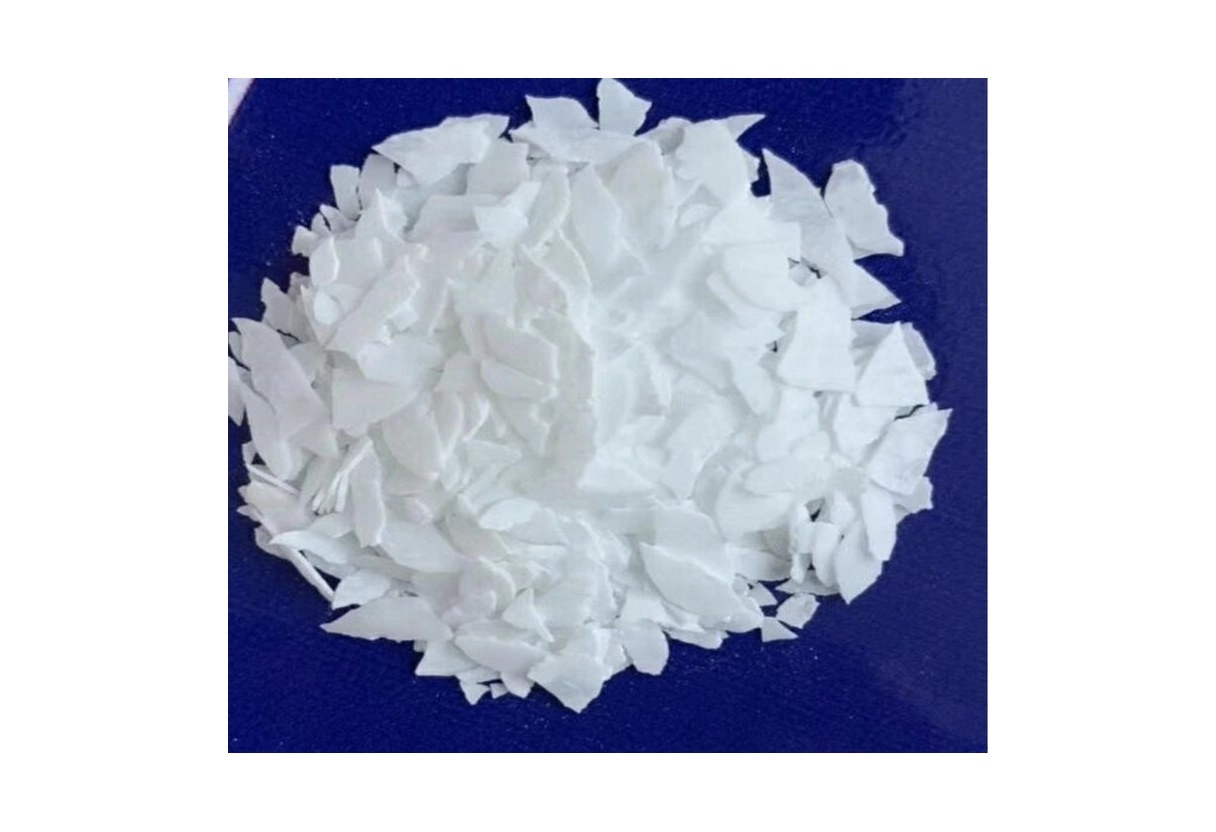
| Appearance | White to pale yellow needle crystals |
| Grade / type | Technical grade, >=99% |
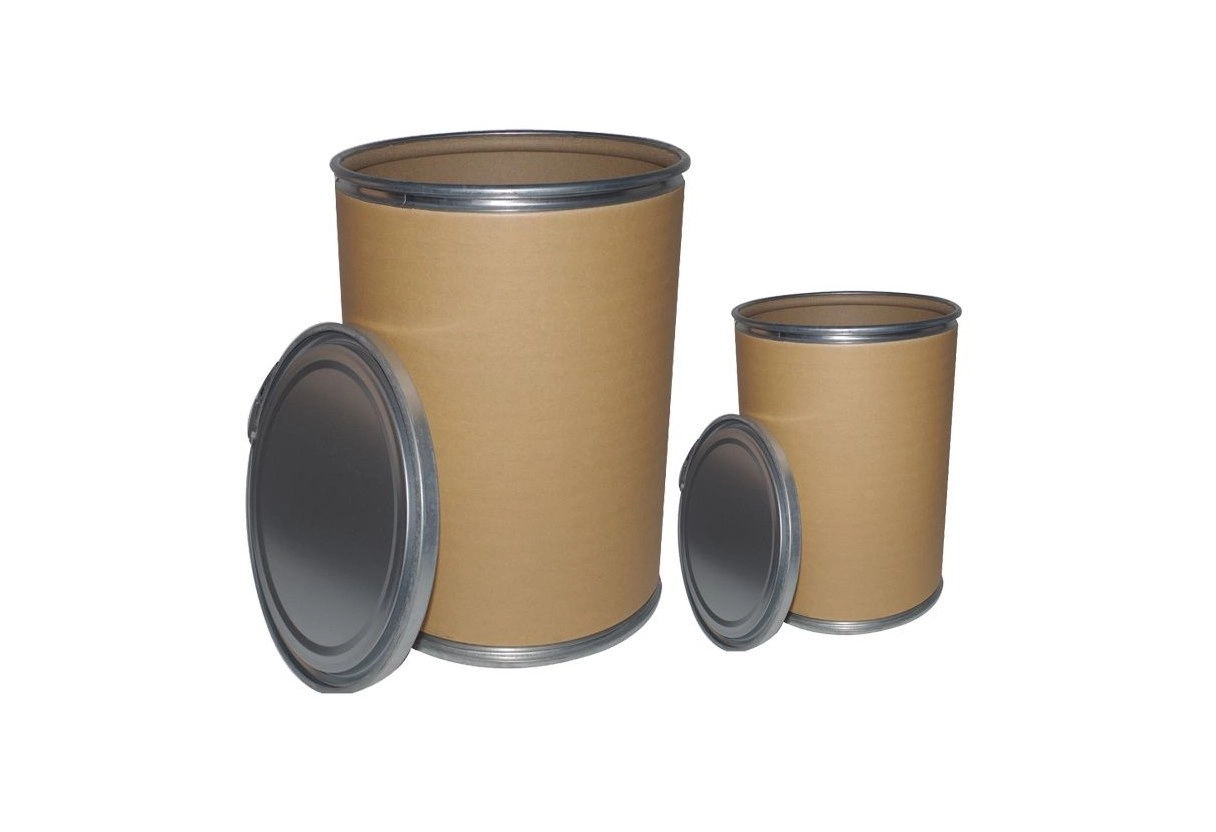
| Standard packing | 25 kg PP woven bag or kraft paper bag with PE inner liner; 25 kg fibre drum |
What it is and what it does. Benzotriazole (BTA) is the copper corrosion inhibitor added to acid copper baths, to passivation rinses and to lacquer formulations, where it forms a protective film on the copper and zinc surface.
- White to pale yellow needle crystals; used at 20-200 mg/L in rinses and at low mg/L in plating baths.
- Forms a chemisorbed film on copper and on zinc that stops tarnishing and reduces staining of the plated parts.
- Also used in cooling-water treatment and in anti-tarnish papers and lacquers.
Typical Use in a Plating / Finishing Line
| Item | Typical guidance |
|---|---|
| Anti-tarnish rinse | 0.5-2 g/L at pH 5-6, 30-60 seconds |
| Copper bath additive | 1-50 mg/L |
| Note | Dissolve in a small amount of warm water or alcohol before addition |
Safety, Handling & Storage
| Item | Requirement |
|---|---|
| Hazard classification | Not classified as dangerous for transport in most cases; observe good industrial hygiene and dust control |
| Personal protective equipment | Dust mask, goggles and gloves for powder handling; general ventilation |
| Spill / first aid | Sweep up dry; material is a nuisance dust — avoid breathing the dust |
| Storage | Cool, dry, sealed store; keep bags closed, off the floor and away from moisture |
| Transport | Classified and packed according to IATA/IMDG for the hazard class; UN number and packing group stated on the shipping documents |
Quality Documents Shipped With Every Batch
| Document | Comment |
|---|---|
| COA (certificate of analysis) | Provided with the shipment; batch traceable to the production date |
| MSDS (safety data sheet) | Provided with the shipment; batch traceable to the production date |
| Packing list | Provided with the shipment; batch traceable to the production date |
| Commercial invoice | Provided with the shipment; batch traceable to the production date |
| Certificate of origin on request | Provided with the shipment; batch traceable to the production date |
Buyer Questions We Answer Every Week
| Question | Answer |
|---|---|
| How long does the anti-tarnish effect last? | Weeks to months indoors depending on the humidity; for long storage combine it with a lacquer. |
| Does it affect the colour? | At the recommended concentration it forms a monolayer that is visually invisible; overdosing can leave a haze. |
| Item | Typical Value |
|---|---|
| Chemical identity | 1,2,3-Benzotriazole, C6H5N3 |
| Appearance | White to off-white crystalline powder |
| Assay | ≥ 99% |
| Melting point | 96-100°C |
| Solubility | Soluble in hot water, ethanol, chloroform; ~20 g/L in water at 25°C |
| pH (1% solution) | 5.5-7.5 |
| Ash | ≤ 0.1% |
| Standard packing | 25KG/DRUM, PE-lined |
How It Works: BTA Film Formation and Its Limits
BTA chemisorbs on copper and brass through its triazole ring and cross-links into a protective polymer film. Because the bond forms and repairs continuously at room temperature, a BTA dip does not need heat to work - but temperature and pH control decide whether the film is thick and uniform or patchy:
| Condition | Effect on protection |
|---|---|
| 1-3 g/L, 50-60°C, 1-3 min (normal) | Uniform barrier; passes H2S-vapor and humidity testing |
| Cold bath (20-30°C) | Film forms but slower; extend immersion to 3-5 min |
| pH below 4 in the dip | Film thins; acid attacks copper and defeats protection |
| Above 80°C | No benefit - film stability drops; keep baths below 70°C |
| Bath loaded with oils/soils | Soil blocks adsorption - patchy film, localized tarnish |
Standard verification is the same sulfur-vapor test used across the industry: a treated panel must stay bright over 30 minutes in dilute ammonium-sulfide vapor while an untreated panel darkens within minutes.
Working Concentrations on the Line
| Application | Concentration | Notes |
|---|---|---|
| Inter-process dip (copper before nickel) | 1-2 g/L, 50-60°C, 30-120 s | Prevents edge tarnish on work held overnight; rinse before nickel |
| Final copper/brass anti-tarnish | 1-3 g/L, 40-60°C, 1-3 min | Optional silicate or wax top for export |
| Barrel copper rework protection | 1 g/L, ambient, 2-5 min | Cold bath needs longer time |
| Coolant / grinding additive | 0.05-0.2% | Stops copper staining in water-based coolants |
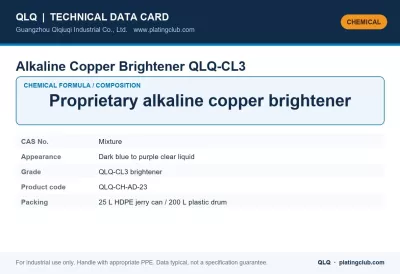
| Brightener formulation raw material | per blender | Component in copper additive packages |
BTA is consumed almost entirely by drag-out. A dip tank that plates a known surface area loses roughly 5-15 g per 1000 dm² of work; top up to keep the measured concentration, and carbon-polish the tank monthly to remove oils that block film formation.
Quality Checks Before Use
| Check | Method | Pass |
|---|---|---|
| Appearance | Visual vs retained sample | White free-flowing powder; no yellowing or caking |
| Assay | COA (HPLC) | ≥ 99% |
| Melting point | Melting-point apparatus | 96-100°C (narrow range = pure) |
| Solubility | 20 g in 1 L warm water | Clear solution; no film or residue |
| H2S vapor test | Copper panel dipped, then ammonium-sulfide vapor | No darkening for 30 min vs control |
How QLQ controls it: every lot is assay-verified and H2S-vapor tested on copper panels against a retained reference before release. Because a contaminated BTA lot (high sulfate, organics) shows up first as patchy tarnish on a customer's parts, the batch number travels with each drum and QLQ keeps a retained sample for 12 months for re-testing.
Common Problems & Fixes (Workshop Table)
| Problem | Root cause | Fix |
|---|---|---|
| Patchy tarnish after dip | Oils/soils on parts or bath loaded with drag-in | Clean before dip; carbon-polish bath; filter continuously |
| Film fails H2S test | Dose low, bath cold, or time too short | Verify 1-3 g/L by analysis; heat to 50-60°C; 1-3 min |
| White deposit on dried parts | Over-dosed bath or hard water salts | Cut to 1-2 g/L; use softened/DI water for make-up |
| Copper darkens after hot-air drying | Parts dried above ~80°C or too long before rinsing | Dry below 70°C; rinse before drying to remove excess BTA |
| Nickel skips on copper after BTA dip | Film too heavy - no acid desmut between dip and nickel | Add dilute acid dip (3-5% H2SO4, 15-30 s) before nickel |
Handling & Safety
- Health: BTA is a mild irritant; wear gloves and a dust mask when weighing, and avoid inhaling the powder. Wash hands after handling.
- Fire note: BTA is combustible as a dust - keep away from open flame and strong oxidizers; do not sweep into a dusty bin near ignition sources.
- Dissolving: add to warm water (50-60°C) with stirring; stock solutions of 5-10% are convenient for dosing. Do not boil - BTA sublimes slowly above 100°C.
- Storage: sealed drums in a cool, dry store. BTA is stable for 24 months sealed; protect from humidity and direct sun.
- Waste: dilute BTA dips are biodegradable, but used baths carry copper - treat as metal-bearing waste or recover the copper before discharge.
What It Does on Iron, Zinc Alloy, Copper and Stainless Steel Parts
| Substrate | Role / behavior of BTA | Practice note |
|---|---|---|
| Copper / brass parts | Direct anti-tarnish - protects the classic copper, brass and copper-tone finishes during storage and export | The standard application; 1-3 g/L at 40-60°C |
| Zinc alloy (sliders, buckles) | Keeps the copper underlayer of Cu-Ni-Cr stacks bright while parts queue for nickel and chrome | Short dip after copper; full rinse + acid dip before nickel to avoid skip-plating |
| Iron / steel hardware | Protects copper-plated steel against humidity staining before lacquer, packing or shipment | BTA film plus lacquer gives the humidity margin export buyers audit |
| Stainless steel | No film forms on bare stainless - no benefit; relevant only over a copper flash | Skip on bare stainless; use for copper-flashed stainless decorative work |
FAQ
| Question | Answer |
|---|---|
| Does BTA work on zinc or nickel plate? | Not effectively - BTA's protective film is specific to copper and its alloys (and somewhat to silver). Zinc and nickel need chromate/passivate routes, not BTA. |
| My parts tarnish two weeks after export. Was BTA useless? | Check dose, bath loading and the dry-off step first. Patchy films from soiled baths or over-hot drying are the usual causes - a properly formed BTA film survives weeks of humid packing. |
| Can I add BTA to the final rinse instead of a separate dip? | Yes, at 0.5-1 g/L in the last hot rinse, but control is harder and film thickness varies. A dedicated dip tank gives reproducible protection and is easier to analyze. |
| Does QLQ help with anti-tarnish system design? | Yes - BTA, MBI and matched concentrates ship with COAs, and QLQ engineers help set up dips, H2S-vapor testing and the rinse/desmut sequence before nickel. |
Copper finish tarnishing in humid weather or export? QLQ engineering runs H2S-vapor testing and humidity trials for plating customers in 10+ countries. Contact us with a sample of the failing part.
Shipping cost is based on weight. Just add products to your cart and use the Shipping Calculator to see the shipping price.We want you to be 100% satisfied with your purchase. Items can be returned or exchanged within 30 days of delivery.