
Plating Plant Requirements: Footprint, Power, Water, Wastewater
Investment & Factory Planning

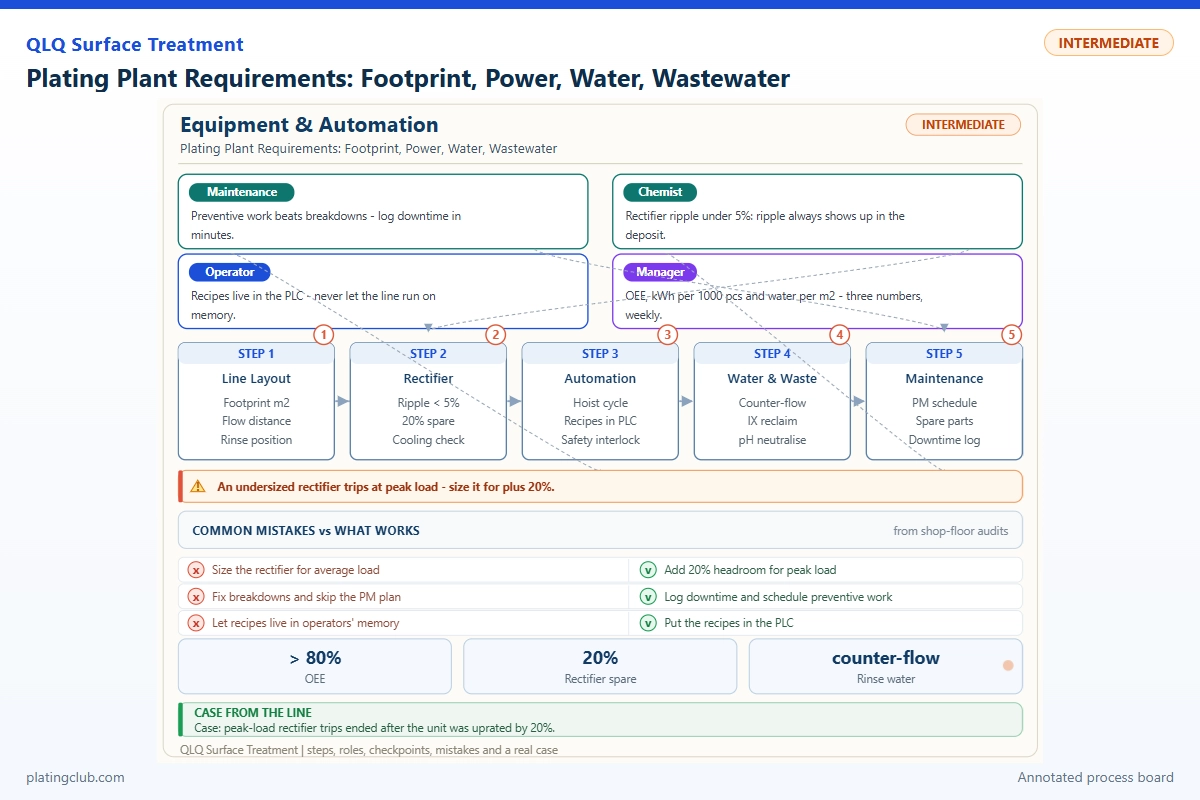
Plating Plant Requirements: Footprint, Power, Water, Wastewater

Plating plant: footprint, power, water and wastewater Conceptual rack-plating layout with utility connections, five indicative process parameters, segregated wastewater treatment and maintenance access. Not a construction drawing. PLATING PLANT / UTILITY & SPACE PLAN SKETCH 889 / NOT TO SCALE Footprint = wet line + access + utilities + chemical store + treatment POWER AC supply → isolated DC rectifier Size for rectifiers, heaters, pumps & exhaust WATER Meter → treatment / DI → final rinse Water balance: make-up + rinse + losses AIR & CONTAINMENT Tank-edge extraction → suitable scrubber Chemical-resistant floor; contained drains WET PROCESS ZONE / RACK TRAVEL → Clean / activate Rinse Rack plating Drag-out rinse Final rinse DC counterflow water ACCESS / MAINTENANCE AISLE — verify clearances, floor loads and escape routes INDICATIVE RACK-PLATING PARAMETERS Bath temperature: 25–55 °C Current density: 1–5 A/dm² Plating time: 5–30 min Rack load: 50–200 small parts / rack Nickel thickness: 5–15 µm SEGREGATED WASTEWATER TREATMENT Collection → equalization → chemical treatment Solids separation → testing → permitted outlet Separate incompatible streams; sludge → approved disposal Spent baths: separate collection, not direct sewer discharge. Treatment capacity follows peak flow and contaminant loading. DESIGN CHECK: process recipe / utility balance / local approvals REV A / CONCEPT ONLY
Conceptual plating-plant layout linking wet-process footprint, electrical supply, rinse-water flow and segregated wastewater treatment. Parameter ranges are indicative for small-part rack plating, not a single bath recipe.

FAQ - Plating Plant Requirements: Footprint, Power, Water, Wastewater

Straight answers from the shop floor. Ask us on WhatsApp if your case is different.

What must fit inside the plant?
Arrange incoming inspection, polishing or deburring, cleaning, activation, compatible undercoating, decorative plating, rinsing, drying and inspection in production order.
How are power and heating calculated?
Use current density multiplied by exposed cathode area for the plating current. At an assumed 2 amperes per square decimetre and 120 square decimetres of active area, the load is 240 amperes.
What safety and environmental controls are required?
Assume three rinse trains at 0.5 cubic metres/hour, final rinsing at 0.2 and cleaning at 0.1: operating consumption is 1.8 cubic metres/hour, or 14.4 over eight hours.
How do I verify the fix actually worked?
The following comparison is a proposed commissioning experiment, not measured batch data. Use matched zinc-alloy parts, the same approved undercoat, bath and topcoat, and the same nominal current-time exposure.
What drives cost per part and how do I reduce it?
Verdict: compare cost per accepted kilogram and include infrastructure, sludge and utilization. The example below compares single-pass rinsing with a metered countercurrent and purified-final-rinse option at an assumed 10,000 accepted kilograms monthly.
Delivery, Installation, Commissioning and Operator Training Timeline
Total Investment for a Barrel Plating + Painting Line: Cost & Payback