

Hanger Spray Painting — Electrostatic & Air Spray for Precision Parts
The premium painting method for large, delicate or cosmetic-grade hardware. Electrostatic wrap-around gives uniform film and up to 40% paint savings.
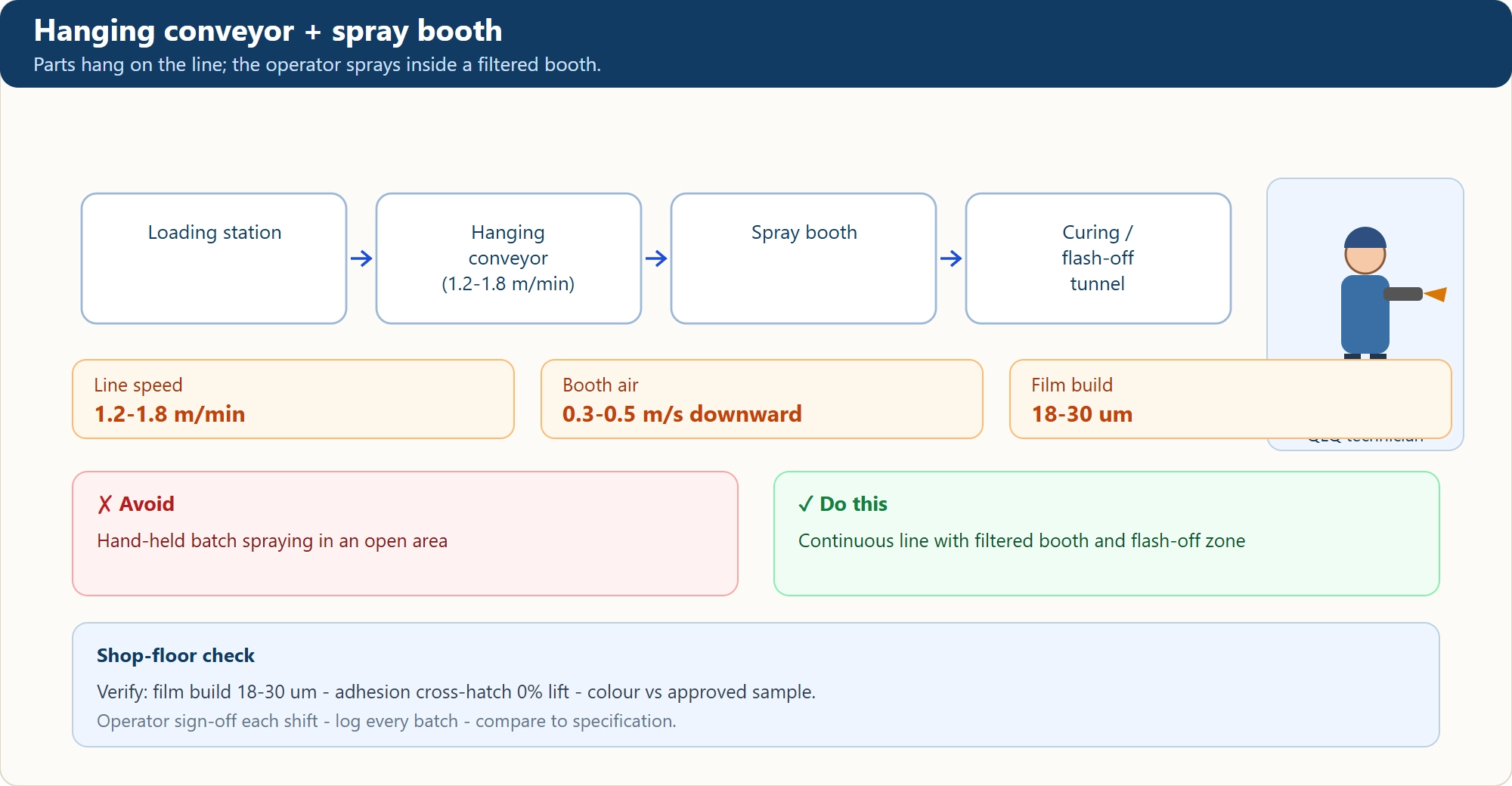
The Hanger Painting Process
Fixture → Ground → Spray → Flash → Cure — precision at every step
1Electrostatic vs Air Spray
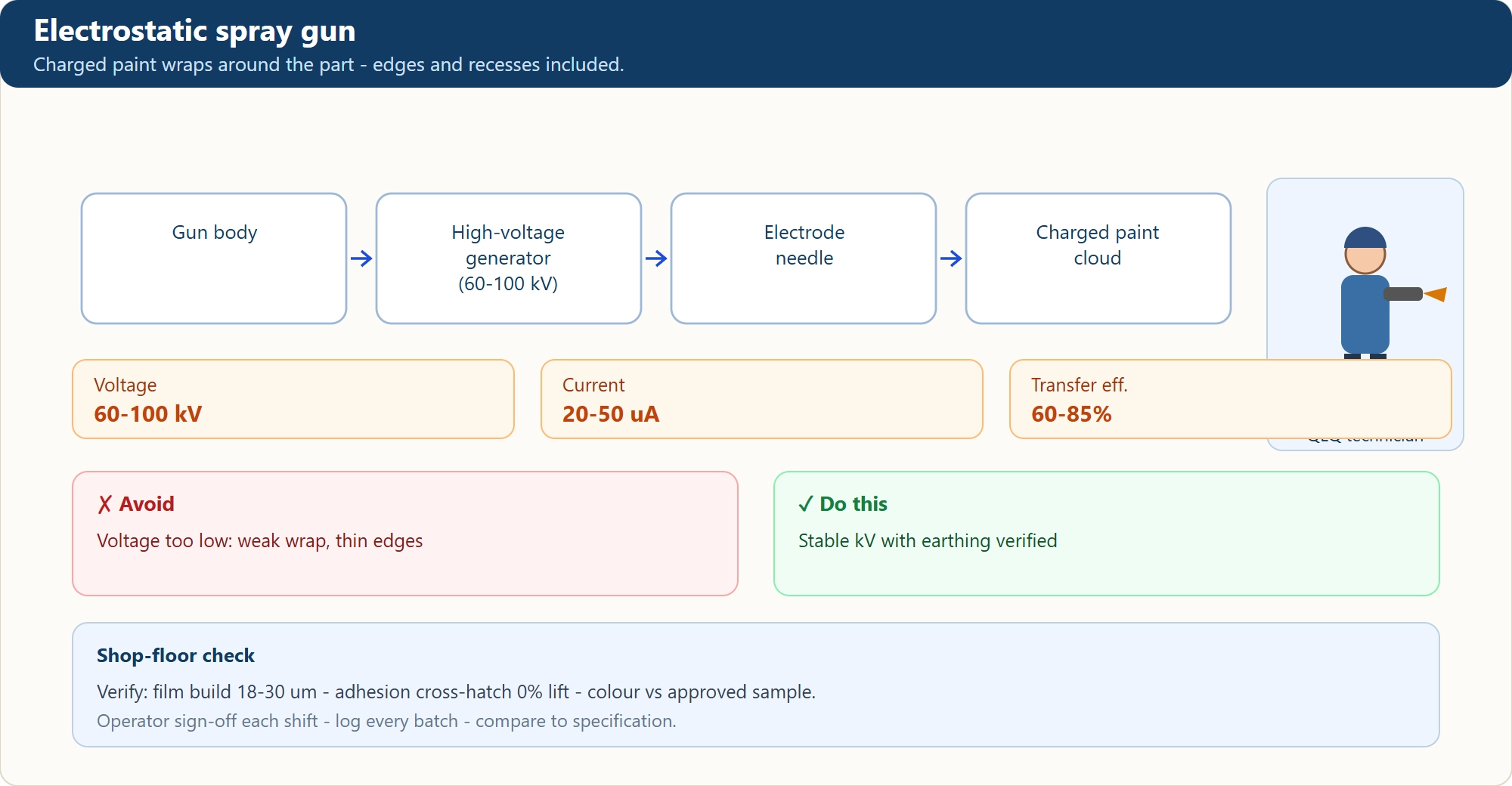
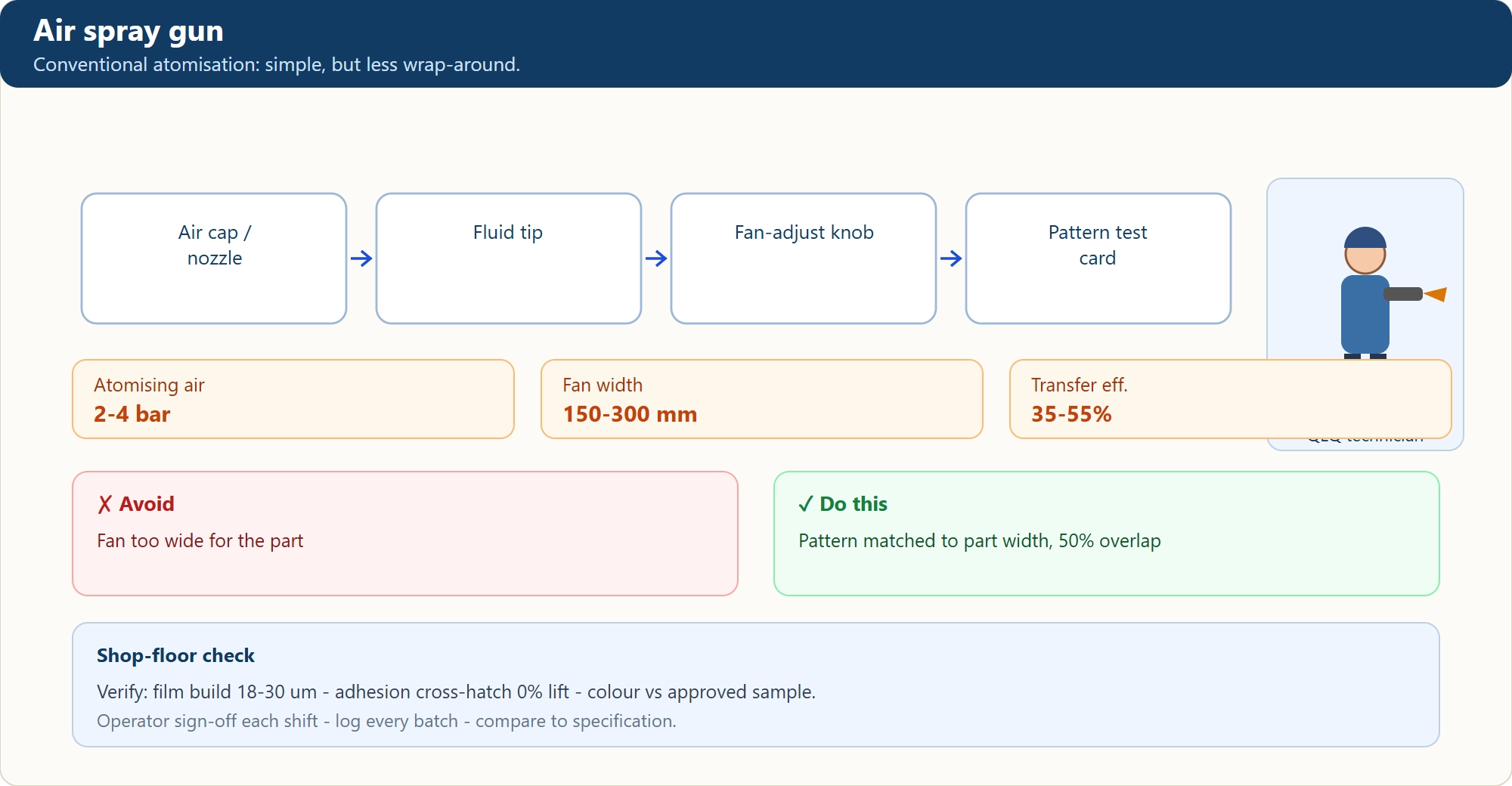
Electrostatic: paint particles are negatively charged (−60 to −90 kV) and attracted to the grounded part — paint wraps around edges and into recesses. Air spray: mechanical atomization only, no wrap. Electrostatic saves 30–40% paint on complex shapes.
2Conveyor & Hanging Fixtures
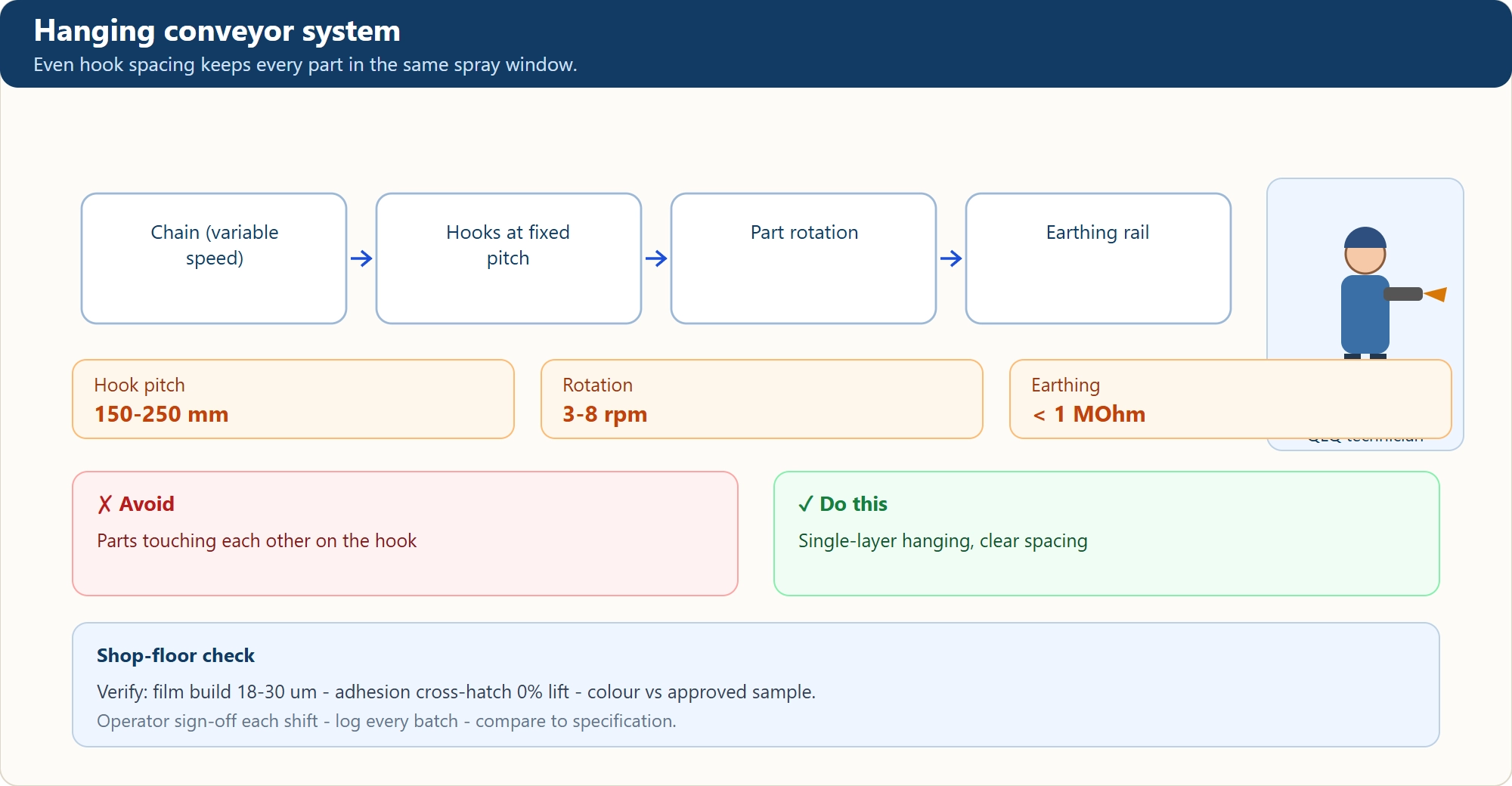
Overhead conveyor with adjustable-speed drive. Hook spacing must prevent part-to-part contact on curves. Grounding is critical for electrostatic — dirty hooks = no charge = no wrap.
3Manual vs Robot Spraying
Manual for small batches and complex shapes; robot for high-volume repeatable runs. Robot eliminates operator variance — consistent stroke speed, distance and overlap. ROI at >2000 pcs/day.
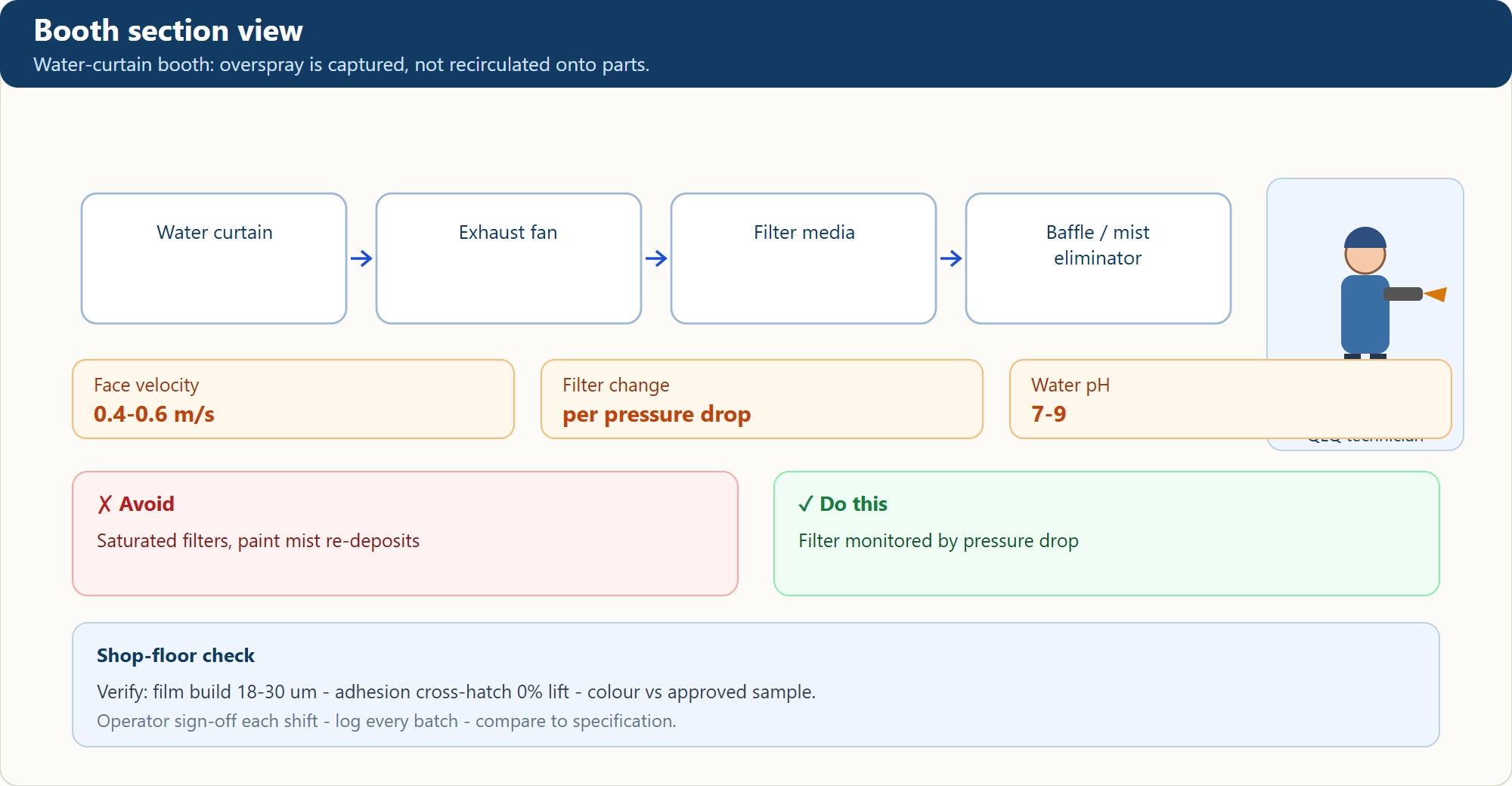
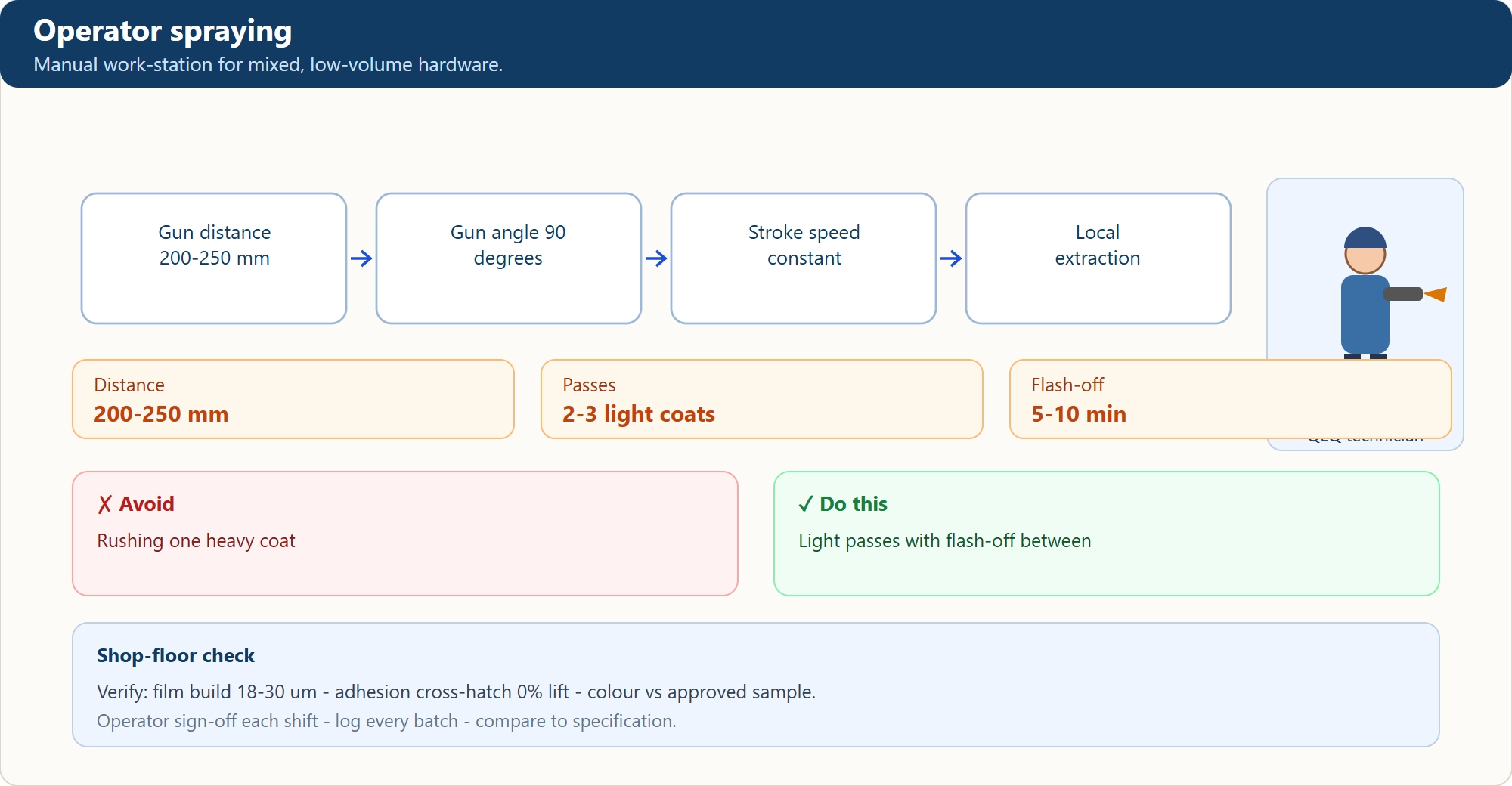
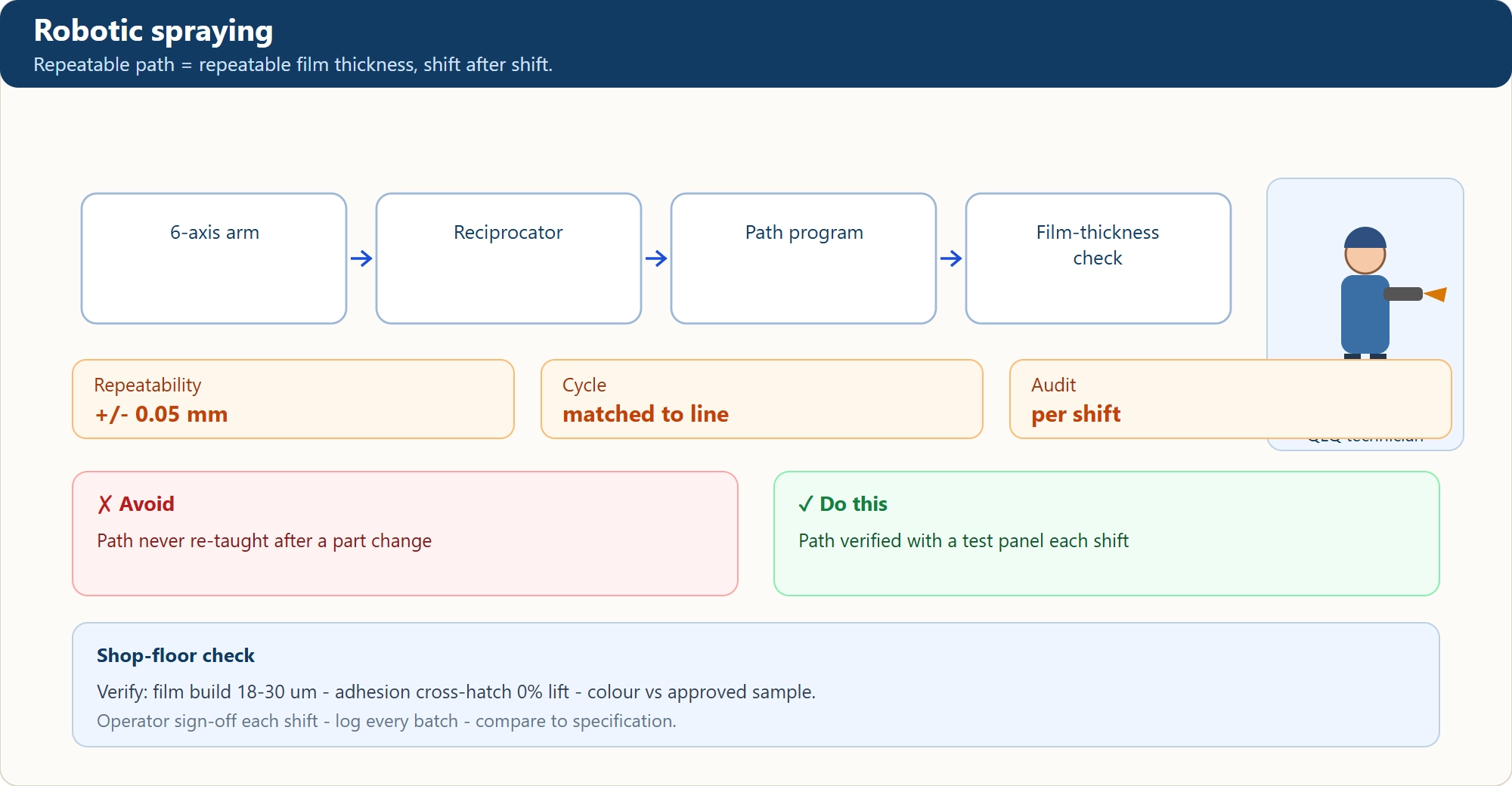
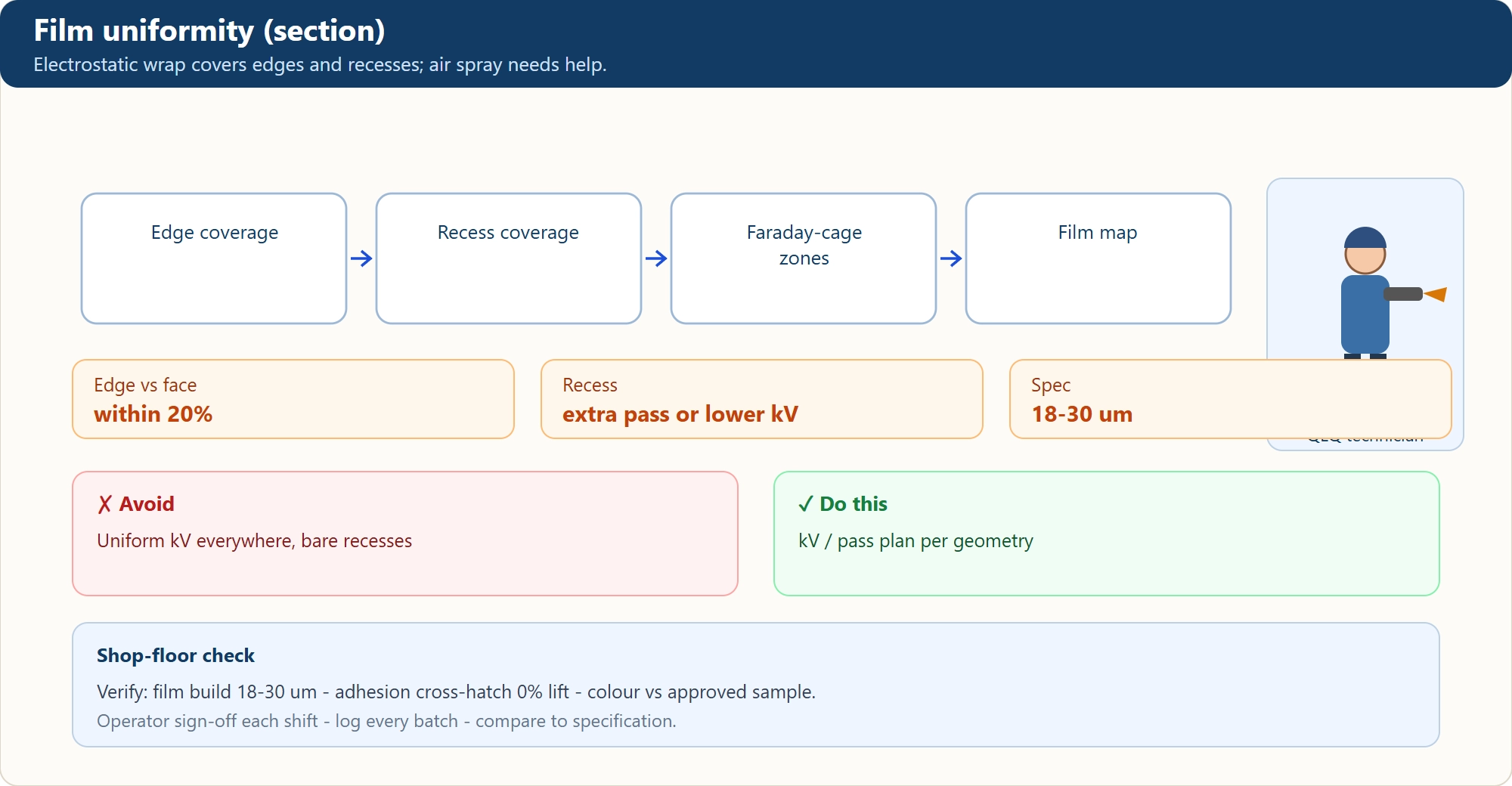
4Film Uniformity Control
Electrostatic wrap gives ±5 μm uniformity vs ±15 μm for air spray. Arm speed, gun distance and voltage stability are the three levers. Use a film thickness gauge at 5 points per part.
Electrostatic vs Air Spray Comparison
Transfer efficiency, wrap and film uniformity side by side
| Parameter | Electrostatic Spray | Conventional Air Spray |
|---|---|---|
| Transfer efficiency | 60–85% | 30–50% |
| Paint savings vs air | 30–40% | — |
| Wrap-around effect | Yes — coats edges | Line-of-sight only |
| Film uniformity | ±5 μm | ±15 μm |
| Part complexity | Any shape | Simple geometries |
| Equipment cost | Higher | Lower |
| Safety requirement | Explosion-proof, grounding | Standard ventilation |
📌 Hanger Painting Cheat Sheet
FAQ
Can I paint plastic parts with electrostatic?
What is the optimal gun distance for 80 kV?
How to fix Faraday cage effect on deep recesses?
What conveyor speed for 30 μm dry film?
Is robot painting worth it for 500 pcs per day?
Get a Free Quote Today
Send us your samples or drawings — our engineers reply within 24 hours with pricing and technical advice.
Contact UsHanger / rack painting: fixture quality decides yield
| Item | Standard | Failure if not |
|---|---|---|
| Hanger contact | Clean, minimal contact area | Bare spots at hooks |
| Spacing | Even, no shadowing | Uneven film on inner faces |
| Earth path | Verified before spray | Poor wrap on electrostatic |
| Changeover | Cleaned between colours | Colour contamination |
FAQ
How often should hangers be stripped?
When build-up reaches the point where parts fit loosely - typically every 15-30 cycles.
Why do we get marks exactly at the hooks?
Paint cannot reach the contact point. Move the contact to a hidden face at design stage.