
The question every buyer asks
Powder-coating defects look mysterious but map cleanly to four causes: pinholes, craters, poor charging and color drift. The practical rule is to check pre-treatment first, because about half of all defects originate there.
Parameters are industry-standard starting ranges; confirm against your supplier TDS.
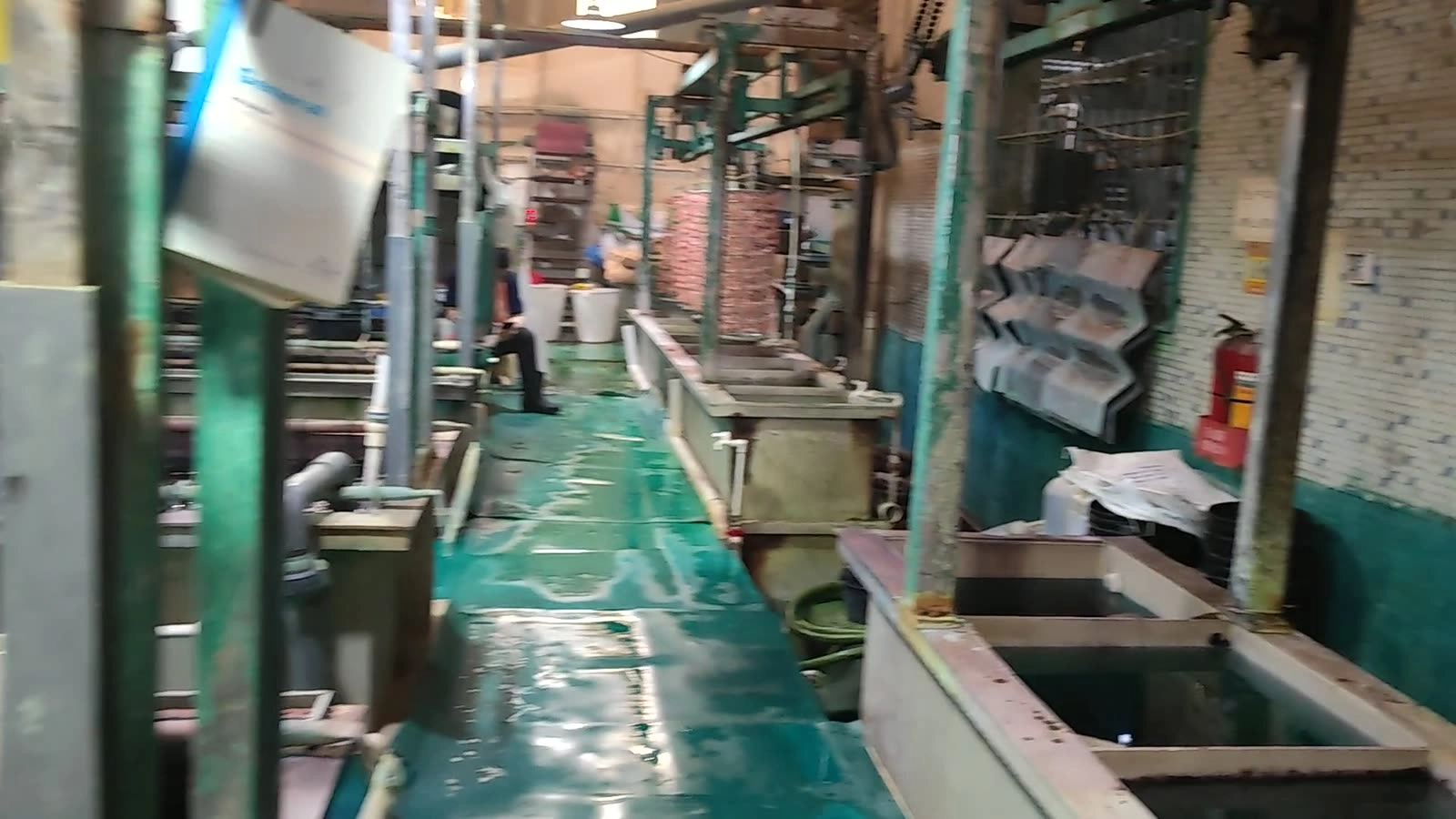
How we handle it on the line
- Pinholes/craters → film thickness mismatched to oven temperature, or gas escaping from casting pores during cure.
- Craters/fisheyes → incomplete degreasing in pre-treatment, or a failed oil-water separator letting oil into rinse water.
- Poor charging / powder fallout → bad part grounding, or aged insulation wrapping on racks/hooks.
- Color drift → curing-temperature fluctuation, or dry-blend metallic powder separating in transport.
- Troubleshooting order: pre-treatment first (the source of roughly half of all defects), then gun parameters.
- Castings deserve special attention: subsurface porosity outgasses during cure and cannot be fixed by gun tuning.
- QLQ ships coated parts with three records — pre-treatment, film thickness, curing curve — so defective parts can be traced back to batch parameters.
Honest boundaries
- Casting porosity outgassing cannot be eliminated by process tuning alone — it needs substrate-level solutions.
- Dry-blend metallic powders can separate in transit; settling and re-mixing procedure affects color consistency.
- Batch-level records localize causes but do not guarantee zero defects; sampling and acceptance criteria remain the contract's job.
FAQ
What causes pinholes and craters in powder coating?
Pinholes come from film thickness mismatched to oven temperature or outgassing from casting pores; craters come from incomplete degreasing or a failed oil-water separator. Check pre-treatment first — it causes about half of defects.
Why won't the powder charge properly on some parts of my batch?
Usually bad part grounding or aged insulation wrapping on the hooks. Check rack insulation and ground contacts before blaming the powder or the gun.
My powder color drifted between batches — what changed?
Most often curing-temperature fluctuation, or dry-blend metallic powder that separated during transport. Ask for the curing-curve record; QLQ ships pre-treatment, film-thickness and curing-curve records with every lot.
How do I troubleshoot powder defects systematically?
Work pre-treatment first, then gun parameters. Defects traceable to records are fixable — QLQ keeps three records per batch so any defective part can be traced to its parameters.