
Scope of this guide
This junior-level guide sticks to the basics you must run without help: safe settings, daily checks and the pass criteria you can verify yourself.
Process: Anodizing. Figures in this guide are industry-standard starting ranges; confirm against your supplier TDS before locking settings.
Working ranges and control points
The table below is the daily reference for a anodizing line. Set by the card, verify by the control point column.
| Parameter | Typical range | Control point | Watch out |
|---|---|---|---|
| Sulfuric acid | 150–200 g/L | Titration daily | Low acid softens film |
| Current density | 1.2–1.8 A/dm² | Amp-min per area | Burns at high spots |
| Bath temperature | 18–21 °C | Chiller alarm active | Warm bath gives soft film |
| Film thickness | 8–15 µm decorative; 20–25 µm hard | Eddy current per batch | Thin film fades fast |
| Sealing | 95–100 °C water, 20 min | Seal quality dye test | Poor seal stains |
Standard routine
- Etch and desmut before anodizing
- Rack tight — contacts carry full current
- Hold bath within ±1 °C through the run
- Eddy-current check thickness per load
- Seal immediately after rinse; never leave films dry overnight
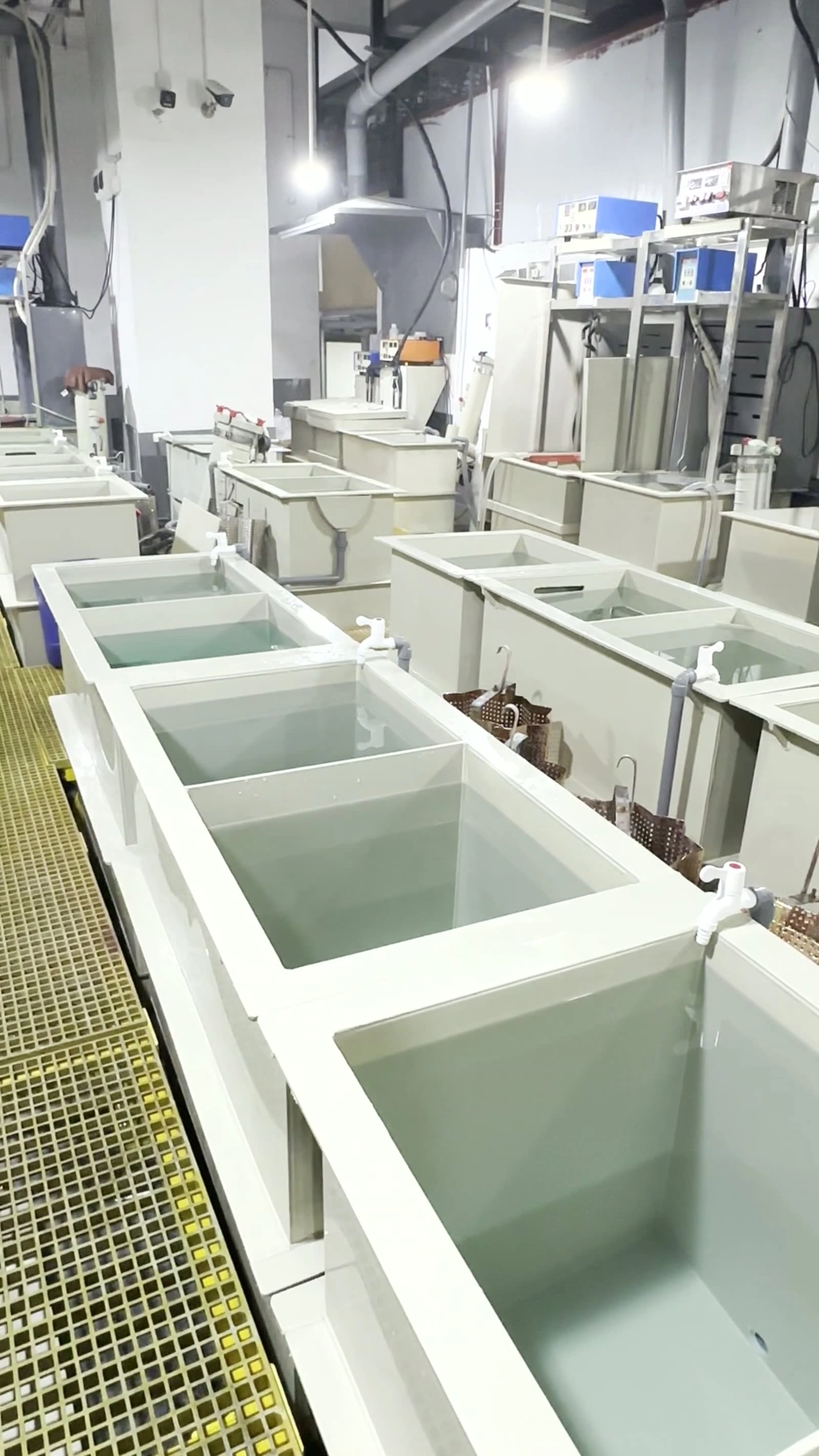
Engineer notes
- Contacts leave bare marks — place them on non-visible edges
- Alloy composition changes colour; 6063 vs 6061 need separate colour standards
- Dye baths live or die by pH 5–6 control
- Cold sealing needs different time rules than hot water sealing
- Record amp-min per area; thickness follows it almost linearly
Safety: Anodizing buses carry high current. Confirm bus off before racking; wet acid mist needs ventilation and eye protection.

FAQ
Why does the same batch show two colours?
Alloy mix or temperature drift. Separate alloys and log chiller performance.
How do I verify sealing quality?
Dye stain test per batch; unprotected films absorb dye visibly.
What thickness is enough for indoor hardware?
8–12 µm decorative is standard; outdoor needs 15 µm or more.