
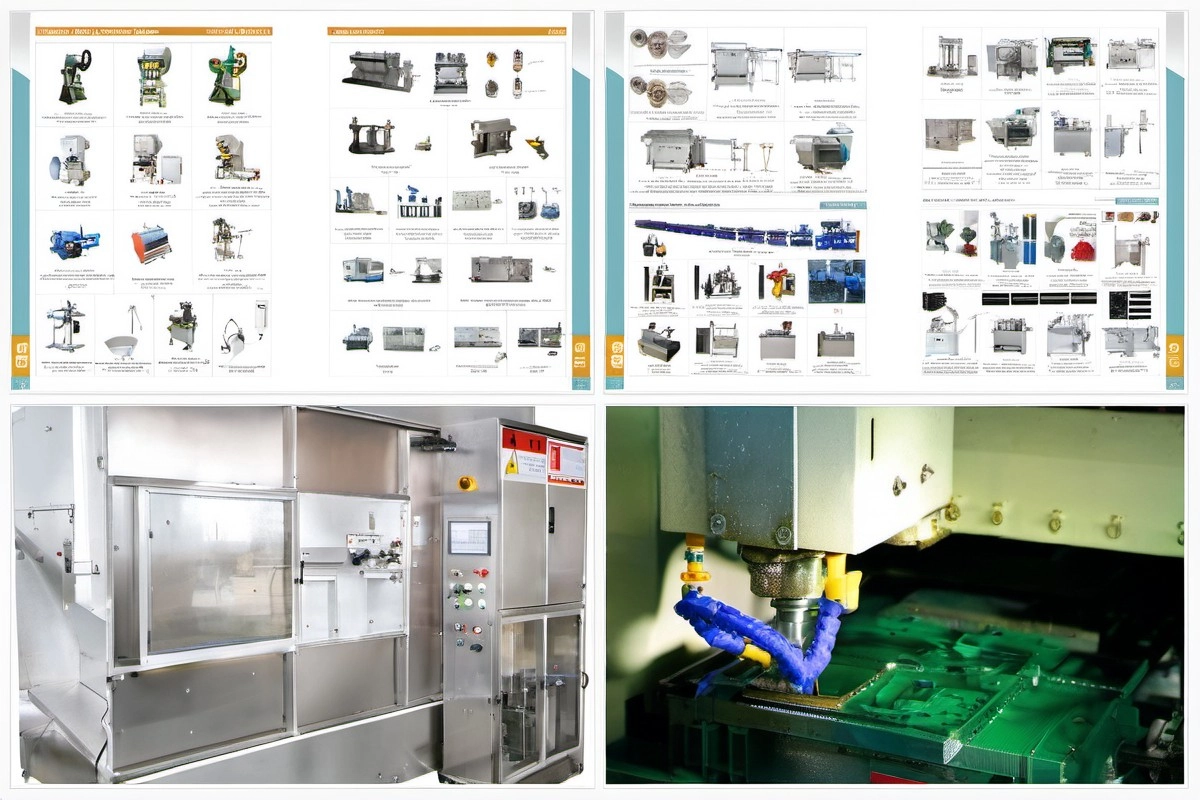
Whether a small hardware finishing shop can grow from roughly $700K to over $4M a year depends less on how expensive the equipment is, and more on making the right decisions at the right nodes. Bottleneck, automation level, supplier scope, integration responsibility and data discipline are the five levers that decide the outcome.
This guide is written for plating and painting factory owners, bag-hardware producers and investors who are evaluating an expansion or retrofit. It maps each decision to shop-floor evidence and a 12-month roadmap that keeps capital aligned with output.
Common Mistakes and How to Avoid Them
The pitfalls that show up most often in real projects, with the cause and the practical fix.
| Mistake | Why It Happens | Practical Fix |
|---|---|---|
| 1. Buying the cheapest machine first | Capital goes to the wrong constraint; downstream equipment starves or waits | Audit rework, downtime and WIP by process step for three months before ordering |
| 2. Jumping to full automation too early | Unmanned lines need stable mix and volume; variety kills utilisation | Match automation level to order volume, SKU count and available capital |
| 3. Sourcing machines from five suppliers | Electrical integration and recipe debugging fall to the owner | Use a turnkey scope unless you have a dedicated PLC technician |
| 4. Ignoring drag-out and rinse design | Chemistry loss and cross-contamination erase margin | Add drip stations and counterflow rinses in the layout phase |
| 5. Selecting a supplier on price only | After-sales gaps and no process support create downtime | Score reference cases, integration scope, spares and response time equally |
| 6. Installing sensors without a review habit | Data sits unused; nobody acts on trends | Assign a weekly review owner and publish trend charts |
| 7. Skipping operator training in the budget | Even good equipment runs badly without chemistry discipline | Reserve 5-10% of project budget for SOP and training |
| 8. Upgrading plating before fixing pretreatment | Poor adhesion makes every downstream investment waste money | Stabilise degreasing, dewaxing and water-break first |
| 9. Changing three parameters at once | When quality shifts, you cannot tell which variable caused it | Change one variable at a time and log product-parameter cards |
| 10. Scaling before the first-pass yield is stable | More volume amplifies reject rate and cash burn | Hold yield above 95% before increasing daily output |
Best Practices That Hold Up in Production
The operating disciplines that separate a reliable line from a reactive one.
- Track rework, downtime and WIP by process step for 90 days before capital spend
- Fix pretreatment first; it is the bottleneck in about 80% of small shops
- Start automation with single-process units, not a full unmanned line
- Choose suppliers by integration capability and process support, not price alone
- Collect the five quality-critical parameters before adding more sensors
- Review trends weekly with a named owner; data without review is disk space
- Document a product-parameter card for every SKU
- Phase the build so each stage stabilises before the next investment
Implementation Roadmap
A practical sequence that can be adapted to your own project.
Working Data & Formula Notes
Upgrade ROI estimate - payback window for a semi-automatic finishing line
The formula is a simplified financial model. Annotations show what each input does and how drift affects the result.
| Component / Parameter | Working Value / Role | What Changes Mean (annotation) |
|---|---|---|
| Annual labour cost before upgrade | $120k-$200k typical for 8-12 people | If this is understated, payback looks shorter than it really is. Include overtime and rework labour. |
| Labour reduction after automation | 25-40% of direct labour | Semi-automatic usually delivers the fastest payback; full automatic needs stable mix. |
| Throughput gain | 20-35% with targeted upgrades | Higher volume spreads fixed costs; but only if first-pass yield holds. |
| Project capex | $80k-$250k for targeted semi-automatic scope | Add 15-20% for installation, training and first-year spares. |
| Simple payback (years) | Capex / (labour saved + margin from extra output) | If the result is above 3 years, reduce scope or increase volume before spending. |
Reference Data
Specifications and references cited in this guide. Confirm final parameters with your line supplier.
Automation stage comparison
| Manual | Standalone machines, manual transfer | Small batches, many SKU changes |
| Semi-automatic | Automated single processes, manual connection | Growing volume, limited budget |
| Automatic line | Conveyor-linked machines, recipe control | Stable products, medium volume |
| Smart line | Central control + data acquisition + MES | Large volume, traceability requirements |
12-month upgrade roadmap summary
| Q1 | Audit bottlenecks, standardise pretreatment | Rework down 20% |
| Q2 | Add key automatic units | Throughput up 30% |
| Q3 | Connect machines with conveyor and recipe control | Labour per part down 25% |
| Q4 | Add data acquisition and train operators | First-pass yield up 15% |
Implementation Cases
Case 1 - plating job shop breaking a $900K ceiling
Situation. A small plating shop in Southeast Asia was stuck at roughly $900K annual output. Rework was concentrated in pretreatment, and the owner planned to buy a second plating tank.
Approach. An audit showed 70% of rejects started in degreasing and water-break failure. The owner added an ultrasonic cleaning station and standardised loads before adding any plating capacity.
Outcome. Rework fell by 22% in 60 days, freeing plating capacity that had been hidden by downstream rework. Output rose without buying a new tank.
Case 2 - painting line scaling from $700K toward $4M
Situation. A hardware painting factory relied on standalone manual machines and could not meet rising orders for colour-finished bag hardware.
Approach. The owner installed semi-automatic painting and drying units, connected them with a short conveyor, added viscosity logging, and trained one technician on oven profiling.
Outcome. Throughput rose 32%, labour per part fell 28%, and the owner had capacity data to support the next investor round.
Frequently Asked Questions
Which process should I upgrade first?
Start with the bottleneck. Track rework, downtime and work-in-process inventory by process step for three months. In most small shops, the bottleneck is pretreatment, not plating or painting.
How far should automation go?
Match automation to order volume, product variety and capital. Semi-automatic upgrades usually give the fastest payback. Fully automatic lines need a stable product mix and enough volume.
Should I build in-house or buy a turnkey line?
If you have a dedicated PLC or electrical technician, building in-house can save money. If not, turnkey lowers integration risk and shortens debugging time.
How do I choose a line supplier?
Score reference cases, scope coverage, electrical integration, spare parts availability, process support and after-sales response. Price is only one dimension.
What data should I collect first?
Start with plating bath temperature and current, pretreatment temperature and pH, painting air pressure and flow, drying oven profile, and overall equipment effectiveness (OEE).
When does data collection become useful?
Only when someone reviews trends weekly. Assign a named owner and act on the trends; otherwise the data is wasted.
How long does a typical upgrade take?
A phased 12-month path is common: audit and pretreatment in Q1, automatic units in Q2, conveyor and recipe control in Q3, data and training in Q4.
What capex range is realistic?
A targeted semi-automatic upgrade for a small line typically falls in the $80k-$250k range, plus 15-20% for installation, training and first-year spares.
What is the biggest mistake owners make?
Buying equipment before identifying the real bottleneck. The first question is not what machine to buy, but which process is limiting output today.
Can investors use this roadmap for due diligence?
Yes. The roadmap shows whether management is fixing constraints before scaling, and whether data discipline exists before capital is deployed.
What Would You Like to Solve?
Every shop has a different product mix, equipment base and capital constraint. If you share your current output, bottleneck data, workshop size and growth target, we can help you decide which process to upgrade first, what automation level fits, and how to phase the investment so each stage pays for the next.
Published by QLQ - an integrated surface-finishing supplier covering equipment, moulds, consumables, plating and painting for zinc-alloy hardware, with whole-factory solutions from raw material to finished finish. Values cited are project references; confirm with your line supplier before specification.