

Professional Zinc Alloy Surface Finishing Solutions
Hydroquinone
Hydroquinone
Tạo mã QR
-
Estimated Delivery:Oct 02 - Oct 06
-
Free Shipping & Returns: On all orders over $75
Product description
Shipping & Return
Product Overview
Hydroquinone (C6H4(OH)2) is the finishing industry's standard antioxidant for stannous (Sn2+) plating solutions. Acid tin and tin-lead baths, whether sulfate, fluoroborate or methanesulfonate based, lose stannous ions continuously to air oxidation - dissolved oxygen turns Sn2+ into Sn4+, which hydrolyzes into the milky stannic sludge that dulls deposits and shortens bath life. Hydroquinone works as an oxygen scavenger and reducing agent that holds the stannous state, typically at 0.5-2 g/L. In smaller amounts it also appears as a stabilizer in electroless copper formulations, where oxidation of the reducing agent is the bath's main failure mode. In QLQ's finishing plants it protects the acid tin used on hardware and connector components where a clean, solderable tin surface matters. The market offers photographic and technical grades; for plating the critical spec is not purity alone but low iron, because traces of iron catalyze exactly the stannous oxidation the antioxidant is meant to stop. Cheap grades with high iron or organic residue can therefore shorten a tin bath's life instead of lengthening it.
Product Identity (Encyclopaedia Card)
| Property | Value |
|---|---|
| Chemical name | Hydroquinone |
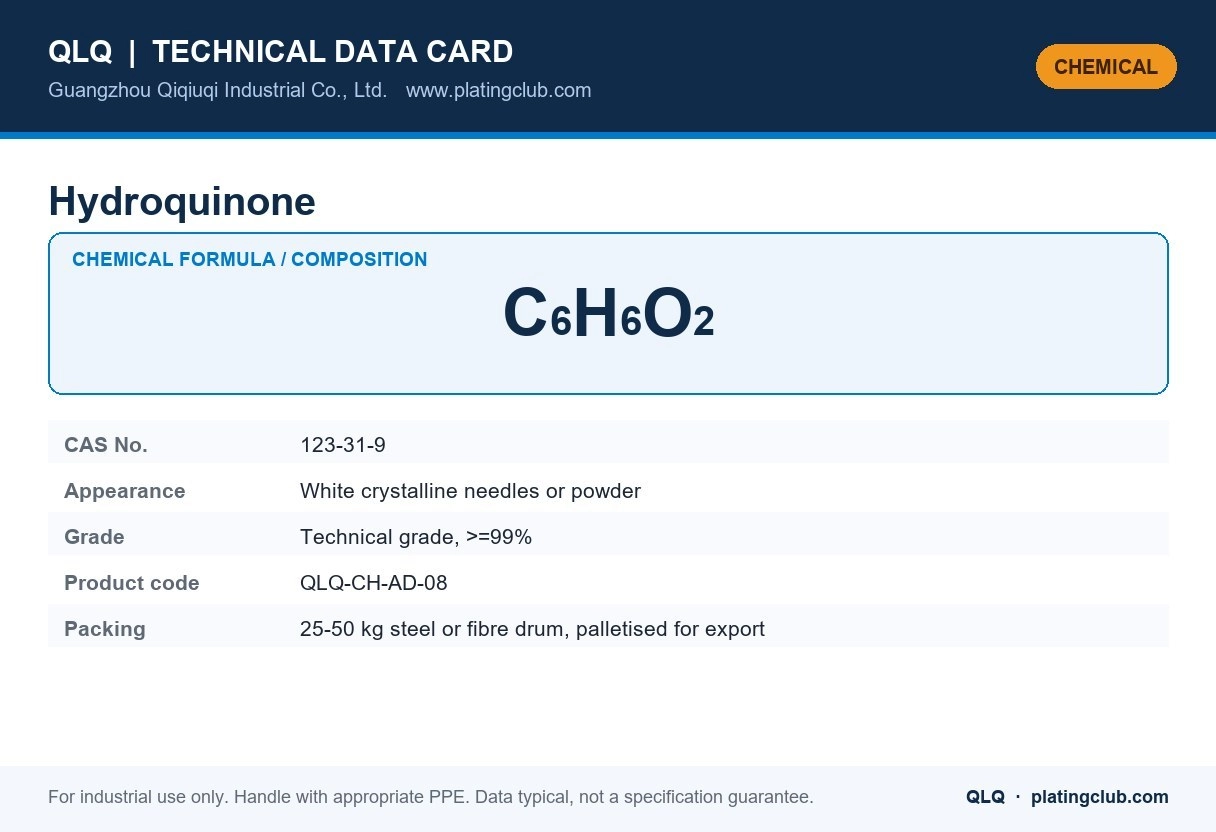
| Chemical formula | C6H6O2 |
| CAS number | 123-31-9 |
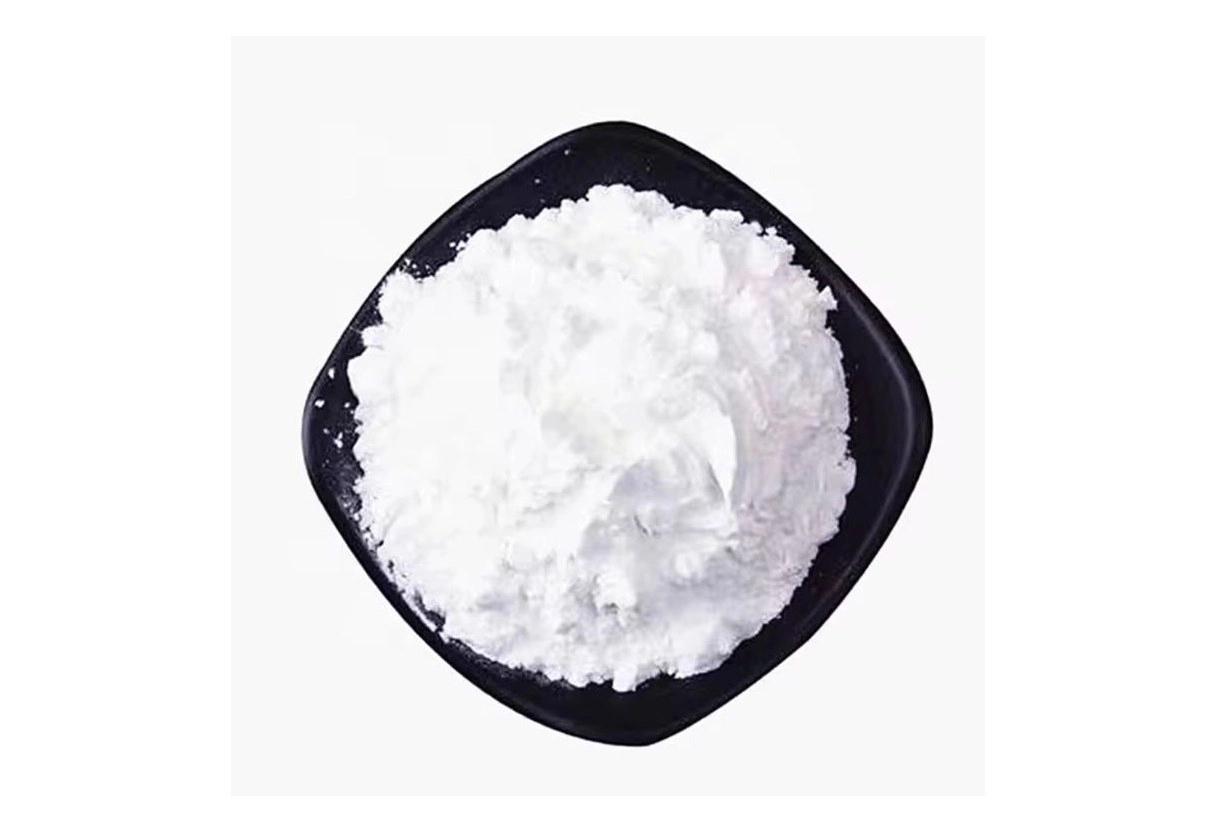
| Appearance | White crystalline needles or powder |
| Grade / type | Technical grade, >=99% |
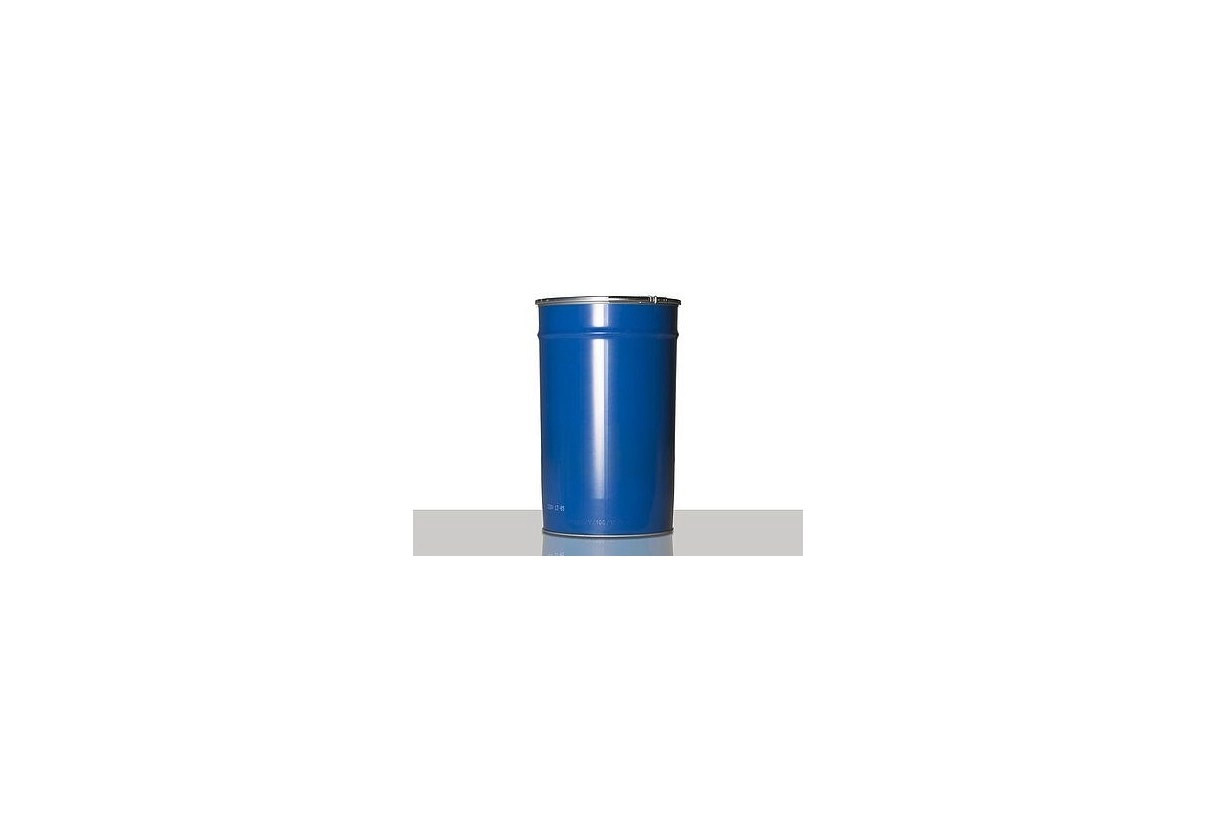
| Standard packing | 25-50 kg steel or fibre drum, palletised for export |
What it is and what it does. Hydroquinone is the reducing agent and brightener used in lead-tin and tin plating baths and as a stabiliser in some electroless processes.
- White crystalline needles; oxidises on exposure to air and light, so store it closed and dark.
- In tin and tin-lead baths it helps to keep the tin in the divalent state and improves the brightness of the deposit.
- Also used as a photographic developer and as a polymerisation inhibitor, which indicates how easily it oxidises.
Typical Use in a Plating / Finishing Line
| Item | Typical guidance |
|---|---|
| Tin and tin-lead baths | 0.5-5 g/L |
| Electroless stabiliser | As specified by the formulation |
| Storage | Closed, dark, cool; use FEFO stock rotation to avoid oxidised material |
Safety, Handling & Storage
| Item | Requirement |
|---|---|
| Hazard classification | Not classified as dangerous for transport in most cases; observe good industrial hygiene and dust control |
| Personal protective equipment | Dust mask, goggles and gloves for powder handling; general ventilation |
| Spill / first aid | Sweep up dry; material is a nuisance dust — avoid breathing the dust |
| Storage | Cool, dry, sealed store; keep bags closed, off the floor and away from moisture |
| Transport | Classified and packed according to IATA/IMDG for the hazard class; UN number and packing group stated on the shipping documents |
Quality Documents Shipped With Every Batch
| Document | Comment |
|---|---|
| COA (certificate of analysis) | Provided with the shipment; batch traceable to the production date |
| MSDS (safety data sheet) | Provided with the shipment; batch traceable to the production date |
| Packing list | Provided with the shipment; batch traceable to the production date |
| Commercial invoice | Provided with the shipment; batch traceable to the production date |
| Certificate of origin on request | Provided with the shipment; batch traceable to the production date |
Buyer Questions We Answer Every Week
| Question | Answer |
|---|---|
| Why has the powder turned brown? | It has oxidised to benzoquinone; a slight discolouration is tolerable but heavily oxidised material should not be used for critical work. |
| Is it hazardous? | Yes - hydroquinone is a sensitiser and is harmful on ingestion; use gloves and dust control. |
| Item | Typical Value |
|---|---|
| Chemical formula | C6H4(OH)2 (1,4-dihydroxybenzene) |
| Purity | ≥ 99.0% (plating grade) |
| Appearance | White to light-grey crystalline powder or needles |
| Melting point | 170-174°C |
| Iron (Fe) | ≤ 0.001% (low-iron grade for tin baths) |
| Ash / insolubles | ≤ 0.05% |
| Standard packing | 25KG fibre drum or woven bag with PE liner |
How It Works in the Bath (Dosage and Limits)
Stannous solutions are thermodynamically unstable in air: dissolved oxygen oxidizes Sn2+ to Sn4+, and stannic species hydrolyze into suspended sludge that co-deposits as grey, rough, poorly solderable tin. Hydroquinone intercepts that oxidation cycle by reacting preferentially with dissolved oxygen (and by reducing early oxidation products back), so the stannous content the bath was made with is still there to plate weeks later. Laboratory and production experience agree on the practical band: around 1 g/L is a well-proven working level, 0.5-2 g/L is the normal control window. Above roughly 2-5 g/L the benefit reverses - excess antioxidant begins to interfere with deposition kinetics and leaves a duller finish, and its own oxidation product (yellow quinone) builds up and forces carbon treatment. The right dose is therefore maintained by analysis and topped up against amp-hours and air exposure, not doubled for safety.
| Component | Stannous sulfate bath | MSA tin bath |
|---|---|---|
| Tin (as Sn2+) | 25-40 g/L | 20-40 g/L |
| Free acid | H2SO4 80-120 g/L | MSA 100-200 g/L |
| Hydroquinone | 0.5-2 g/L | 0.5-2 g/L |
| Wetting agent / carrier | per supplier | per supplier |
| Temperature | 20-30°C | 20-30°C |
| Cathode current density | 1-4 A/dm² | 1-4 A/dm² |
The rest of bath care decides how long each dose lasts: keep the tank covered when idle, minimize splashing and air injection through the solution, filter continuously, and never let iron dissolve into the bath from racks or anodes.
How to Check Quality Before Loading a Batch
| Check | Method | Pass Criteria |
|---|---|---|
| Appearance | Visual | White to light-grey crystals; brown or pink tint means oxidized or iron-loaded material |
| Purity | Assay by titration or HPLC, from COA | ≥ 99.0% |
| Iron | COA figure, spot-check by colorimetric test | Fe ≤ 0.001%; iron accelerates stannous loss |
| Solution color test | Dissolve 5 g in 100 mL warm DI water | Near-colorless to pale straw; dark solution = already oxidized |
| Bath trial | Add to a laboratory tin cell with fresh Sn2+; store 48 h covered and exposed | Sn2+ loss in the protected cell clearly lower than in an unprotected control |
How QLQ controls it: incoming antioxidant lots are checked for iron and appearance against the COA before release, and the tin-line operator records the lot number with each addition. When a tin bath ages faster than expected, the record shows whether the antioxidant itself or line practice (air exposure, iron pick-up) is responsible - a distinction that saves whole tank replacements.
Common Problems & Fixes (Workshop Table)
| Problem | Root cause | Fix |
|---|---|---|
| Milky sludge and falling stannous between Mondays | Air oxidation overnight; antioxidant exhausted or iron present | Cover tank when idle; titrate antioxidant and Sn2+; add to 1 g/L; filter out stannic sludge |
| Grey, rough, poorly solderable deposit | Sn4+ sludge co-depositing; bath past its working life | Filter or decant; restore Sn2+; keep antioxidant in window; dump and rebuild if sludge is heavy |
| Solution turning yellow | Quinone oxidation product building up from overdose or age | Carbon-treat 2-5 g/L; re-dose antioxidant to 0.5-2 g/L; check dosing practice |
| Dull finish after raising antioxidant level | Overdose interfering with deposition | Reduce to the 0.5-2 g/L window; do not use antioxidant as a cure for unrelated haze |
| Bath dies fast even with fresh antioxidant | Iron contamination catalyzing oxidation | Find the iron source (racks, steel parts, impure salt or acid); carbon and chelate treatment; keep iron out |
Handling & Safety for the Plating Line
- Health: hydroquinone is harmful if swallowed and irritating to eyes and skin; prolonged skin contact can cause discoloration and sensitization. Wear gloves, goggles and a dust mask when weighing and dissolving.
- Dissolving: dissolves readily in warm water; prepare additions as a 50-100 g/L solution and dose slowly into the circulating bath.
- Dust control: fine powder is easily airborne when bags are opened; empty slowly and keep the dosing station ventilated.
- Storage: keep containers sealed, dry and away from strong oxidizers and alkalis. Exposed material darkens as it oxidizes - a visual cue that assay is dropping.
- Spills: sweep dry powder for disposal and rinse residues with plenty of water; do not flush into acid waste streams where it could react unpredictably.
What It Does on Iron, Zinc Alloy, Copper and Stainless Steel Parts
| Substrate | Effect of a healthy, antioxidant-protected tin bath | Recommended practice |
|---|---|---|
| Iron / steel small hardware | Clean, adherent, solderable tin without grey stannic streaks | Acid activate before tin; keep Sn2+ stable so the deposit stays white and bright |
| Zinc alloy (sliders, buckles) | Acid tin over zinc die cast is aggressive; a stable bath shortens exposure risk | Use a copper underlayer; keep immersion times short; monitor bath health closely |
| Copper / brass | Tin protects copper from tarnish and keeps solderability for connectors | Plate 2-5 μm tin; a sludge-free bath avoids the roughness that ruins fine pitch |
| Stainless steel | Tin is not normally plated directly on stainless for corrosion service | Nickel-strike stainless first if tin is specified; the antioxidant's job stays the same - keep Sn2+ alive |
FAQ
| Question | Answer |
|---|---|
| Can more hydroquinone make my tin bath last even longer? | No - the benefit plateaus near 1 g/L and excess above a few g/L dulls deposits and builds quinone breakdown products. Control at 0.5-2 g/L and manage air exposure instead. |
| How do I know if my antioxidant has failed? | Stannous falls between working days while the bath sits covered, or the solution turns milky. Titrate Sn2+ and antioxidant together; a protected bath holds Sn2+ for weeks. |
| Is iron really that harmful in a tin bath? | Yes. Even a few mg/L of iron sharply accelerates stannous oxidation - it catalyses the reaction the antioxidant is fighting. Use low-iron chemicals and keep steel out of the tin solution. |
| Can hydroquinone be used in alkaline baths? | No - it is for acidic solutions. In alkali it oxidizes quickly and darkens; electroless copper use is a controlled, ppm-level special case handled by the formulation supplier. |
| Does QLQ supply low-iron hydroquinone with support? | Yes. QLQ supplies antioxidant-grade hydroquinone with COA covering purity and iron, and engineers help with tin bath stabilization and troubleshooting for customers in 10+ countries. |
Tin bath turning milky or losing stannous? QLQ supplies low-iron hydroquinone with COA and engineers who help customers in 10+ countries stabilize acid tin lines and diagnose sludge problems. Contact us with your bath analysis.
Shipping cost is based on weight. Just add products to your cart and use the Shipping Calculator to see the shipping price.We want you to be 100% satisfied with your purchase. Items can be returned or exchanged within 30 days of delivery.