
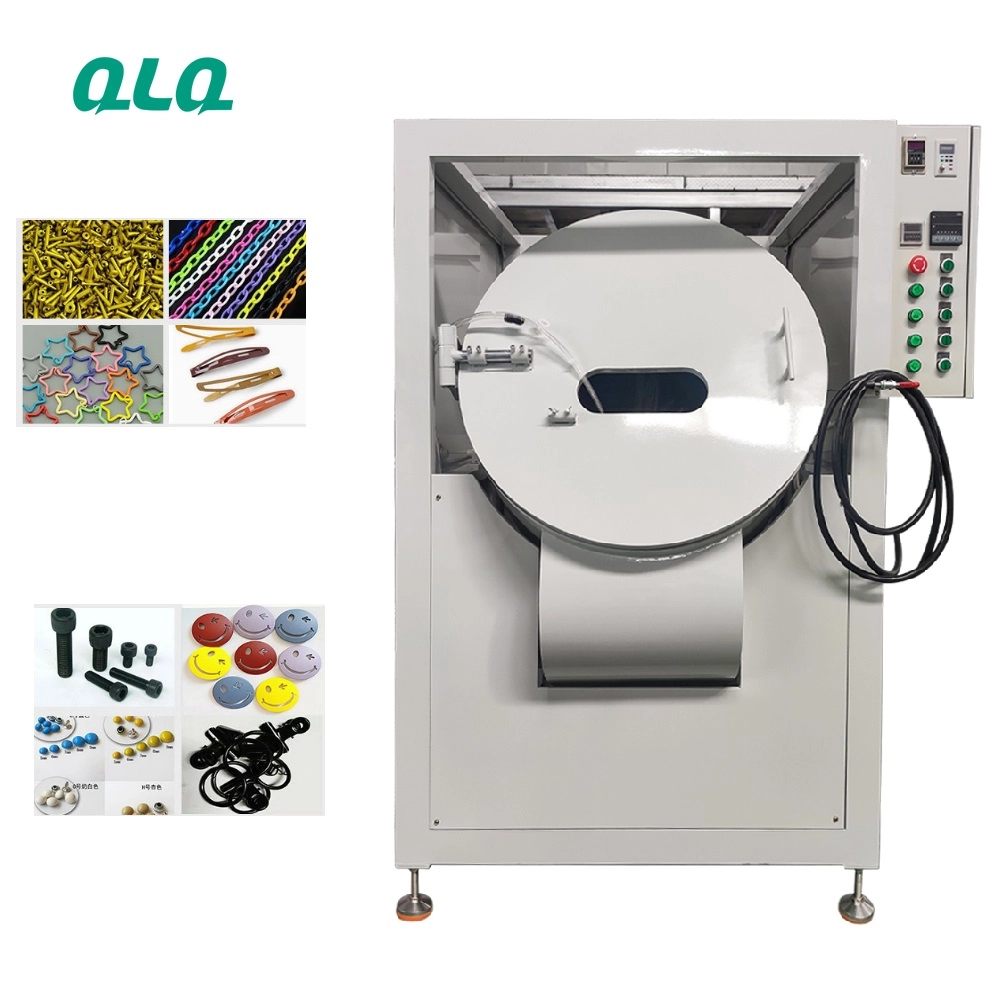
Coverage in a tumble drum is decided by how long each surface sees the spray. Load, burst duration and rotation speed set that exposure - and they interact.
This intermediate guide covers coverage control in tumble painting and how to tune load, spray duration and rotation together.
Common Mistakes and How to Avoid Them
The pitfalls that show up most often in real projects, with the cause and the practical fix.
| Mistake | Why It Happens | Practical Fix |
|---|---|---|
| 1. Load and burst changed together | Cause unprovable | Change one at a time |
| 2. Burst too long | Heavy spots and sticking | Time per surface area |
| 3. Rotation too slow | Repeats on the same face | Increase rotation slightly |
| 4. Coverage checked by eye | Thin film hidden | Cut and measure |
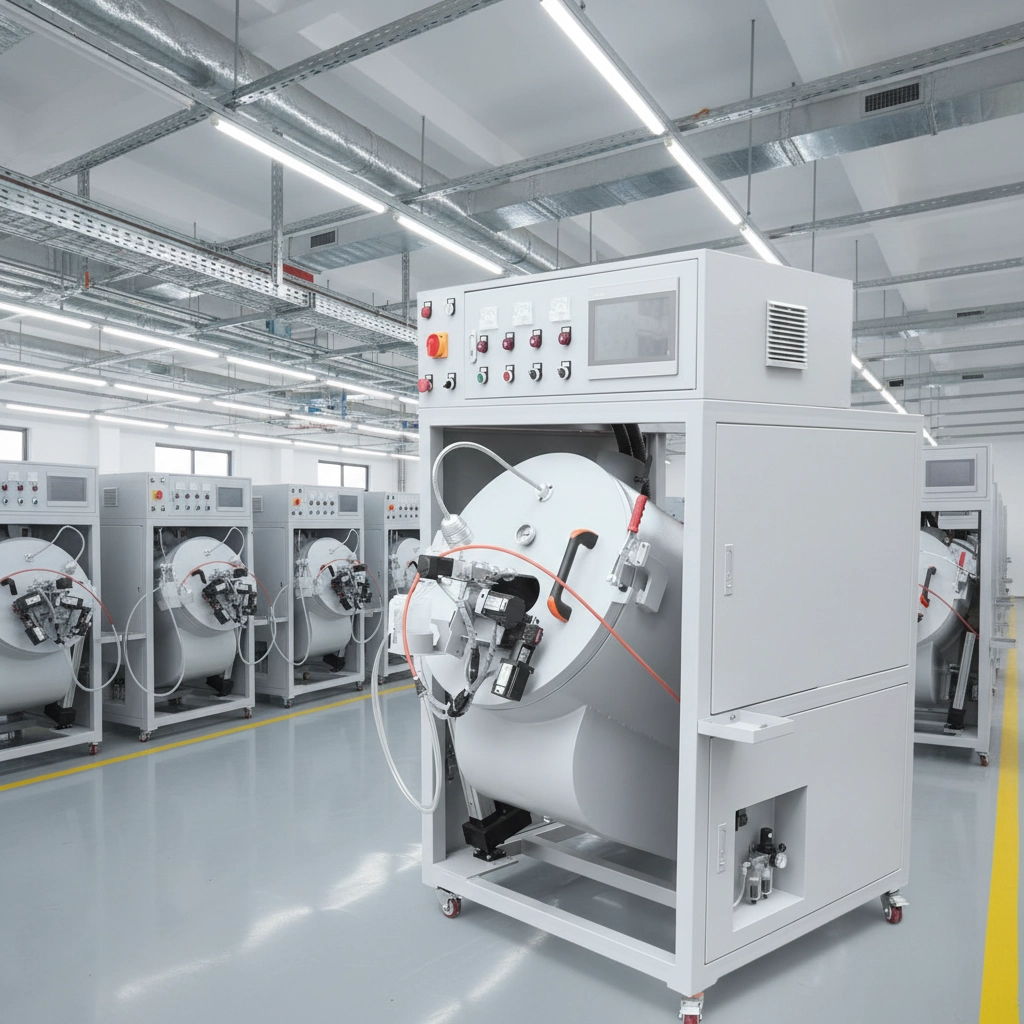
| 5. Drum level tilted wrong | One end heavy | Level the drum |
| 6. Gun angle fixed for all parts | Geometry mismatch | Adjust per part |
| 7. Spray pressure drift | Atomization changes | Check pressure per batch |
| 8. No coverage log | Tuning invisible | Log load, burst, speed |
Best Practices That Hold Up in Production
The operating disciplines that separate a reliable line from a reactive one.
- Tune load, burst and rotation one at a time
- Time bursts to the load's surface area
- Verify coverage by cutting sample parts
- Check spray pressure every batch
- Keep a coverage tuning log
Implementation Roadmap
A practical sequence that can be adapted to your own project.
Process Flowchart
Coverage tuning flow
A step-by-step sequence with notes and cautions so every shift follows the same order.
- Rotation changes which face sees the spray.
- Burst time = paint amount per cycle.
- Never run a tilted drum - coverage becomes uneven.
- Pressure drift changes atomization.
Working Data & Formula Notes
Coverage data
Reference values for tumble coverage tuning.
| Component / Parameter | Working Value / Role | What Changes Mean (annotation) |
|---|---|---|
| Load | Per drum rating | Overload locks surfaces |
| Burst | Per surface area | Long bursts pool and stick |
| Rotation | Per geometry | Slow rotation repeats faces |
| Verify | Cut sample film | Eye checks mislead |
Reference Data
Specifications and references cited in this guide. Confirm final parameters with your line supplier.
Tuning variables
| Variable | Increase effect | Decrease effect |
| Load | Less exposure | Better coverage, lower output |
| Burst | Thicker film | Thinner film |
| Rotation | More surface change | Repeated faces |
Implementation Cases
Case 1 - thin film on one face
Situation. Cut samples showed one face of caps at half the target film; the rotation was too slow, repeating the same face under the gun.
Approach. Rotation was increased slightly, burst was held, and cut samples were re-checked.
Outcome. Both faces reached the film target; the cut-sample check became standard.
Case 2 - pooling from a long burst
Situation. Frames came out with heavy spots where paint pooled; the burst had been lengthened to fix thin film.
Approach. Burst was re-timed to the load's surface area and rotation was raised; the two changes were verified separately.
Outcome. Pooling stopped and film stayed in target; the tuning log recorded the sequence.
Frequently Asked Questions
Why do load, burst and rotation interact?
All three control how much paint each surface sees; changing one changes the effect of the others.
How do I time the burst?
Base it on the load's surface area and the film target; verify by cut samples.
Why cut samples?
Film thickness cannot be judged by eye in a tumble drum.
What does rotation change?
Which face of the part is exposed to the spray in each pass.
Why change one variable?
Tuning is provable only when one variable moves at a time.
What if film is thin?
Check rotation and burst before load; overloading is the usual first suspect.
Why check spray pressure?
Pressure changes atomization and coverage even with the same burst time.
How do I level the drum?
Check the bubble level at installation and after any move.
What goes in the tuning log?
Load, burst, rotation, pressure, film result and the change made.
What Would You Like to Solve?
Tell us your drum size, part geometry and cut-sample film data. We can help tune the load, burst and rotation for even coverage.
Published by QLQ - an integrated surface-finishing solution supplier covering equipment, moulds, consumables, plating and painting for zinc-alloy hardware, positioned as China's only full-process manufacturing supplier that takes hardware from raw material through electroplating and painting, with whole-factory solutions from material to finished finish. Values cited are project references; confirm with your line supplier before specification.