
Jewelry-Grade Gold Plating — 24K, 18K & 14K for Necklaces, Earrings & Bracelets
Your complete guide to jewelry gold plating: color systems, thickness specifications, cyanide-free processes, anti-tarnish sealing, and nickel-free options for hypoallergenic wear.
The QLQ Gold Plating Advantage
From fashion accessories to fine jewelry — gold plating that meets the world's strictest skin-contact regulations
The Jewelry Gold Plating Process
Every layer between base metal and the final gold surface is engineered for appearance, wear and safety
1Pre-Cleaning & Wax Removal
Jewelry arrives with casting investment, polishing compound and finger oils. Ultrasonic alkaline degrease (60–70 °C, 3–5 min) followed by DI rinse. Any residue = gold adhesion failure.
2Ni- or Ni-Free Strike Layer
Traditional process: nickel strike (5–10 μm) for brightness. Hypoallergenic option: copper strike + palladium flash — no nickel at all. Choose based on your target market.
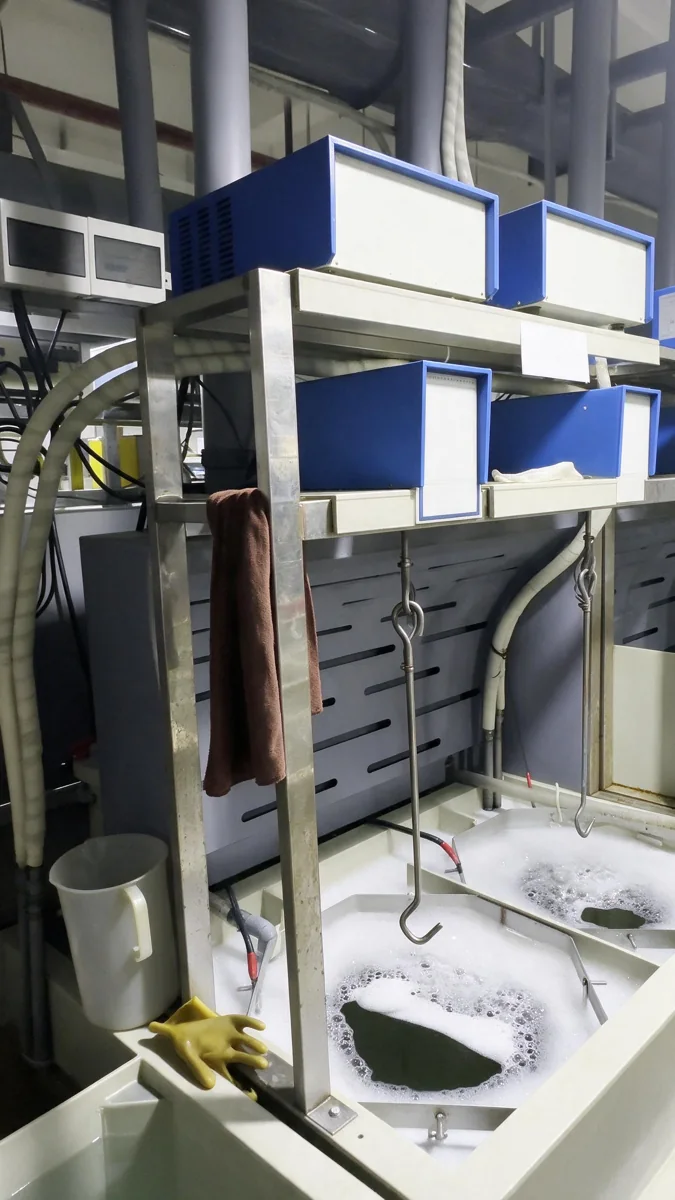 Conceptual illustration based on reference photographs; not test evidence.
3Gold Flash Plating (Decorative: 0.1–0.5 μm)
Thin decorative gold layer. 24K pure gold (pure yellow), 18K (warm gold, 75% Au), 14K (paler, 58% Au). Each alloy has its own electrolyte formulation and color appearance.
4Anti-Tarnish Sealing
Gold itself does not tarnish, but the underlying copper or nickel can migrate through thin gold layers. A clear organic sealer (immersion or spray) blocks this migration. For high-wear jewelry, add a thin e-coat top layer.
Color & Thickness Guide
Choose by application, wear frequency and budget
| Gold Type | Au Content | Color Tone | Decorative (μm) | Durable (μm) | Best For |
|---|---|---|---|---|---|
| 24K | 99.9% | Bright yellow | 0.1–0.3 | 0.5–1.0 | High-end jewelry, religious items |
| 18K | 75% | Warm gold | 0.2–0.5 | 1.0–3.0 | Fashion jewelry, watches |
| 14K | 58.5% | Pale gold | 0.2–0.5 | 1.0–3.0 | Affordable fashion, kids' jewelry |
📌 Jewelry Gold Plating Quick Reference
FAQ
What thickness do I need for everyday wear gold jewelry?
Is cyanide-free gold plating as good as cyanide-based?
Why does my gold jewelry turn skin green?
Can you match a specific Pantone gold shade?
What is the difference between hard gold and soft gold for jewelry?
Get a Free Quote Today
Send us your samples or drawings — our engineers reply within 24 hours with pricing and technical advice.
Contact Us