
collection-banner-image collection-banner-image

Professional Zinc Alloy Surface Finishing Solutions

Industrial Gold Plating

Industrial Gold Plating — Connectors, PCB Gold Fingers & Precision Contacts

Functional gold for electronics: hard gold vs. soft gold, selective plating, barrel vs. rack, and the critical salt spray / contact resistance specifications that govern electronic reliability.

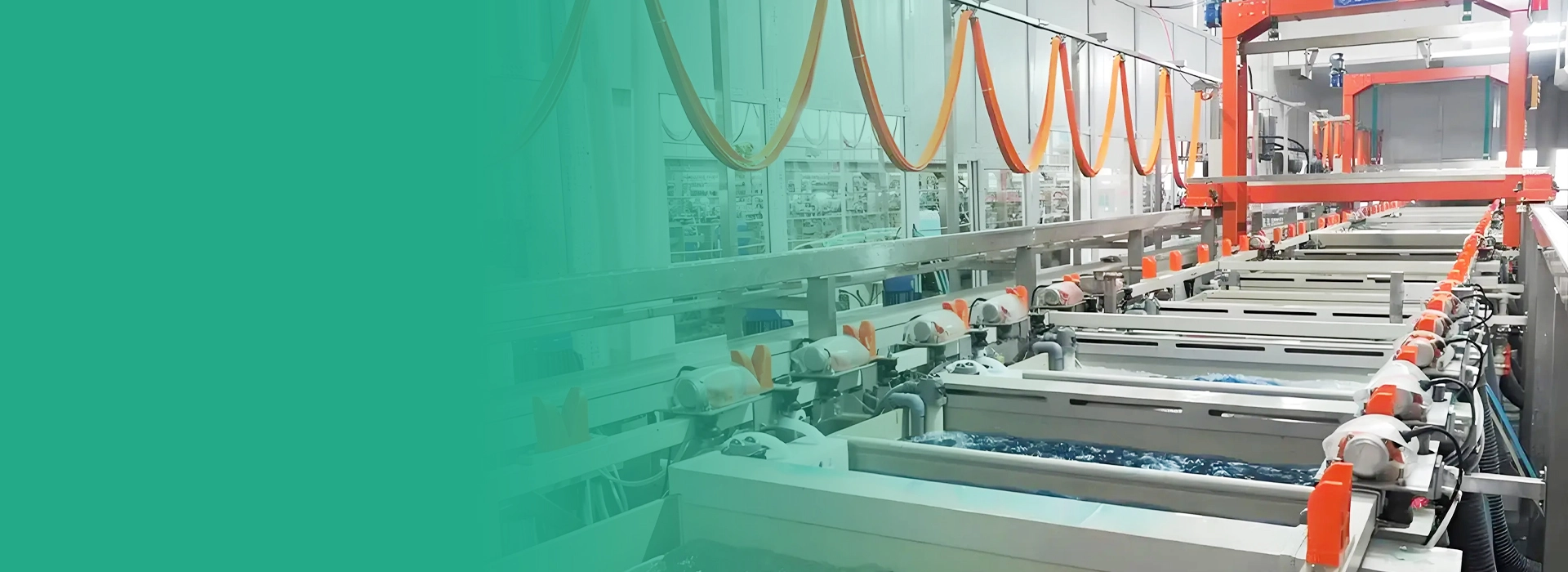
工业镀金车间 电子接插件/PCB金手指/精密端子工业镀金生产线 21:9

Why Gold in Electronics?

Gold does not oxidize. One atomic layer of oxide on a copper contact = a failed connection. Gold guarantees < 10 mΩ contact resistance for the life of the product.

金手指细节 PCB板金手指镀金,光泽均匀

Gold Fingers

PCB edge connectors

精密接插件 电子接插件端子镀金,微型精密

Connector Pins

Miniature contacts

滚镀与挂镀 滚镀机/挂镀架对比选择

Barrel vs Rack

Choice by part geometry

盐雾测试 盐雾箱测试镀层耐腐蚀

Salt Spray

24–96 h requirement

The Industrial Gold Plating Process

From base metal prep through hard/soft gold deposition to final QC

1Gold Thickness Selection (0.5–5.0 μm)

Contact resistance and wear life scale with thickness. 0.5–1.0 μm: low-cycle connectors (1K–5K mate cycles). 2.0–5.0 μm: high-reliability (10K+ cycles, MIL-spec). IPC-4552 defines gold finger thickness standards.

Key Parameters
Low-cycle: 0.5–1.0 μm
Standard: 1.0–2.0 μm
High-reliability: 2.0–5.0 μm
Standard: IPC-4552
镀金厚度对比样品 不同厚度镀金样品对比标识
膜厚仪检测 XRF膜厚仪现场检测
接触电阻测试 四探针接触电阻测试仪

2Hard Gold (Cobalt / Nickel Hardened)

Gold alloyed with 0.1–0.5% Co or Ni. Hardness 150–250 HV vs. 50–90 HV for soft gold. Much better wear resistance for repeated mating. Preferred for connector pins, edge card fingers, and relay contacts.

Key Parameters
Hardness: 150–250 HV
Alloy: Au + 0.1–0.5% Co/Ni
Wear: Excellent — 10K+ cycles
Best for: Connectors, relays
硬金端子 硬金镀层精密端子,耐磨接触面

3Soft Gold (Pure, 99.9% Au)

Pure gold for thermal compression bonding and soldering. Soft gold deforms under thermode pressure for void-free bonds. Lower hardness (50–90 HV) but superior weldability. Used for semiconductor die attach and wire bonding.

Key Parameters
Purity: 99.9% Au
Hardness: 50–90 HV
Best for: Die attach, wire bonding
Thickness: 0.5–3.0 μm
软金镀层 纯金软镀层,焊接性优异,用于半导体

4Barrel vs. Rack Plating Selection

Barrel plating (small parts in rotating drum): efficient for mass-production connector pins, terminals, and stampings. Rack plating (fixtured): for PCB panels, odd-shaped housings, and parts needing selective plating.

Key Parameters
Barrel: Small loose parts, 1000s per load
Rack: PCB panels, selective plating
Selective: Rack with masked areas
Cost: Barrel < Rack for small parts
Zinc alloy parts before surface finishingBefore
Finished zinc alloy parts after surface finishingAfter

Hard Gold vs. Soft Gold — Selection Guide

Both have their place in electronics manufacturing

PropertyHard Gold (Co/Ni)Soft Gold (Pure)
Hardness (HV)150–25050–90
Wear cycles10,000–50,000+500–2,000
Contact resistance< 10 mΩ< 5 mΩ
SolderabilityGood (with flux)Excellent (no flux)
Wire bondingPossible (high force)Standard (low force)
Thickness typical1.0–5.0 μm0.5–3.0 μm
Cost (per μm)Same as soft + alloySame

📌 Industrial Gold Plating Quick Reference

Thickness range0.5–5.0 μm
Hard gold (Co/Ni)150–250 HV
Soft gold (pure)50–90 HV
Contact resistance< 10 mΩ
Barrel max loadup to 15 kg
IPC standardIPC-4552
💡 Selective gold plating saves costYou don't need gold on the whole part. Selective rack plating (masked areas) plates gold only on contact surfaces — the rest stays nickel or tin. Typical saving: 40–60% of gold cost. We offer precision mask tooling for custom patterns.

FAQ

What is the minimum gold thickness for reliable connectors?
IPC-4552 specifies minimum 0.5 μm for gold fingers (Class 1) and 1.27 μm for Class 3 (high-reliability). For connector pins with 10K+ mate cycles, we recommend 2.0–3.0 μm hard gold.
Can you plate gold on stainless steel contacts?
Yes — stainless steel needs an intermediate nickel strike to activate the surface before gold. Without it, gold adhesion on stainless is unreliable. Our process: Wood's nickel strike → sulfamate Ni → hard gold.
Barrel vs. rack — which gives better gold thickness distribution?
Rack plating gives ±10% thickness uniformity across the part. Barrel plating is ±25–30% due to random contact. For critical contact resistance (e.g. 0.5 μm minimum requirement), rack or selective rack is mandatory.
How is contact resistance tested?
4-wire Kelvin method at 10–100 mA, 20 mV max open circuit. Typical spec: < 10 mΩ initial, < 20 mΩ after environmental testing (heat/humidity). We test per batch on a Caltech CR-100 or equivalent.
What salt spray rating does industrial gold plating achieve?
Gold itself is inert. The corrosion resistance comes from the nickel underlayer. Our standard process: 2 μm Ni + 1 μm Au passes 48 h neutral salt spray. With thicker Ni (5 μm): 96+ h. MIL-G-45204 Type II requires 24 h minimum.

Get a Free Quote Today

Send us your samples or drawings — our engineers reply within 24 hours with pricing and technical advice.

Contact Us
Workshop Planning Data

Industrial Gold Plating — Data Zinc Alloy Finishing Managers Need

Gold plating (rack and selective) and gold electroforming produce premium jewelry-grade finishes on zinc alloy, brass and silver — with tight karat control and high-value output per square meter.

350 m²Workshop Area
14 peopleTeam Size
120 kWInstalled Power
100-300k pcs/dayDaily Output (10 h)

Quality Inspection & Control

Check itemMethodAcceptance standard
Gold thicknessX-ray fluorescence0.05-5.0 μm per karat spec
Karat / purityXRF analysis24K ≥ 99.9%, 18K ≥ 75% Au
Color matchColorimeter ΔEΔE ≤ 1.0 vs karat master
AdhesionBend + thermal shockNo flake at 150 °C × 30 min
Wear resistanceTaber / rub testNo wear-through at spec cycles
Contact resistanceMilliohm meter≤ 10 mΩ for industrial contacts

Workshop Layout & Floor Area

ZoneArea
Clean-room plating line110 m²
Electroforming shop80 m²
Precious metal store (vault)20 m²
QA lab + XRF40 m²
Rinse / DI / recovery50 m²
Waste & gold recovery25 m²
Utility & lockers25 m²
Total workshop350 m²

Manpower & Shift Plan

RoleHeadcount
Platers / operators7
Gold solution technicians2
QC inspectors (XRF)2
Precious metal control1
Supervisor1
Maintenance1
Total (2 shifts × 10 h)14

Power & Utility Demand

EquipmentDemand
Rectifiers (precious metal)35 kW
Heaters / chillers30 kW
Pumps / filters15 kW
Clean-room HVAC18 kW
Electroforming power10 kW
Lighting & auxiliary12 kW
Installed total120 kW
Typical running load≈ 95 kW

Production Flow Chart

PretreatmentPolish, clean, activate
Strike LayerNickel or silver strike
Gold PlateRack / barrel / selective gold
Rinse & RecoveryDI rinse + gold drag-out recovery
Dry & QCXRF thickness + color check
Protect & PackSeal, wrap, pack

Daily Capacity — 10-Hour Operating Day

ParameterValue
Cycle time30-60 min
Load per batch30-80 kg
Batches per 10 h day10-16
Daily output100,000-300,000 pcs
Monthly output (26 days)2.6-7.8 million pcs

Output Value Estimate

ParameterValue
Plating fee per pieceUSD 0.02-0.12
Daily output value (10 h)USD 8,000-25,000
Monthly output valueUSD 210,000-650,000
Annual output valueUSD 2,500,000-7,800,000

Related Products — Complete Industrial Gold Plating Solution

Machines, chemicals and consumables selected from the real QLQ product range for this process. Every product page is live and ready to quote.