
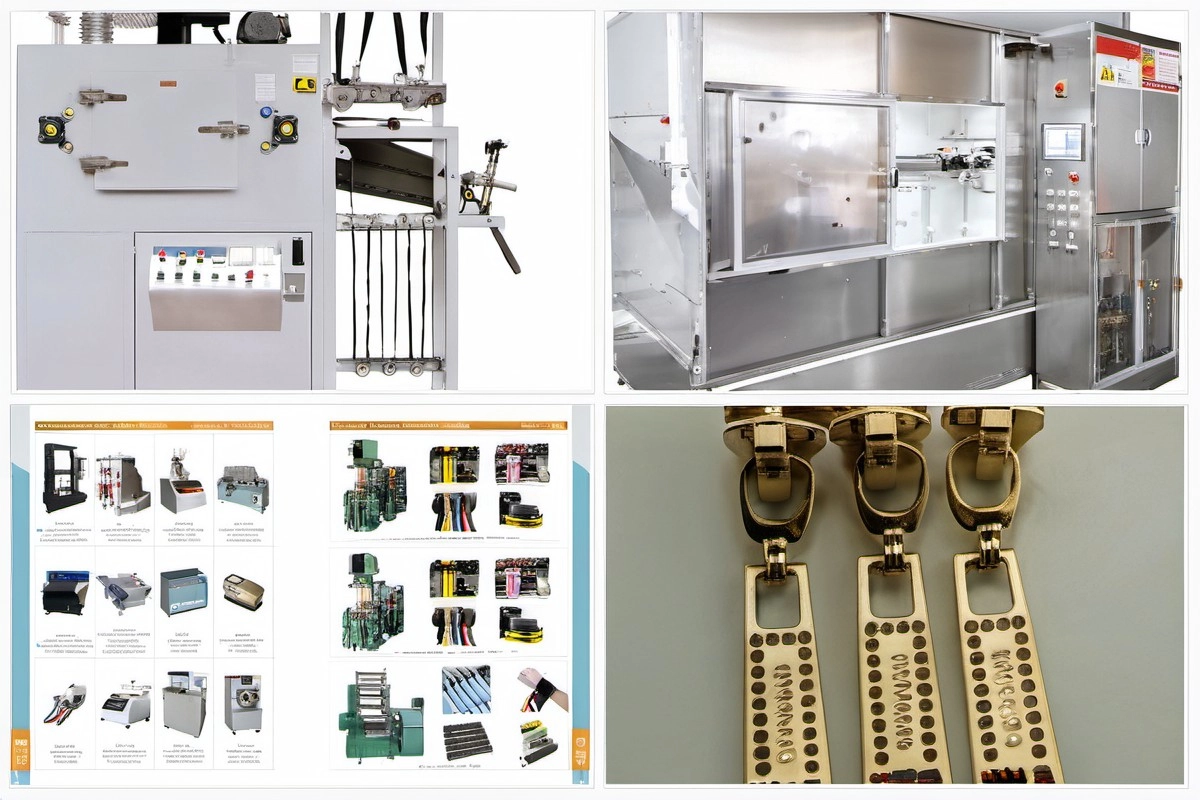
Intelligent upgrading in hardware surface finishing is not about replacing every manual motion with a robot. The real goal is to make the process controllable, observable and traceable. PLC control solves stable execution; data acquisition solves knowing what happened.
This field guide explains the three-layer control architecture, the critical control points for polishing, cleaning, plating, painting and drying, and the common pitfalls that cause automation projects to stall after commissioning.
Common Mistakes and How to Avoid Them
The pitfalls that show up most often in real projects, with the cause and the practical fix.
| Mistake | Why It Happens | Practical Fix |
|---|---|---|
| 1. Choosing the wrong PLC size | Too few I/O points block future sensors and expansion | Size I/O for current needs plus 20-30% expansion headroom |
| 2. Using lab-grade pH probes in a plating bath | High temperature and corrosion destroy probes in weeks | Specify industrial high-temperature anti-corrosion probes and a calibration schedule |
| 3. Mixing communication protocols without a plan | Modbus RTU, Modbus TCP and proprietary protocols increase integration cost | Require standard open protocols from suppliers at procurement |
| 4. Collecting data but never analysing it | Hard drives full of unused logs do not improve yield | Schedule weekly alarm reviews and monthly pass-rate-by-shift reports |
| 5. Connecting the control network to the office LAN | Industrial controls become attackable once exposed | Use VLAN or physical isolation and whitelist upstream data transfer |
| 6. Letting data acquisition intervene in control logic | Read-only acquisition can still destabilise the PLC if polled too aggressively | Keep acquisition read-only and set sensible poll frequencies |
| 7. Skipping operator training on the HMI | Operators bypass alarms or misinterpret trends | Train operators on alarms, recipe recall and basic fault response |
| 8. Ignoring sensor maintenance | Drift in temperature and pH sensors silently changes quality | Calibrate sensors on a documented schedule and replace ageing probes |
| 9. Designing for MES on day one | Complex systems fail before basic data discipline is established | Start with PLC + database + dashboard; add MES after scaling |
| 10. No backup of recipes or parameters | A PLC failure without backups means recipe reconstruction by trial | Export recipes and parameters weekly to offline storage |
Best Practices That Hold Up in Production
The operating disciplines that separate a reliable line from a reactive one.
- Start with the parameters that directly affect quality: temperature, current, pH and time
- Make data acquisition read-only and separate from control logic
- Choose a PLC with expandable I/O and maintainable programming environment
- Require standard protocols from every machine supplier
- Isolate the industrial network from office and Internet traffic
- Store data in a queryable database, not only in PLC or CSV
- Review alarms weekly and pass-rate trends monthly
- Train one technician who understands PLC, electrical and process basics
Implementation Roadmap
A practical sequence that can be adapted to your own project.
Working Data & Formula Notes
Working data - data-acquisition signal chain and sampling rules
The annotations explain what happens when each part of the chain drifts or is misconfigured.
| Component / Parameter | Working Value / Role | What Changes Mean (annotation) |
|---|---|---|
| Sensor signal | 4-20 mA / 0-10 V / thermocouple / encoder pulse | A weak or noisy signal produces false trends; use shielded cable and proper grounding. |
| PLC input module | Analogue or digital conversion with scaling | Wrong scaling makes the dashboard show 120 °C when the bath is 55 °C. |
| Acquisition frequency | Process parameters 1-10 s; status on event | Too fast wastes storage and slows queries; too slow misses short spikes. |
| Database storage | Industrial PC + MySQL/SQLite or CSV entry stage | No queryable database means traceability stops at the spreadsheet. |
| Batch linkage | Batch number + operator + product model | Without batch linkage, customer complaints cannot be traced to parameters. |
Reference Data
Specifications and references cited in this guide. Confirm final parameters with your line supplier.
Three-layer control architecture
| Device layer | PLC, VFD, sensors, actuators | Hands and feet of the line |
| Control layer | Recipe management, interlocks, alarms | Brain that executes recipes |
| Data layer | Batch records, parameters, inspection results | Memory that enables traceability |
Key control points by process
| Polishing | Barrel run time + vibration sensor |
| Degreasing | Temperature PID + pH alarm |
| Ultrasonic cleaning | Frequency + power program |
| Plating | Current density + bath temp/pH + time |
| Painting | Air pressure + flow + gun speed + booth humidity |
| Drying | Metal temperature profile vs time |
Implementation Cases
Case 1 - zipper-pull plating line retrofit
Situation. A plating line wrote parameters by hand, found abnormalities late, and could not trace customer complaints back to a batch.
Approach. Temperature, pH, current and time sensors were added. A PLC logged data to an industrial-PC database and created a QR code for each batch.
Outcome. Abnormal response time dropped from an average of 2 hours to 10 minutes; customer-complaint traceability rose from 30% to over 95%.
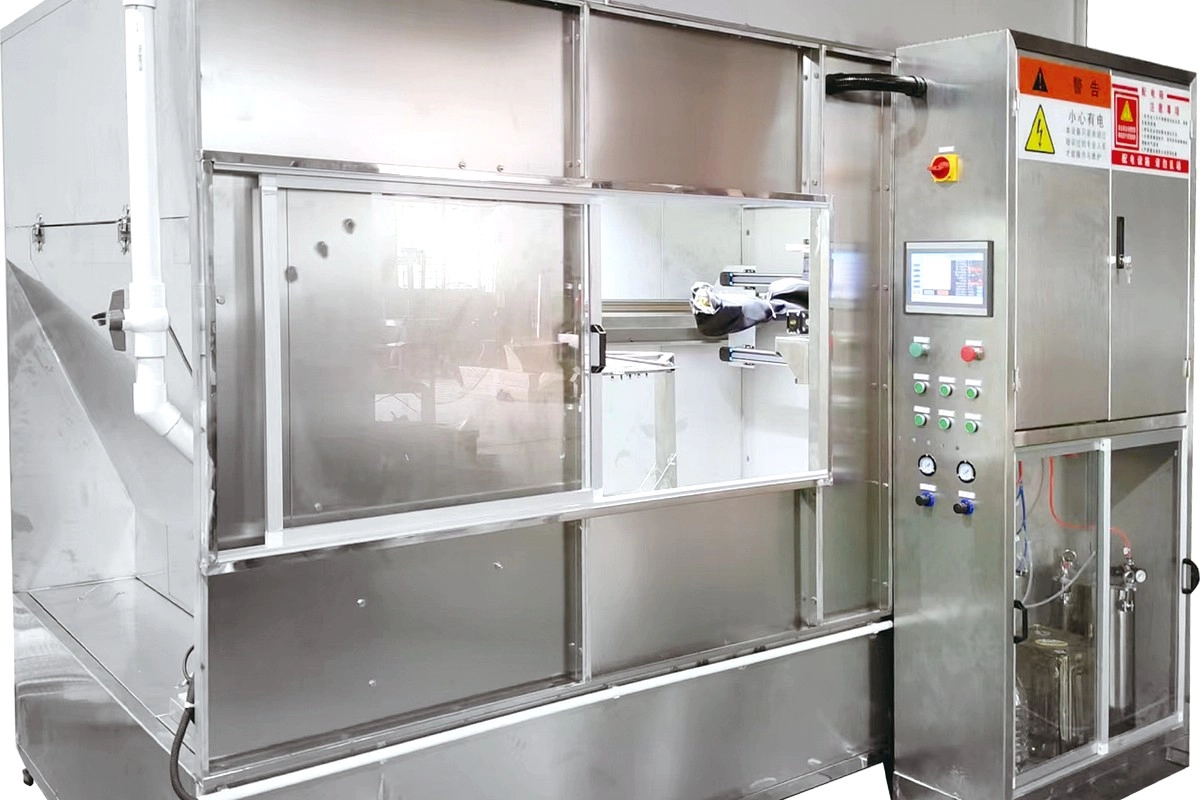
Case 2 - intelligent painting machine network retrofit
Situation. A painting machine ran independently. Air pressure, flow rate and rotation speed were not recorded, so batch-to-batch colour differences were hard to diagnose.
Approach. The painting-machine PLC was connected to the shop-floor LAN; air pressure, flow, rotation speed, temperature and humidity were logged per batch.
Outcome. When colour anomalies occurred, the complete painting parameters could be pulled up within 5 minutes, reducing root-cause location time from half a day to 30 minutes.
Frequently Asked Questions
What factors matter when selecting a PLC?
Check that I/O points cover current and future expansion, supported protocols, maintainable programming environment and local technical support.
Does data acquisition affect production stability?
If designed correctly, no. Data acquisition should be read-only and should not intervene in real-time control logic.
Does a small factory need MES?
Not necessarily. Recording key process parameters in a queryable database already solves about 80% of traceability problems. MES is a later choice.
Is maintenance of the control system expensive?
Lower than labour costs in most cases, but it needs at least one trained technician who understands PLC and electrical basics.
How is data-collection frequency set?
Key process parameters every 1-10 seconds, equipment status on event, inspection results per batch. Avoid blindly high frequency.
Can old equipment be retrofitted?
Yes, if the machine has signal output points. If not, add sensors or acquisition modules; cost depends on machine condition.
Which sensors fail fastest in a plating environment?
pH probes suffer most in high-temperature, corrosive baths. Use industrial high-temperature anti-corrosion probes and calibrate regularly.
How do I keep the control network secure?
Physically or VLAN-isolate it from the office network, disable unnecessary remote-access ports, and use one-way gateways or whitelists.
What data should be collected first?
Start with the five categories that directly affect quality: process parameters, equipment status, quality data, material data and energy data.
How do I justify the investment to an investor?
Show traceability improvement, reduced complaint response time, and the ability to link quality to process parameters - all of which reduce warranty and rework costs.
What Would You Like to Solve?
Automation should make your line more stable and your data more useful, not more complex. If you are planning a control or data-acquisition upgrade, share your current machine list, the parameters you want to trace, and your technician capacity, and we can help you design a three-layer architecture that fits your scale.
Published by QLQ - an integrated surface-finishing supplier covering equipment, moulds, consumables, plating and painting for zinc-alloy hardware, with whole-factory solutions from raw material to finished finish. Values cited are project references; confirm with your line supplier before specification.