
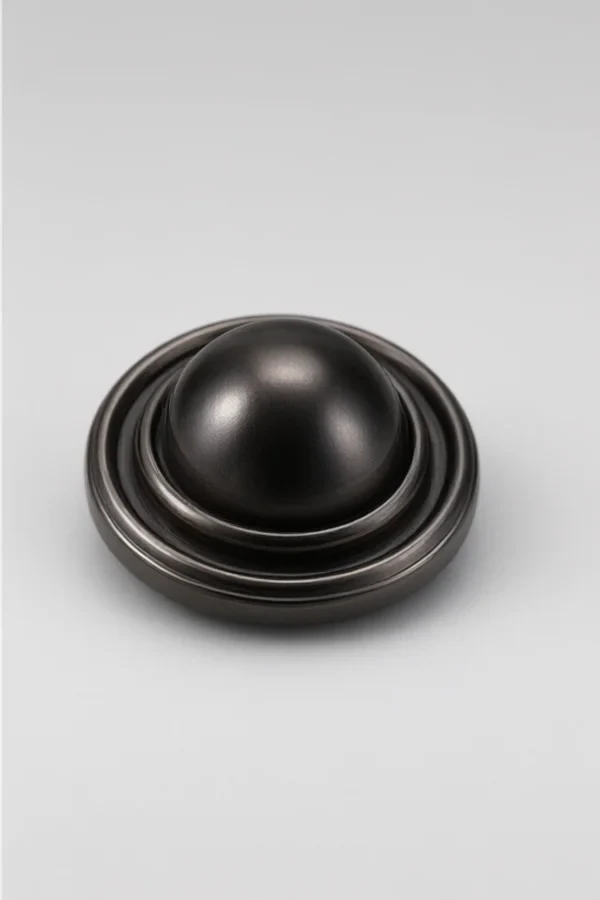
Recesses in zinc alloy hardware are where barrel plating fails first: current is screened, chemistry is slow and the deposit thins. The fix is usually in the load, not the bath.
This intermediate guide covers recess shadow, load factor, media mixing and the current-density adjustments that improve coverage without changing the recipe.
Common Mistakes and How to Avoid Them
The pitfalls that show up most often in real projects, with the cause and the practical fix.
| Mistake | Why It Happens | Practical Fix |
|---|---|---|
| 1. Load too heavy | Shadow worsens | Reduce load factor |
| 2. No media in load | Parts lock together | Add ball media |
| 3. Recesses never checked | Thin deposit hidden | Section sample parts |
| 4. Current density fixed | Same load, different area | Calculate per load area |
| 5. Barrel speed slow | Parts stay together | Increase speed slightly |
| 6. Media size wrong | Jams or no separation | Match media to part |
| 7. Coverage blamed on bath | Load cause missed | Check load first |
| 8. No load-area record | Trends invisible | Log area per load |
Best Practices That Hold Up in Production
The operating disciplines that separate a reliable line from a reactive one.
- Keep load factor inside the barrel window
- Add media so parts separate and rotate
- Section recess samples to verify coverage
- Calculate current density per load area
- Log load area with the batch
Implementation Roadmap
A practical sequence that can be adapted to your own project.
Process Flowchart
Coverage improvement flow
A step-by-step sequence with notes and cautions so every shift follows the same order.
- Media separates parts so every surface sees current.
- Recess coverage is verified by section, not by look.
- Too much media reduces load and productivity.
- Media must be compatible with the bath chemistry.
Working Data & Formula Notes
Coverage data
Reference values for barrel coverage improvement.
| Component / Parameter | Working Value / Role | What Changes Mean (annotation) |
|---|---|---|
| Load factor | Per barrel and part | Overload locks and shadows |
| Media share | 10-20% of load volume | Separates parts, opens recesses |
| Current density | Per load area | Area changes need re-calculation |
| Check | Section recess sample | Look hides thin deposit |
Reference Data
Specifications and references cited in this guide. Confirm final parameters with your line supplier.
Media selection
| Part type | Media | Purpose |
| Small sliders | Small balls | Separation |
| Cups / recesses | Shaped media | Open the recess |
| Heavy frames | Larger balls | Separation without jamming |
Implementation Cases
Case 1 - recesses thin under heavy loads
Situation. A plant ran barrels at 120% of rating to meet demand; slider recesses plated thin and failed the thickness test.
Approach. Load factor was returned to 90%, ball media was added at 15% of volume, and section samples were checked per batch.
Outcome. Recess thickness passed; the small production loss was recovered by fewer rejects.
Case 2 - media that unlocked locked parts
Situation. Flat frames locked together in the barrel, leaving contact shadows in nickel.
Approach. Shaped media was added to keep frames apart, and barrel speed was raised slightly to improve rotation.
Outcome. Contact shadows disappeared; the media mix was written on the loading card.
Frequently Asked Questions
What is recess shadow?
Screening of current and solution inside recesses where parts touch or geometry hides them.
How much can I load?
Keep the load factor inside the barrel rating; overloading worsens shadow and contact.
Why add media?
Media separates parts so surfaces rotate and see current, and it keeps recesses open.
How much media?
About 10-20% of load volume, tuned to the part geometry.
How do I verify coverage?
Section sample parts and measure the recess deposit; looks hide thin plating.
Should I change current density?
Calculate it per load area; the same current on a different load area changes coverage.
What speed is best?
Fast enough to rotate parts fully, slow enough not to damage them; test per part.
Why blame the load first?
Coverage faults are usually load and geometry before bath chemistry.
How do I log it?
Record load weight, area estimate, media share and the section result per batch.
What Would You Like to Solve?
Tell us your barrel size, part shapes and current settings. We can calculate the load factor, media share and current density for better recess coverage.
Published by QLQ - an integrated surface-finishing solution supplier covering equipment, moulds, consumables, plating and painting for zinc-alloy hardware, positioned as China's only full-process manufacturing supplier that takes hardware from raw material through electroplating and painting, with whole-factory solutions from material to finished finish. Values cited are project references; confirm with your line supplier before specification.