
Why this keeps coming up
Hazy Chrome is one of the recurring questions on finishing forums — and answers online usually jump to a single fix. There isn't one: the symptom has several causes, each confirmed differently, each fixed differently. This is the diagnostic sequence our lines run.
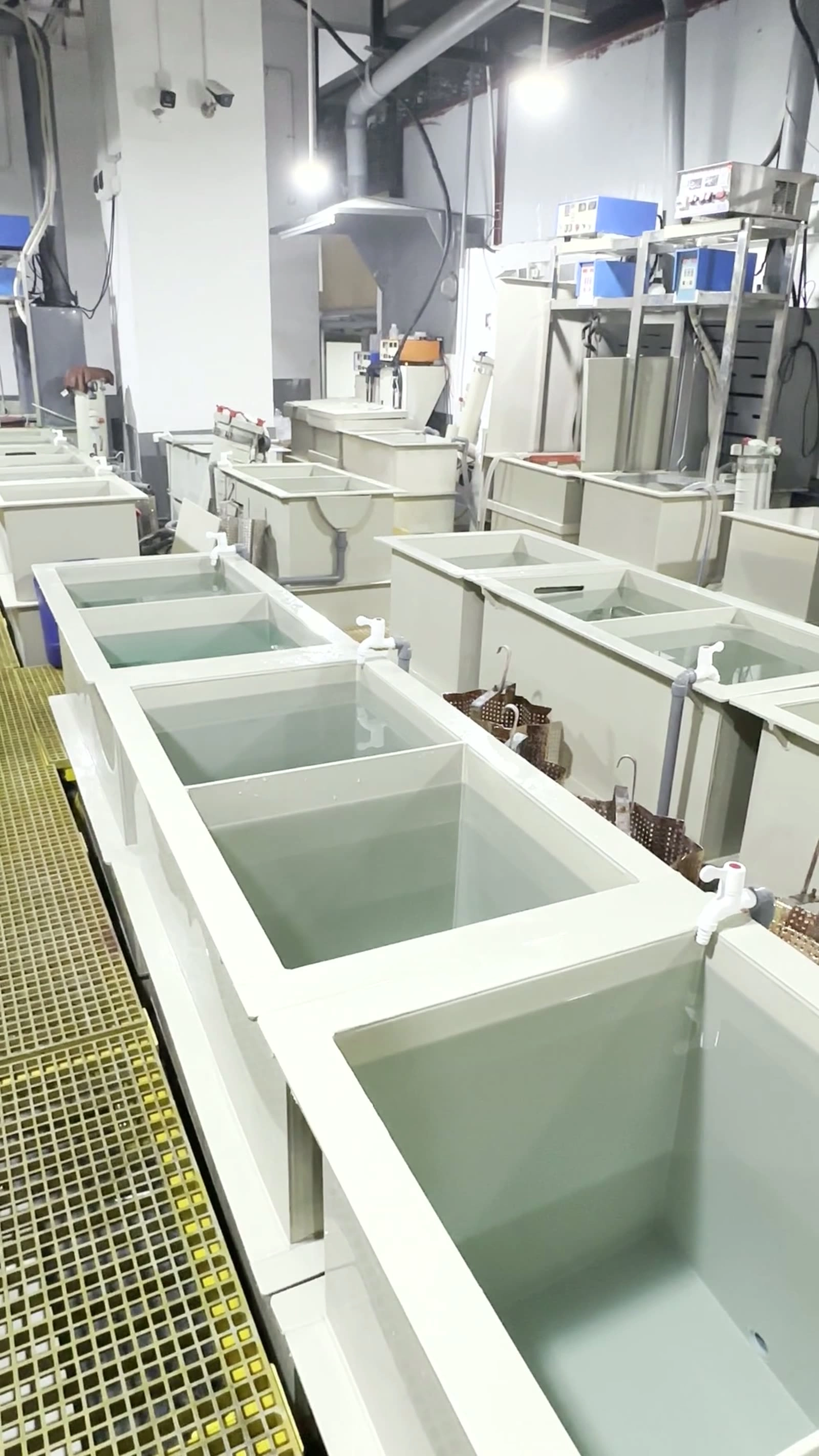
Triage: symptom → confirm → first move
| Symptom | Likely root | Confirm by | First move |
|---|---|---|---|
| Milky haze, wipes off | Rinse contamination / bath oil | White wipe cloth test | Skim + check rinse overflow |
| Gray haze, will not wipe | Low bath temperature or CrO3 drift | Thermometer + Ba titration | Hold 50–60 °C; correct ratio 100:1 |
| Haze in recesses only | Throwing power limit | Position map of parts | Aux anode or reduce load width |
| Iridescent yellow-blue | Catalyst ratio off ( sulfate ) | Hull cell panel | Adjust sulfate 0.8–1.2% of CrO3 |
| Haze after nickel, not on nickel | Nickel passivated before chrome | Timing check transfer | Cut transfer time; re-activate |
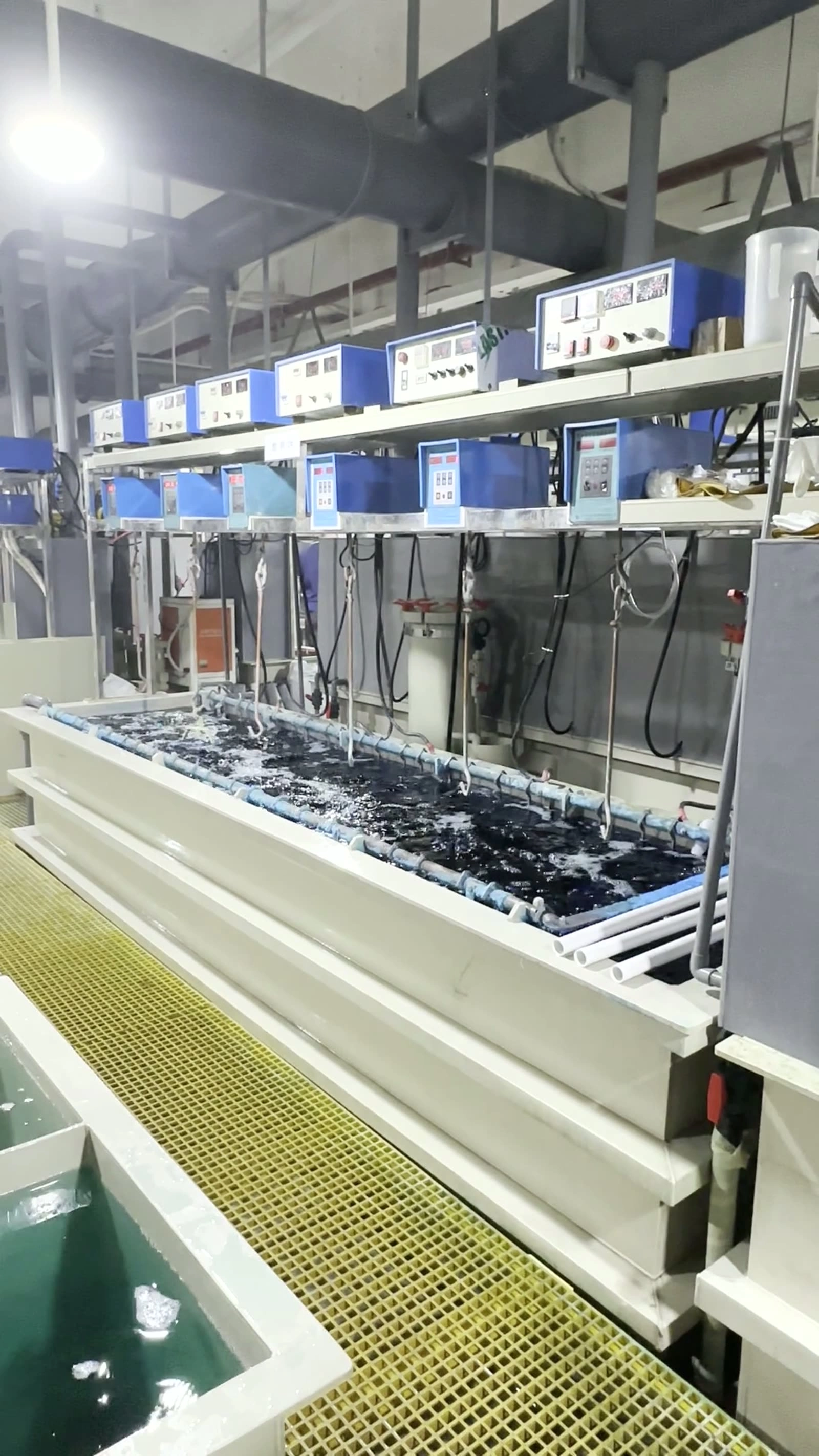
The fix set with windows
- Fix 1 — temperature discipline — Hard chrome 50–60 °C (±2 °C); decorative 45–50 °C; log hourly, not per shift
- Fix 2 — ratio control — CrO3 : sulfate = 100 : 1 by titration; drift shows as coverage loss before haze
- Fix 3 — transfer timing — Nickel-to-chrome transfer under 60 s; passivated nickel plates hazy
- Fix 4 — rinse integrity — Final nickel rinse must not drag into chrome; oil film wipes milky
- Fix 5 — current density — Decorative 15–25 A/dm² (150–250 ASF); low CD at cold bath = gray haze
Case method
A decorative line chased gray haze for weeks. Root cause was transfer time: nickel parts waited 4–5 minutes in a cold rinse before chrome, passivating the nickel surface. The fix cost nothing — a timer and a hoist schedule. Haze rework dropped within one week of the change. (Method illustration: confirm your own numbers by titration and timing log.)
On the floor: recognise, record, escalate
| You see | You do | You never do |
|---|---|---|
| Milky film | Report with photo, note tank temp | Add chromium acid yourself |
| Gray parts | Compare with first article of the shift | Re-plate immediately without report |
| Only recesses hazy | Record rack position on sketch | Load racks tighter to 'fix' it |
| Haze wipes off | Flag rinse tank overflow check | Wax or oil the part to hide it |
Engineer notes
- One variable per corrective action; verify with the confirm-by column.
- Records beat memory: log every trial on the tank card.
- Two failed actions in a row is a senior call — escalate with your log.
Safety: chromic acid mist is a carcinogen and burns skin. Mist suppressants, local exhaust and face shield are mandatory.
FAQ
Why does my chrome look milky after rinsing?
Usually a contaminated rinse or an oil film — it wipes milky. Report it; do not add anything.
Haze in recesses but racks look fine — why?
Throwing power: high-CD faces plate, recesses go gray. Map positions and reduce load width or add aux anodes.
Bath analysis fine but haze persists — next step?
Timing audit: measure actual transfer times, do not trust the schedule. Then rinse water quality and temperature interlocks.
Where does haze cost us most?
Replating found at packing: it doubles handling on finished goods. Transfer-time discipline is free.