
collection-banner-image collection-banner-image

Professional Zinc Alloy Surface Finishing Solutions

珠宝电镀MC

Jewelry-Grade Gold Plating — 24K, 18K & 14K for Necklaces, Earrings & Bracelets

Your complete guide to jewelry gold plating: color systems, thickness specifications, cyanide-free processes, anti-tarnish sealing, and nickel-free options for hypoallergenic wear.

首饰镀金机全景 珠宝镀金���设备,金缸和滚镀机,金色首饰展示,豪华感 21:9

The QLQ Gold Plating Advantage

From fashion accessories to fine jewelry — gold plating that meets the world's strictest skin-contact regulations

24K/18K/14K色卡 三种金色色卡展示,颜色渐变精确

Gold Color Range

24K / 18K / 14K matched

镀金厚度控制 0.1-5μm镀层厚度精确控制

Thickness Control

0.1–5 μm precise

无氰镀金 环保无氰工艺,符合欧盟标准

Cyanide-Free

Eco-friendly process

防变色封闭 镀后封闭处理,抗汗耐氧化

Anti-Tarnish

Sealer blocks oxidation

The Jewelry Gold Plating Process

Every layer between base metal and the final gold surface is engineered for appearance, wear and safety

1Pre-Cleaning & Wax Removal

Jewelry arrives with casting investment, polishing compound and finger oils. Ultrasonic alkaline degrease (60–70 °C, 3–5 min) followed by DI rinse. Any residue = gold adhesion failure.

Key Parameters
Method: Ultrasonic alkaline
Temp: 60–70 °C
Time: 3–5 min
Zinc alloy parts before surface finishingBefore
Finished zinc alloy parts after surface finishingAfter

2Ni- or Ni-Free Strike Layer

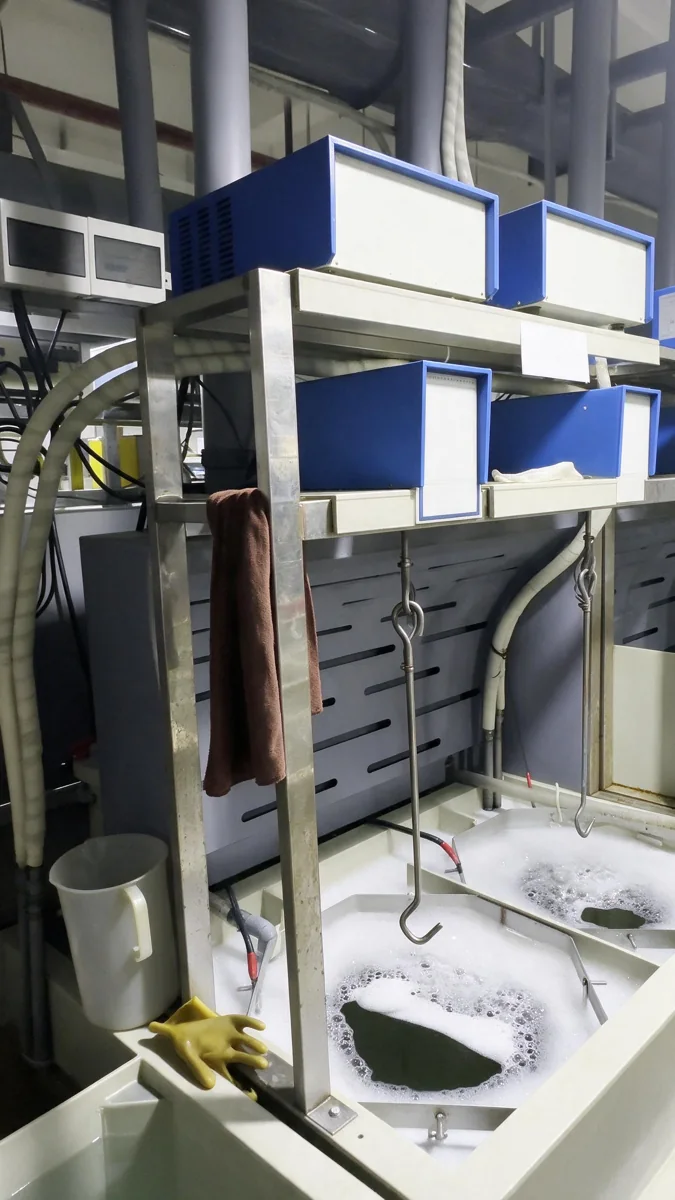
Traditional process: nickel strike (5–10 μm) for brightness. Hypoallergenic option: copper strike + palladium flash — no nickel at all. Choose based on your target market.
Key Parameters
Nickel strike: 5–10 μm
Ni-free option: Cu + Pd flash
For: EU REACH, sensitive skin
打底层电镀 镍或铜打底电镀槽,工件浸入

3Gold Flash Plating (Decorative: 0.1–0.5 μm)

Thin decorative gold layer. 24K pure gold (pure yellow), 18K (warm gold, 75% Au), 14K (paler, 58% Au). Each alloy has its own electrolyte formulation and color appearance.

Key Parameters
24K: 99.9% Au, bright yellow
18K: 75% Au, warm tone
14K: 58.5% Au, pale gold
Thickness: 0.1–0.5 μm
24K金样品 24K纯金镀层,明亮金黄色
18K金样品 18K金镀层,暖色调金色
14K金样品 14K金镀层,浅金色调

4Anti-Tarnish Sealing

Gold itself does not tarnish, but the underlying copper or nickel can migrate through thin gold layers. A clear organic sealer (immersion or spray) blocks this migration. For high-wear jewelry, add a thin e-coat top layer.

Key Parameters
Method: Organic sealer dip
E-coat option: 5–10 μm clear
Benefit: Blocks metal migration
防变色封闭处理 镀金后封闭槽,产品浸入封闭液

Color & Thickness Guide

Choose by application, wear frequency and budget

Gold TypeAu ContentColor ToneDecorative (μm)Durable (μm)Best For
24K99.9%Bright yellow0.1–0.30.5–1.0High-end jewelry, religious items
18K75%Warm gold0.2–0.51.0–3.0Fashion jewelry, watches
14K58.5%Pale gold0.2–0.51.0–3.0Affordable fashion, kids' jewelry

📌 Jewelry Gold Plating Quick Reference

Decorative thickness0.1–0.5 μm
Durable thickness1.0–3.0 μm
Alloy range14K / 18K / 24K
Ni-free optionCu + Pd + Au
Cyanide-freeYes — sulfite-based
Anti-tarnishOrganic sealer dip
⚠ Nickel allergy is real — know your target marketThe EU Nickel Directive restricts nickel release to < 0.5 μg/cm²/week. For EU-bound jewelry, we recommend 100% nickel-free processing: Cu strike → Pd flash → Au. The palladium layer is the barrier that blocks skin contact with the base metal.

FAQ

What thickness do I need for everyday wear gold jewelry?
For necklaces and earrings worn daily: 1.0–3.0 μm gold. Below 0.5 μm, the gold layer wears through in 3–6 months on high-friction areas like necklace clasps and earring posts.
Is cyanide-free gold plating as good as cyanide-based?
Yes — modern sulfite-based gold baths achieve > 99.9% purity and excellent brightness. The only limitation is deposition rate: cyanide baths plate faster. For jewelry thicknesses (0.1–3.0 μm), sulfite is perfectly adequate.
Why does my gold jewelry turn skin green?
Base metal copper oxidizing through a thin gold layer. Solution: increase gold thickness to ≥ 1.0 μm and apply an anti-tarnish sealer. Our nickel-free process with a palladium barrier layer eliminates this entirely.
Can you match a specific Pantone gold shade?
Yes — we have 8 standard gold tones from yellow (24K) to greenish (14K white gold). We can formulate custom alloy ratios to match your swatch or Pantone code. Lead time: 7–10 days for formulation.
What is the difference between hard gold and soft gold for jewelry?
Hard gold (alloyed with Co or Ni, 150–250 HV) is more scratch-resistant — better for rings and clasps. Soft gold (pure, 50–90 HV) is warmer in color and preferred for earrings and delicate pendants.

Get a Free Quote Today

Send us your samples or drawings — our engineers reply within 24 hours with pricing and technical advice.

Contact Us
Workshop Planning Data

Jewelry Plating MC — Data Zinc Alloy Finishing Managers Need

Gold plating (rack and selective) and gold electroforming produce premium jewelry-grade finishes on zinc alloy, brass and silver — with tight karat control and high-value output per square meter.

350 m²Workshop Area
14 peopleTeam Size
120 kWInstalled Power
100-300k pcs/dayDaily Output (10 h)

Quality Inspection & Control

Check itemMethodAcceptance standard
Gold thicknessX-ray fluorescence0.05-5.0 μm per karat spec
Karat / purityXRF analysis24K ≥ 99.9%, 18K ≥ 75% Au
Color matchColorimeter ΔEΔE ≤ 1.0 vs karat master
AdhesionBend + thermal shockNo flake at 150 °C × 30 min
Wear resistanceTaber / rub testNo wear-through at spec cycles
Contact resistanceMilliohm meter≤ 10 mΩ for industrial contacts

Workshop Layout & Floor Area

ZoneArea
Clean-room plating line110 m²
Electroforming shop80 m²
Precious metal store (vault)20 m²
QA lab + XRF40 m²
Rinse / DI / recovery50 m²
Waste & gold recovery25 m²
Utility & lockers25 m²
Total workshop350 m²

Manpower & Shift Plan

RoleHeadcount
Platers / operators7
Gold solution technicians2
QC inspectors (XRF)2
Precious metal control1
Supervisor1
Maintenance1
Total (2 shifts × 10 h)14

Power & Utility Demand

EquipmentDemand
Rectifiers (precious metal)35 kW
Heaters / chillers30 kW
Pumps / filters15 kW
Clean-room HVAC18 kW
Electroforming power10 kW
Lighting & auxiliary12 kW
Installed total120 kW
Typical running load≈ 95 kW

Production Flow Chart

PretreatmentPolish, clean, activate
Strike LayerNickel or silver strike
Gold PlateRack / barrel / selective gold
Rinse & RecoveryDI rinse + gold drag-out recovery
Dry & QCXRF thickness + color check
Protect & PackSeal, wrap, pack

Daily Capacity — 10-Hour Operating Day

ParameterValue
Cycle time30-60 min
Load per batch30-80 kg
Batches per 10 h day10-16
Daily output100,000-300,000 pcs
Monthly output (26 days)2.6-7.8 million pcs

Output Value Estimate

ParameterValue
Plating fee per pieceUSD 0.02-0.12
Daily output value (10 h)USD 8,000-25,000
Monthly output valueUSD 210,000-650,000
Annual output valueUSD 2,500,000-7,800,000

Related Products — Complete Jewelry Plating MC Solution

Machines, chemicals and consumables selected from the real QLQ product range for this process. Every product page is live and ready to quote.