
collection-banner-image collection-banner-image

Professional Zinc Alloy Surface Finishing Solutions

金电铸

Gold Electroforming — Deposit-Forming of Hollow Jewelry, Badges & Precision Replicas

Electroforming builds 3D gold objects directly in the bath — no stamping, no casting. 100+ μm thickness, perfect texture reproduction, and weight-efficient hollow structures.

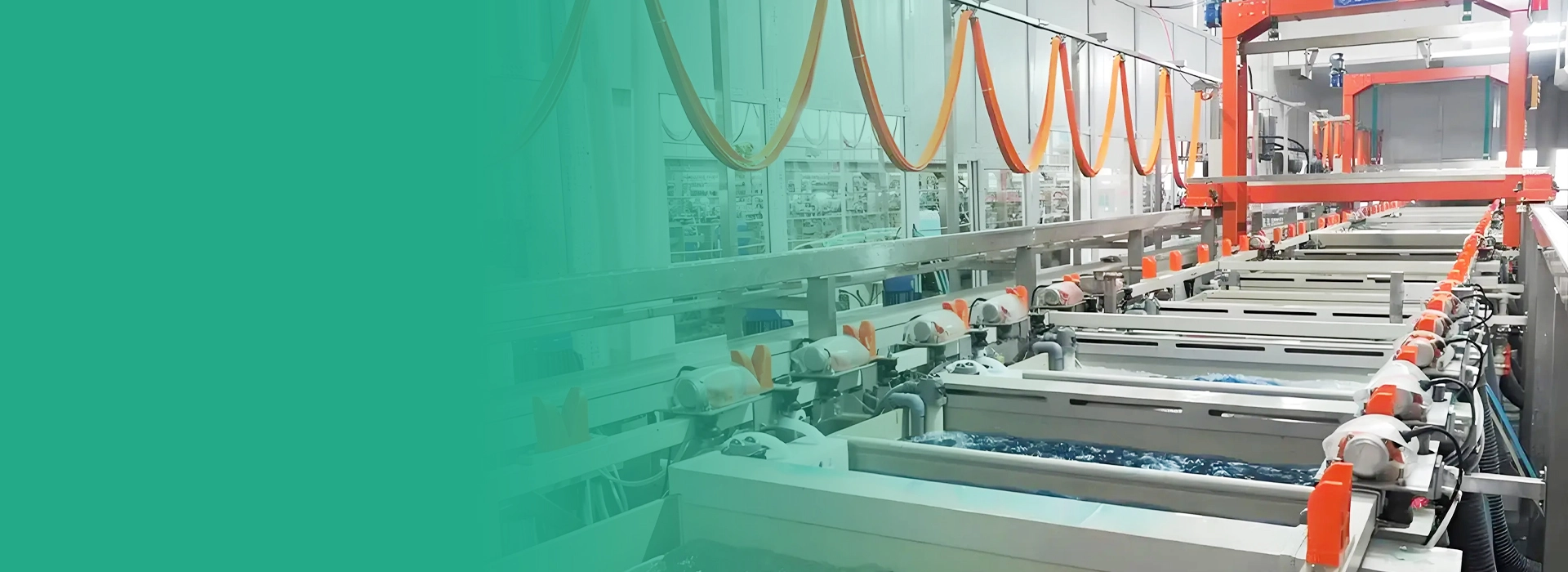
电铸金车间 电铸金生产线,母模/��铸槽/脱模/成品展示 21:9

Electroforming vs. Electroplating

Plating coats a surface — electroforming builds the object itself

电铸金首饰 空心金饰品截面,壁厚均匀>100μm

Hollow Gold

Wall thickness > 100 μm

电铸徽章 金徽章模具与电铸成品并排

Badges & Emblems

Crisp texture replication

母模与成品 母模/导电化/电铸/脱模全流程展示

Master to Part

Master mold + electroformed copy

复杂纹理复制 ���密纹理复制效果对比放大

Texture Reproduction

Micro-detail faithful copy

The 4-Step Electroforming Process

Master → Conductive → Deposit → Demold — each step determines the final quality

1Master Pattern (母模制造)

Master can be wax (lost-wax electroforming), 3D-printed resin, silicone, or metal. Surface must be smooth and detailed — every scratch on the master appears on the electroformed part. For jewelry, UV-cured resin masters give the best detail.

Key Parameters
Master materials: Wax, resin, silicone, metal
Surface finish: Must be flawless
Detail replication: Down to 10 μm features
母模制作 3D打印树脂母模,表面光滑细节丰富

2Conductive Coating (导电化处理)

Non-conductive masters (wax, resin) must be made conductive. Three methods: (a) silver spray (most common), (b) electroless nickel (for high-temp baths), (c) graphite powder (environmental). Resistivity must be < 1 Ω/cm².

Key Parameters
Silver spray: Standard, < 1 Ω/cm²
Electroless Ni: For hot baths > 50 °C
Graphite: Eco option, lower conductivity
Zinc alloy parts before surface finishingBefore
Finished zinc alloy parts after surface finishingAfter

3Gold Electroforming

Cyanide or sulfite gold bath with low current density (0.1–0.5 A/dm²). Deposition rate: 5–10 μm/hour. Builds up to 100–500 μm total thickness. Slow deposition = dense, stress-free gold. Bath temperature 50–65 °C.

Key Parameters
Current density: 0.1–0.5 A/dm²
Deposition rate: 5–10 μm/hour
Final thickness: 100–500+ μm
Bath temp: 50–65 °C
电铸槽工作 电铸槽中,母模在阴极缓慢旋转沉积
电铸过程微观 金层在导电表面逐层生长
金层增厚检测 显微镜检查沉积厚度

4Demolding (脱模)

Separate the electroformed gold shell from the master. For wax masters: melt out in hot water (reusable if wax). For resin: dissolve in solvent or mechanically peel. Silicone masters peel off cleanly and can be reused 50–100 times.

Key Parameters
Wax master: Melt out (60–80 °C)
Resin master: Solvent dissolve
Silicone master: Peel off, 50+ reuses
脱模前电铸件 电铸完成,母模包裹在金层内
脱模中 热水中融化蜡模
脱模后空心金件 空心金件轻巧精致

Karat Gold Electroforming Systems

Electroforming baths can be formulated for different gold purities

KaratAu ContentAlloy MetalsColorBath TypeHardness (HV)
24K99.9%NoneBright yellowCyanide or sulfite50–90
22K91.7%Cu, AgDeep yellowCyanide only90–130
18K75%Cu, Ag, ZnWarm goldCyanide only130–180
14K58.5%Cu, Ag, ZnPale goldCyanide only160–210

📌 Gold Electroforming Quick Reference

Deposit thickness100–500+ μm
Current density0.1–0.5 A/dm²
Deposition rate5–10 μm/hour
Master reuse50–100× (silicone)
Typical purity14K–24K
Detail replication10 μm features
⚠ Electroforming is slow — plan your production accordinglyA 200 μm wall thickness takes 20–40 hours of deposition time. Rushing with higher current density creates rough, stressed gold that cracks. We run overnight shifts on a rectifier timer. For urgent jobs, we stock pre-deposited semi-finished shells.

FAQ

What is the wall thickness for hollow gold electroformed jewelry?
Standard: 100–250 μm for earrings and pendants (light enough to wear comfortably). Larger pieces (bracelets, bangles): 200–500 μm for rigidity. Any wall thickness down to 50 μm is possible for ultra-lightweight designs.
How many reuses can a silicone master give?
High-quality silicone masters last 50–100 cycles before degrading. Wax masters are single-use (melted out). 3D-printed resin masters can be reused 5–15 times depending on the dissolution method.
Can electroforming reproduce fine texture like leather grain or fabric weave?
Absolutely — this is the biggest advantage of electroforming over casting. A leather-textured wax master reproduces every grain line and fiber impression in the gold down to 10 μm resolution. The result is visually indistinguishable from the original.
Is gold electroforming more expensive than casting?
Per gram: electroforming is similar to casting. Per piece: electroforming wins because you only deposit gold where needed. A hollow 5 g electroformed pendant looks like a 15 g cast piece. Gold cost saving is 60–70%.
What is the difference between K gold electroforming solution and pure gold?
K gold electroforming baths contain alloying metals (Cu, Ag, Zn, Ni) that co-deposit with gold to produce 18K or 14K color and hardness. Pure gold (24K) baths contain only gold salts. K gold formulations are more complex to control because the alloy ratio changes with current density.

Get a Free Quote Today

Send us your samples or drawings — our engineers reply within 24 hours with pricing and technical advice.

Contact Us
Workshop Planning Data

Gold Electroforming — Data Zinc Alloy Finishing Managers Need

Gold plating (rack and selective) and gold electroforming produce premium jewelry-grade finishes on zinc alloy, brass and silver — with tight karat control and high-value output per square meter.

350 m²Workshop Area
14 peopleTeam Size
120 kWInstalled Power
100-300k pcs/dayDaily Output (10 h)

Quality Inspection & Control

Check itemMethodAcceptance standard
Gold thicknessX-ray fluorescence0.05-5.0 μm per karat spec
Karat / purityXRF analysis24K ≥ 99.9%, 18K ≥ 75% Au
Color matchColorimeter ΔEΔE ≤ 1.0 vs karat master
AdhesionBend + thermal shockNo flake at 150 °C × 30 min
Wear resistanceTaber / rub testNo wear-through at spec cycles
Contact resistanceMilliohm meter≤ 10 mΩ for industrial contacts

Workshop Layout & Floor Area

ZoneArea
Clean-room plating line110 m²
Electroforming shop80 m²
Precious metal store (vault)20 m²
QA lab + XRF40 m²
Rinse / DI / recovery50 m²
Waste & gold recovery25 m²
Utility & lockers25 m²
Total workshop350 m²

Manpower & Shift Plan

RoleHeadcount
Platers / operators7
Gold solution technicians2
QC inspectors (XRF)2
Precious metal control1
Supervisor1
Maintenance1
Total (2 shifts × 10 h)14

Power & Utility Demand

EquipmentDemand
Rectifiers (precious metal)35 kW
Heaters / chillers30 kW
Pumps / filters15 kW
Clean-room HVAC18 kW
Electroforming power10 kW
Lighting & auxiliary12 kW
Installed total120 kW
Typical running load≈ 95 kW

Production Flow Chart

PretreatmentPolish, clean, activate
Strike LayerNickel or silver strike
Gold PlateRack / barrel / selective gold
Rinse & RecoveryDI rinse + gold drag-out recovery
Dry & QCXRF thickness + color check
Protect & PackSeal, wrap, pack

Daily Capacity — 10-Hour Operating Day

ParameterValue
Cycle time30-60 min
Load per batch30-80 kg
Batches per 10 h day10-16
Daily output100,000-300,000 pcs
Monthly output (26 days)2.6-7.8 million pcs

Output Value Estimate

ParameterValue
Plating fee per pieceUSD 0.02-0.12
Daily output value (10 h)USD 8,000-25,000
Monthly output valueUSD 210,000-650,000
Annual output valueUSD 2,500,000-7,800,000

Related Products — Complete Gold Electroforming Solution

Machines, chemicals and consumables selected from the real QLQ product range for this process. Every product page is live and ready to quote.