
Barrel Gold Plating — 24K, Rose, Champagne, Green & Light Gold
Precious metal barrel plating: 24K, light gold, rose gold, champagne, green gold. Gold salt concentration, free cyanide control, 0.1-0.5 μm decorative thickness. Cost management for small-batch gold salt.
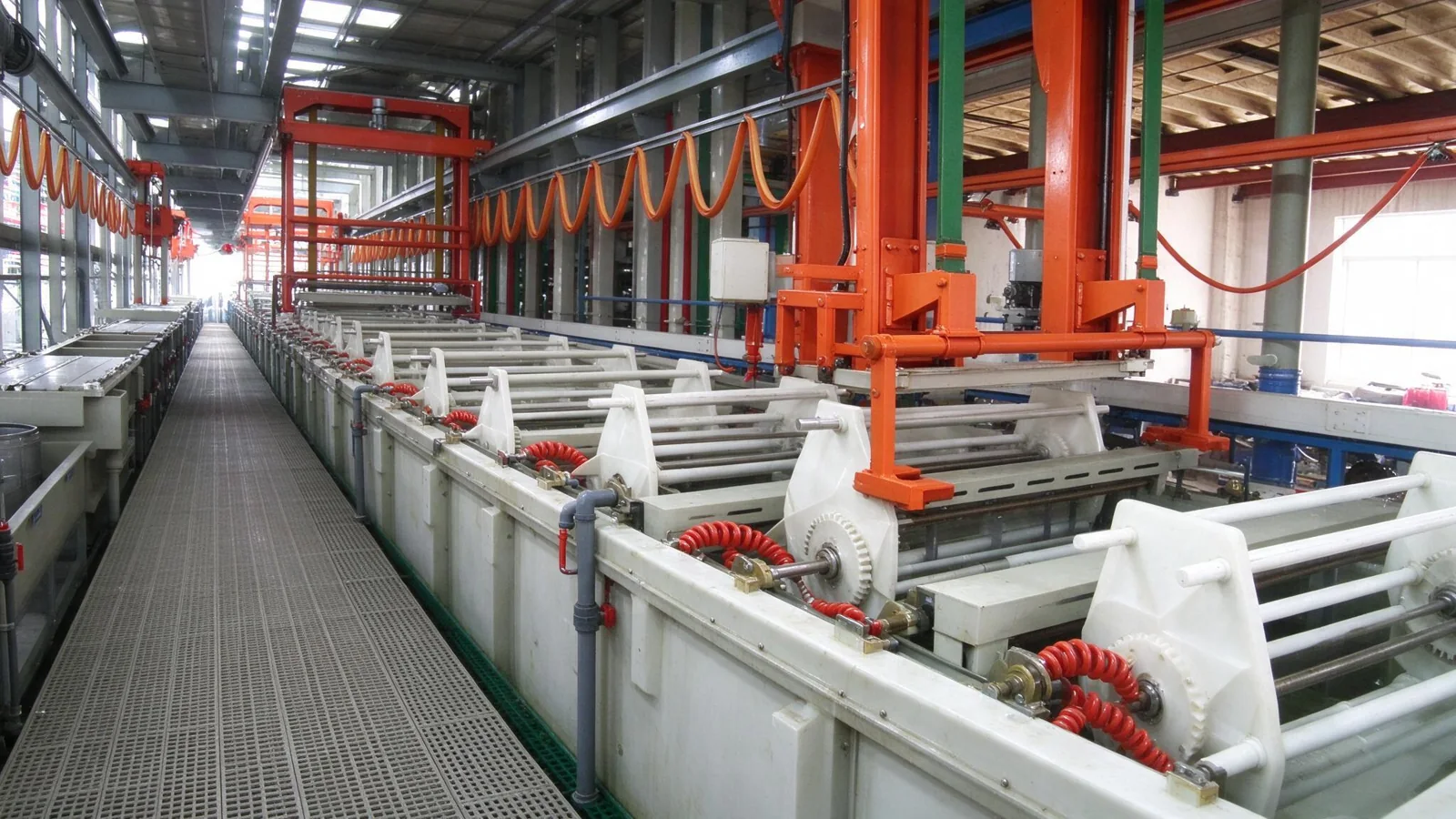 Conceptual illustration based on reference photographs; not test evidence.
Why Barrel Gold Plating
Gold gives the ultimate luxury finish — barrel processing makes it affordable for mass-produced small hardware
Barrel vs Rack — Gold Plating Comparison
Cost and process differences between barrel and rack gold plating
| Parameter | Barrel Plating | Rack Plating |
|---|---|---|
| Current density | 0.3-1.0 A/dm² | 0.5-2.0 A/dm² |
| Gold salt (as Au) | 1-5 g/L AuK(CN)₂ | 2-8 g/L AuK(CN)₂ |
| Free KCN | 10-20 g/L | 15-30 g/L |
| Temperature | 50-65 °C | 50-70 °C |
| Barrel rotation | 6-10 rpm | N/A |
| Thickness typical | 0.1-0.5 μm | 0.5-5 μm |
| Gold usage efficiency | Lower (drag-out loss in barrel) | Higher (recovery easier) |
| Cost per part (0.1μm) | Low (batch size spreads cost) | High (per-part handling) |
Barrel Gold Plating — Process Steps
Luxury finish for mass-produced small parts
1Gold Bath Make-up
Gold solution based on gold potassium cyanide (AuK(CN)₂). Free cyanide maintains anode dissolution and prevents decomposition. pH and temperature precisely controlled.
2Barrel Loading & Gold Plating
Load base-plated parts (usually bright nickel) into barrel. Gold flashes in 30-120 seconds. Barrel rotation ensures uniform gold coverage. Low current density to avoid burning.
3Color Formulation — 5 Gold Tones
Gold tone is adjusted by alloy composition: 24K (pure Au), light gold (Au-Ag), rose gold (Au-Cu), champagne (Au-Ag-Cu), green gold (Au-Ag-Cd or Au-Ag-Ni). Each has a specific bath formulation.
7Gold Salt Management (Cost Control)
Gold is expensive — precise control of gold salt in bath and drag-out recovery is critical. Auto-dosing by ampere-hour and drag-out recovery tank minimize gold loss.
5Anti-Tarnish Treatment
Gold doesn't tarnish, but the base metals in rose gold and green gold alloys can. Anti-tarnish dip (organic inhibitor or Cr³⁺) protects the alloy golds.
6Thickness Verification
XRF verification of gold thickness. Decorative gold 0.1-0.5 μm is thin — XRF must be calibrated for thin gold films on nickel.
Gold Color Comparison Chart
All gold tones available for barrel plating
| Gold Type | Alloy | Au% | Appearance | Typical Thickness | Best Use |
|---|---|---|---|---|---|
| 24K Gold | Pure Au | 99.9% | Warm yellow gold | 0.3-1.0 μm | Premium jewelry, religious items |
| Light Gold | Au-Ag | 90-95% | Pale, soft gold | 0.1-0.3 μm | Cost-sensitive fashion hardware |
| Rose Gold | Au-Cu | 75-85% | Pinkish warm tone | 0.1-0.3 μm | Luxury bags, fashion jewelry |
| Champagne Gold | Au-Ag-Cu | 80-90% | Soft golden-pink | 0.1-0.3 μm | Watches, premium bags |
| Green Gold | Au-Ag-Ni | 85-95% | Greenish yellow tint | 0.1-0.3 μm | Fashion accessories, eyewear |
📌 Gold Plating Cheat Sheet
FAQ
What's the minimum gold thickness for barrel plating?
Does barrel gold plate better on nickel or copper?
How do I avoid gold thickness variation in barrel?
What causes gold 'burning' in barrel?
Can you do REACH-compliant gold plating?
Get a Free Quote Today
Send us your samples or drawings — our engineers reply within 24 hours with pricing and technical advice.
Contact Us