
Polishing
Polishing groups every process in this section. The overview below shows all options side by side - click any card to open the full process page with working parameters, step-by-step procedure and QC checks.
How to choose
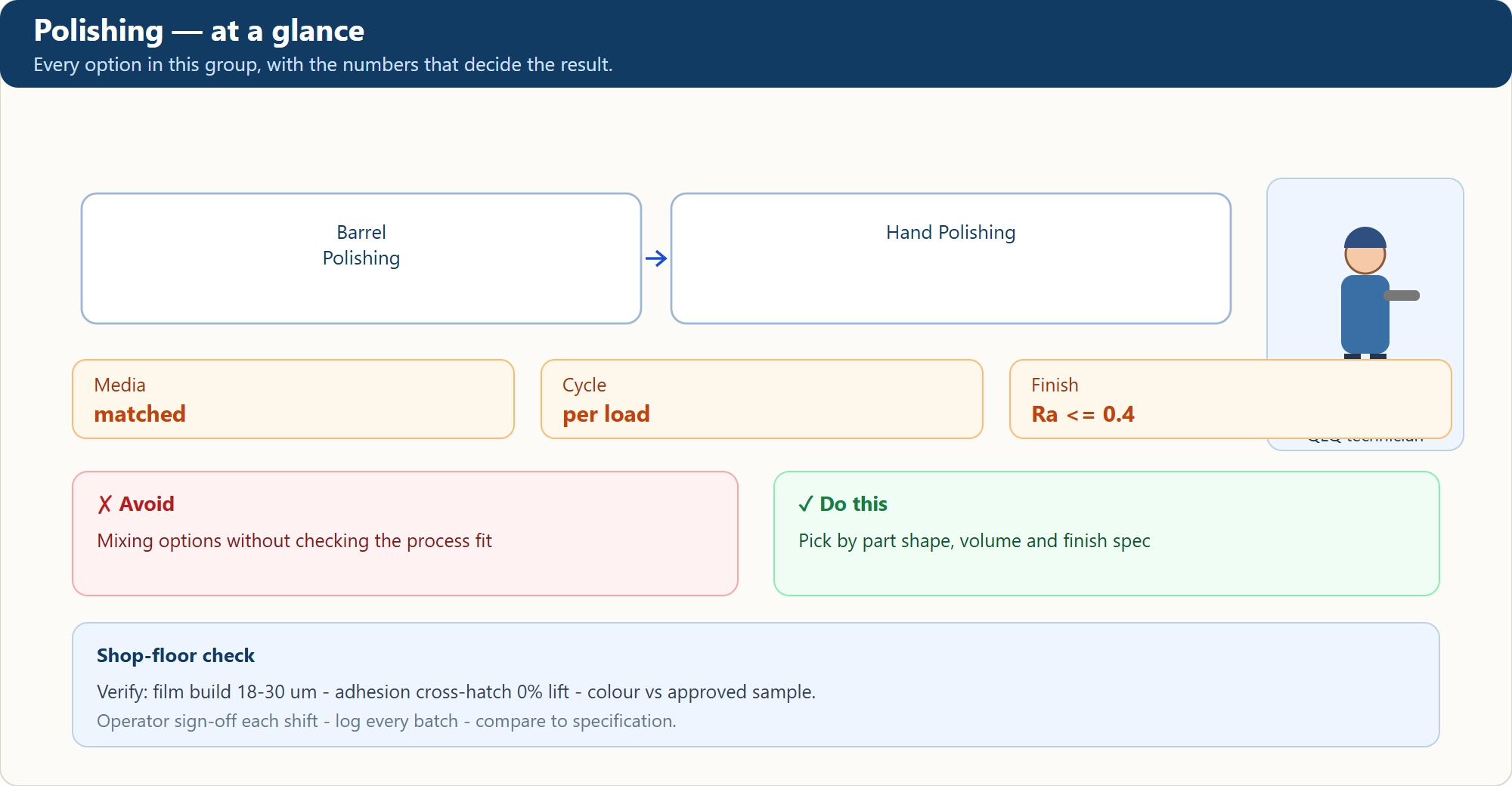
Part shape, batch size and the finish specification decide the route. Every page in this group lists working parameters and the checks that must pass before shipping. Ask QLQ engineering if your case sits between two options.
Polishing sequence that holds the shape
Cut, then colour, then clean - in that order, with a wash between every step. Skipping the wash carries compound into the next wheel and shows up later as a grey haze under the plating.
Wheel and compound pairing
| Stage | Wheel | Compound | Result |
|---|---|---|---|
| Cutting | Sisal or hard cloth | Emery / brown tripoli | Removes die lines, levels surface |
| Colour | Loose cotton or flannel | White or green rouge | Mirror gloss, no visible scratches |
| Final clean | Soft cotton + ultrasonic | Neutral detergent | Removes residue before plating |
Defects you will see under plating
| Symptom | Cause | Fix |
|---|---|---|
| Grey shadow under bright nickel | Compound residue in blind holes | Ultrasonic clean, check rinse water |
| Orange-peel look | Over-polished, surface flowed | Reduce pressure, shorter colour stage |
| Fine scratches after plating | Grit carried from cutting wheel | Separate wheels per stage, wash between |
| Burn marks on edges | Excess pressure on thin sections | Lower pressure, support the part |
FAQ
Does polishing affect plating thickness?
It removes 5-20 um of base metal depending on the die condition. Set the polishing allowance before you set the plating thickness.
Can we automate?
Robotic polishing works when part geometry repeats. For mixed low-volume work, manual with a fixed wheel/compound chart gives more consistent results than an untaught robot.