

Resin domes that lift at the edge after assembly cost a plant a 2,000-piece recall, and fresh parts passed every adhesion test. The fault appeared only after a plating line change upstream.
This senior case guide traces the interface in order: substrate cleanliness, surface energy, moisture, cure state and cross-line contamination.
Common Mistakes and How to Avoid Them
| Mistake | Why It Happens | Practical Fix |
|---|---|---|
| 1. Blame the resin first | Interface cause missed | Test the substrate first |
| 2. Surface energy never measured | Release film hides | Check 38-44 dyn/cm |
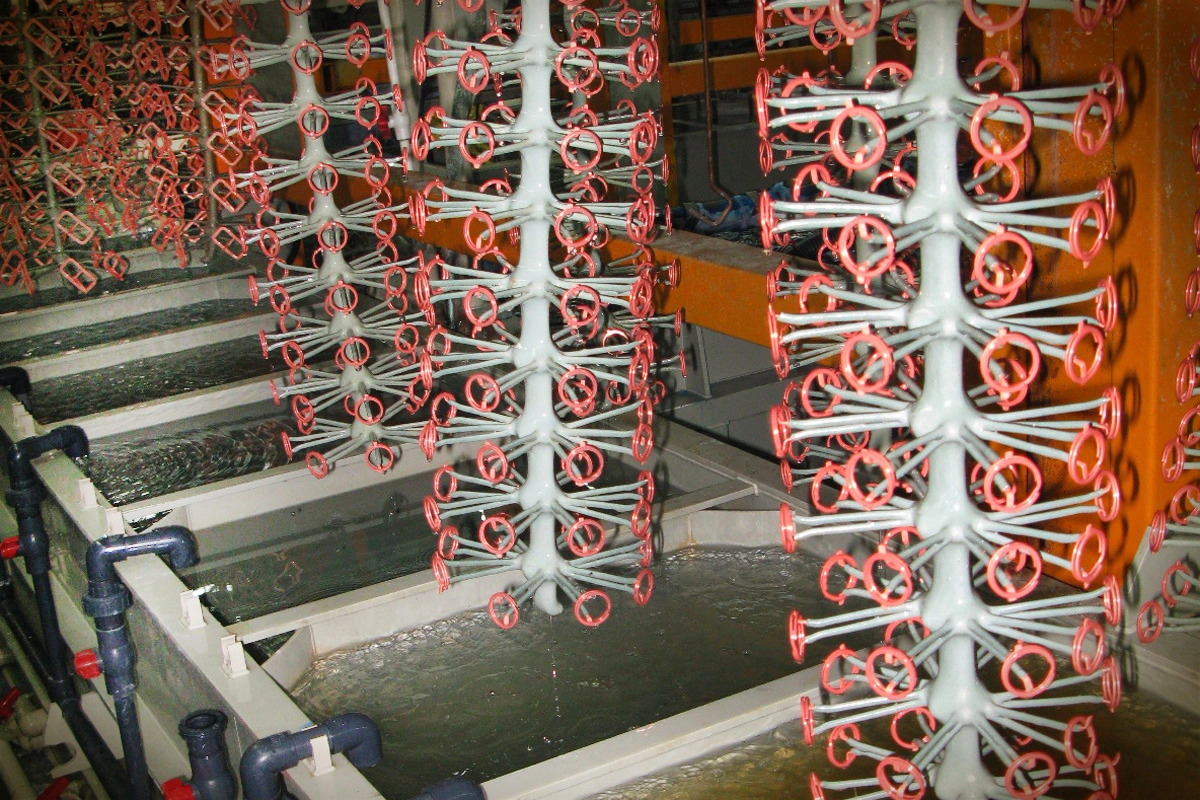
| 3. Plating residue on parts | Weak boundary layer | Full rinse and dry before drip |
| 4. Moisture at the interface | Lift after soak tests | Dry parts, control humidity |
| 5. Under-cured dome | Soft edge, poor grip | Verify cure time and temperature |
| 6. Mold release carry-over | Edge ring lift pattern | Clean and rinse after demold |
| 7. Line change ignored | New chemistry upstream | Log every line change |
| 8. Fresh-part test only | Hidden weak interface | Add water soak and aging test |
| 9. No traceability | Batch cause unprovable | Link drip batch to plating batch |
Best Practices
- Measure surface energy before every dripping campaign
- Verify full rinse and dry after plating
- Log every upstream line change with the drip batch
- Track cure temperature and time per batch
- Test crosshatch before and after water soak
- Keep batch traceability from plating to pack
Implementation Roadmap
| Step | Frequency |
|---|---|
| Map the failure | Lift position and timing |
| Check substrate | Surface energy, residue, moisture |
| Verify cure | Cure log and hardness |
| Review line changes | Upstream chemistry and dates |
| Run aging test | Soak and crosshatch |
Interface fault flow
- Locate - Lift position and timing. (Edge lift and top lift have different causes.)
- Substrate - Surface energy and residue. (A clean-looking part can carry film.)
- Cure - Time, temperature, hardness. (Under-cure softens the edge grip.)
- Verify - Soak, then crosshatch. (Fresh-part tests miss weak interfaces.)
Edge lift usually means an interface layer, not the resin body. | Upstream chemistry changes show up as drip defects days later.
Interface control data
Reference values for resin-to-substrate adhesion tracing.
| Parameter | Reference | Why It Matters |
|---|---|---|
| Surface energy | 38-44 dyn/cm before drip | Below this, a release film forms |
| Rinse quality | Full rinse, no drag-out | Plating salts weaken the bond |
| Drying | 30 minutes at 40-50°C | Moisture fails after soak |
| Cure | 60-80°C, per cure log | Under-cure softens the edge |
| Hardness check | Shore D per spec | Confirms the cure state |
| Aging test | 24-hour water soak | Reveals weak interfaces |
| Traceability | Drip batch to plating batch | Makes the cause provable |
Lift pattern map
| Pattern | Likely cause | First check |
|---|---|---|
| Edge ring lift | Interface film | Surface energy, residue |
| Whole dome release | Under-cure | Cure log, hardness |
| Lift after soak | Moisture | Drying, humidity |
| Random spots | Contamination | Drag-out, handling |
Verification sequence
| Step | Test | Pass criteria |
|---|---|---|
| Fresh part | Crosshatch | No removal |
| 24-hour soak | Crosshatch | No edge lift |
| Cure audit | Cure log versus spec | Time and temperature met |
| Line change review | Chemistry log | No unlogged change |
Case 1 - edge lift after a new acid pickling step
Scenario. A 2,000-piece order developed edge lift after a plant added acid pickling to the plating line and shortened the final rinse.
Action. Surface energy measured 32 dyn/cm on rinsed parts; the rinse was restored, drying was extended, and drip batches were linked to plating batches.
Result. Edge lift stopped, and a 24-hour soak test now runs on every new line setting.
Case 2 - mold release carry-over from a new supplier
Scenario. A North American dome maker saw edge-ring lift only on parts from one mold supplier; the parts looked clean and the resin had not changed.
Action. Solvent extraction found release agent residue; the supplier corrected the demold process and parts were pre-cleaned before dripping.
Result. Lift vanished on the next three batches, and incoming mold parts now pass a surface energy gate.
Frequently Asked Questions
Why do domes lift at the edge?
An interface film between substrate and resin weakens the bond ring first.
What surface energy is needed?
38-44 dyn/cm before dripping; below that, adhesion is unreliable.
Why check after a line change?
Plating chemistry and rinses upstream change the surface the resin meets.
Does the resin cause edge lift?
Sometimes, but test the substrate first; most edge lift is an interface fault.
How to test adhesion properly?
Crosshatch on fresh parts, then repeat after a 24-hour water soak.
Why does moisture matter?
Water at the interface fails under soak and humidity tests after assembly.
How to prove the cause?
Batch traceability linking drip batch, plating batch and line changes.
What is a weak boundary layer?
A thin contamination film that looks clean but breaks the bond under stress.
When is the cure at fault?
When lift covers the whole dome or hardness is below the resin spec.
What Would You Like to Solve?
Describe the lift pattern, the upstream line changes and your current adhesion test, and a surface energy check usually points to the interface.