
Scope of this guide
This management guide translates the process into cost, risk and throughput: what to measure, what to audit and where the money leaks.
Process: Equipment Maintenance. Figures in this guide are industry-standard starting ranges; confirm against your supplier TDS before locking settings.
Working ranges and control points
The table below is the daily reference for a line maintenance. Set by the card, verify by the control point column.
| Item | Check frequency | Healthy reading | Watch out |
|---|---|---|---|
| Rectifier ripple | Monthly scope check | < 5% ripple at load | Ripple dulls deposits |
| Filter pump ΔP | Daily log | Within card band | Rising ΔP starves bath flow |
| Heat exchanger ΔT | Weekly | Within design ΔT | Scale kills cooling slowly |
| Anode bag condition | Weekly visual | No sludge bleed | Burst bags dump sludge |
| Bus bar joints | Quarterly IR scan | Uniform temp | Hot joint drops current |
Run It As A Business: the management view
Beyond the basic card, this is the layer that matters at your level:
| Cost line | What drives it | Metric to track | Typical lever |
|---|---|---|---|
| Chemicals | Drag-out and bath dumps | Cost per 1000 parts | Rinse counter-flow, drip bars |
| Rework | First-pass yield losses | FPY by defect family | Fix top family first |
| Energy | Heated tanks and idle time | kWh per 1000 parts | Covers, night setback |
| Claims | Escape rate | PPM by customer | Ship gate on FPY |
Standard routine
- Walk the line with the log book at shift start
- Trend ΔP and ΔT, act on the slope not the point
- IR-scan bus joints under load quarterly
- Record every intervention with part numbers
- Keep critical spares counted, not estimated
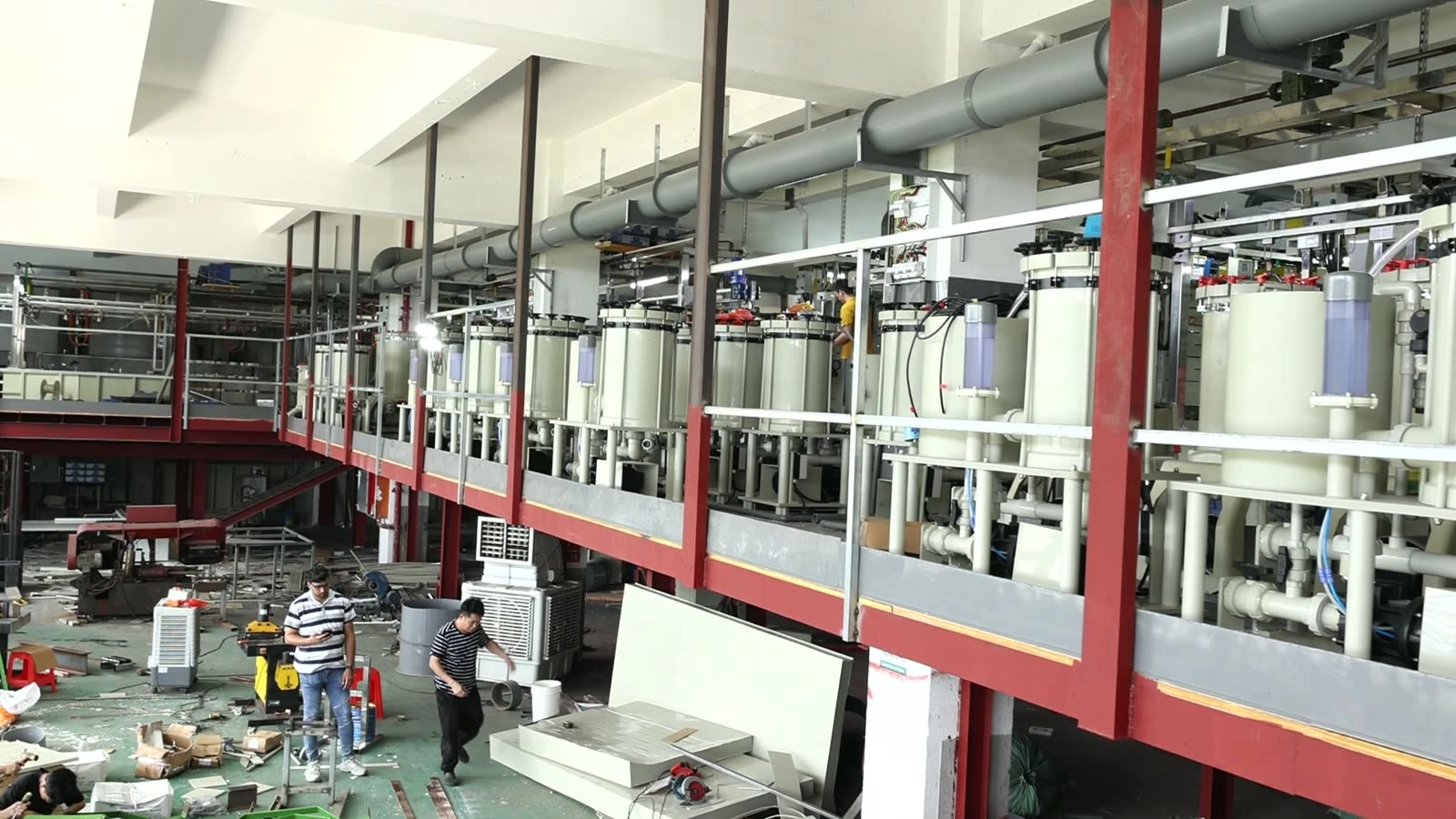
Engineer notes
- Rising filter ΔP with steady flow means media loading, not pump failure
- Rectifier ripple shows in the deposit before it shows on gauges
- Scale in exchangers follows water hardness — log conductivity
- Anode bag checks prevent the classic sludge rain on racks
- Spare-parts stock-outs cost more than the parts
Safety: Electrical panels stay live behind doors. Only authorised staff open panels; lock-out before work, verify zero voltage.
FAQ
How often should rectifier ripple be checked?
Monthly under real load, and immediately after any deposit-quality drift.
What does rising filter pressure mean?
Media loading or clogging — service before flow drops starves the bath.
Why IR-scan bus joints?
A hot joint steals current from positions downstream and burns its neighbours.
Which single metric should I start reporting weekly?
First-pass yield by defect family; it exposes rework cost and points at the largest lever.