
Why this keeps coming up
Chrome Burning And Poor Coverage is one of the recurring questions on finishing forums — and answers online usually jump to a single fix. There isn't one: the symptom has several causes, each confirmed differently, each fixed differently. This is the diagnostic sequence our lines run.
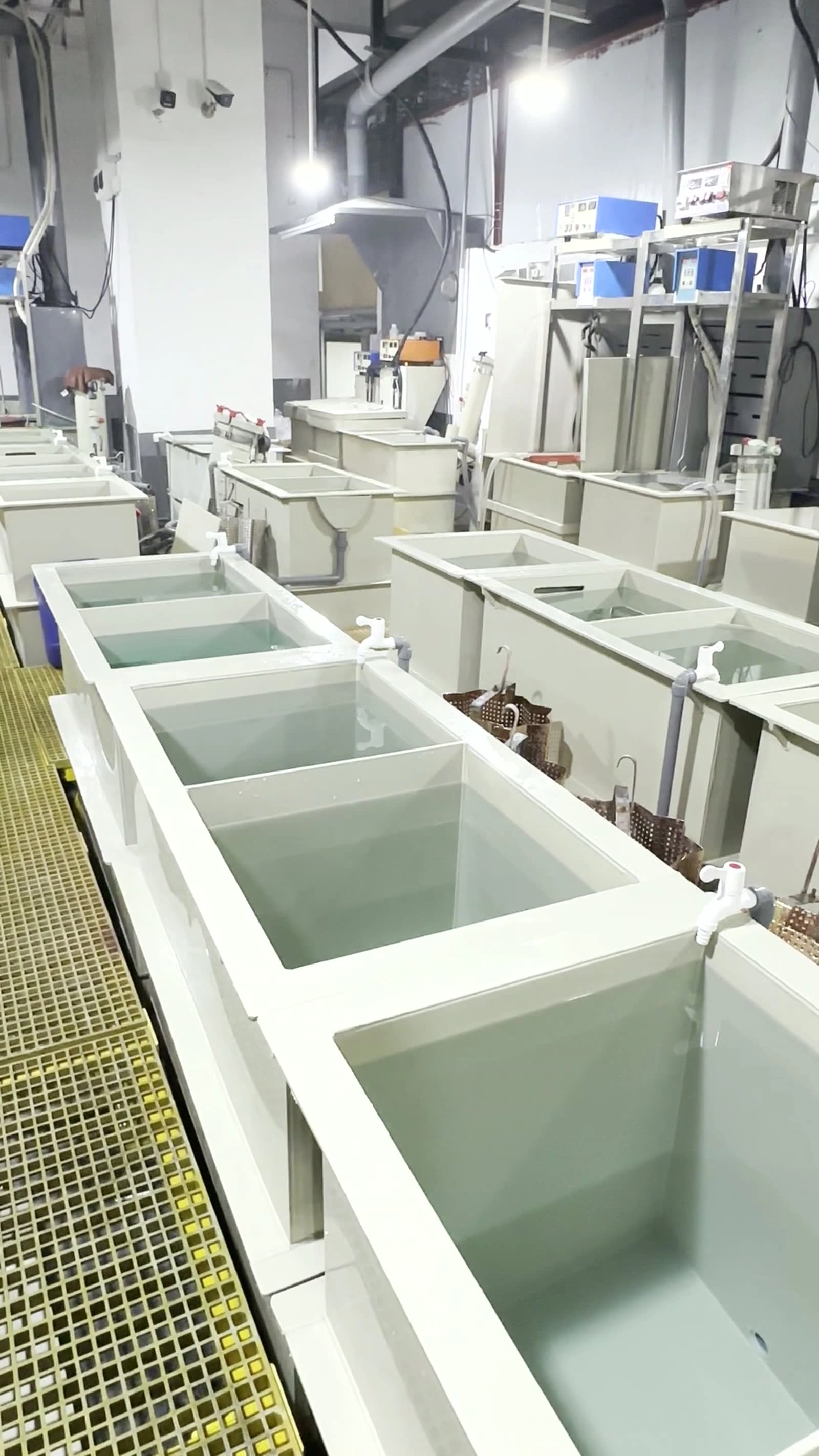
Triage: symptom → confirm → first move
| Symptom | Likely root | Confirm by | First move |
|---|---|---|---|
| Burnt, gray nodules on edges/high points | Local CD far above window | Position map vs rack layout | Cut total amps; add thieves |
| Bare spots in recesses while edges burn | Throwing power ceiling | Coverage vs position chart | Aux anode trial on recess |
| Burns after bath cools overnight | Temperature-CD coupling | Temp + amps log overlay | Interlock heat to line start |
| Burns only on new racks | Contact resistance low, current hogging | Contact check by rack age | Balance load across racks |
| Coverage loss with normal burn | Catalyst ratio drift | Hull cell + titration | Correct sulfate ratio 100:1 |
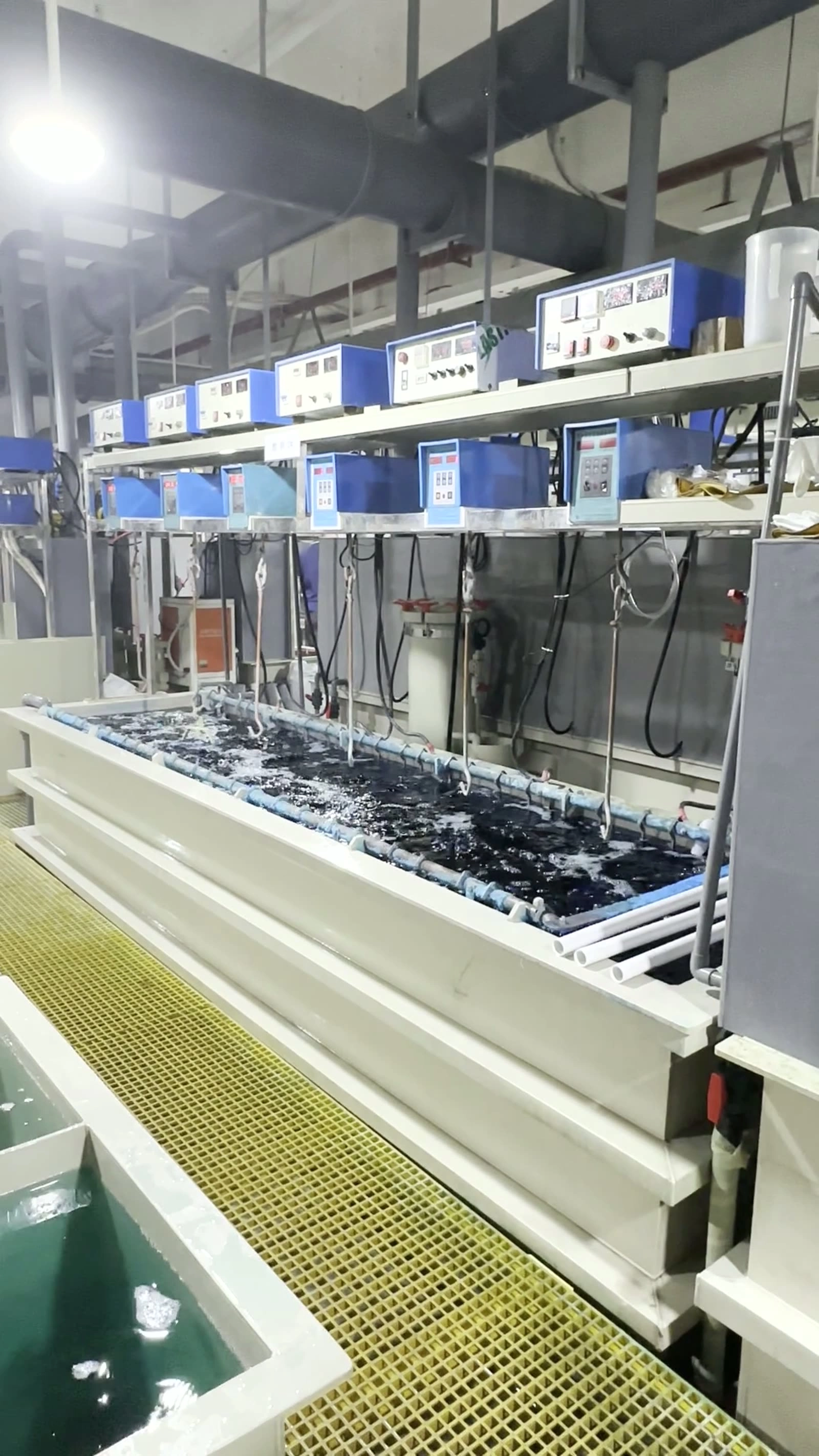
The fix set with windows
- Fix 1 — amp staging — Start 20% under target CD for 30 s, then ramp; burns fade without losing coverage
- Fix 2 — geometry — Anode gap ≥ 150 mm; thieves/shields on corners; recesses get aux anodes, not more amps
- Fix 3 — temperature first — Decorative 45–50 °C ± 2 °C: cold bath burns at lower CD than operators expect
- Fix 4 — rack rotation — Retire high-mileage racks; new racks plate hotter at same setting
- Fix 5 — ratio discipline — Sulfate 0.8–1.2% of CrO3 by titration; coverage loss precedes haze
Case method
A rack chrome line burned every corner at set current. Adding thieves on the two hottest rack positions and staging the ramp (20% under for 30 s) cleared burns without losing recess coverage; total amps ended lower than before. (Method illustration: verify with your own position-mapped thickness data.)
On the floor: recognise, record, escalate
| You see | You do | You never do |
|---|---|---|
| Burnt edges | Photograph, note rack row, report | File or polish burns off yourself |
| Bare recess | Mark position on rack sketch | Turn amps up to 'push' coverage |
| Burns on one rack only | Flag that rack for contact check | Swap racks silently |
| Any sudden pattern change | Stop, report with last good first article | Run the shift on hope |
Engineer notes
- One variable per corrective action; verify with the confirm-by column.
- Records beat memory: log every trial on the tank card.
- Two failed actions in a row is a senior call — escalate with your log.
Safety: Safety: chromic acid mist is a carcinogen and burns skin. Exhaust running before load-in, face shield, and immediate first aid for any chrome burn.
FAQ
Why do edges burn first?
Current crowds onto points and edges — that is where CD is highest. Geometry fixes it, not more chemistry.
Burns AND bare recesses together — which first?
Geometry: thieves for the burns, aux anode for the recess. Amps alone cannot fix both ends.
How do I design thieves for a new rack?
Map burn positions over three loads, size thief wire to steal the excess, trial at staged amps.
Why does chrome rework cluster in one rack family?
Contact and geometry age together; rack rotation costs less than replate hours.