

Professional Zinc Alloy Surface Finishing Solutions
Sodium Dodecyl Sulfonate
Sodium Dodecyl Sulfonate
Tạo mã QR
-
Estimated Delivery:Oct 02 - Oct 06
-
Free Shipping & Returns: On all orders over $75
Product description
Shipping & Return
Product Overview
Sodium Dodecyl Sulfonate (C12H25SO3Na) is an anionic surfactant sold to plating shops as a wetting, emulsifying and dispersing agent for pretreatment tanks and acid plating baths. Its defining feature is the carbon-sulfur bond: unlike sulfate-type wetting agents, a sulfonate does not hydrolyze, so it keeps working in hot concentrated acid, alkaline electrocleaners and long-running baths where ester surfactants silently die. In QLQ's finishing lines it appears in three places: soak and electro degreasing tanks (where it lifts oils and helps rinsing), acid activation dips (where it stops water-break and lets acid reach the surface evenly), and low-foam wetting additions to acid copper and acid zinc baths. Market grades differ mainly in active content and by-product salt: a paste grade around 60% active for cleaning formulations, and a dried powder at 95%+ for precise bath dosing. Cheap grades with high sodium sulfate content foam poorly and leave white residue on parts after drying.
Product Identity (Encyclopaedia Card)
| Property | Value |
|---|---|
| Chemical name | Sodium Dodecyl Sulfonate |
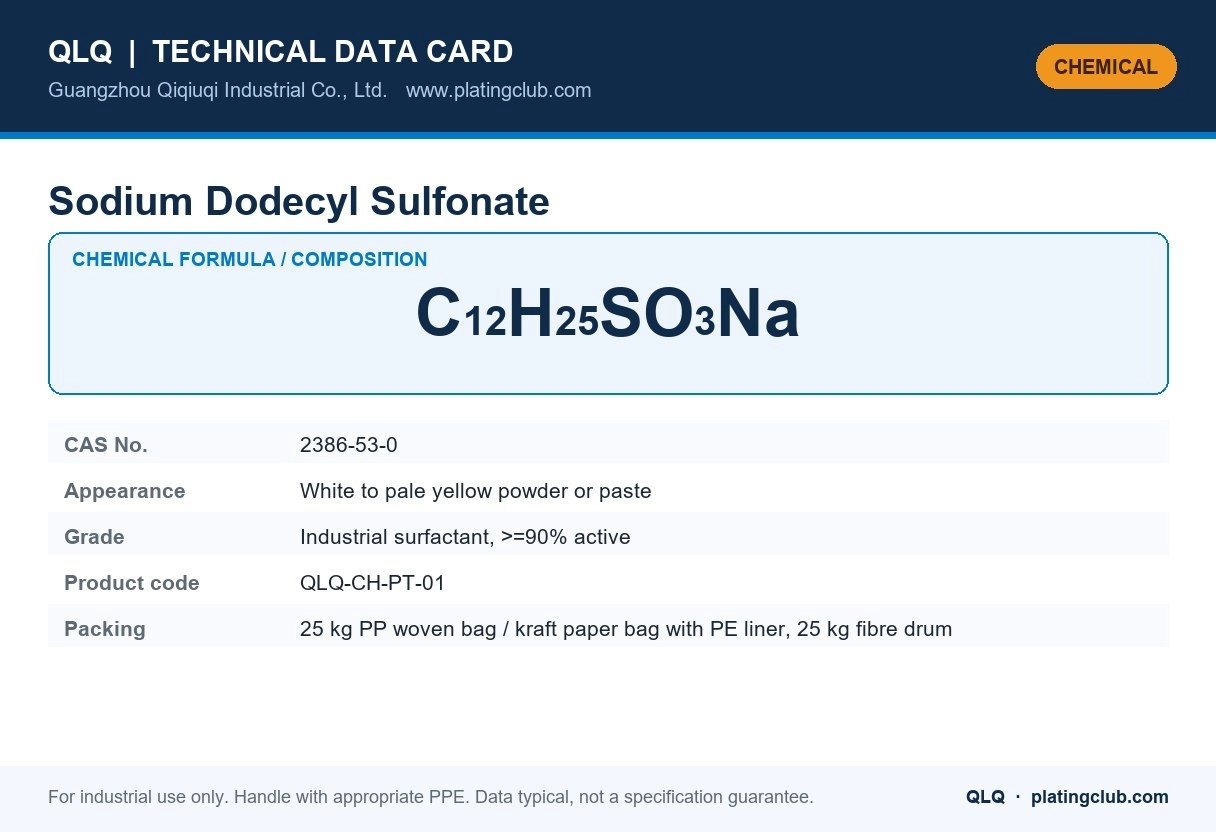
| Chemical formula | C12H25SO3Na |
| CAS number | 2386-53-0 |
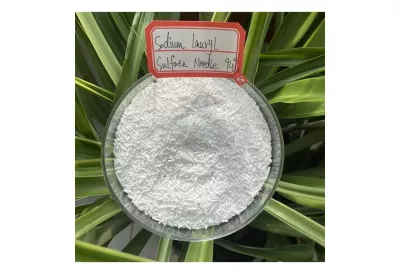
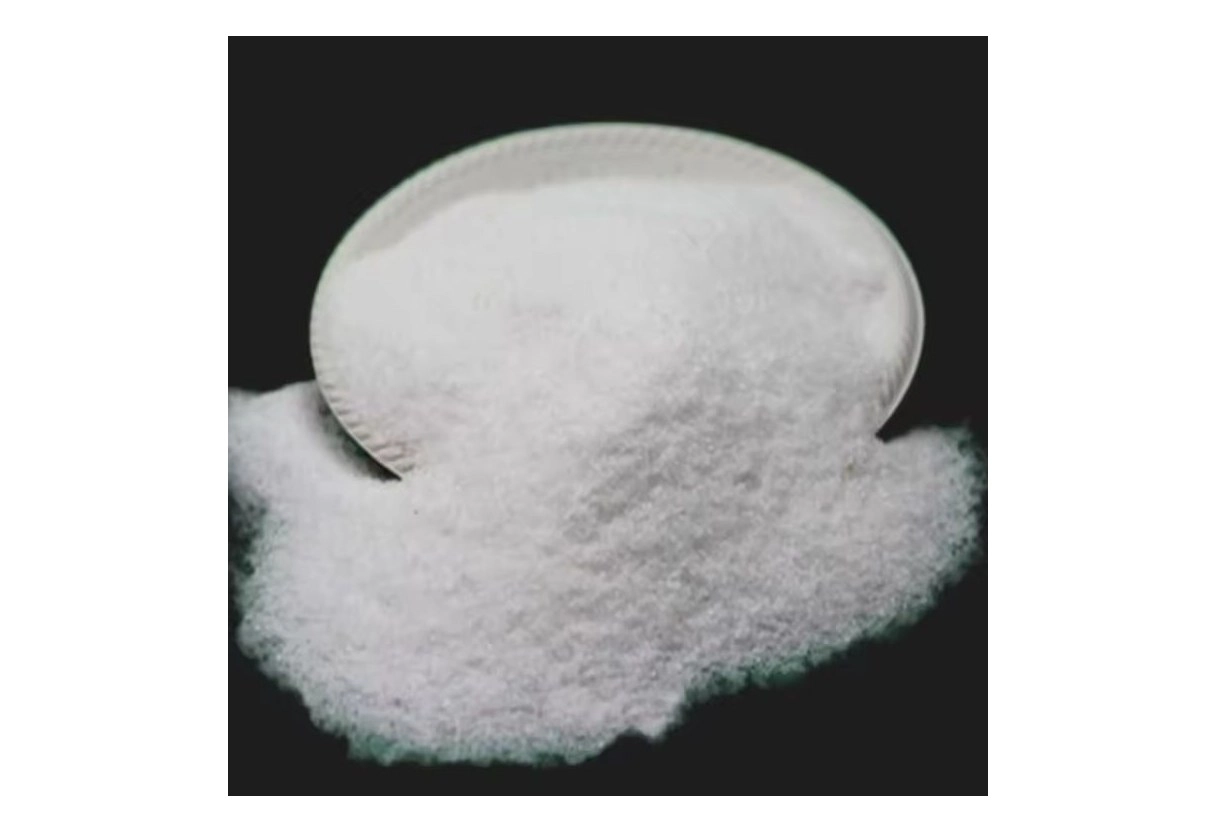
| Appearance | White to pale yellow powder or paste |
| Grade / type | Industrial surfactant, >=90% active |
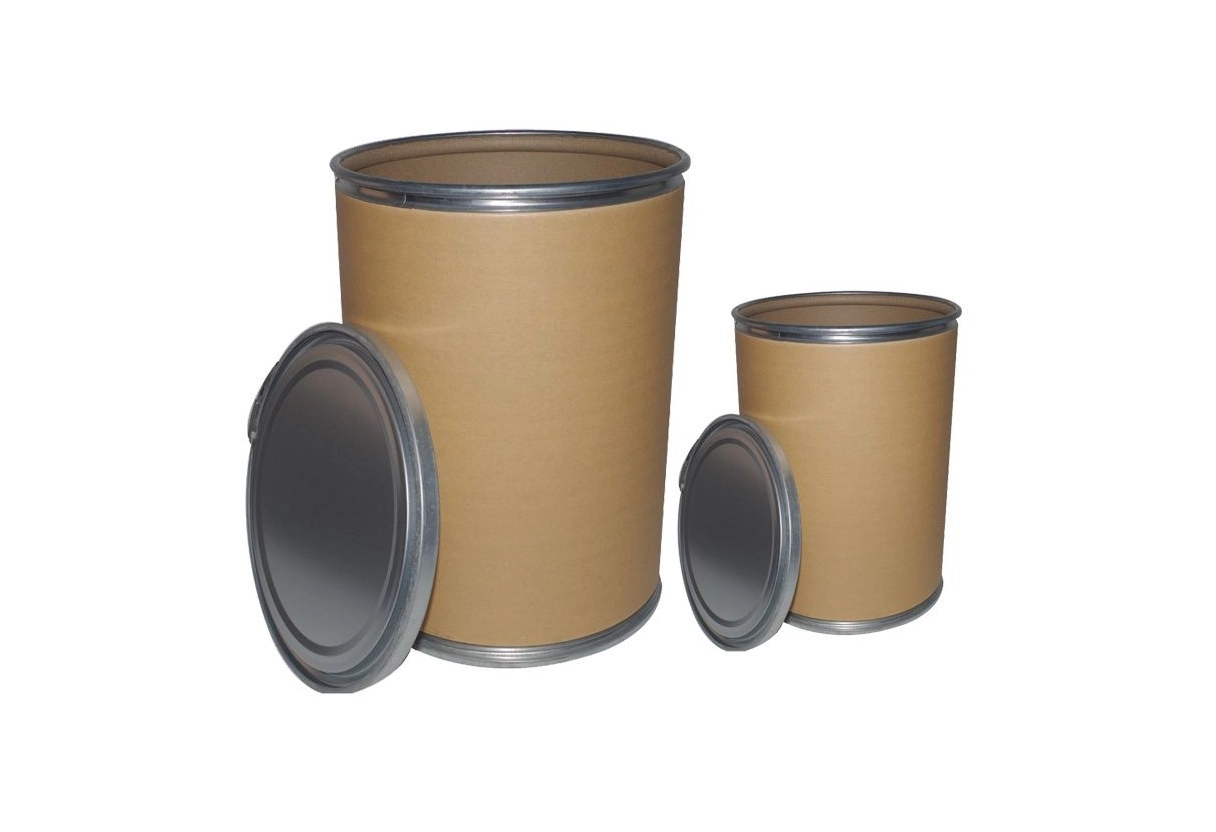
| Standard packing | 25 kg PP woven bag or kraft paper bag with PE inner liner; 25 kg fibre drum |
What it is and what it does. Sodium dodecyl sulfonate is an anionic surfactant used as the wetting and emulsifying agent in alkaline cleaners, in acid cleaners and in nickel bath wetting systems.
- White to pale yellow powder or paste; it lowers surface tension so the cleaner penetrates blind holes and crevices.
- In plating baths it acts as a wetting agent that reduces pitting and gas marking.
- Anionic type - it is compatible with alkaline and acid cleaners but not with cationic systems.
Typical Use in a Plating / Finishing Line
| Item | Typical guidance |
|---|---|
| Cleaner formulation | 1-10 g/L |
| Nickel bath wetting | 0.05-0.5 g/L as the anti-pitting agent |
| Note | Watch the foam level in spray cleaning and in agitated tanks |
Safety, Handling & Storage
| Item | Requirement |
|---|---|
| Hazard classification | Irritant (GHS07) — causes serious eye irritation; mild skin irritation on prolonged contact |
| Personal protective equipment | Safety goggles and nitrile gloves; avoid contact with eyes; use good general ventilation |
| Spill / first aid | Absorb or mop up; surfactant solutions are slippery — rinse the floor with plenty of water |
| Storage | Cool, dry, ventilated store; keep containers closed, protect paste and liquid grades from frost and from moisture pick-up |
| Transport | Classified and packed according to IATA/IMDG for the hazard class; UN number and packing group stated on the shipping documents |
Quality Documents Shipped With Every Batch
| Document | Comment |
|---|---|
| COA (certificate of analysis) | Provided with the shipment; batch traceable to the production date |
| MSDS (safety data sheet) | Provided with the shipment; batch traceable to the production date |
| Packing list | Provided with the shipment; batch traceable to the production date |
| Commercial invoice | Provided with the shipment; batch traceable to the production date |
| Certificate of origin on request | Provided with the shipment; batch traceable to the production date |
Buyer Questions We Answer Every Week
| Question | Answer |
|---|---|
| Does it cause foaming in spray cleaners? | It can; use a low-foam blend or reduce the dose for spray equipment. |
| Is it suitable for acid cleaners? | Yes, it is stable in acid and alkaline solutions within the normal cleaning pH range. |
| Item | Typical Value |
|---|---|
| Chemical identity | Sodium 1-dodecanesulfonate, C12H25SO3Na |
| Appearance | White to light yellow powder (or 60% paste) |
| Active content | ≥ 95% (powder) / ~60% (paste) |
| Ionic type | Anionic |
| pH (1% solution) | 6.0-9.0 |
| Sodium sulfate | ≤ 5% |
| Stability | Stable in acid (pH 1+) and alkali; resists hydrolysis |
| Standard packing | 25KG/DRUM, with PE inner liner |
Formulation Chemistry: Sulfonate vs Sulfate
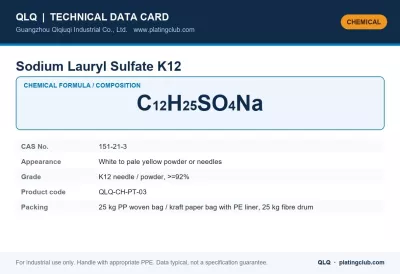
Plating buyers often confuse sodium dodecyl sulfonate (SDS-type, a sulfonate) with sodium lauryl sulfate (SLS/K12, a sulfate ester). Both are C12 anionic wetting agents, but the chemistry differs where it counts:
| Property | Dodecyl sulfonate | Lauryl sulfate (K12) |
|---|---|---|
| Bond type | C-S bond (sulfonate) | C-O-S ester (sulfate) |
| Hot acid stability | Excellent - does not hydrolyze | Slowly hydrolyzes below pH 3 / above 60°C |
| Hot alkaline stability | Good | Fair to poor in hot strong alkali |
| Foam | Medium, controllable | High, rich foam |
| Hard water tolerance | Better (Ca/Mg salts stay soluble) | Can precipitate calcium lauryl sulfate |
| Typical role | Acid baths, long-life wetting, cleaning | Foam cleaning, nickel anti-pitting |
Both have a place in a plating shop; the sulfonate is the more durable molecule for anything hot or acidic. QLQ stocks both and advises which one each tank actually needs.
Working Concentrations (Starting Ranges)
| Application | Concentration | Notes |
|---|---|---|
| Soak / ultrasonic degreaser | 0.5-2 g/L (with builders) | Use with alkali builders; rinses film-free |
| Alkaline electrocleaner | 0.3-1 g/L | Watch foam height at high current |
| Acid activation / acid dips | 0.1-0.5 g/L | Kills water-break, no hydrolysis in 5-10% acid |
| Acid copper / acid zinc baths | 0.05-0.3 g/L | Anti-pitting wetting; keep low to protect brightness |
| Emulsion / pre-degrease formulas | 1-3% of concentrate | Emulsifies mineral oil and buffing compound |
Start low and confirm with a wetting test (a clean panel withdrawn from the tank must show an unbroken water film for 30 seconds). Surfactant is consumed by drag-out and oil loading, not by electrolysis, so additions follow solution analysis or tank turnover, not amp-hours.
Quality Checks Before Use
| Check | Method | Pass |
|---|---|---|
| Appearance | Visual against retained sample | Uniform white powder; no yellowing, lumps or oil streaks |
| Active content | COA (Epton two-phase titration) | ≥ 95% (powder) |
| Foam in acid | 0.2 g/L in 5% H2SO4, shake 10 s | Stable foam forms; no cloudiness or scum |
| Wetting test | 0.2 g/L solution, dip clean steel panel | Continuous water film, no beading |
| Residue | Evaporate 1% solution to dryness | White, easily re-dissolved; no sticky film |
How QLQ controls it: incoming lots are checked for active content, sodium sulfate and acid-stability foam against a retained reference before release. Because the same drum may feed both a degreaser and an acid bath, the batch number is recorded per tank so any foam or wetting complaint can be traced to a specific lot within a day.
Common Problems & Fixes (Workshop Table)
| Problem | Root cause | Fix |
|---|---|---|
| Water-break after cleaning | Surfactant exhausted by oil loading or drag-out | Top up 0.3-0.5 g/L; check cleaner temperature and loading |
| Foam overflows electrocleaner | Over-dosed or wrong (high-foam) surfactant | Defoam, cut dose; switch agitation pattern; use 0.1-0.3 g/L |
| White film on dried parts | High sodium sulfate / salt carry-over | Improve rinsing; verify COA salt level; avoid over-dosing |
| Acid bath suddenly hazy | Sulfate-type surfactant used by mistake in hot acid | Carbon treat or dump; switch to sulfonate chemistry |
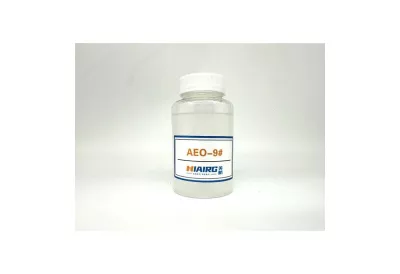
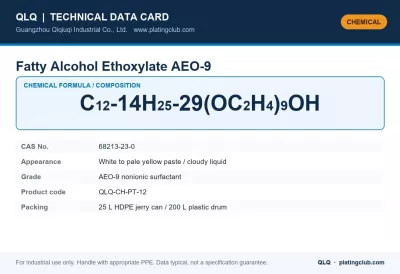
| Poor emulsification of oil | Single surfactant overloaded | Blend with a nonionic (e.g. AEO-9) or 6501 amide |
Handling & Safety
- Health: powder is an eye and skin irritant; wear goggles, gloves and a dust mask when opening drums and weighing.
- Dust: fine powder forms dust clouds when poured; dose as a 5-10% pre-made solution for plating baths to avoid dust and local over-concentration.
- Incompatibility: keep away from strong oxidizing agents; do not mix with concentrated nitric or chromic solutions.
- Storage: sealed drums in a dry store. The powder is hygroscopic but free-flowing when dry; caked material can be broken up and still performs if the active content is confirmed.
- Environment: anionic surfactants are biodegradable, but used degreaser solutions carry oil and metals - treat as hazardous waste or process through the emulsion-breaking step of the effluent plant.
What It Does on Iron, Zinc Alloy, Copper and Stainless Steel Parts
| Substrate | Role of the sulfonate wetting stage | Practice note |
|---|---|---|
| Iron / steel hardware | Complete wetting in alkaline cleaner and acid dip guarantees the copper-nickel stack adheres without skip-plating on stamped edges | Keep the acid dip fresh; sulfonate here survives hot acid where SLS would not |
| Zinc alloy (sliders, buckles) | Quick, film-free degreasing prevents oil residues that cause blistering of the pyro/cyanide copper base on die-cast | Short immersion, medium foam; over-cleaning can etch zinc - keep time and temperature controlled |
| Copper / brass | Wetting agent in the acid pre-dip stops tarnish bands by letting acid contact every contour equally | Use low foam so barrel rotation is not blocked by air pockets |
| Stainless steel | Removes forming lubricants and keeps the surface active for the high-CD nickel strike | Follow with thorough rinsing; sulfonate films do not passivate stainless if rinsed within 60 s |
FAQ
| Question | Answer |
|---|---|
| Is this the same as SDS (sodium lauryl sulfate) I already use? | No - it is the sulfonate analog. It looks similar but resists hydrolysis in hot acid and alkali, at the cost of slightly less foam. Confirm what your tank chemistry tolerates before switching. |
| Why did my acid copper get hazy after I added a surfactant? | If you added a sulfate-type wetting agent into hot acid it hydrolyzed into lauryl alcohol and salt, which breaks brightness. Switch to the sulfonate and carbon treat the haze away. |
| How often must I add surfactant to a degreaser? | There is no amp-hour rule. Titrate active content weekly (or test the water-break) and add to keep the target level; oil loading consumes surfactant faster than drag-out. |
| Can QLQ supply a matched pretreatment package? | Yes - dodecyl sulfonate, 6501 amide, K12 and nonionic blends can be supplied together with written tank recipes, and QLQ engineers tune them to your water hardness and soil load. |
Water-break or foam problems before plating? Send QLQ engineering a photo of your tank and parts - we help customers in 10+ countries fix pretreatment chemistry remotely. Contact us.
Shipping cost is based on weight. Just add products to your cart and use the Shipping Calculator to see the shipping price.We want you to be 100% satisfied with your purchase. Items can be returned or exchanged within 30 days of delivery.