
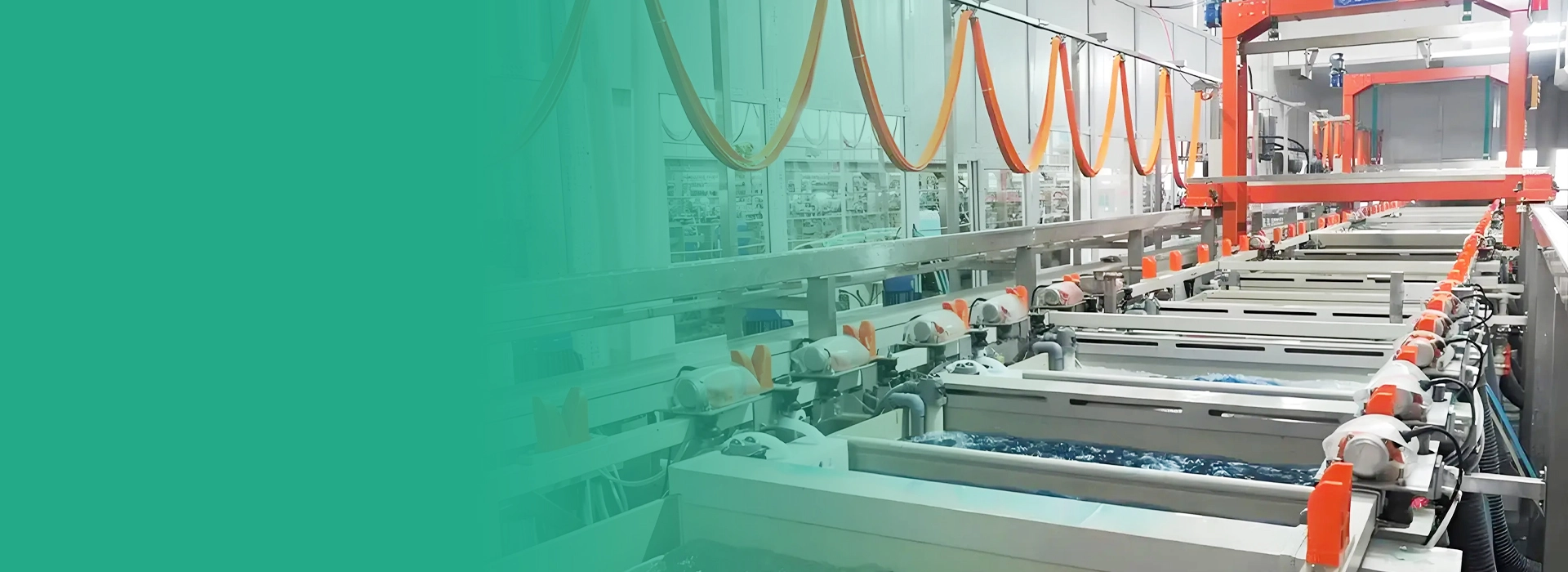
Barrel Plating Post-Treatment — Unloading, Drying, Sorting & Packaging
Mass post-treatment for barrel-plated small parts: centrifugal drying, vibratory finishing, passivation, anti-oxidation packaging. Batch processing from barrel to box.
Why Barrel Post-Treatment Matters
Plating gives the finish — post-treatment decides how it survives shipping, storage and the customer's first inspection
Unload → Clean → Seal
DI rinse, passivation, anti-tarnish
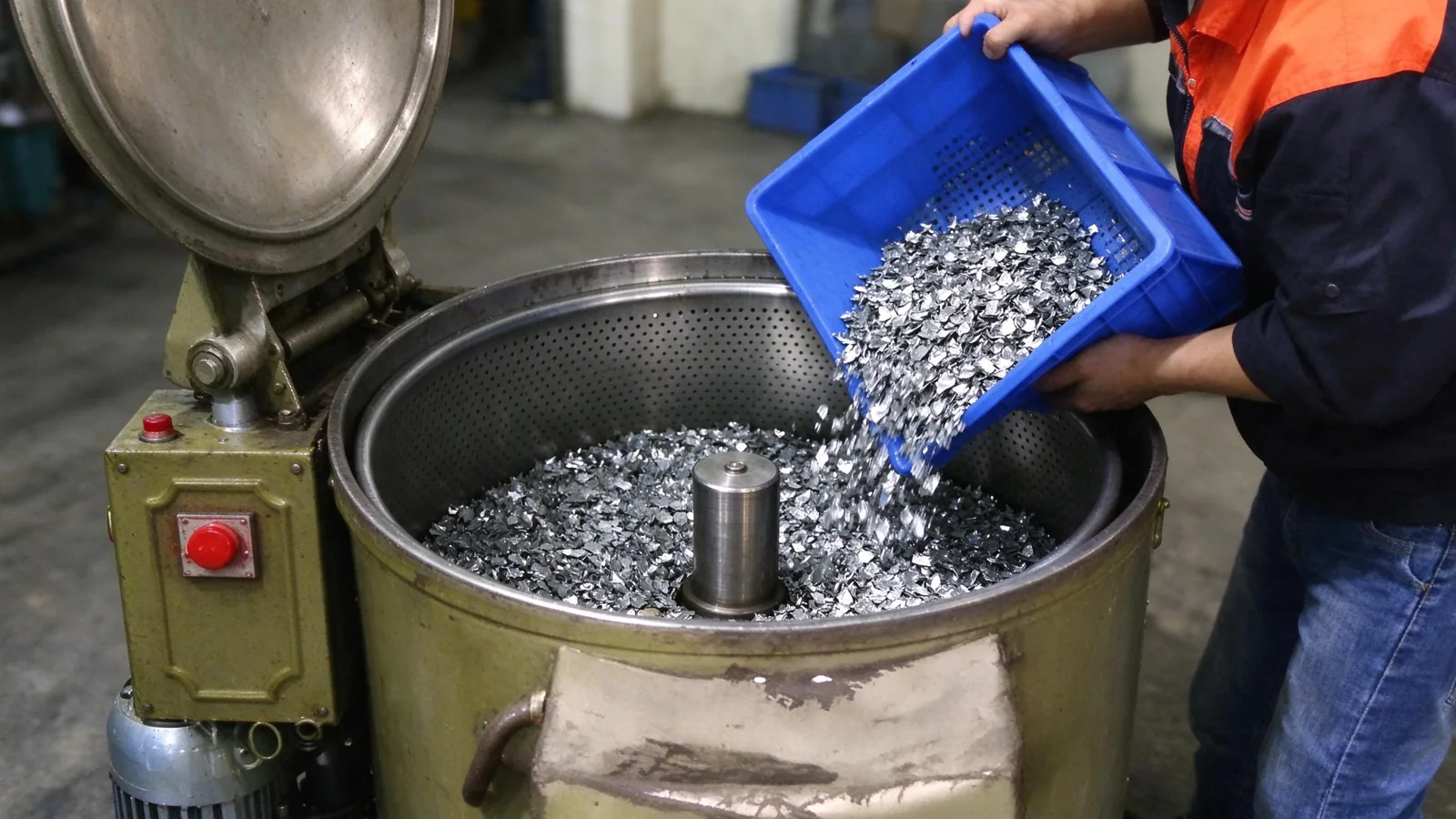 Conceptual illustration based on reference photographs; not test evidence.
Centrifugal Drying
Fast water removal, 600-1200 rpm
Vibratory Drying
Bulk drying, 60-80 °C, no water spots
Anti-Oxidation Packaging
VCI + desiccant + anti-tarnish paper
Barrel vs Rack — Post-Treatment Comparison
How post-treatment differs between barrel and rack processed parts
| Factor | Barrel Plating (Bulk) | Rack Plating (Individual) |
|---|---|---|
| Unloading method | Tip barrel into collection bin | Manual unracking one by one |
| Drying method | Centrifugal dryer 600-1200 rpm | Hanging on racks + hot air |
| Inspection | Random sample + visual sorting | 100% visual per part |
| Packaging | Bulk bagging (VCI bags) | Individual bag or tray |
| Cost per part (post-treatment) | Very low (batch processed) | Medium (per-part handling) |
| Scratch risk during handling | Higher (parts contact during drying) | Lower (transferred individually) |
Barrel Post-Treatment — Process Steps
From barrel to box — 6-step mass finishing system
1Barrel Unloading & Collection
Tip the barrel contents into a collection bin or onto a vibratory feeder. For delicate parts, use a soft-drop chute to prevent mechanical damage.
2DI Water Rinse & Passivation
Bulk rinse in DI water bath, then passivation dip. For barrel parts, a mesh basket allows batch dipping. Trivalent chrome passivation for nickel, organic inhibitor for gold/copper.
3Centrifugal De-watering
High-speed centrifuge (600-1200 rpm) spins water off parts. Critical for barrel parts that have nested shapes (water trapped in recesses causes spotting).
4Vibratory Drying (60-80 °C)
Vibratory hot air dryer — parts travel on vibrating deck through heated chamber. Heated air at 60-80 °C with adjustable dwell time. Prevents water spots and accelerates passivation cure.
5Sorting & Inspection
Vibratory sorting table + visual inspection. Magnetic separator removes ferrous debris. Operators visually inspect for rejects (color mismatch, pitting, scratches).
6Anti-Oxidation Packaging
VCI (Vapor Corrosion Inhibitor) bags + desiccant + anti-tarnish paper. For gold/rose gold: anti-tarnish tissue. For nickel: VCI bags. For antique: anti-scratch tissue interleave.
Post-Treatment Equipment Comparison
Choosing the right drying & handling equipment for barrel parts
| Equipment | Capacity | Speed / Temp | Best For | Space | Cost |
|---|---|---|---|---|---|
| Centrifugal dryer | 50-100 kg/batch | 600-1200 rpm / 3-5 min | Small parts, recessed shapes | 1 m² | $$ |
| Vibratory hot air dryer | 200-500 kg/h continuous | 60-80 °C / 10-20 min | High volume, uniform drying | 3-5 m² | $$$ |
| Hot air oven (batch) | 100-300 kg/batch | 60-100 °C / 20-40 min | Mixed batches, flexible | 2-3 m² | $$ |
| Spin dryer (manual) | 20-50 kg/batch | 300-600 rpm / 2-3 min | Small batches, delicate parts | 0.5 m² | $ |
| Vacuum dryer | 50-150 kg/batch | 40-60 °C / 15-30 min | Spot-free, premium finish | 2 m² | $$$$ |
📌 Post-Treatment Cheat Sheet
FAQ
Can barrel parts be e-coated after plating?
How do I prevent parts from sticking together during centrifugal drying?
What packaging is best for overseas shipment?
How long can barrel parts sit before packaging?
Do you offer 'ready-to-assemble' packaging?
Post-Treatment Baths — Working Ranges
Use this worksheet for supplier-approved post-treatment of compatible zinc-plated barrel parts. It is not a universal treatment for bare zinc-alloy castings, nickel, copper or decorative multilayer finishes. Numeric passivation and sealing values below are starting points supplied in the article brief, not a validated QLQ production recipe. Confirm the coating, chemical product and technical data sheet before trials.
| Step | Chemistry | Range | Typical | Purpose |
|---|---|---|---|---|
| Bright dip | Nitric- or sulfuric-acid-based treatment selected for the plated finish; not an instruction to mix acids. | Acid concentration, temperature and immersion time: supplier confirmation required. | Use the approved product recipe; confirm surface brightness and absence of excessive attack on a trial batch. | Prepare a clean, uniform surface before the compatible conversion treatment. |
| Passivation | Complete proprietary Cr³⁺-based system compatible with the zinc deposit. | Brief-specified trial window: Cr³⁺ 8–12 g/L; pH 3.8–4.5; 25–30°C; 60–120 s. Supplier validation required. | Trial midpoint only: Cr³⁺ 10 g/L; pH 4.2; 28°C; 90 s. | Develop a conversion film; qualify appearance and resistance to white corrosion products. |
| Neutralization | Supplier-approved neutralizer, only where the selected process specifies it. | Product concentration, pH, temperature and time: confirmation required. | Do not add an alkaline neutralization step after passivation unless explicitly approved. | Control residual acidity where required without damaging the conversion film. |
| Hot rinse | Clean water or deionized water where required by the process specification. | Water quality, temperature and time: confirmation required; do not infer the rinse temperature from the drying limit. | Use the supplier-approved final-rinse conditions and avoid prolonged immersion. | Remove soluble carryover before drying without degrading the fresh film. |
Trivalent Passivation — Starting Formulation
Starting-point only: adjust per corrosion target (white rust hours). Obtain the supplier's complete make-up instructions, including concentrate dosage and required additives. The chromium concentration alone does not define a working formulation; g/L as Cr³⁺ is not g/L of chromium salt or commercial concentrate.
| Component | Make-up | Control |
|---|---|---|
| Cr³⁺ | 8–12 g/L as chromium, subject to supplier approval. | Check by the supplier's specified analytical method; replenish with the approved concentrate, not arbitrary chromium salts. |
| pH | 3.8–4.5, brief-specified trial range. | Measure with a calibrated meter; adjust only with approved reagents and recheck after mixing. |
| Temperature | 25–30°C, brief-specified trial range. | Measure the working bath temperature and hold the supplier-approved setpoint. |
| Immersion time | 60–120 s, brief-specified trial range. | Time actual immersion consistently; record the load and compare film appearance and corrosion results. |
| Seal (optional) | 60°C for 5 min, only if the selected sealer permits these conditions. | Use a compatible sealer at its specified concentration; qualify the sealed finish separately. |
Agree the corrosion-test method, conditioning period, inspection criteria and required hours to white rust with the customer. No white-rust-hour performance is guaranteed by these starting values.
Engineer Notes
- pH drift and blue-film consistency: Log pH against a qualified reference batch. If the blue appearance changes, check pH, bath concentration, temperature, immersion time and carryover before adjusting chemistry; film colour alone does not prove corrosion performance.
- Hexavalent chromium and RoHS: Use a qualified Cr⁶⁺-free route when required by the customer. RoHS restricts hexavalent chromium to 0.1% by weight in homogeneous materials of covered electrical and electronic equipment, subject to applicable exemptions; it is not a blanket ban on every hardware product. Confirm scope and required test evidence. See Directive 2011/65/EU, consolidated text, Annex II.
- Excessive temperature and film dissolution: Treat overheating as a potential film-damage or dissolution risk. Follow the selected product's temperature limits rather than assuming that hotter treatment improves protection.
- Transfer-water contamination: Prevent acid, plating-solution and chromium carryover between tanks. Control rinse quality and drainage, keep transfer equipment clean and segregate incompatible process lines.
- Drying temperature: Use 60–70°C only as the brief's provisional drying window, subject to the passivate and sealer supplier's limits. Verify actual part temperature and exposure time; avoid overbaking and qualify corrosion performance after drying.
Source basis: article brief enhance_barrel_post_treatment.txt supplies the numeric trial values. QLQ knowledge-base notes on cleaning and sealing (topic 07, surface-treatment processes) and slider plating and painting (topic 04, slider processes) support adequate rinsing, controlled drying and corrosion checks but do not establish these numeric bath recipes. Unspecified values require supplier confirmation.
Get a Free Quote Today
Send us your samples or drawings — our engineers reply within 24 hours with pricing and technical advice.
Contact Us