
Why this keeps coming up
Bright Nickel Cloudy Deposits is one of the recurring questions on finishing forums — and answers online usually jump to a single fix. There isn't one: the symptom has several causes, each confirmed differently, each fixed differently. This is the diagnostic sequence our lines run.
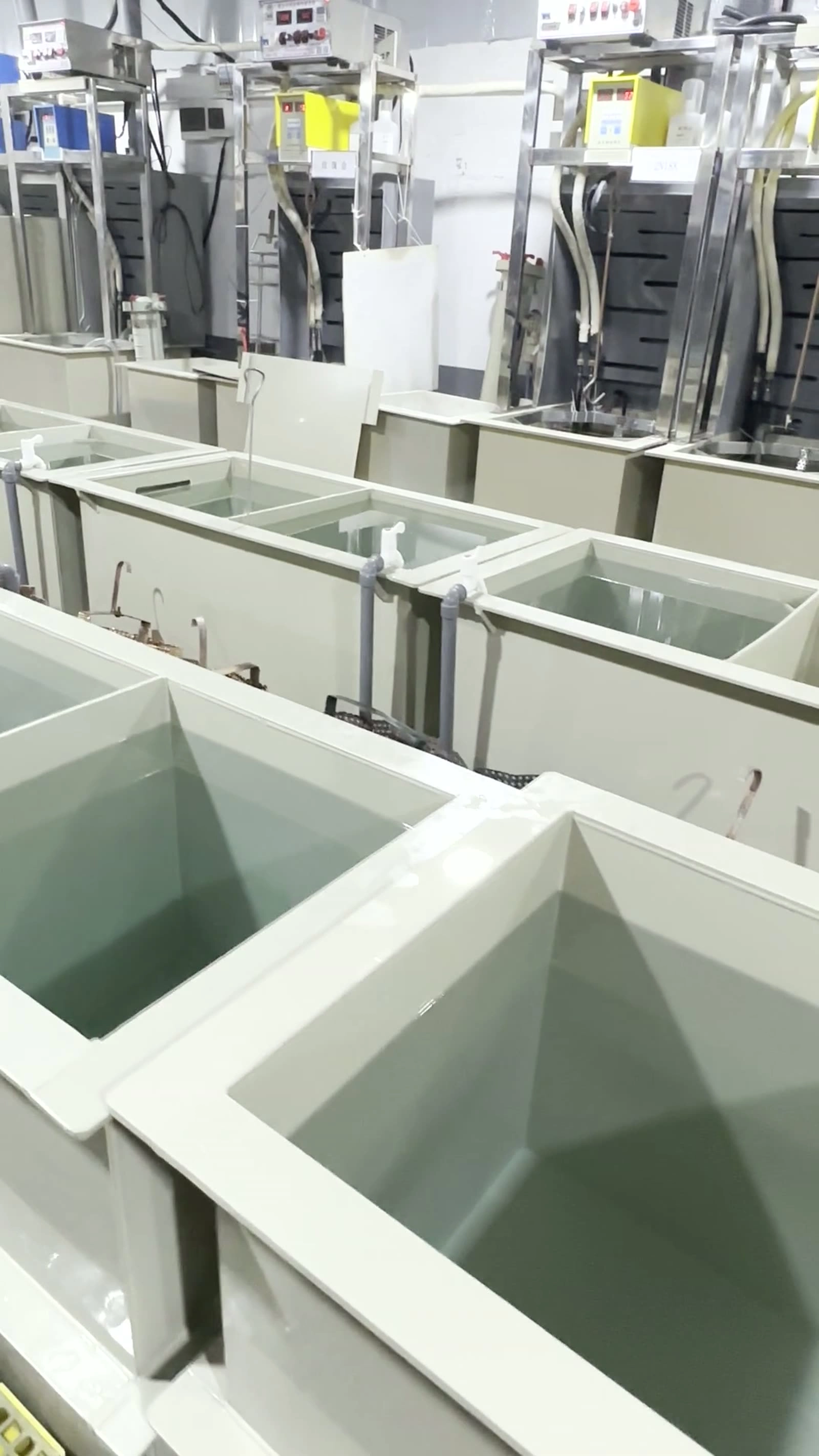
Triage: symptom → confirm → first move
| Symptom | Likely root | Confirm by | First move |
|---|---|---|---|
| Uniform haze all over | Metallic contamination (Cu, Zn) | Hull cell: dull low-CD band | Dummy plate at low CD |
| Cloudy streaks that follow rack | Wetter shortage / surface tension | Stalgmometer reading | Titrate to 35–45 dyn/cm |
| Cloud with pinprick pits | Organics + gas | Hull cell banding | Carbon trial before dosing |
| Haze on castings only | Base metal drag-in (Zn) | By-alloy pattern | Segregate alloys; check strike |
| Haze after maintenance day | Work done: filter change, make-up | Revert one change | Restore and re-verify |
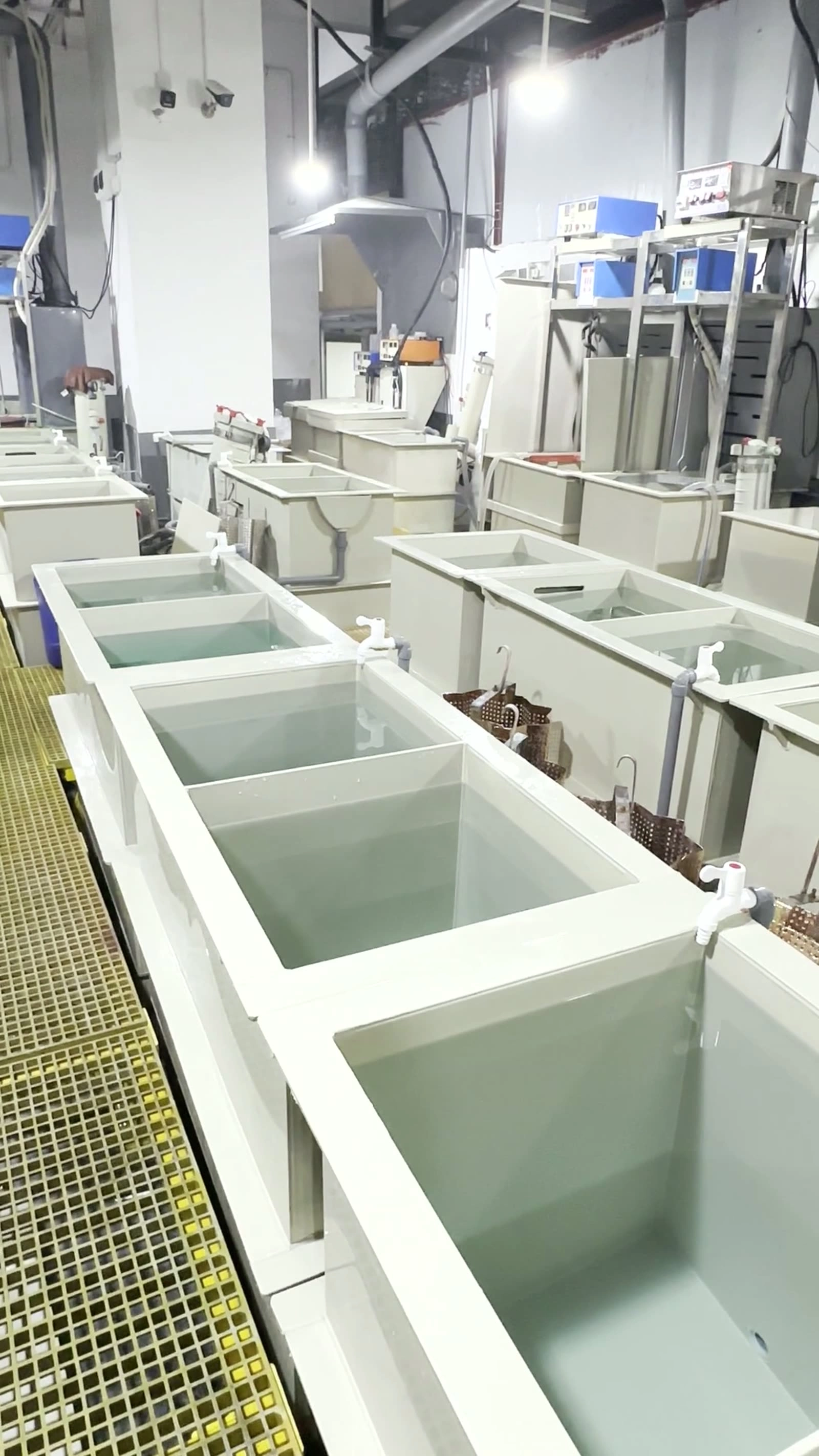
The fix set with windows
- Fix 1 — dummy plate — Low-CD dummy 0.2–0.5 A/dm² overnight for metallics; cathode sheets report what they took out
- Fix 2 — surface tension — Wetter by titration to 35–45 dyn/cm; overdosing clouds differently — go in steps
- Fix 3 — carbon pack — 3–5 g/L at 40–50 °C for organics; circulate, then filter polish
- Fix 4 — brightener by Amp-hour — Re-dose from consumption curve, never by bottle schedule
- Fix 5 — segregate alloys — Zinc diecast on its own racks/fixtures through strike; zinc drag-in clouds nickel
Case method
A line fought Monday-morning haze for months. The pattern: haze only after weekends, only on castings. Zinc drag-in from shared strike racks was the root. Separating diecast fixtures and a Monday Hull cell routine ended it. (Method illustration: confirm by your own by-alloy defect records.)
On the floor: recognise, record, escalate
| You see | You do | You never do |
|---|---|---|
| Cloudy parts | Run Hull cell sample, label it, report | Add brightener from the bottle |
| Haze on one rack family | Note the alloy of those parts | Mix alloys to 'balance' the load |
| Haze after weekend | Record Friday's last additions | Double Monday's dose |
| Anything unusual | Photo + tank card entry | Adjust two things at once |
Engineer notes
- One variable per corrective action; verify with the confirm-by column.
- Records beat memory: log every trial on the tank card.
- Two failed actions in a row is a senior call — escalate with your log.
Safety: Safety: nickel baths are skin sensitisers and dummy plating runs live tanks unattended overnight — check flood, ventilation and lock-out before leaving.
FAQ
What does cloudy nickel mean?
Something in the bath or on the surface is off — chemistry, wetting or contamination. Your Hull cell sample starts the diagnosis.
Hull cell shows dull band at low CD — meaning?
Metallic contamination: copper or zinc dummy out at low CD overnight, then re-test.
Dummy plate at what CD, how long?
0.2–0.5 A/dm², overnight for metallics; weigh the cathode sheets — they tell you what left the bath.
What does a haze day cost?
Chrome stoppage + nickel rework: the nickel gate before chrome pays for itself.