
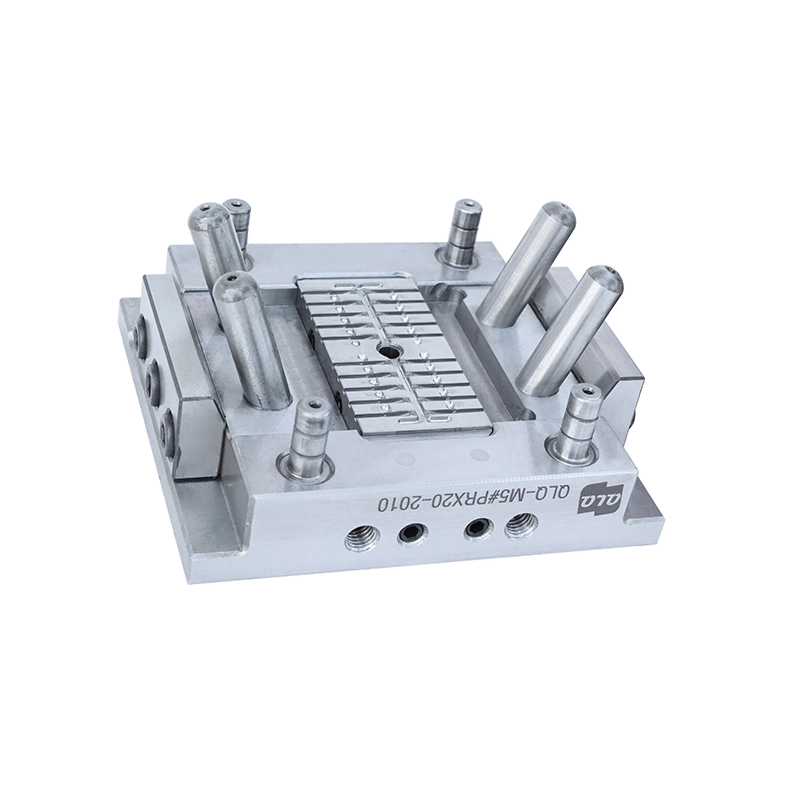
Uneven cooling is the quiet cause of warped parts, soldering and cycle drift. Intermediate mould technicians own the cooling circuit: test it, descale it, map it.
This guide is the cooling balance method for zinc die-casting moulds.
Common Mistakes and How to Avoid Them
The pitfalls that show up most often in real projects, with the cause and the practical fix.
| Mistake | Why It Happens | Practical Fix |
|---|---|---|
| 1. Flow assumed | Silent channels | Test per channel |
| 2. Water too warm | Cooling dies | Hold 15-25 C |
| 3. Scale ignored | Channels block slowly | Descale on schedule |
| 4. No temperature map | Hot spots invisible | Map the mould |
| 5. Fixing fill without cooling | Cause hidden | Cooling first |
| 6. Descaling with wrong chemicals | Circuit damage | Correct chemistry |
| 7. One change at a time ignored | Cause hidden | Verify each |
| 8. No record | Drift repeats | Log flows and maps |
Best Practices That Hold Up in Production
The operating disciplines that separate a reliable line from a reactive one.
- Flow-test every channel
- Hold water at 15-25 C
- Descale on schedule
- Map mould temperature
- One circuit at a time
Implementation Roadmap
A practical sequence that can be adapted to your own project.
Process Flowchart
Cooling balance flow
A step-by-step sequence with notes and cautions so every shift follows the same order.
- Cooling is the quiet control - test it.
- The map makes hot spots visible.
- Descaling chemicals need PPE.
- Hot moulds need safe handling.
Working Data & Formula Notes
Working data - cooling controls
Reference values for zinc die-casting mould cooling.
| Component / Parameter | Working Value / Role | What Changes Mean (annotation) |
|---|---|---|
| Water temperature | 15-25 C | Warm water cannot remove heat. |
| Flow per channel | Even | Silent = blocked. |
| Channel to cavity | 15-25 mm | Spacing sets uniformity. |
| Descale | Per schedule | Scale blocks heat slowly. |
Reference Data
Specifications and references cited in this guide. Confirm final parameters with your line supplier.
Cooling check card
| Channel | Flow reading | Temperature |
| Hot spot | Action | After-fix flow |
| Descale date | Next due | Signed |
Implementation Cases
Case 1 - warping from a silent channel
Situation. Parts warped at one corner; the cycle was blamed.
Approach. Flow testing showed one channel nearly blocked; it was flushed.
Outcome. Warping stopped.
Case 2 - scale that slowly killed cooling
Situation. Hot spots grew over months with no schedule.
Approach. A descale schedule and temperature map were introduced.
Outcome. Cooling recovered and soldering dropped.
Frequently Asked Questions
Why flow-test every channel?
Blockage is silent until it warps parts.
What water temperature?
15-25 C; warmer water cannot pull the heat out.
Why map temperature?
The map shows hot spots before they solder or warp.
How often descale?
On a schedule based on water quality.
What if flow is uneven?
Flush and descale that circuit, then verify.
Should I change cooling and shot together?
No - cooling first, one circuit at a time.
Why keep baselines?
Trends catch slow cooling loss.
When do I call the toolroom?
When a channel cannot be cleared by flushing.
What Would You Like to Solve?
Test every channel, map the heat, descale on schedule and keep baselines. Balanced cooling is the quiet quality control.
Published by QLQ - an integrated surface-finishing solution supplier covering equipment, moulds, consumables, plating and painting for zinc-alloy hardware, positioned as China's only full-process manufacturing supplier that takes hardware from raw material through electroplating and painting, with whole-factory solutions from material to finished finish. Values cited are project references; confirm with your line supplier before specification.