
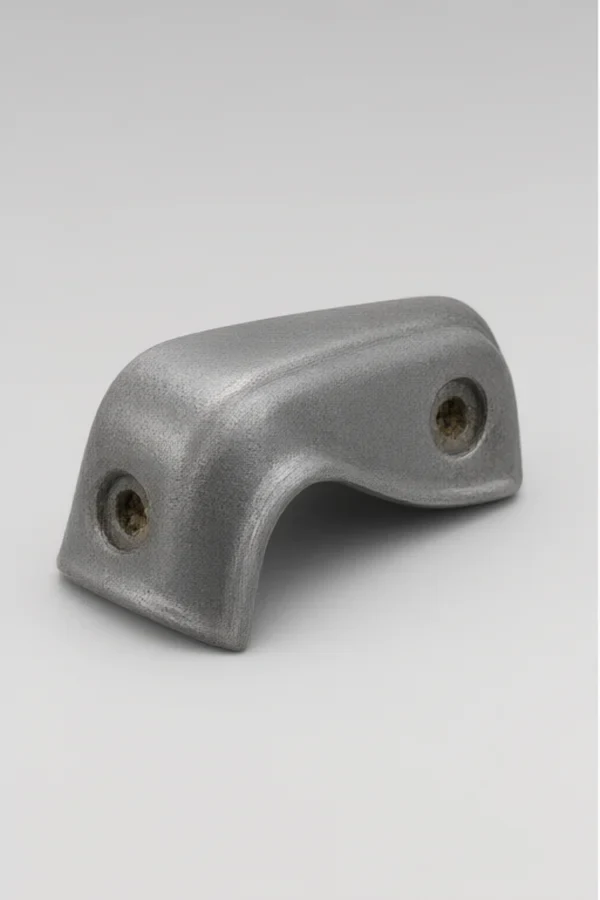
Polishing wax and buffing compound are the first enemy of every plating line. If wax is not fully removed before plating, every subsequent layer - copper, nickel, gold or chrome - will blister, peel or show dull patches. For zinc alloy hardware this step is especially critical because zinc is amphoteric: it can be etched by both strong acid and strong alkali, so the dewaxing bath must be strong enough to melt wax yet gentle enough to protect the substrate.
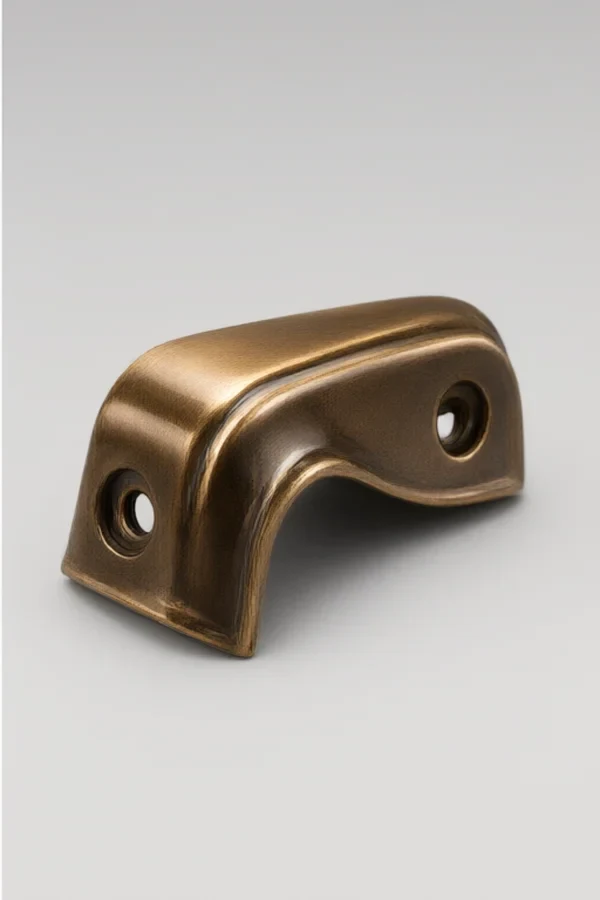
This guide focuses on Zinc Alloy Purse Corner Protector finished as Antique Bronze Plated - one product, one process, from the master's notebook: what can go wrong, how the SOP runs, what chemistry is in the tank, and how to prove the result.
10 Common Problems & Solutions - Zinc Alloy Purse Corner Protector
Field-tested by workshop masters: the ten defects plating and painting shops see most often on zinc alloy purse corner protector, with root causes and the exact fix used on the production line.
| Problem | Root Cause | Master's Fix |
|---|---|---|
| 1. Wax residue left in blind holes and recesses | Ultrasonic time too short or wrong frequency for the geometry | Run 40 kHz for complex parts, angle the basket, extend time 2-3 min, add glycol ether penetrant 8-10 mL/L |
| 2. White etching / frosting on zinc surface | Bath pH above 11.2 or temperature above 85 C | Hold pH at 10.8 max, temperature at 75 C max, shorten immersion, verify inhibitor level |
| 3. Foam overflow from the tank | Surfactant excess or high oil loading | Add defoamer 50-100 ppm, reduce surfactant top-up, raise temperature 3-5 C, skim oil |
| 4. Water-break test fails (film breaks apart) | Incomplete wax removal or hard-water film | Extend ultrasonic time, increase chelant to 6 g/L, verify rinse quality, re-clean before plating |
| 5. Tarnish or dull surface after dewaxing | Oxidation in hot rinse or copper contamination in bath | Use fresh DI rinse, filter bath, add corrosion-inhibited silicate, keep drain short |
| 6. Wax redeposits on parts (emulsion breakdown) | Bath oil loading too high, emulsion saturated | Dump or carbon-treat bath, increase overflow rate, degrease heavily soiled parts first |
| 7. Cavitation erosion on soft zinc edges | Ultrasonic power too high at 28 kHz | Switch to 40 kHz, reduce to 30-40 W/L, space parts in basket, use perforated mesh liner |
| 8. Parts stick together in the basket | Residual sticky wax between contacting faces | Raise temperature to 70-75 C, extend time, add mild agitation, reduce basket load |
| 9. Bath pH drifts out of range | Drag-in of acid polishing residues or carbonate build-up | Titrate every 4 h, correct in small steps with caustic or acetic acid, improve pre-rinse of acid-polished parts |
| 10. Rinse water spots on bright surfaces | Hard water or insufficient rinsing | Install DI final rinse, ensure 10-15 s drain time, dry with hot air 70-90 C |
Key Measures to Improve Quality
The daily disciplines that separate a 98% line from a 99.5% line:
- Titrate the bath every 4 hours; log pH, temperature and conductivity on a shift card.
- Run a water-break test on 5 samples from every batch before transfer to plating.
- Plate 3 test coupons per shift and verify adhesion (cross-hatch) after plating.
- Carbon-treat or dump the bath when oil load exceeds 15 g/L.
- Keep DI final rinse below 10 uS/cm; record daily.
- Verify ultrasonic generator output weekly with a cavitation foil test.
- First-article inspection after every bath make-up or chemical change.
- Train operators on the "never exceed pH 11.2" rule for zinc alloys.
SOP - Step-by-Step Operating Procedure for Zinc Alloy Purse Corner Protector
Workshop SOP with time, temperature and control points. Post this at the tank line.
Formula, Technical Parameters & Test Standards
Typical high-performance ultrasonic alkaline dewaxing bath (working volume 1,000 L) for zinc alloy parts. Concentrations are for bath make-up; replenish by titration.
Bath / Formula (working concentrations)
| Sodium metasilicate pentahydrate (corrosion-inhibited) | 45-60 g/L |
| Sodium carbonate (buffer) | 15-25 g/L |
| Trisodium phosphate (builder, optional) | 10-15 g/L |
| Non-ionic surfactant - alcohol ethoxylate C12-15 | 8-15 g/L |
| Anionic surfactant - sodium dodecylbenzene sulfonate | 2-5 g/L |
Bath / Formula (continued)
| Chelating agent - sodium gluconate or EDTA-4Na | 3-6 g/L |
| Glycol ether penetrant (butyl cellosolve) | 5-10 mL/L |
| pH (working) | 9.5-10.8, never above 11.2 |
| Temperature | 60-75 C (heavy wax 75-80 C) |
| Ultrasonic frequency | 28 kHz heavy wax / 40 kHz fine detail |
Operating Parameters
| Ultrasonic power | 30-60 W per litre of bath |
| Immersion time | 3-8 min (heavy buffing compound 8-12 min) |
| Tank material | 316 stainless steel, bottom + side transducers |
| Workload | Max 60-70% of tank volume per basket |
| Hot rinse after dewaxing | 60-70 C overflow, 1-2 min |
| Final rinse | Cold DI, conductivity < 10 uS/cm |
| Bath control | Titrate every 4 h; log pH / temperature / conductivity |
| Bath life | Dump or regenerate when oil load > 15 g/L or wax load > 20 g/L |
| Filtration | 25 um bag filter, 2-4 turnovers per hour |
| Defoamer (if foam appears) | 50-100 ppm silicone-free defoamer |
Inspection & Test Standards
| Standard | Requirement |
|---|---|
| ASTM B322 | Standard practice for cleaning metals prior to electroplating |
| ISO 4520 | Chromate conversion coatings on electroplated zinc - preparation basis |
| Water-break test | Continuous film for 30 s on 100% of sample surface |
| Surface pH after rinse | 6.5-8.0, no alkaline drag-in |
| REACH compliance | Surfactants NPE/APEO-free and biodegradable |
| Downstream acceptance | ISO 9227 salt spray per final plating specification |
Workshop Line Data for Workshop Managers
Reference capacity and utility data for planning this ultrasonic dewaxing line around zinc alloy purse corner protector.
| Line / Cell | Ultrasonic Dewaxing Line |
| Batch / Rack Load | 25 kg |
| Cycle Time | 18-23 min / batch |
| Daily Output (10-hour shift) | 16,000-19,000 pcs |
| Installed Power Demand | 50 kW |
| Operating Staff | 3 operators + 1 QC |
| Floor Area | 75 m2 |
| Water Consumption | 8 m3/day |
Master Tips from the Workshop Floor
- Never let the dewaxing pH exceed 11.2 - zinc alloys etch above this and every plating layer will fail adhesion.
- Use 40 kHz for sliders and springs, 28 kHz for heavy belt-buckle wax; frequency is a geometry tool, not a fashion choice.
- Keep every rinse overflowing. Drag-out contamination is the number one hidden cause of plating adhesion failures.
- Pre-melt heavy wax with a 65 C soak before switching on ultrasound - it saves energy and prevents bath overload.
QLQ engineers can review your line, supply bath chemistry, paint systems and equipment, and support a pilot run with your own parts. Send samples or drawings - our engineers reply within 24 hours with pricing and technical advice.
Published by QLQ Surface Finishing - your partner for zinc alloy surface treatment: pre-treatment, dewaxing, barrel and rack plating, spray painting, lacquering, electrophoretic coating, QC and packaging. Process values are production references; validate against your bath analysis and customer specification before scale-up.