
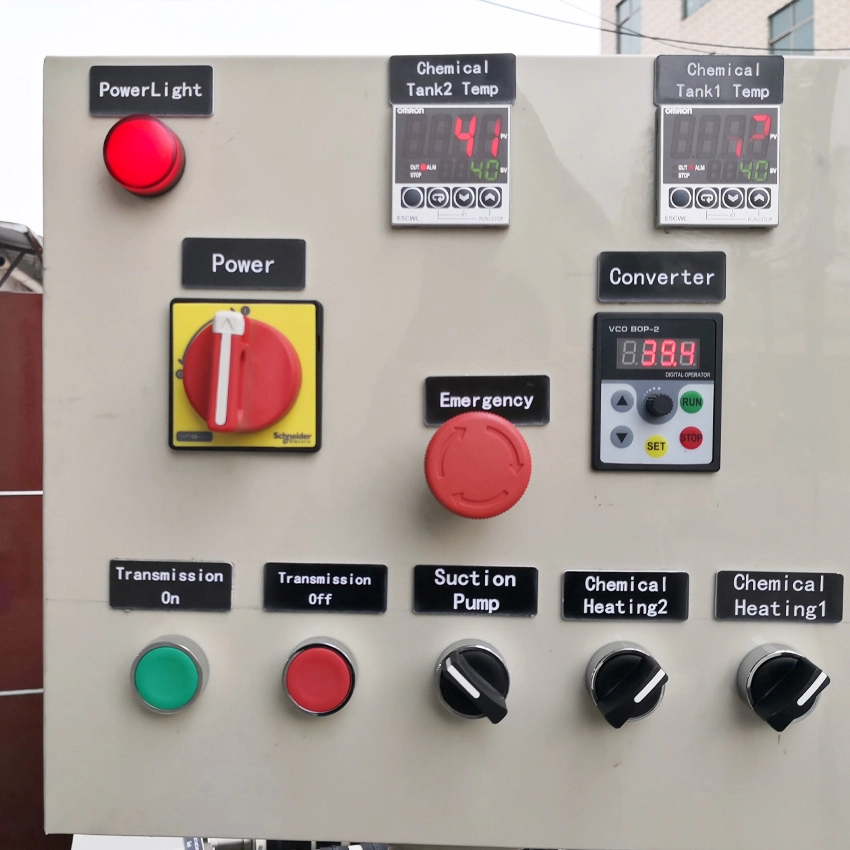
A bright nickel barrel line does not fail suddenly; it drifts. The deposit turns hazy, pits appear on the high-current side of the parts, or the low-current areas go dull - and each signature points to a different variable. The technician who fixes drift in the right order keeps the line running at first-pass quality instead of chasing symptoms.
This guide gives the field sequence for the three most common nickel drift signatures on barrel work, with the chemistry, equipment and dosing checks in the order that finds the cause fastest.
Common Mistakes and How to Avoid Them
The pitfalls that show up most often in real projects, with the cause and the practical fix.
| Mistake | Why It Happens | Practical Fix |
|---|---|---|
| 1. Adding brightener before checking ampere-hours | Over-dosing haze while the real cause is temperature | Check the ampere-hour log and Hull cell first |
| 2. Ignoring temperature drift | Below 55 C the deposit dulls at low current | Hold 55-62 C; verify with a calibrated thermometer |
| 3. pH swings from drag-in | Roughness and pitting at the cathode | Titrate pH every shift; correct in small steps |
| 4. Chloride below range | Anode passivation, grey anodes, falling efficiency | Analyse and restore nickel chloride 45-60 g/L |
| 5. Filtering intermittently | Particulates plate into the deposit | Run filtration continuously at 2-3 turnovers/h |
| 6. Anode bags full or torn | Roughness and nodule growth | Inspect and replace bags monthly; clean anode hooks |
| 7. Barrel load too high | Contact marks and low-current skipping | Hold 40-60% of drum volume |
| 8. Starting current before immersion | Burns on outer parts | Ramp current over 10-15 s after immersion |
| 9. Wetting agent neglected | Pitting returns after carbon treatment | Rebalance wetting agent after any carbon treatment |
| 10. No Hull cell before dosing | Blind dosing compounds the drift | Panel first, dose second, panel again next shift |
Best Practices That Hold Up in Production
The operating disciplines that separate a reliable line from a reactive one.
- Log pH, temperature, current, ampere-hours and doses every barrel
- Run a Hull cell every shift and keep the panel photos
- Keep filtration continuous, not "when someone remembers"
- Inspect anode bags weekly, replace monthly
- Verify barrel load and rotation speed on the shift card
- Ramp current after immersion every time
- Rebalance wetting agent after carbon treatment
- Track first-pass yield per barrel to catch drift early
Implementation Roadmap
A practical sequence that can be adapted to your own project.
Working Data & Formula Notes
Working formula - bright nickel bath (1,000 L) and drift signatures
The annotations link each component to the defect it controls, so a drift signature points to the right check.
| Component / Parameter | Working Value / Role | What Changes Mean (annotation) |
|---|---|---|
| Nickel sulfate | 240-300 g/L | Low salt = slow deposition and thin low-current areas; high salt risks crystallisation below 20 C. |
| Nickel chloride | 45-60 g/L | Low chloride = grey anodes and falling efficiency; high chloride = more stress and pitting risk. |
| Boric acid | 40-50 g/L | Below range, cathode pH swings cause roughness and pitting at high current. |
| pH | 4.0-4.8 | Above 4.8 = rough, stressed deposit; below 4.0 = low efficiency and thin recesses. |
| Temperature | 55-62 C | Below 55 C = dull low-current areas; above 62 C = brightener consumption climbs. |
| Carrier brightener | 5-10 mL/L | Dull low-current end is the first sign of carrier loss. |
| Secondary brightener | 0.5-1.5 mL/L | Haze across mid-zones or streaking = secondary out of balance. |
| Wetting agent | 0.5-1.0 mL/L | Pitting with agitation = wetter low; foam = wetter high. |
Reference Data
Specifications and references cited in this guide. Confirm final parameters with your line supplier.
Drift signature to first check
| Haze over the whole deposit | Temperature, secondary brightener, organics |
| Dull low-current areas | Carrier, chloride, temperature |
| Pitting on high-current areas | Wetting agent, filtration, boric acid |
| Roughness / nodules | Filtration, anode bags, particulates |
| Burning on outer parts | Barrel load, current ramp, total current |
Shift checks that catch drift early
| pH and temperature | Every shift |
| Hull cell | Every shift |
| Ampere-hour vs brightener use | Every shift |
| Anode bags and filtration flow | Weekly |
| Bath analysis | Weekly or per 50 kAh |
Implementation Cases
Case 1 - haze that followed brightener additions
Situation. A barrel nickel line went hazy; operators had doubled the carrier brightener over two days.
Approach. The Hull cell showed dull mid-zones with pitting under agitation, and the ampere-hour log showed dosing far above consumption.
Outcome. A carbon treatment removed the excess, dosing returned to ampere-hour control, and the finish cleared within one shift.
Case 2 - winter temperature drift
Situation. When the shop cooled down in winter, low-current areas on barrel parts turned dull and thin.
Approach. Thermometers showed the nickel tank at 51-53 C. The technician corrected temperature control and added a low-temperature alarm.
Outcome. Deposit brightness and recess thickness returned to spec without any chemistry change - a temperature problem, not a chemistry one.
Frequently Asked Questions
Why does my nickel deposit look hazy?
Check temperature first, then secondary brightener balance, then organic contamination. Haze that does not respond to brightener is usually contamination or temperature.
What causes pitting in barrel nickel?
Hydrogen bubbles trapped on the part - low wetting agent, poor agitation, or the barrel rotating too slowly. Particulates can also plate into the deposit.
Why are my low-current areas dull?
Carrier brightener loss, low chloride, or temperature below 55 C. The Hull cell low-current end shows it before production parts do.
How do I dose brighteners correctly?
By ampere-hours: log current and time per barrel, dose from the meter, and confirm with a Hull cell. Calendar-based dosing always drifts.
How often should I filter the nickel bath?
Continuously, at 2-3 turnovers per hour. Intermittent filtration lets particulates settle and plate into the deposit.
Why are my anodes grey?
Usually low chloride or anode-to-cathode ratio. Restore chloride and check that anodes are bagged and sized at 1.5-2:1.
My parts burn on the outside of the barrel - why?
Current starts before the barrel is immersed, or the load is too high. Ramp current over 10-15 s after immersion and hold 40-60% of drum volume.
When should I carbon-treat nickel?
When the Hull cell shows haze or pitting that does not respond to brightener or wetting agent. After carbon, rebalance brightener and wetter.
What is the fastest way to catch drift?
A shift card: pH, temperature, ampere-hours, doses and a Hull cell photo. Drift becomes visible in one shift instead of after a reject pile.
Who can help with a persistent nickel problem?
Plating process engineers can review your bath analysis, Hull cell photos and shift logs and pinpoint the variable - share the last week of data.
What Would You Like to Solve?
If you can share your last few Hull cell photos, the ampere-hour log and the shift card, we can help you separate temperature, chemistry and equipment causes - and tell you what to check first.
Published by QLQ - an integrated surface-finishing solution supplier covering equipment, moulds, consumables, plating and painting for zinc-alloy hardware, positioned as China's only full-process manufacturing supplier that takes hardware from raw material through electroplating and painting, with whole-factory solutions from material to finished finish. Values cited are project references; confirm with your line supplier before specification.